
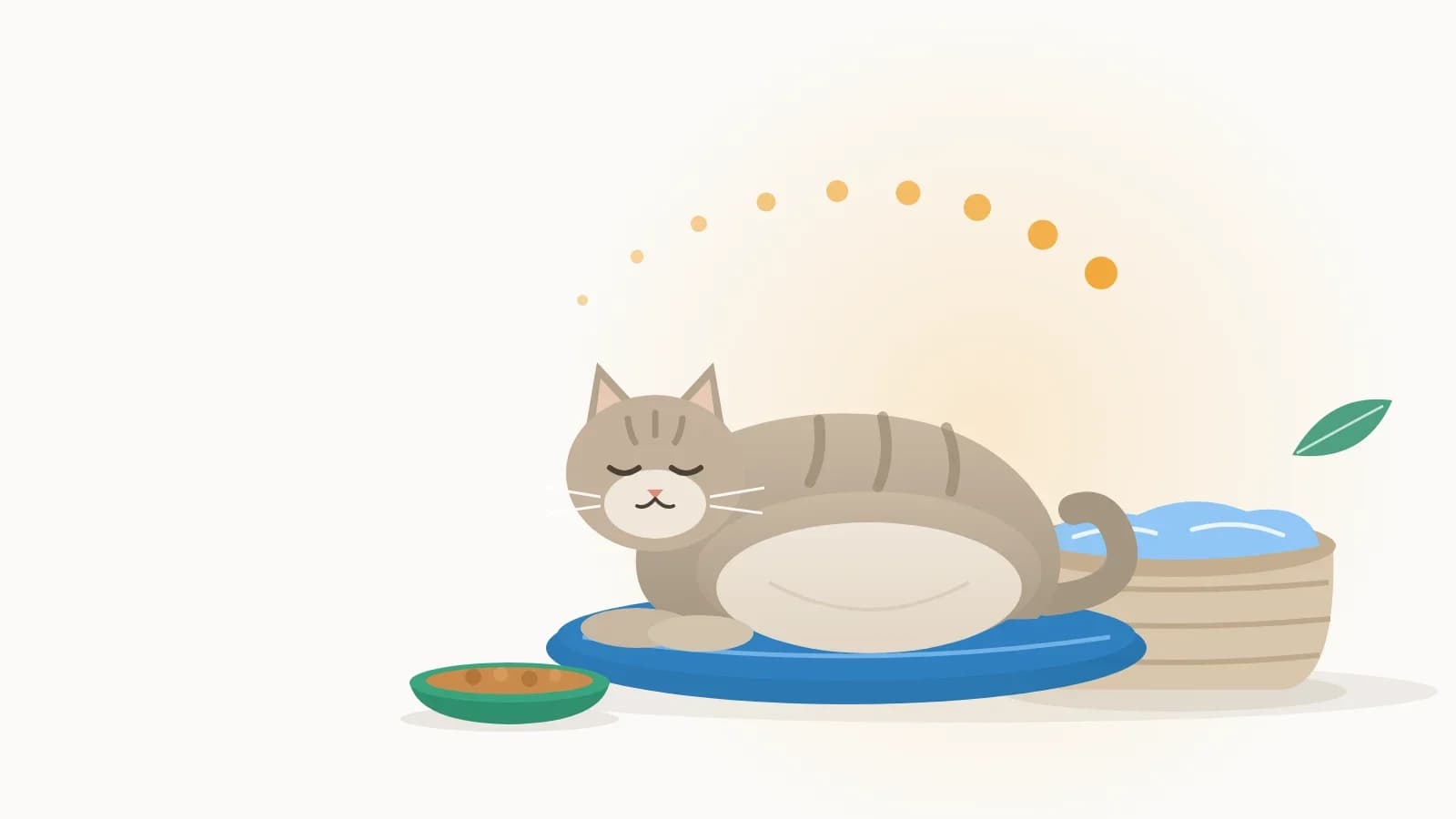
Feeding Pregnant and Nursing Cats: What Changes During Pregnancy?
Why do a pregnant and nursing cat's energy, protein and vitamin needs rise, and what should you watch for at home? Vet. Hek. Metehan Çalıkuşu explains why human vitamins are off-limits and the risk of excess fat-soluble vitamins.
A pregnant cat's energy needs rise gradually from the first weeks of pregnancy and peak during nursing, depending on litter size. Throughout this period, a high-quality complete food formulated for growth and reproduction should be the foundation; human vitamins must never be given, and any supplement decision belongs with your veterinary surgeon.
Pregnancy and nursing are the most nutritionally demanding stages of a cat's life. The queen feeds her own body and her developing kittens at the same time, and after birth she also has to sustain milk production. In this article we explain what changes during this period, why, and what to watch for at home. Remember: diagnosis and treatment are your veterinary surgeon's responsibility; the information here does not replace a veterinary examination.
Why and how do pregnancy and nursing change a cat's nutritional needs?
Pregnancy in cats lasts on average 63–65 days, roughly nine weeks. It is not only the amount of food that changes; energy, protein and micronutrient needs all increase at different rates and for different reasons.
Energy: a gradual rise in pregnancy, a peak in lactation
Unlike dogs, cats begin to gain weight from early pregnancy and continue to gain steadily throughout. Part of this gain belongs to the kittens, placentas and fluids; a significant part, however, is the queen's own fat reserve. She builds this reserve like an "energy bank" and draws on it after birth to support milk production.
The real load comes during lactation. Milk production is energetically very costly, and demand rises as litter size increases and as the kittens grow. Around the third to fourth week of nursing, a queen's energy requirement can reach several times her maintenance requirement. As the kittens start eating solid food, this load gradually eases.
Protein and amino acids: an obligate carnivore's metabolism
Cats are obligate carnivores; their liver continuously uses protein for energy as well, so their protein requirement is already high. Building foetal tissue in pregnancy and synthesising milk protein during lactation raise this need further. Amino acids such as taurine, which cats can only obtain from animal sources, are particularly important at this stage; in scientific studies, dietary taurine deficiency has been associated with reproductive problems such as kitten loss, low birth weight and developmental issues.
Micronutrients: calcium, phosphorus, fatty acids and vitamins
- Calcium and phosphorus: During lactation there is an intense flow of minerals through the milk to the kittens' developing skeletons. This need is met in appropriate ratios by a balanced growth/reproduction food; adding calcium at random can upset the mineral balance.
- Omega-3 fatty acids (especially DHA): These are associated with brain and eye (retinal) development in kittens and are an important component of foods made for growth and reproduction.
- Vitamins: Cats cannot convert plant beta-carotene into vitamin A and cannot make enough vitamin D in their skin; they must obtain these vitamins ready-formed from food. Good-quality complete foods therefore already contain them. Requirements increase, but they are not unlimited.
How should a pregnant or nursing cat be fed in practice?
- The right food: Once pregnancy is noticed (ideally at the planning stage), a gradual switch to a complete food labelled for growth and reproduction or for "all life stages" can be made in consultation with your veterinary surgeon.
- Small, frequent meals: In late pregnancy, abdominal space becomes limited and the cat may eat less at one time. Meals spread through the day suit this stage better.
- Free access during nursing: Free access to food is generally recommended for nursing queens. Your veterinary surgeon will decide the right approach for your cat.
- Water: Milk is largely water. Clean, fresh water should always be available; wet food contributes to fluid intake.
- Weight and body condition monitoring: Both excessive weight gain and insufficient gain are undesirable. Regular weighing and body condition assessment help you and your veterinary surgeon adjust the amount of food.
- Caution with home-made and raw diets: Unformulated home-made diets easily become unbalanced during this period, and raw meat and raw milk carry microbiological risks.
- After weaning: As the kittens move onto solid food, the queen's food amount and type are gradually returned to maintenance level on your vet's advice. For the kittens' next stage, see our kitten nutrition guide.
Does a pregnant cat need vitamins or supplements, and can human vitamins be given?
A healthy pregnant cat fed a good-quality growth/reproduction food usually has her core needs met by the diet. Whether an additional product is needed depends on factors such as age, body condition, current diet and litter size, and that decision belongs to the veterinary surgeon. We explain the difference between complementary feeds, vitamins and medicines in our supplement guide.
Human vitamins and prenatal supplements made for people must never be given to cats. Their amounts are set for human body weight and human metabolism; ingredients such as iron and vitamins A and D can be far too high for a cat, and some products may contain additives that are unsuitable for cats.
The risk of excess fat-soluble vitamins
Vitamins A, D and E are fat-soluble; unlike water-soluble vitamins, they are not readily excreted in urine and can accumulate in the body, particularly in the liver and fat tissue. In cats, long-term high vitamin A intake has been associated with skeletal and joint problems, and high vitamin A intake during pregnancy has been associated in experimental studies with developmental abnormalities in kittens. Excess vitamin D can raise blood calcium and lead to mineral deposits in soft tissues such as the kidneys.
The risk usually comes not from a single source but from sources stacking up: a food containing vitamins A and D, plus vitamin A-rich home foods such as liver, cod liver oil, and one or more supplements. That is why, before adding any product, you should review the labels of your cat's food and other products together with your veterinary surgeon.
Where does Mallia Pregnant Kitten fit in?
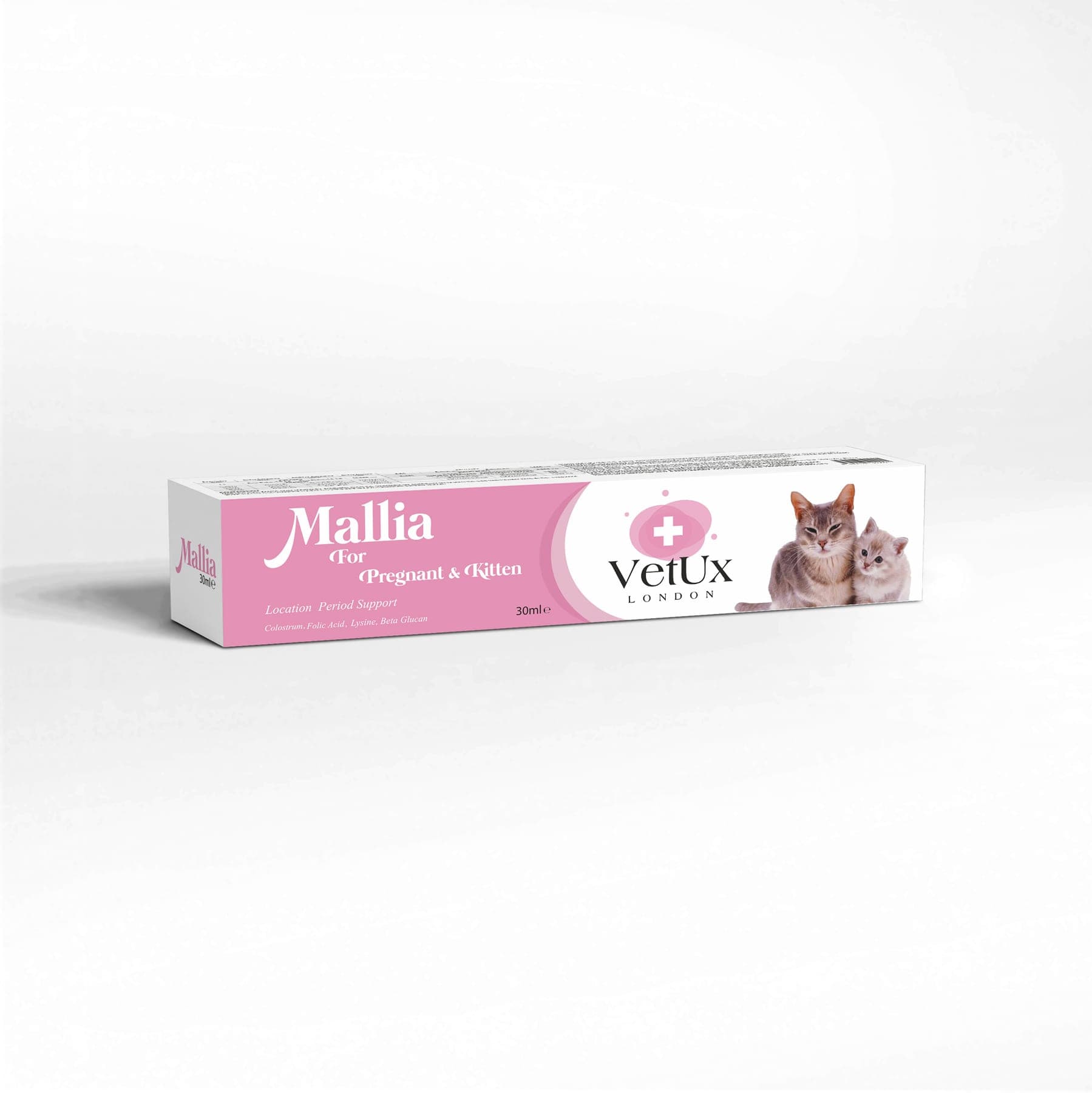
Mallia Pregnant Kitten is a complementary feed in paste form prepared for pregnant and nursing cats, formulated to accompany the increased nutritional demands of this period. Its composition includes beta glucan 1,3-1,6, L-lysine, vitamins C and E, colostrum, folic acid (vitamin B9) and botanical extracts; the full composition and amounts, including vitamin A, are clearly listed on the product page. It is a complementary feed and does not replace a balanced main diet. Because it needs to be assessed together with the vitamin content of your cat's food, whether to use it, how much and for how long are decided by your veterinary surgeon and the product label. You can review the full composition on the Mallia Pregnant Kitten product page.
When should you see a veterinary surgeon?
A check-up as soon as you suspect pregnancy is the best starting point, both to confirm the pregnancy and to set up a feeding plan. In addition, contact your veterinary surgeon without delay in the following situations:
- Loss of appetite lasting more than a day, repeated vomiting or diarrhoea
- Rapid weight loss or marked lethargy during pregnancy or nursing
- Trembling, muscle twitching, restlessness, wobbliness, open-mouth breathing or high temperature while nursing — this is an emergency and may be linked to low blood calcium
- Hardness, redness, heat or pain in the mammary tissue
- Abnormal vaginal discharge or the expected birth date passing
- Kittens failing to gain weight, crying constantly or not suckling
- Whenever you are considering giving your cat any vitamin, mineral or supplement
Final word
When well planned, pregnancy and nursing can pass smoothly for both the queen and her kittens. The core rule is simple: a good-quality complete food suited to this stage, fresh water at all times, regular weight checks, and steering clear of the idea that "the more vitamins, the better". For your cat's feeding plan, supplement needs and the warning signs to watch for during pregnancy, consult your veterinary surgeon.
References
- National Research Council (NRC). Nutrient Requirements of Dogs and Cats. Washington, DC: The National Academies Press; 2006.
- Freeman L, Becvarova I, Cave N, et al. WSAVA Nutritional Assessment Guidelines. Journal of Feline Medicine and Surgery. 2011;13(7):516–525.
- FEDIAF. Nutritional Guidelines for Complete and Complementary Pet Food for Cats and Dogs. Brussels: FEDIAF European Pet Food Industry Federation; 2021.
- Association of American Feed Control Officials (AAFCO). Official Publication — Dog and Cat Food Nutrient Profiles. Champaign, IL: AAFCO; current edition.
- Freytag TL, Liu SM, Rogers QR, Morris JG. Teratogenic effects of chronic ingestion of high levels of vitamin A in cats. Journal of Animal Physiology and Animal Nutrition. 2003;87(1-2):42–51.
- Sturman JA, Messing JM. Dietary taurine content and feline reproduction and outcome. Journal of Nutrition. 1991;121(8):1195–1203.
- Fascetti AJ, Delaney SJ (eds). Applied Veterinary Clinical Nutrition. Chichester: Wiley-Blackwell; 2012.
This article is for information only and does not replace a veterinary examination. For every decision about your cat's nutrition during pregnancy and nursing, consult your veterinary surgeon.
Frequently asked questions
Can I feed my pregnant cat kitten food?
Complete foods formulated for growth and reproduction or for "all life stages" are generally preferred for pregnant and nursing cats; most kitten foods fall into this group. Plan when and how to switch with your veterinary surgeon.
How much extra food should my pregnant cat get?
There is no fixed amount that suits every cat. Needs vary with body weight, body condition, stage of pregnancy and litter size. Your veterinary surgeon will set the right amount based on regular weighing and body condition assessment.
Can I give my pregnant cat my own vitamins?
No. Human vitamins and prenatal supplements are made for human needs; their vitamin A, vitamin D and iron content in particular may be unsuitable for cats. Only give products made for cats that your veterinary surgeon considers appropriate.
Does a pregnant cat need extra calcium?
A cat fed a balanced growth/reproduction food receives calcium and phosphorus in appropriate ratios. Adding calcium on your own can upset the mineral balance; only your veterinary surgeon should assess whether there is such a need.
How does the queen's diet change after nursing ends?
As the kittens move onto solid food and are weaned, the queen's energy requirement falls. Her food amount and type are gradually returned to maintenance level on veterinary advice, and weight and body condition monitoring should continue during this time.
When is a complementary feed considered?
Complementary feeds do not replace the main diet; they are added on top of it. Whether a complementary feed is suitable for your cat should be decided by your veterinary surgeon, taking into account the vitamin content of the food you already use.
This article is for general information only; it does not replace veterinary examination, diagnosis or treatment. VetUx London products are complementary feed. If you have any concern about your companion, please consult your veterinary surgeon.
Share
The formulas matching the nutritional support described above.
Related articles
All articles Nutrition
Kitten Nutrition: Growth, Meal Routines and Transition Periods in the First 12 Months
Kitten nutrition begins with weaning, continues with small, frequent meals and ends with the move to adult food at around 12 months. This article explains the nutritional needs of the growth period, meal routines, gradual food changes and how to follow growth with your vet.
 Nutrition
What Are Cat and Dog Supplements? Complementary Feed vs Vitamins vs Veterinary Medicines
Most cat and dog supplements are legally complementary feed, not medicines. This guide gives clear definitions of complementary feed, vitamin supplements, veterinary medicines and dietetic feed, a label checklist and when to see your vet.
 Nutrition
Practical ways to raise water intake in senior cats
Cats rarely show us that they are thirsty. Raising daily water intake is one of the simplest habits that helps maintain normal kidney function — and in most homes it takes only a few small changes.