
Kitten Nutrition: Growth, Meal Routines and Transition Periods in the First 12 Months
Kitten nutrition begins with weaning, continues with small, frequent meals and ends with the move to adult food at around 12 months. This article explains the nutritional needs of the growth period, meal routines, gradual food changes and how to follow growth with your vet.
Kittens start solid food at around 3–4 weeks and are usually fully weaned by about 8 weeks. In the early months, the essentials are several small meals a day, a complete and balanced growth-stage food and gradual food changes. Growth, and the move to adult food at around 12 months, should be planned with your vet.
Why are a kitten's first 12 months a separate nutritional stage?
In its first year a cat grows to many times its birth weight; its skeleton, muscles, nervous system and eyes all mature in this short window. This is why international guidelines treat kittenhood as a distinct life stage and set different nutrient values for kittens than for adults [1, 4, 5, 6]. A food that is adequate for an adult cat may not meet the protein, mineral and energy needs of a growing kitten.
Dividing the first 12 months roughly into four periods makes feeding easier to plan:
- 0–4 weeks: The mother's milk is the only source of food. The kitten grows on the first milk (colostrum) taken in the first hours of life and on regular nursing after that.
- 4–8 weeks: The weaning period. The kitten is introduced to solid food and nursing gradually decreases.
- 2–6 months: The period of fastest growth. Energy and nutrient needs relative to body weight are at their highest.
- 6–12 months: Growth slows; neutering falls in this period for most cats, and preparation for adult feeding begins.
These periods do not follow the same timetable in every cat. Breed, birth weight, litter size and general health can change the timing, and in some large breeds growth can continue beyond 12 months. Working out which stage your kitten is in, and when it will move to the next, is safest done with your vet.
What are a kitten's nutritional needs during growth?
Protein: the building block of growth
Cats are obligate carnivores; even adult cats have a markedly higher protein requirement than dogs or people. In a growing kitten this need is greater still, because protein is used both to build new muscle and tissue and for energy [5]. Protein quality matters as much as quantity: cats cannot make enough of certain amino acids, such as arginine, methionine and taurine, and must obtain them from food [5]. Foods formulated for the growth stage are therefore adjusted to the kitten's requirements.
Taurine: an essential amino acid for cats
Taurine is an amino acid that cats cannot make in sufficient amounts and must therefore obtain from their diet. Deficiency in cats has been linked to retinal degeneration with resulting loss of vision [9] and to a failure of the heart muscle known as dilated cardiomyopathy [8]. Adding taurine to cat foods became standard after these findings. In practice, this means a kitten fed dog food, or home-cooked meals that have not been balanced by a vet, is at risk of taurine deficiency.
Calcium and phosphorus: balance as well as amount
A rapidly growing skeleton has a high need for calcium and phosphorus, but what matters is not just the amount — it is the balance between the two. Authoritative guidelines keep the calcium-to-phosphorus ratio of growth foods within a defined range [4, 5, 6]. In kittens fed only meat (for example, only chicken breast or minced meat), calcium stays low and phosphorus relatively high. This imbalance can lead to a condition called nutritional secondary hyperparathyroidism: the bones cannot mineralise properly, the kitten may become lame and fractures can occur [10]. Because too much calcium can upset the balance just as too little can, calcium supplements should not be added to the food without consulting your vet. It is also worth adding that cats cannot make enough vitamin D in their skin from sunlight, so they need this vitamin from their food as well [5].
Moisture: most of the water comes from food
Cats, a trait inherited from their desert-dwelling ancestors, respond to thirst relatively late, and in nature they meet a large part of their water needs from the tissues of their prey [5, 7]. With their high water content, wet foods contribute to total daily fluid intake. Wet and dry food can be used together or separately when feeding a kitten; you can talk to your vet about which routine suits your kitten. Whatever the routine, the kitten should always have access to clean, fresh water.
How is weaning done?
Weaning is a gradual process lasting several weeks, following the rhythm of the kitten and the mother; it does not happen in a day.
- 1First introduction (weeks 3–4): Kitten food is softened into a gruel with lukewarm water or a kitten milk replacer and offered on a shallow plate. In the first days kittens may play with the food and eat little; this is normal.
- 2Thickening the texture (weeks 5–6): The gruel is made progressively less watery. Nursing continues but becomes less frequent.
- 3Moving to solid food (weeks 7–8): Most kittens can eat kitten food on their own by this stage, and weaning is complete.
Orphaned kittens, or those whose mother cannot produce enough milk, need special care. Milk replacers formulated for the needs of kittens are used for them; which product to use, how often and how to give it should be decided with your vet. We explained what happens in the digestive system during the move from mother's milk to solid food in our article on the transition from mother's milk to solid food.
Can I give cow's milk or human milk?
No. Cat's milk has a markedly higher protein and fat content than cow's milk; its composition is shaped around a kitten's rapid growth [5, 11]. Cow's milk does not meet this need, and the lactose it contains can cause diarrhoea in some kittens. After weaning, the activity of the enzyme that digests lactose falls in cats, so the "milk for the cat" habit can cause digestive problems in adulthood too [5, 11]. Human milk, infant formula and other dairy products made for people are shaped around the needs of a human baby and are not balanced for a kitten's requirements. Your vet will decide the right option for a kitten with no access to its mother's milk.
How many meals a day should a kitten eat?
In nature, cats catch many small prey animals throughout the day, and small, frequent meals suit this natural behaviour [7]. Because kittens have small stomachs but high energy needs, this principle becomes even more important in the early months. As a general guide:
| Age | General meal frequency | |---|---| | 2–4 months | 4 or more small meals a day | | 4–6 months | 3–4 meals a day | | 6–12 months | 2–3 meals a day |
This table shows meal frequency only. The amount per meal and per day depends on the kitten's age, weight, activity level, whether it has been neutered and the energy value of the food used. To find the right amount, take the guidance on the food label as a starting point and adjust it with your vet according to how your kitten develops.
Keeping the food bowl permanently full (free feeding) may seem practical with some kittens, but it can set the stage for weight gain, especially after neutering. Because energy needs fall after neutering while appetite may rise, it is advisable to review the meal plan with your vet at this point [1]. You can find what to watch for in the first days after neutering in our post-neutering care guide. Offering part of the food through play or a food puzzle also feeds the cat's hunting behaviour [7].
How should food be changed?
A few food changes are unavoidable in a kitten's life: the move from a shelter or breeder to a new home, a switch to a different kitten food and, finally, the move to adult food. The digestive system is sensitive to sudden changes; changing gradually reduces the risk of diarrhoea, vomiting and food refusal.
- On arrival in the new home: Keep giving the food the kitten is used to for the first days. Not combining the stress of a new environment with a food change at the same time is easier on digestion.
- Gradual mixing: Spread the change over 7–10 days, reducing the proportion of the old food while increasing the proportion of the new one.
- Observation: During this period, watch stool consistency, appetite and any vomiting. If problems appear, slow the change down and consult your vet.
- Probiotics: If you are considering a probiotic for digestive support, we explained how to choose one in our probiotic selection guide; make the decision to use one with your vet.
When should you move to adult food?
In most cats growth is complete at around 12 months, and the move to adult food is planned for this period [1]. In some large breeds growth can take longer, while kittens neutered early and prone to weight gain may need a different plan. Decide the timing and the right food with your vet, based on an assessment of your kitten's body condition.
How can I monitor growth at home?
Regular weighing is the simplest and most valuable monitoring tool in kittenhood. In the early months, weighing your kitten once a week at the same time on the same scale and noting the results makes it easier to review the growth curve together at vet visits. Steady weight gain is expected; a halt in weight gain or any weight loss calls for a conversation with your vet.
Alongside weighing, body condition score (BCS) is used. Vets assess whether a kitten is underweight, ideal or overweight by feeling the ribs and looking at the waist from above and at the abdominal line; WSAVA recommends this assessment as part of every examination [2, 3]. Vaccination and parasite-control visits are also a good opportunity to assess growth; as intestinal parasites can slow growth, it is important not to skip these check-ups [1].
Is home-cooked or raw feeding suitable for a kitten?
Most home-prepared recipes are known not to meet a kitten's needs, falling short particularly in calcium, taurine and certain vitamins. We described above how a meat-only diet can disrupt bone development [10]. Raw meat and raw fish also bring a risk of bacterial and parasite transmission on top of the question of nutritional balance. If you are considering a home-prepared diet, do it with your vet or a veterinary nutritionist, using a recipe balanced for the growth stage.
When should you see a vet?
Kittens have limited energy and fluid reserves; a situation that could wait a few days in an adult cat can become serious quickly in a kitten. Contact your vet without delay in any of the following situations:
- The kitten has not eaten for more than one meal or shows no interest in food
- It is not gaining weight, is losing weight or is clearly falling behind its littermates
- Diarrhoea lasts longer than a day, or there is blood or mucus in the stool
- There is repeated vomiting
- There is lethargy, excessive sleepiness, trembling, or the kitten feels cold to the touch
- The abdomen looks swollen and tight
- The gums are dry or tacky and the eyes look sunken (signs of fluid loss)
- There is lameness, reluctance to walk or signs of bone pain
- You are hand-rearing an orphaned kitten and its urge to suckle has decreased
Identifying the cause of these signs and planning the necessary treatment is the vet's job; trying to resolve them at home by changing the diet can delay diagnosis.
Where does Elixir of Kitten fit in during this period?
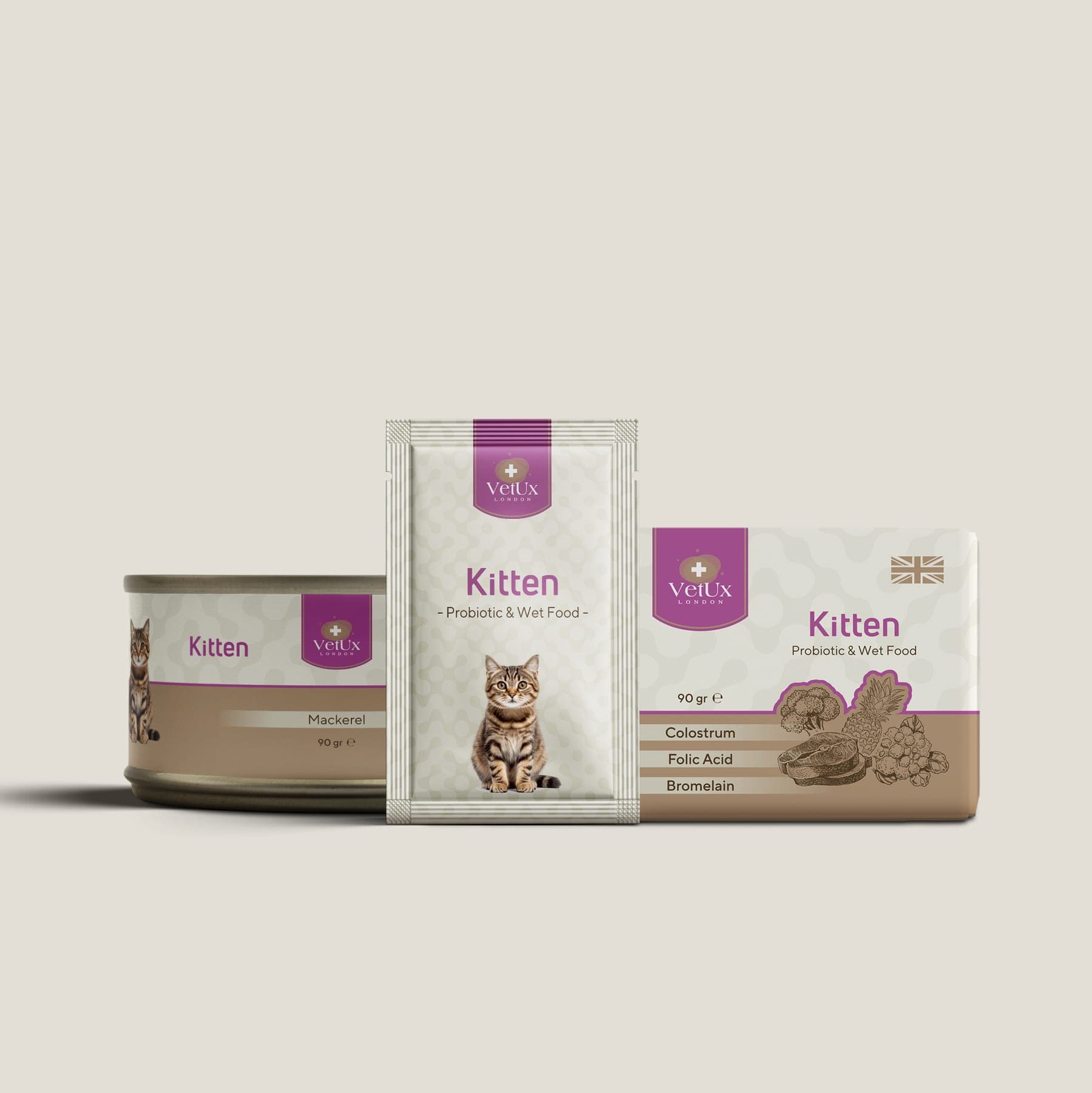
One option that can accompany the feeding plan recommended by your veterinary surgeon is Vetux London's Elixir of Kitten. A probiotic wet food and sachet combination prepared for the life-stage nutritional needs of growing kittens, Elixir of Kitten's mackerel-based formula brings colostrum, folic acid (vitamin B9), probiotic cultures, balanced protein sources, vitamins A, D3 and E, B group vitamins, calcium and phosphorus, and taurine together with a high moisture content; its balanced protein, vitamin and mineral profile gives nutritional support to maintaining normal muscle and bone development, while the wet form contributes to daily fluid intake. The contents of the sachet are stirred into the wet food before serving and, once opened, kept refrigerated; the daily amount is set according to your kitten's weight and energy needs in consultation with your veterinary surgeon. Elixir of Kitten is a complementary feed: it does not replace a complete and balanced main diet suited to the growth stage but accompanies it; assessing your kitten's growth and diagnosing and treating any health problem remain the responsibility of your veterinary surgeon.
Frequently asked questions
Can I give my kitten cow's milk?
It is not recommended. The composition of cow's milk differs from cat's milk and does not meet a kitten's protein and fat needs; the lactose it contains can cause diarrhoea in some kittens. An orphaned kitten needs a milk replacer formulated specifically for kittens, and the choice should be made with your vet.
How many meals a day should a kitten eat?
As a general guide, kittens aged 2–4 months can be fed 4 or more meals a day, those aged 4–6 months 3–4 meals, and those aged 6–12 months 2–3 meals. The amount per meal and per day should be set with your vet according to the food label and the kitten's development.
When should I switch from kitten food to adult food?
In most cats the switch is planned at around 12 months. In large breeds growth can take longer, while kittens neutered early may need a different plan. Make the change gradually over 7–10 days and decide the timing together with your vet.
Should I give my kitten wet food or dry food?
Either can be used as long as it is a complete and balanced food formulated for the growth stage. Wet food contributes to daily fluid intake through its high water content, while dry food offers advantages in storage and convenience. Using both together is also possible; talk to your vet about the routine that suits your kitten.
My kitten developed diarrhoea after a food change. What should I do?
Sudden food changes can cause temporary digestive upsets in kittens; you can slow the change down and increase the proportion of the old food again. However, if the diarrhoea lasts longer than a day, there is blood in the stool, or the kitten is lethargic, off its food or vomiting, contact your vet without delay; the cause of the diarrhoea may have nothing to do with the food.
How do I know my kitten is gaining enough weight?
In the early months, weigh your kitten once a week on the same scale and record the results; steady weight gain is expected. Your vet can review these records together with a body condition score and tell you whether growth is appropriate for the kitten's age. A halt in weight gain or any weight loss calls for a conversation with your vet.
References
- 1Quimby J, Gowland S, Carney HC, et al. 2021 AAHA/AAFP Feline Life Stage Guidelines. J Feline Med Surg. 2021;23(3):211-233. doi:10.1177/1098612X21993657
- 2Freeman L, Becvarova I, Cave N, et al. WSAVA Nutritional Assessment Guidelines. J Feline Med Surg. 2011;13(7):516-525. doi:10.1016/j.jfms.2011.05.009
- 3WSAVA Global Nutrition Committee. Global Nutrition Guidelines and Global Nutrition Toolkit (including body and muscle condition score charts). World Small Animal Veterinary Association. wsava.org
- 4FEDIAF. Nutritional Guidelines for Complete and Complementary Pet Food for Cats and Dogs (current edition). Brussels: FEDIAF European Pet Food Industry. fediaf.org
- 5National Research Council. Nutrient Requirements of Dogs and Cats. Washington, DC: The National Academies Press; 2006. doi:10.17226/10668
- 6Association of American Feed Control Officials (AAFCO). Official Publication — AAFCO Cat Food Nutrient Profiles (Growth and Reproduction). AAFCO; published annually.
- 7Sadek T, Hamper B, Horwitz D, et al. Feline feeding programs: addressing behavioural needs to improve feline health and wellbeing. J Feline Med Surg. 2018;20(11):1049-1055. doi:10.1177/1098612X18791877
- 8Pion PD, Kittleson MD, Rogers QR, Morris JG. Myocardial failure in cats associated with low plasma taurine: a reversible cardiomyopathy. Science. 1987;237(4816):764-768. doi:10.1126/science.3616607
- 9Hayes KC, Carey RE, Schmidt SY. Retinal degeneration associated with taurine deficiency in the cat. Science. 1975;188(4191):949-951. doi:10.1126/science.1138364
- 10Tomsa K, Glaus T, Hauser B, et al. Nutritional secondary hyperparathyroidism in six cats. J Small Anim Pract. 1999;40(11):533-539. doi:10.1111/j.1748-5827.1999.tb03015.x
- 11Little SE. The Cat: Clinical Medicine and Management. St. Louis: Elsevier Saunders; 2012 (paediatrics and nutrition chapters).
This article is for information only and does not replace an examination. To set your kitten's feeding plan, monitor its growth and decide when to move to adult food, consult your veterinary surgeon.
Frequently asked questions
Can I give my kitten cow's milk?
It is not recommended. The composition of cow's milk differs from cat's milk and does not meet a kitten's protein and fat needs; the lactose it contains can cause diarrhoea in some kittens. An orphaned kitten needs a milk replacer formulated specifically for kittens, and the choice should be made with your vet.
How many meals a day should a kitten eat?
As a general guide, kittens aged 2–4 months can be fed 4 or more meals a day, those aged 4–6 months 3–4 meals, and those aged 6–12 months 2–3 meals. The amount per meal and per day should be set with your vet according to the food label and the kitten's development.
When should I switch from kitten food to adult food?
In most cats the switch is planned at around 12 months. In large breeds growth can take longer, while kittens neutered early may need a different plan. Make the change gradually over 7–10 days and decide the timing together with your vet.
Should I give my kitten wet food or dry food?
Either can be used as long as it is a complete and balanced food formulated for the growth stage. Wet food contributes to daily fluid intake through its high water content, while dry food offers advantages in storage and convenience. Using both together is also possible; talk to your vet about the routine that suits your kitten.
My kitten developed diarrhoea after a food change. What should I do?
Sudden food changes can cause temporary digestive upsets in kittens; you can slow the change down and increase the proportion of the old food again. However, if the diarrhoea lasts longer than a day, there is blood in the stool, or the kitten is lethargic, off its food or vomiting, contact your vet without delay; the cause of the diarrhoea may have nothing to do with the food.
How do I know my kitten is gaining enough weight?
In the early months, weigh your kitten once a week on the same scale and record the results; steady weight gain is expected. Your vet can review these records together with a body condition score and tell you whether growth is appropriate for the kitten's age. A halt in weight gain or any weight loss calls for a conversation with your vet.
This article is for general information only; it does not replace veterinary examination, diagnosis or treatment. VetUx London products are complementary feed. If you have any concern about your companion, please consult your veterinary surgeon.
Share
The formulas matching the nutritional support described above.
Related articles
All articles Nutrition
What Are Cat and Dog Supplements? Complementary Feed vs Vitamins vs Veterinary Medicines
Most cat and dog supplements are legally complementary feed, not medicines. This guide gives clear definitions of complementary feed, vitamin supplements, veterinary medicines and dietetic feed, a label checklist and when to see your vet.
 Nutrition
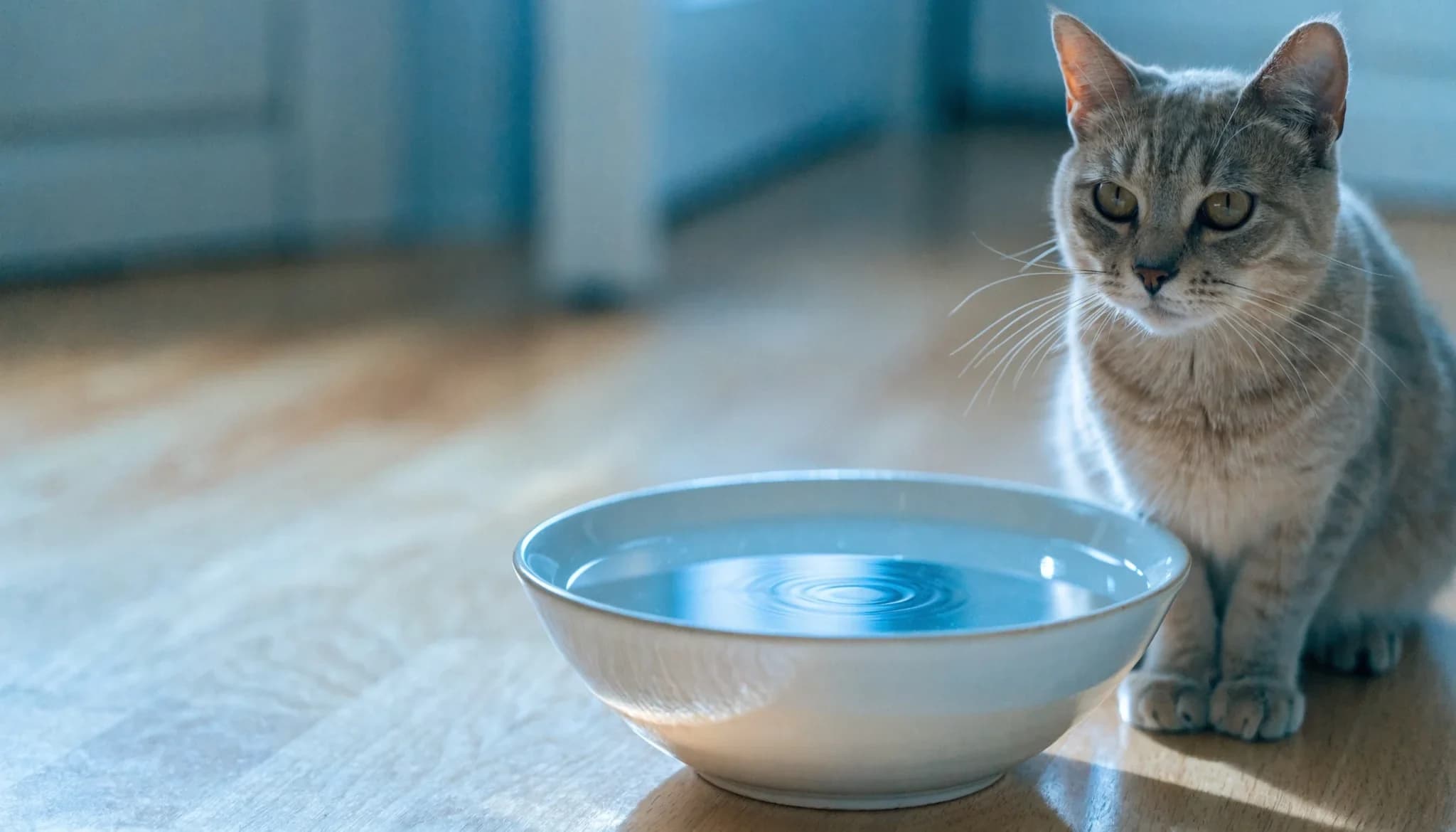
Practical ways to raise water intake in senior cats
Cats rarely show us that they are thirsty. Raising daily water intake is one of the simplest habits that helps maintain normal kidney function — and in most homes it takes only a few small changes.
 Clinical Notes
Bad Breath in Cats: Tartar, Gum Disease and Causes Beyond the Mouth
Bad breath in cats usually comes from plaque and tartar, but it can also be an early sign of kidney disease or diabetes. We explain how the odour develops, why tartar removal belongs at the vet and how to care for your cat's mouth day to day.