
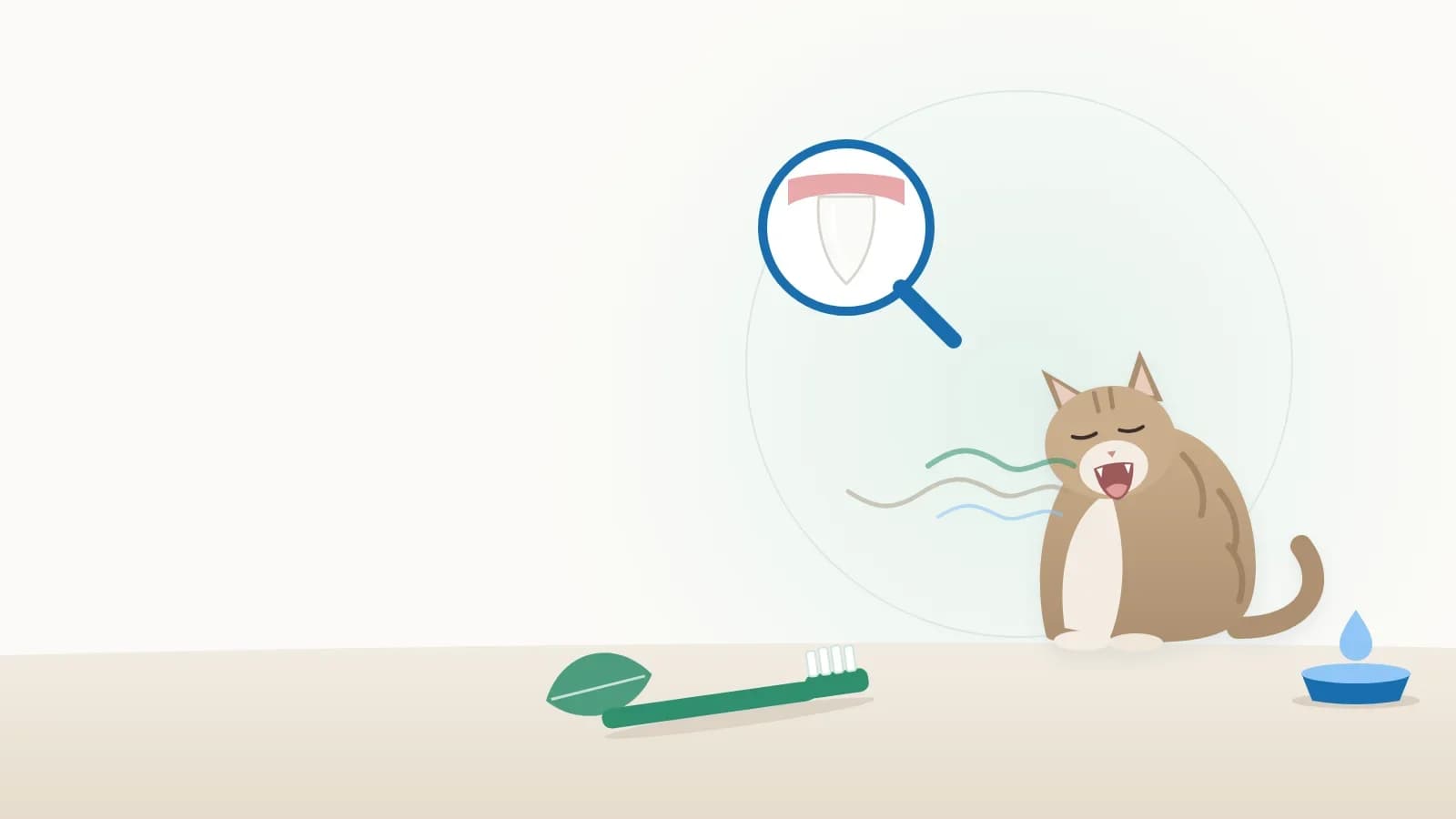
Bad Breath in Cats: Tartar, Gum Disease and Causes Beyond the Mouth
Bad breath in cats usually comes from plaque and tartar, but it can also be an early sign of kidney disease or diabetes. We explain how the odour develops, why tartar removal belongs at the vet and how to care for your cat's mouth day to day.
The most common cause of bad breath in cats is plaque building up on the teeth and hardening into tartar; bacteria in plaque produce foul-smelling volatile sulphur compounds. However, bad breath can also be a sign of kidney disease, diabetes or digestive problems. If the odour persists, see your veterinary surgeon for a diagnosis.
Is bad breath normal in cats?
A healthy cat's mouth is not completely odourless; a mild food smell may be noticeable straight after a meal, especially fish or wet food, and it fades quickly. What is not normal is an odour that lasts for days, gets steadily worse or changes in character. Known medically as "halitosis", this is not a disease in itself but a sign. So the real question is not "how do I mask the smell?" but "where is it coming from?" The answer usually lies in the mouth, but sometimes it lies far from it.
How does bad breath develop?
Plaque: the thin layer where it all starts
Shortly after cleaning, the tooth surface becomes coated with a thin film made of proteins from saliva. Bacteria in the mouth attach to this film and multiply, forming a sticky, barely visible biofilm called "plaque". If plaque is not removed mechanically, for example by brushing, it thickens and extends below the gum line. Oxygen is scarce there, and this environment favours bacteria that thrive without oxygen.
Volatile sulphur compounds: the chemistry of the smell
The substances that actually cause bad breath are volatile sulphur compounds produced by these bacteria: mainly hydrogen sulphide and methyl mercaptan, along with gases such as dimethyl sulphide. Bacteria release these gases as they break down sulphur-containing amino acids (cysteine, methionine) found in food debris, shed cells lining the mouth, saliva and blood seeping from the gums. This is the source of the familiar rotten-egg or cabbage-like smell. The more plaque there is and the more inflamed the gums are, the more "raw material" is available to the bacteria.
Tartar: plaque that has hardened
Plaque that is not removed combines with minerals in saliva, hardens and turns into tartar (calculus). Tartar is usually seen as a yellow-brown deposit on the back teeth, on the surfaces facing the cheeks. Tartar itself is not the only source of the smell, but its rough surface makes it easier for new plaque to stick, and once formed it cannot be removed by brushing.
The gums: from gingivitis to periodontitis
The first response to plaque is inflammation of the gums (gingivitis): redness, swelling and bleeding on touch along the gum margin. At this stage, appropriate professional cleaning and home care can reverse the changes. As it progresses, the tissues that hold the tooth in place are also affected (periodontitis): the gums recede, pockets form around the teeth and teeth may become loose. Tissue lost at this stage does not grow back. The pockets are an ideal hiding place for odour-producing bacteria.
Oral problems specific to cats
Tartar is not the only possible cause of bad breath in cats. Tooth resorption (the tooth breaking down from the root or crown) is common in cats and can often only be fully assessed with dental X-rays. Chronic gingivostomatitis is a widespread and very painful inflammation inside the mouth. Broken teeth, foreign bodies such as thread caught under the tongue, and masses in the mouth can also cause a bad smell. All of these require examination by a veterinary surgeon.
Which conditions outside the mouth can bad breath point to?
If the mouth looks healthy but the odour persists, or the smell has an unusual character, the cause may lie outside the mouth.
- Kidney disease: When the kidneys are not working well enough, waste products such as urea build up in the blood. Urea that passes into saliva is broken down by oral bacteria, which can produce an ammonia-like, urine-like smell. In advanced cases, ulcers may also develop in the mouth. Common accompanying signs: drinking more, urinating more, weight loss, poor appetite, vomiting. Chronic kidney disease is particularly common in older cats.
- Diabetes mellitus: In uncontrolled diabetes the body starts burning fat for energy and ketone bodies are produced. This can give the breath a sweet, fruity or acetone-like smell. If this smell comes with lethargy, vomiting and loss of appetite, it is an emergency because of the possibility of diabetic ketoacidosis. Common accompanying signs: drinking more, urinating more, weight loss despite a good or increased appetite.
- Digestive problems: Frequent vomiting, problems arising from the oesophagus or stomach, and some intestinal diseases can leave a sour or unpleasant smell in the mouth.
- Other causes: Nasal and sinus infections (together with nasal discharge) and, rarely, liver disease can also change the smell of the breath.
This is why, in a cat with bad breath, your veterinary surgeon will not stop at the teeth; where needed, they will assess overall health with blood and urine tests. Diagnosing and treating causes outside the mouth is entirely the veterinary surgeon's domain.
Can tartar be removed at home?
No. Established tartar cannot be removed by brushing or by any product used at home; tartar removal is carried out by your veterinary surgeon. According to international dental guidelines, professional oral care should be performed under general anaesthesia. The reason is that the real problem lies not in the visible tartar but below the gum line. Under anaesthesia, the veterinary surgeon:
- examines the whole mouth and every tooth in detail,
- measures the depth of the gum pockets,
- takes dental X-rays to look for hidden problems such as resorption in cats,
- cleans all surfaces, including below the gum line, and polishes the teeth,
- carries out the treatment plan if needed.
Anaesthesia-free dental cleaning is not recommended by the guidelines: it only cleans the visible surface cosmetically, can delay diagnosis by hiding disease below the gum line, and carries a risk of stress and injury for the cat. Blood tests carried out before anaesthesia can also help uncover causes outside the mouth, such as kidney disease or diabetes.
How do you care for your cat's mouth day to day?
The aim of home care is not to remove tartar but to limit plaque building up again after professional cleaning and to keep a regular eye on the mouth.
- 1Toothbrushing: Mechanical brushing is the most effective way to remove plaque; the guidelines regard daily brushing as the gold standard. Use a soft brush or finger brush suitable for cats.
- 2Toothpaste made only for pets: Do not use human toothpaste; cats swallow toothpaste, and some ingredients in human toothpastes (fluoride, foaming agents) are not suitable for swallowing.
- 3Gradual introduction: Start by touching the edge of the lips, then let your cat taste the paste, then try brushing a few teeth for a short time. Keep sessions short and end with a reward. Focus on the gum line and the outer surfaces of the teeth facing the cheeks.
- 4Supporting options: Diets and treats designed for dental health can help alongside brushing but do not replace it. Discuss with your veterinary surgeon which option suits your cat; the seal of acceptance from independent bodies (e.g. VOHC) can be a useful guide.
- 5Regular checks: Lift your cat's lip once a week and look at the gums. A red line along the gum margin, bleeding or a yellow-brown deposit means it is time for a veterinary check.
- 6Routine examinations: An oral examination at least once a year is recommended even for cats that look healthy; older cats and those with a history of oral problems may need more frequent checks.
Where do Ora Fix and Ora Fix Fresh fit into oral care?
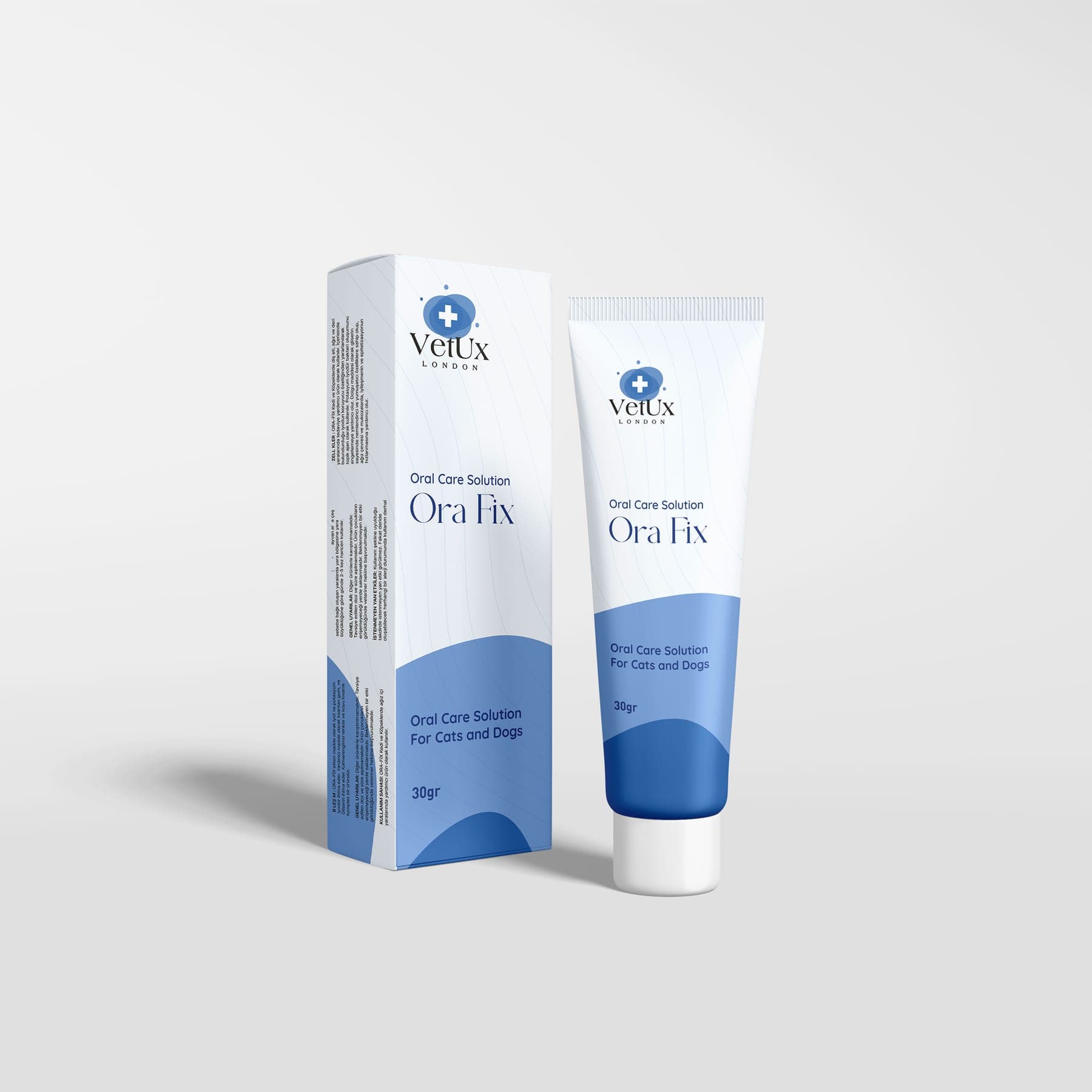
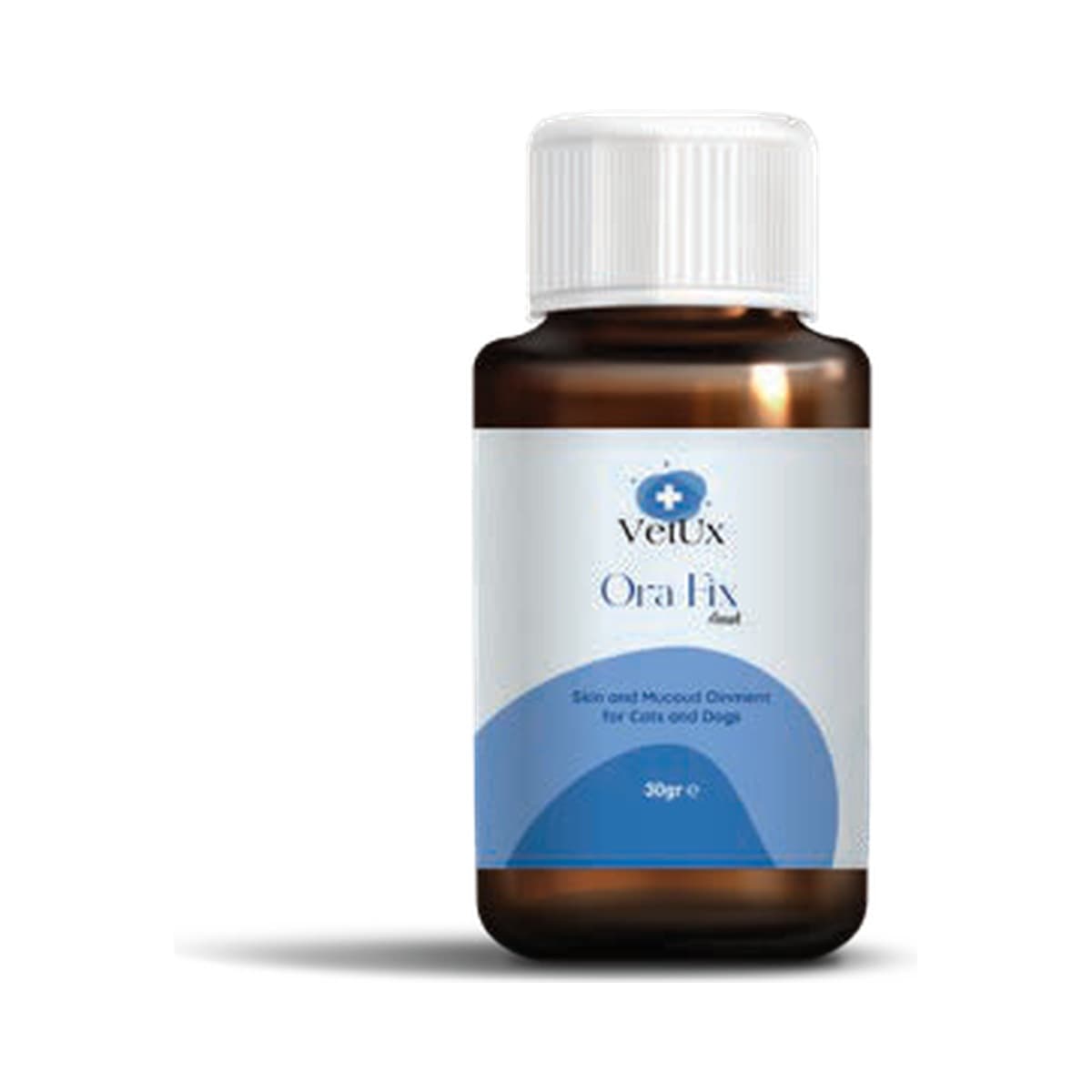
One of the options that can be part of the everyday oral care routine recommended by your veterinary surgeon is Vetux London's Ora Fix and Ora Fix Fresh. Both are care ointments containing potassium iodide (Kalium iodatum) and glycerine (Glycerinum), prepared for the everyday care of the gums, the mouth and the skin surface in cats and dogs; potassium iodide contributes to keeping the mouth and the area around the gums clean, while glycerine forms a protective layer on the surface it is applied to, accompanying the retention of moisture and everyday comfort. The two products have the same ingredients; Ora Fix comes as a tube cream, while Ora Fix Fresh is also available as a bottle with a small brush that makes it easier to reach the gum line. These products are intended for the everyday care of the oral environment, not for bad breath itself: they do not replace toothbrushing, tartar removal by your veterinary surgeon or the examination needed to find the cause of the odour. If your cat is being monitored for thyroid disease, is fed an iodine-restricted diet or has any other health condition, discuss suitability and how to use the product with your veterinary surgeon beforehand.
When should you see a veterinary surgeon?
If bad breath lasts for more than a few days, book an examination in any case. Do not wait in the following situations:
- The smell started suddenly or is getting worse quickly
- The gums are red, swollen or bleeding; there is blood or bloody saliva coming from the mouth
- Your cat is drooling, pawing at the mouth, dropping food or chewing on one side
- Your cat's appetite has dropped or they have stopped eating (in cats, loss of appetite can quickly lead to serious problems)
- Bad breath comes with drinking more, urinating more or weight loss
- The breath smells sweet or acetone-like and your cat is lethargic or vomiting — emergency
- The breath smells of ammonia or urine
- You notice a sore, lump or swelling in the mouth, swelling of the face or nasal discharge
Remember: finding the cause of bad breath and planning treatment is the veterinary surgeon's job. Care at home does not replace a veterinary examination.
Frequently asked questions
My cat's breath smells fishy after meals; is that a problem?
A mild smell that appears straight after a meal and fades quickly is usually related to food. If the smell is present all the time regardless of meals, or is getting worse, plaque, tartar or another cause should be investigated.
Can I brush my cat's teeth with human toothpaste?
No. Cats do not spit out toothpaste; they swallow it, and human toothpastes are not designed to be swallowed. Use only toothpastes made for pets that are suitable for swallowing.
Is anaesthesia really necessary for tartar removal?
Yes. International guidelines recommend that professional oral care is performed under general anaesthesia so that the area below the gum line can be cleaned, the mouth fully examined and dental X-rays taken. Your veterinary surgeon will discuss the pre-anaesthetic assessment and the risks with you.
Can kittens have bad breath?
While milk teeth are being replaced by permanent teeth, the gums may be temporarily sensitive and a mild smell may be noticeable. However, retained milk teeth, marked gum inflammation or a persistent odour require a veterinary check.
Does Ora Fix or Ora Fix Fresh get rid of bad breath?
No such claim is made for these products. Ora Fix and Ora Fix Fresh are care products that accompany the everyday care of the gums and the surface inside the mouth. The cause of bad breath — whether tartar, kidney disease or diabetes — must be identified and treated by a veterinary surgeon.
References
- 1Bellows J, Berg ML, Dennis S, et al. 2019 AAHA Dental Care Guidelines for Dogs and Cats. J Am Anim Hosp Assoc. 2019;55(2):49-69. doi:10.5326/JAAHA-MS-6933
- 2Niemiec B, Gawor J, Nemec A, et al. World Small Animal Veterinary Association Global Dental Guidelines. J Small Anim Pract. 2020;61(7):E36-E161. doi:10.1111/jsap.13132
- 3Perry R, Tutt C. Periodontal disease in cats: back to basics – with an eye on the future. J Feline Med Surg. 2015;17(1):45-65. doi:10.1177/1098612X14560099
- 4Tonzetich J. Production and origin of oral malodor: a review of mechanisms and methods of analysis. J Periodontol. 1977;48(1):13-20. doi:10.1902/jop.1977.48.1.13
- 5Sparkes AH, Caney S, Chalhoub S, et al. ISFM Consensus Guidelines on the Diagnosis and Management of Feline Chronic Kidney Disease. J Feline Med Surg. 2016;18(3):219-239. doi:10.1177/1098612X16631234
- 6International Renal Interest Society (IRIS). IRIS Staging of CKD (modified 2023). iris-kidney.com
- 7Sparkes AH, Cannon M, Church D, et al. ISFM Consensus Guidelines on the Practical Management of Diabetes Mellitus in Cats. J Feline Med Surg. 2015;17(3):235-250. doi:10.1177/1098612X15571880
- 8Carney HC, Ward CR, Bailey SJ, et al. 2016 AAFP Guidelines for the Management of Feline Hyperthyroidism. J Feline Med Surg. 2016;18(5):400-416. doi:10.1177/1098612X16643252
This article is for information only and does not replace an examination. If you notice bad breath or any change in your cat's mouth, consult your veterinary surgeon to find the cause and set up the right care plan.
Frequently asked questions
My cat's breath smells fishy after meals; is that a problem?
A mild smell that appears straight after a meal and fades quickly is usually related to food. If the smell is present all the time regardless of meals, or is getting worse, plaque, tartar or another cause should be investigated.
Can I brush my cat's teeth with human toothpaste?
No. Cats do not spit out toothpaste; they swallow it, and human toothpastes are not designed to be swallowed. Use only toothpastes made for pets that are suitable for swallowing.
Is anaesthesia really necessary for tartar removal?
Yes. International guidelines recommend that professional oral care is performed under general anaesthesia so that the area below the gum line can be cleaned, the mouth fully examined and dental X-rays taken. Your veterinary surgeon will discuss the pre-anaesthetic assessment and the risks with you.
Can kittens have bad breath?
While milk teeth are being replaced by permanent teeth, the gums may be temporarily sensitive and a mild smell may be noticeable. However, retained milk teeth, marked gum inflammation or a persistent odour require a veterinary check.
Does Ora Fix or Ora Fix Fresh get rid of bad breath?
No such claim is made for these products. Ora Fix and Ora Fix Fresh are care products that accompany the everyday care of the gums and the surface inside the mouth. The cause of bad breath — whether tartar, kidney disease or diabetes — must be identified and treated by a veterinary surgeon.
This article is for general information only; it does not replace veterinary examination, diagnosis or treatment. VetUx London products are complementary feed. If you have any concern about your companion, please consult your veterinary surgeon.
Share
The formulas matching the nutritional support described above.
Related articles
All articles Clinical Notes
Signs of Heart Failure in Dogs: Coughing, Fast Breathing and Tiredness
Coughing, fast breathing during sleep and tiring quickly are the most common signs of heart failure in dogs. Why they happen, counting sleeping breathing rate at home, emergency signs and the diagnostic process, from a veterinary surgeon.
 Clinical Notes
Signs of Pancreatitis in Cats: A Digestive Problem That Often Goes Unnoticed
In cats, pancreatitis often progresses quietly rather than with vomiting; sometimes the only signs are poor appetite and lethargy. We explain the role of the pancreas in digestion, the signs to watch for, why feeding matters and when to see your veterinary surgeon.
 Clinical Notes
Signs of Diabetes in Cats: Drinking More, Eating More and Losing Weight
A cat that drinks more and eats more but still loses weight may be showing the first signs of diabetes. We explain why these three signs appear, what to watch for at home, how a diagnosis is made with blood and urine tests, and when to see your veterinary surgeon without delay.