
Signs of Heart Failure in Dogs: Coughing, Fast Breathing and Tiredness
Coughing, fast breathing during sleep and tiring quickly are the most common signs of heart failure in dogs. Why they happen, counting sleeping breathing rate at home, emergency signs and the diagnostic process, from a veterinary surgeon.
The most common signs of heart failure in dogs are coughing, fast or laboured breathing at rest or asleep, reluctance to exercise and tiring quickly. They arise when fluid builds up in the lungs and the heart cannot pump enough blood. If you notice them, see your veterinary surgeon for diagnosis and treatment; sudden collapse and blue gums are emergencies.
What is heart failure in dogs?
Heart failure is not a single disease but an outcome: the heart can no longer pump the blood the body needs at adequate pressure, or cannot comfortably accept the blood returning to it. Blood then backs up in the vessels "behind" the heart and fluid leaks into the tissues. In medical terms this is called congestive heart failure.
In dogs, two diseases cause this picture most often:
- Myxomatous mitral valve disease (MMVD): The mitral valve on the left side of the heart thickens over the years and no longer closes fully. It is common in middle-aged and older small-breed dogs (e.g. Cavalier King Charles Spaniel, Chihuahua, Poodle, Dachshund). The disease can progress for a long time without signs; the ACVIM consensus divides it into stages, from the silent phase through to heart failure (Keene et al., 2019).
- Dilated cardiomyopathy (DCM): The heart muscle weakens and the heart chambers enlarge. It is reported more often in large breeds such as the Dobermann, Boxer and Great Dane, and in some breeds it occurs together with rhythm disturbances (Wess et al., 2017).
Only your veterinary surgeon can determine, through examination and tests, which disease is present, what stage it has reached and what is needed.
Why does heart failure cause coughing, fast breathing and tiredness?
Understanding the signs also makes it clearer what to watch for at home. Each of the three signs has a different physiological process behind it.
Fast and laboured breathing: fluid building up in the lungs
In left-sided heart failure, pressure in the left atrium rises. This pressure is transmitted back into the vessels that carry blood from the lungs to the heart. Once the pressure inside these vessels passes a certain level, fluid leaks around and into the tiny air sacs of the lungs; this is called pulmonary oedema. The fluid makes it harder for oxygen to pass into the blood and makes the lungs "stiffer". To take in the same amount of oxygen, the dog starts to breathe faster and more shallowly. This is why a rise in breathing rate while the dog is resting or asleep is one of the earliest and most reliable signs of heart failure (Ohad et al., 2013; Porciello et al., 2016).
Coughing: there is not always a single cause
In dogs with heart disease, coughing can arise in two different ways. The first is pulmonary oedema. The second, particularly in mitral valve disease, is an enlarged left atrium pressing on the main bronchus that runs directly above it. At the same time, airway problems such as tracheal collapse and chronic bronchitis are also common in dogs of the same age and breed groups. Coughing on its own therefore does not mean heart failure; telling whether a cough comes from the heart or the airways requires veterinary assessment (Ferasin and Linney, 2019).
Tiredness and reluctance to exercise: less blood reaching the muscles
When the amount of blood the heart pumps with each beat falls, the muscles, especially during exertion, cannot get enough of the oxygen and nutrients they need. To close this gap, the body raises the heart rate, narrows the blood vessels and, through the kidneys, holds on to salt and water. In the short term these compensatory mechanisms protect the circulation; in the long term they add to the heart's workload. From the owner's point of view, the result is lagging behind on walks, stopping on the stairs, losing interest in play and sleeping more. Because these changes often develop slowly, they can be put down to "just getting older".
Other signs that may occur
- Restlessness at night, getting up and lying down repeatedly, unable to settle
- Reduced appetite, muscle loss and weight loss
- A swollen abdomen (in right-sided heart failure fluid can collect in the abdomen)
- Fainting or briefly collapsing
How do you count sleeping breathing rate at home?
Sleeping breathing rate is one of the most valuable measures you can track at home, with no equipment at all. In dogs diagnosed with heart disease, a regular record of this number can be an important part of your veterinary surgeon's monitoring plan (Porciello et al., 2016).
How to count:
- 1Choose the right moment: Count while your dog is in deep sleep in a cool, calm room. If they have just exercised, the room is warm, they are dreaming (twitching legs or eyelids) or snoring, keep waiting.
- 2Watch the chest: One rise and fall of the chest counts as one breath.
- 3Time it: Count for 30 seconds using your phone's stopwatch and multiply the result by two. For a more reliable result, you can count for a full 60 seconds.
- 4Write it down: Note the result with the date and time in a notebook or on your phone. Count at a similar time and in similar conditions each day.
- 5Look at the trend: The change over days matters more than any single count. Take your records to check-up appointments.
Studies have reported that the sleeping breathing rate of healthy adult dogs is mostly below 30 breaths per minute (Rishniw et al., 2012). However, each dog's own baseline, the medicines they take and the stage of their disease differ. Your veterinary surgeon will set the value that means "call the practice" for your dog. Be sure to ask for this threshold at your next appointment and write it down.
Which signs are an emergency?
If you see any of the following, do not wait: go straight to the nearest veterinary surgeon or emergency clinic.
- Sudden collapse or fainting: the dog suddenly falls down, brief loss of consciousness
- Blue discolouration: the tongue or gums look blue, grey or markedly pale
- Difficulty breathing: open-mouthed, laboured breathing at rest using the abdominal muscles; sitting with the neck stretched out and elbows held away from the body, refusing to lie down
- Uncontrollable coughing fits, especially with frothy or pinkish fluid
- A rapid and sustained rise in sleeping breathing rate, above the threshold set by your veterinary surgeon
- Rapidly developing abdominal swelling, marked weakness, inability to stand
These signs can indicate that heart failure has suddenly worsened, and time is critical. Do not wait at home by giving any product or medicine.
When should you see a veterinary surgeon?
Outside emergencies, booking an appointment is advised in the following situations:
- A cough that lasts more than a few days or gets worse at night
- A clear change in walking pace, willingness to play or climbing stairs
- Sleeping breathing rate showing an upward trend over several days
- Loss of appetite and weight, restlessness at night
- Any new sign in a dog previously found to have a heart murmur
Regular check-ups also matter for dogs with a heart murmur but no signs. The ACVIM consensus recommends that staging and the frequency of monitoring in mitral valve disease are set by the veterinary surgeon (Keene et al., 2019). Early assessment allows your veterinary surgeon to plan the right step at the right time. Diagnosis and treatment are always your veterinary surgeon's decision.
How is heart failure diagnosed?
Your veterinary surgeon will first listen to the chest (auscultation) to assess heart murmurs, rhythm and lung sounds, then plan the tests they consider necessary:
- Echocardiography (heart ultrasound): The underlying heart disease is diagnosed by echocardiography. It shows the structure of the valves, the size of the heart chambers and how strongly the heart muscle contracts; staging is also based largely on these findings (Keene et al., 2019).
- Chest X-rays: Help show the size of the heart and whether fluid has built up in the lungs.
- Electrocardiography (ECG) and rhythm monitoring: May be used especially when a rhythm disturbance is suspected, or for screening in some large breeds (Wess et al., 2017).
- Blood tests: May be requested for general health status and for the cardiac markers your veterinary surgeon considers necessary.
Although the signs may look alike, heart diseases are managed differently from one another. So rather than comparing with information online or with another dog's treatment, discuss your own dog's test results with your veterinary surgeon.
How can nutritional support accompany heart health?
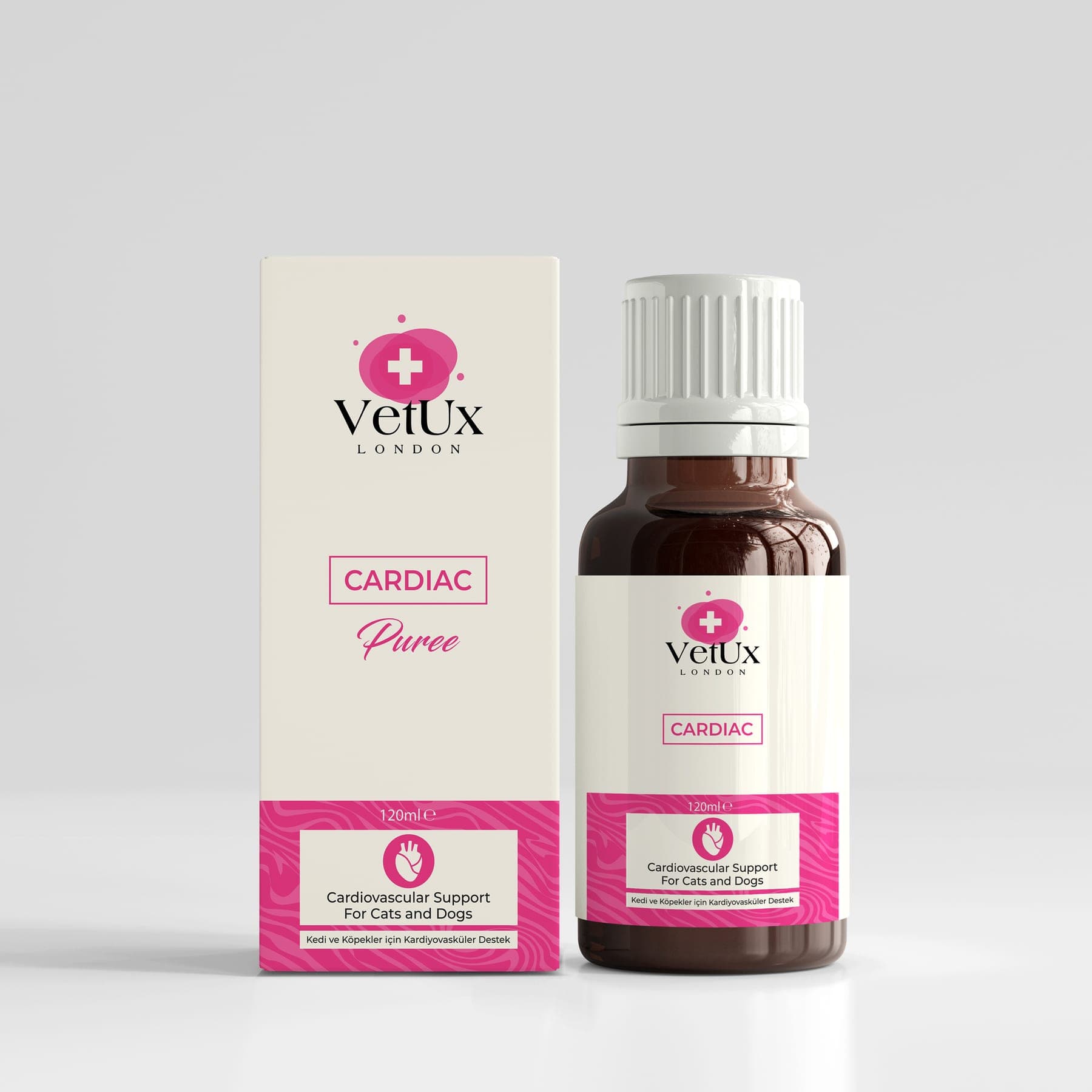
In dogs with heart disease, nutrition is treated as a topic in its own right in the veterinary cardiology literature; maintaining muscle mass and adequate intake of certain nutrients are part of it (Freeman, 2010). Vetux London's Cardiac is a liquid complementary feed developed to help maintain normal heart function and vascular health in cats and dogs. According to the product record, per kg it contains 112,500 mg L-carnitine, 87,500 mg taurine, 87,500 mg krill oil, 11,250 mg hawthorn berry extract (Crataegus) and 10,000 mg vitamin E (alpha-tocopheryl acetate). L-carnitine supports the natural process of fatty acid use in heart muscle; taurine accompanies the normal working rhythm of the heart muscle and its intracellular calcium balance; krill oil, through its omega-3 fatty acids and its natural carotenoid astaxanthin, contributes to the normal oxidative balance of cell membranes; and hawthorn extract and vitamin E complete the blend. Cardiac is not a medicine and does not replace heart medication; it is nutritional support that accompanies the care recommended by your veterinary surgeon. If your dog takes heart medication or has been diagnosed with heart disease, consult your veterinary surgeon before starting any complementary feed, including this one; the decision to use it and how much to give rest with your veterinary surgeon.
Frequently Asked Questions
What should my dog's sleeping breathing rate be?
Studies have reported that in healthy adult dogs the sleeping breathing rate is mostly below 30 breaths per minute. However, your dog's own baseline and health status may differ; your veterinary surgeon will tell you at what value you should call the practice.
Does every dog that coughs have heart failure?
No. Tracheal collapse, chronic bronchitis, infections and allergies also cause coughing. Even in a dog with heart disease, the cough may come from the airways. Your veterinary surgeon distinguishes between them through examination and tests.
Which tests are used to diagnose heart failure?
The underlying heart disease is diagnosed by echocardiography (heart ultrasound). Chest X-rays help show whether there is fluid in the lungs; ECG and blood tests are added when your veterinary surgeon considers them necessary.
My dog suddenly collapsed or their tongue turned blue. What should I do?
These are emergencies. Keep your dog calm and take them to the nearest veterinary surgeon or emergency clinic without delay. Do not wait at home by giving any product or medicine.
Can I give a complementary feed to my dog on heart medication?
This decision should be made by your veterinary surgeon. Complementary feeds do not replace medicines. Ask your veterinary surgeon whether products, especially those with botanical ingredients, are suitable alongside the medicines being used.
Which dogs are at higher risk of heart disease?
Mitral valve disease is more common in middle-aged and older small breeds, and dilated cardiomyopathy in some large breeds. For dogs of an at-risk breed or with a known heart murmur, your veterinary surgeon will set how often check-ups are needed.
Conclusion
Coughing, fast breathing at rest or during sleep and tiring quickly are the most common signs of heart failure in dogs. Behind them lie fluid building up in the lungs and not enough blood reaching the tissues. Recording sleeping breathing rate regularly at home helps you notice change early, while sudden collapse, blue gums and difficulty breathing are emergencies that need immediate attention. Diagnosis is made with tests, echocardiography above all, and the treatment plan rests with the veterinary surgeon. If you have noticed any of these signs in your dog, or are considering support for their heart health, consult your veterinary surgeon.
References
- 1Keene BW, Atkins CE, Bonagura JD, Fox PR, Häggström J, Fuentes VL, Oyama MA, Rush JE, Stepien R, Uechi M. ACVIM consensus guidelines for the diagnosis and treatment of myxomatous mitral valve disease in dogs. Journal of Veterinary Internal Medicine. 2019;33(3):1127–1140.
- 2Wess G, Domenech O, Dukes-McEwan J, Häggström J, Gordon S. European Society of Veterinary Cardiology screening guidelines for dilated cardiomyopathy in Doberman Pinschers. Journal of Veterinary Cardiology. 2017;19(5):405–415.
- 3Rishniw M, Ljungvall I, Porciello F, Häggström J, Ohad DG. Sleeping respiratory rates in apparently healthy adult dogs. Research in Veterinary Science. 2012;93(2):965–969.
- 4Ohad DG, Rishniw M, Ljungvall I, Porciello F, Häggström J. Sleeping and resting respiratory rates in dogs with subclinical heart disease. Journal of the American Veterinary Medical Association. 2013;243(6):839–843.
- 5Porciello F, Rishniw M, Ljungvall I, Ferasin L, Häggström J, Ohad DG. Sleeping and resting respiratory rates in dogs and cats with medically-controlled left-sided congestive heart failure. The Veterinary Journal. 2016;207:164–168.
- 6Ferasin L, Linney C. Coughing in dogs: what is the evidence for and against a cardiac cough? Journal of Small Animal Practice. 2019;60(3):139–145.
- 7Freeman LM. Beneficial effects of omega-3 fatty acids in cardiovascular disease. Journal of Small Animal Practice. 2010;51(9):462–470.
If you notice any of these signs in your dog, do not decide on your own; consult your veterinary surgeon for an accurate diagnosis and a care plan tailored to your dog.
Frequently asked questions
What should my dog's sleeping breathing rate be?
Studies have reported that in healthy adult dogs the sleeping breathing rate is mostly below 30 breaths per minute. However, your dog's own baseline and health status may differ; your veterinary surgeon will tell you at what value you should call the practice.
Does every dog that coughs have heart failure?
No. Tracheal collapse, chronic bronchitis, infections and allergies also cause coughing. Even in a dog with heart disease, the cough may come from the airways. Your veterinary surgeon distinguishes between them through examination and tests.
Which tests are used to diagnose heart failure?
The underlying heart disease is diagnosed by echocardiography (heart ultrasound). Chest X-rays help show whether there is fluid in the lungs; ECG and blood tests are added when your veterinary surgeon considers them necessary.
My dog suddenly collapsed or their tongue turned blue. What should I do?
These are emergencies. Keep your dog calm and take them to the nearest veterinary surgeon or emergency clinic without delay. Do not wait at home by giving any product or medicine.
Can I give a complementary feed to my dog on heart medication?
This decision should be made by your veterinary surgeon. Complementary feeds do not replace medicines. Ask your veterinary surgeon whether products, especially those with botanical ingredients, are suitable alongside the medicines being used.
Which dogs are at higher risk of heart disease?
Mitral valve disease is more common in middle-aged and older small breeds, and dilated cardiomyopathy in some large breeds. For dogs of an at-risk breed or with a known heart murmur, your veterinary surgeon will set how often check-ups are needed.
This article is for general information only; it does not replace veterinary examination, diagnosis or treatment. VetUx London products are complementary feed. If you have any concern about your companion, please consult your veterinary surgeon.
Share
The formulas matching the nutritional support described above.
Related articles
All articles Clinical Notes
Signs of Pancreatitis in Cats: A Digestive Problem That Often Goes Unnoticed
In cats, pancreatitis often progresses quietly rather than with vomiting; sometimes the only signs are poor appetite and lethargy. We explain the role of the pancreas in digestion, the signs to watch for, why feeding matters and when to see your veterinary surgeon.
 Clinical Notes
Signs of Diabetes in Cats: Drinking More, Eating More and Losing Weight
A cat that drinks more and eats more but still loses weight may be showing the first signs of diabetes. We explain why these three signs appear, what to watch for at home, how a diagnosis is made with blood and urine tests, and when to see your veterinary surgeon without delay.
 Clinical Notes
Senior Dog Care Guide: A Checklist for Joints, Behaviour Changes and the Heart
What might night-time restlessness, disorientation, coughing and tiring quickly mean in an older dog? What should you watch at home, and when should you see your veterinary surgeon? A practical guide that looks at three body systems together.