
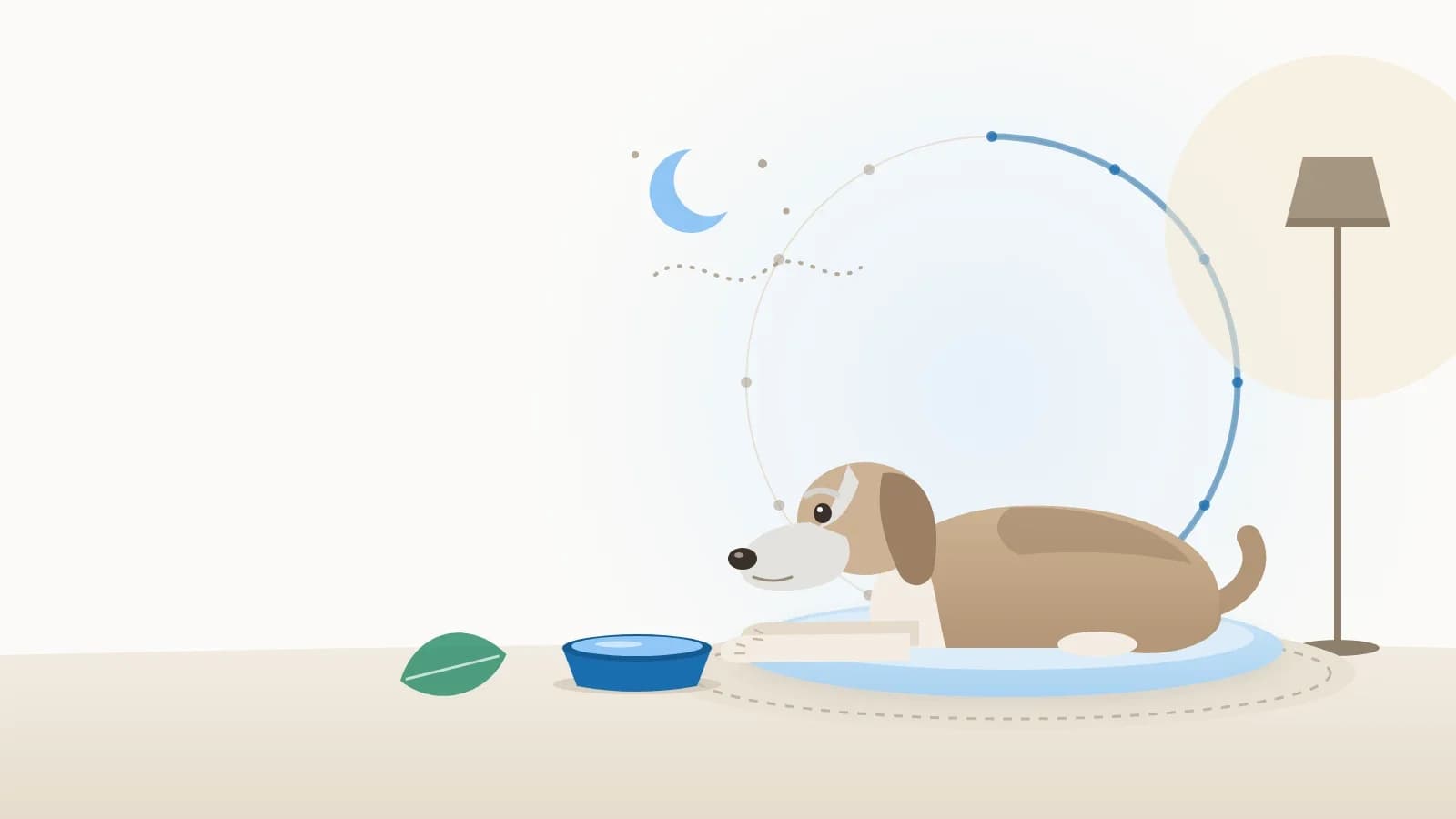
Senior Dog Care Guide: A Checklist for Joints, Behaviour Changes and the Heart
What might night-time restlessness, disorientation, coughing and tiring quickly mean in an older dog? What should you watch at home, and when should you see your veterinary surgeon? A practical guide that looks at three body systems together.
Short answer: In an older dog, the joints, brain and heart change during the same period. Night-time restlessness, disorientation, coughing and tiring quickly can be signs of these changes. Keep track of them at home with a regular checklist and keep up six-monthly examinations. A diagnosis of heart disease or cognitive dysfunction is made by your veterinary surgeon.
Your dog may not get up as quickly as before, may wander round the house at night or may stop halfway through a walk. It is easy to put this down to "getting old". But old age is not a disease, and many problems that become common with age are much easier to manage when they are noticed early. The difficulty is that joint pain, brain ageing and heart problems produce similar signs. In this article we look at the three systems side by side, give you a checklist to use at home and explain when to call your vet without delay.
When is a dog considered "senior"?
There is no single age limit. The American Animal Hospital Association (AAHA) life stage guidelines consider a dog senior once it enters the last quarter of its estimated lifespan. This varies with breed and body size: large breeds generally age earlier and small breeds later. Deciding with your vet which stage your dog is in, and what monitoring plan suits it, is the best place to start.
What changes in the ageing body?
Joints: how does cartilage change with age?
Joint cartilage is a flexible tissue that covers the ends of the bones, holds water and spreads load. It gets its springiness from large molecules called proteoglycans, which sit within a network of collagen. These molecules hold water and give cartilage its cushioning quality. With age, the renewal capacity of cartilage cells (chondrocytes) declines, the matrix's ability to hold water changes and the tissue becomes more vulnerable to load. Joint fluid may also become less slippery. In some dogs this process sets the scene for osteoarthritis. In a large UK study based on primary-care veterinary records, being over eight years old and being overweight were among the factors associated with an osteoarthritis diagnosis (Anderson et al., 2018). The loss of muscle mass that comes with age also increases the load the joints carry.
Brain: why does cognitive change happen?
The canine brain ages too. Research has shown that the brains of older dogs show increased oxidative damage, possible loss of nerve cells in regions linked to learning and memory, changes in the brain's blood vessels and deposits of a protein called beta-amyloid (Head, 2011). Some of the chemical messenger systems that carry signals between nerve cells also weaken with age. In some dogs these changes lead to a picture called canine cognitive dysfunction. Its signs are summarised by the acronym DISHAA: disorientation, changes in social interaction, disturbed sleep-wake cycles, house soiling, changes in activity and anxiety (Landsberg et al., 2012). However, every one of these signs can also come from other causes such as pain, loss of sight or hearing, or kidney or hormonal disease. That is why a diagnosis of cognitive dysfunction is made by a veterinary surgeon once other causes have been ruled out.
Heart: what changes in the heart with age?
The most common heart problem in older dogs is a thickening of the mitral valve over time so that it no longer closes fully (myxomatous mitral valve disease), allowing some blood to leak backwards. It is especially common in small breeds. In large breeds, cardiomyopathy, in which the heart muscle weakens, is seen more often. In valve disease, most dogs have a heart murmur that can be heard years before any signs of heart failure appear (Keene et al., 2019). As the load on the heart increases, the body compensates for a while; when compensation is no longer enough, fluid can build up in the lungs. At this stage the breathing rate at rest rises, the dog tires quickly and a cough may appear. Heart disease is diagnosed and staged by your vet through listening to the chest, imaging and, where needed, blood tests.
Which signs should you watch for at home? A checklist
Go through the list below once a month. Note any item that is new or getting worse, and take your notes to the appointment. Knowing when a change started makes your vet's job much easier.
Movement and joints
- Does your dog struggle to lie down or get up, or pause before standing?
- Does it avoid stairs, getting into the car or onto the sofa?
- Have walks become shorter, or does it lag behind?
- Does it dislike being touched in a particular spot, or lick one area often?
- Is it uneasy on slippery floors?
Behaviour and mind
- Does it get lost in a familiar room, or get stuck in corners or on the wrong side of a door?
- Has its interest in the family dropped, or, the opposite, does it not want to leave your side?
- Does it sleep a lot during the day and become restless at night?
- Are there accidents indoors despite house training?
- Is there aimless wandering, staring into space or barking for no reason?
- Have new anxieties developed (being left alone, noises, the dark)?
Heart and breathing
- Is there a cough, and does it get worse at night, in the morning or when lying down?
- Is its breathing faster than usual when asleep or resting?
- Does it tire quickly on walks and need frequent breaks?
- Has it fainted or collapsed briefly?
- Is there swelling of the belly or an unexplained change in weight?
General condition
- Has its appetite, water intake or amount of urine changed?
- Has it gained or lost weight; is there visible muscle loss over the back and hips?
- Have you noticed any decline in sight or hearing?
- Is there bad breath or difficulty chewing?
In dogs with heart disease, or dogs being monitored for it, your vet may ask you to count your dog's breaths per minute at home while it sleeps. This simple measurement gives valuable information for home monitoring (Ohad et al., 2013). Your vet will tell you which number is a warning sign for your dog.
Why is an older dog restless at night?
Night-time restlessness is where the three systems on the checklist meet. The main reasons an older dog may not sleep at night are:
- Pain: a dog with joint pain cannot find a comfortable position and keeps getting up and moving.
- Cognitive change: the sleep-wake cycle is disrupted; the dog may wander aimlessly at night, bark or seem unsettled.
- Heart and breathing: breathing difficulty linked to heart failure can get worse when lying down; the dog may try to rest sitting up or with its head raised.
- Need to urinate: drinking more can be a sign of kidney, hormonal or urinary problems.
- Sensory loss: a dog whose sight and hearing are fading may be more anxious in the dark.
More than one of these causes can be present at the same time. Do not dismiss night-time restlessness as "just old age". Describe it to your vet so the cause can be found; any decision about sedatives or pain relief belongs to your vet alone.
Are coughing and tiring quickly always heart-related?
No. In an older dog, a cough can come from heart disease, but also from problems with the windpipe or bronchi, lung disease or infection. In small breeds especially, heart valve disease and airway problems can occur in the same dog. Tiring quickly can also come from joint pain, muscle loss, anaemia, hormonal disease or excess weight as well as from the heart. It is not possible to tell at home where a sign is coming from. Your vet makes that distinction by listening to the chest, imaging and laboratory tests.
What happens at a six-monthly check-up?
Check-ups become more frequent as dogs age. An examination every six months is a common and sensible approach, but your vet will set the interval according to your dog's condition. The AAHA guidelines recommend assessing weight and body condition, asking about pain and mobility, discussing behaviour changes and running age-appropriate laboratory screening at each visit (Creevy et al., 2019). A typical senior dog check-up may include:
- Assessment of weight, body condition and muscle condition
- Listening to the heart and lungs, with further imaging if a murmur is heard
- Joint examination and pain assessment
- Questions about behaviour and cognitive changes (this is where your checklist helps)
- Blood and urine tests, and blood pressure measurement if needed
- Mouth and dental examination, plus eye and ear checks
- A review of all medicines and complementary feeds in use
When should you see a veterinary surgeon?
Contact your vet the same day, without waiting, if you notice:
- Clearly fast or laboured breathing at rest, open-mouth breathing, or a bluish tongue or gums
- Fainting, collapse or being unable to stand
- A cough that will not stop, or a cough together with breathlessness
- Swelling of the belly that develops quickly
- Sudden loss of balance, head tilt, flickering eye movements or a seizure
- Not putting any weight on a leg, or signs of severe pain
Book an appointment soon if you notice:
- A new or more frequent cough
- Steadily increasing tiredness on walks
- Night-time restlessness, disorientation or new accidents indoors
- Difficulty getting up, or avoiding stairs
- Changes in appetite, water intake or weight
Both a diagnosis of heart disease and a diagnosis of cognitive dysfunction are made by your veterinary surgeon, once other causes have been ruled out. What you observe at home is the most valuable help in that process.
How can you support daily life at home?
- Floors and access: lay rugs or non-slip mats on slippery floors. Use a ramp for the sofa and car. Place water and food bowls where they are easy to reach.
- Controlled movement: choose short, frequent walks over long, tiring ones. Discuss how intense exercise should be with your vet.
- Weight control: excess weight puts strain on the joints and the heart. Ask your vet for help with the amount and type of food.
- Mental stimulation: sniffing games, food puzzles, short training sessions and new walking routes contribute to keeping the brain active.
- Routine and night-time: fixed times for meals, walks and sleep give a dog going through cognitive change a sense of security. A soft night light can make it easier to find its way.
- A comfortable bed: a warm, supportive bed with a low edge makes it easier for a dog with sore joints to rest.
Which complementary feeds can support nervous system, joint and heart function?
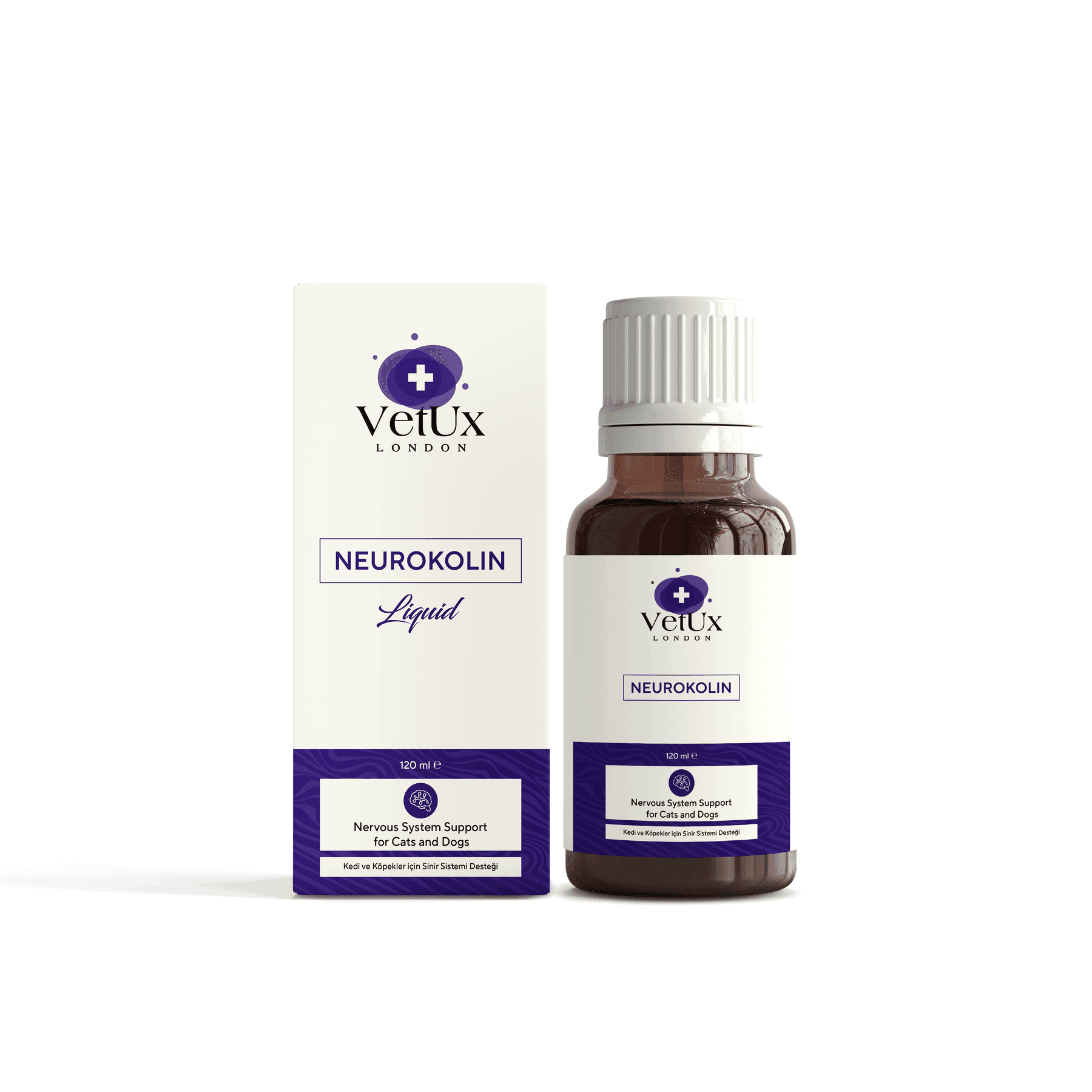
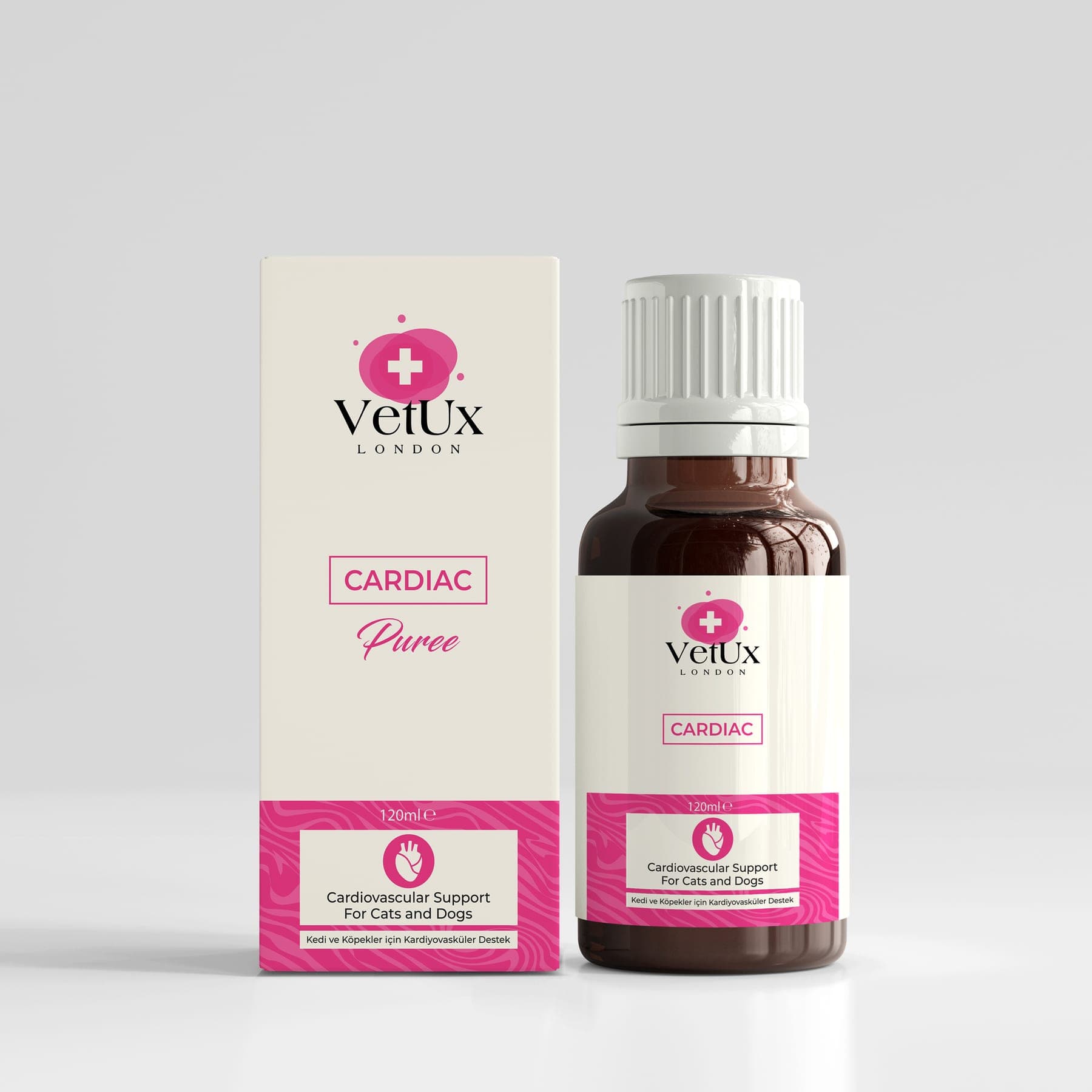
In an older dog's care plan, complementary feeds can be an option that accompanies the care your vet recommends. Neurokolin is a liquid complementary feed containing ginkgo biloba extract and vitamins B6 and B12 that helps maintain the normal function of the nervous system. Comfyrun Maxi is a complementary feed in tablet form that brings together glucosamine sulphate, chondroitin sulphate, MSM, type II collagen, hyaluronic acid, boswellia serrata and turmeric extracts, and vitamins C and D3, to help maintain joint health and comfortable movement. Cardiac is a liquid complementary feed containing L-carnitine, taurine, krill oil, hawthorn berry extract and vitamin E that helps maintain normal heart function and vascular health. These products do not take the place of diagnosis or treatment. Cardiac is not used in place of heart medication; for a dog on heart medication, every decision about a supplement should be made with your vet. Before starting products containing botanical extracts such as ginkgo or hawthorn, tell your vet, especially if your dog takes regular medication or surgery is planned. Your veterinary surgeon will decide which product suits your dog and how it should be used.
Frequently asked questions
My dog wanders around the house at night and is restless. Is this a normal part of ageing? No. Night-time restlessness is a change that should always be assessed. Pain, cognitive change, heart and breathing problems or a greater need to urinate can all be behind it, and your vet will tell them apart. Note when it started and how often it happens, and bring this to the appointment.
How can I tell if my older dog has dementia (cognitive dysfunction)? Disorientation, changes in how it interacts with the family, disturbed sleep, accidents indoors, changes in activity and anxiety are typical signs. However, pain, loss of sight or hearing, or other diseases can cause the same signs. A diagnosis of cognitive dysfunction is made by your veterinary surgeon after other causes have been ruled out.
My older dog is coughing. Does it have heart disease? It might, but the heart is not the only cause. Problems with the windpipe, bronchi and lungs also cause coughing, and in some dogs these occur alongside heart valve disease. Your vet will find the source of the cough by listening to the chest and imaging. If the cough comes with fast breathing or fainting, contact your vet the same day.
How often should an older dog have a check-up? Check-ups become more frequent in older dogs, and an examination every six months is a common, sensible approach. Your vet may want to see a dog with a chronic condition, or one on medication, more often. Your veterinary surgeon will set the interval according to your dog's condition.
Can I give a complementary feed to my dog on heart medication? Only your vet can make that decision. Complementary feeds do not replace heart medication, and some botanical ingredients need to be considered alongside medicines. Tell your vet about every product your dog takes at each visit, and never stop a medicine on your own.
What can I do at home for my older dog's joints? Lay rugs on slippery floors, use a ramp for the sofa and car, choose short and frequent walks, and keep its weight under control. If you notice difficulty getting up or limping, see your vet for a pain assessment. Decisions about pain relief, and which one to use, belong to your veterinary surgeon.
Final word
With the right monitoring, the years you share with an older dog can be peaceful for both of you. Watching the joints, behaviour and heart together rather than one at a time lets you notice small changes before they grow. Fill in the checklist regularly, keep up the six-monthly examinations and talk to your veterinary surgeon about every new change you notice in your dog.
References
- 1Creevy KE, Grady J, Little SE, et al. 2019 AAHA Canine Life Stage Guidelines. J Am Anim Hosp Assoc. 2019;55(6):267–290. doi:10.5326/JAAHA-MS-6999
- 2Keene BW, Atkins CE, Bonagura JD, et al. ACVIM consensus guidelines for the diagnosis and treatment of myxomatous mitral valve disease in dogs. J Vet Intern Med. 2019;33(3):1127–1140. doi:10.1111/jvim.15488
- 3Landsberg GM, Nichol J, Araujo JA. Cognitive dysfunction syndrome: a disease of canine and feline brain aging. Vet Clin North Am Small Anim Pract. 2012;42(4):749–768. doi:10.1016/j.cvsm.2012.04.003
- 4Head E. Neurobiology of the aging dog. Age (Dordr). 2011;33(3):485–496. doi:10.1007/s11357-010-9183-3
- 5Ohad DG, Rishniw M, Ljungvall I, Porciello F, Häggström J. Sleeping and resting respiratory rates in dogs with subclinical heart disease. J Am Vet Med Assoc. 2013;243(6):839–843. doi:10.2460/javma.243.6.839
- 6Anderson KL, O'Neill DG, Brodbelt DC, et al. Prevalence, duration and risk factors for appendicular osteoarthritis in a UK dog population under primary veterinary care. Sci Rep. 2018;8:5641. doi:10.1038/s41598-018-23940-z
Frequently asked questions
My dog wanders around the house at night and is restless. Is this a normal part of ageing?
No. Night-time restlessness is a change that should always be assessed. Pain, cognitive change, heart and breathing problems or a greater need to urinate can all be behind it, and your vet will tell them apart. Note when it started and how often it happens, and bring this to the appointment.
How can I tell if my older dog has dementia (cognitive dysfunction)?
Disorientation, changes in how it interacts with the family, disturbed sleep, accidents indoors, changes in activity and anxiety are typical signs. However, pain, loss of sight or hearing, or other diseases can cause the same signs. A diagnosis of cognitive dysfunction is made by your veterinary surgeon after other causes have been ruled out.
My older dog is coughing. Does it have heart disease?
It might, but the heart is not the only cause. Problems with the windpipe, bronchi and lungs also cause coughing, and in some dogs these occur alongside heart valve disease. Your vet will find the source of the cough by listening to the chest and imaging. If the cough comes with fast breathing or fainting, contact your vet the same day.
How often should an older dog have a check-up?
Check-ups become more frequent in older dogs, and an examination every six months is a common, sensible approach. Your vet may want to see a dog with a chronic condition, or one on medication, more often. Your veterinary surgeon will set the interval according to your dog's condition.
Can I give a complementary feed to my dog on heart medication?
Only your vet can make that decision. Complementary feeds do not replace heart medication, and some botanical ingredients need to be considered alongside medicines. Tell your vet about every product your dog takes at each visit, and never stop a medicine on your own.
What can I do at home for my older dog's joints?
Lay rugs on slippery floors, use a ramp for the sofa and car, choose short and frequent walks, and keep its weight under control. If you notice difficulty getting up or limping, see your vet for a pain assessment. Decisions about pain relief, and which one to use, belong to your veterinary surgeon.
This article is for general information only; it does not replace veterinary examination, diagnosis or treatment. VetUx London products are complementary feed. If you have any concern about your companion, please consult your veterinary surgeon.
Share
The formulas matching the nutritional support described above.

Related articles
All articles Clinical Notes
Itching and Sensitive Skin in Cats: Parasites, Food Sensitivity and the Skin Barrier
Why is my cat itchy, could it still be fleas if I can't see any, and how is food sensitivity identified? The causes of itching in cats, the skin barrier and the itch cycle, why an elimination diet is done with your vet and when to seek veterinary care.
 Clinical Notes
Fatty Liver in Cats (Hepatic Lipidosis): Why Is a Loss of Appetite Dangerous?
Why does a cat's liver fill with fat when it stops eating for a day or two, why are overweight cats more at risk, and when should you see a veterinary surgeon? The physiology of hepatic lipidosis, its signs and the principles of safe weight loss.
 Clinical Notes
How to Choose a Dog Joint Supplement: Glucosamine, Chondroitin and What to Check on the Label
Which amounts, glucosamine form and weight-based usage information should you check on the label when choosing a joint supplement for your dog? The role of glucosamine and chondroitin in cartilage, the strength of the evidence, how long to wait before judging results, and why dogs on medication need vet approval.