
Itching and Sensitive Skin in Cats: Parasites, Food Sensitivity and the Skin Barrier
Why is my cat itchy, could it still be fleas if I can't see any, and how is food sensitivity identified? The causes of itching in cats, the skin barrier and the itch cycle, why an elimination diet is done with your vet and when to seek veterinary care.
Short answer: Fleas are the most common cause of itching in cats; even when no fleas are seen, flea control is considered first. Once fleas are ruled out, food sensitivity, environmental allergies, mites and ringworm are investigated. Food sensitivity can only be identified through a vet-planned elimination diet. Nutrition can support the skin barrier; diagnosis and treatment belong to your vet.
Cats often itch quietly. Rather than scratching in front of you as a dog might, a cat tends to lick itself out of sight, and the first thing an owner notices is usually thinning fur on the belly, small scabs felt on the neck or more frequent hairballs. In this article we explain how to recognise itching in a cat, why fleas are the first suspect, how food sensitivity is investigated, the cycle linking the skin barrier and itching, and when you should see your veterinary surgeon.
How can you tell that a cat is itchy?
Cats are fastidious animals and spend a large part of their day grooming. This makes it hard to tell normal grooming from excessive licking caused by itching. These signs suggest itching:
- Excessive licking and fur pulling: The cat licks the same area for long periods and often, and pulls fur out with its teeth. It often does this while you are not around.
- Bald or thinning areas: Especially on the belly, inner thighs, flanks and the inside of the front legs. In these areas the fur may look broken and short rather than shed.
- Small scabs: When you stroke the back or neck you may feel small, hard scabs like grains of millet under your fingertips.
- Scratching the head and neck: The cat frequently scratches its face, behind its ears or its neck with a back foot.
- Ear-related signs: Frequent ear scratching, head shaking or dark debris inside the ears.
- Indirect clues: More frequent hairball vomiting, fur in the faeces, restlessness and changes in sleep pattern.
To understand whether fur loss is linked to itching or to another cause, see our article on hair loss in cats, and for when hairball vomiting may point to another problem, our article on vomiting in cats.
What most often causes itching in cats?
Itching in cats has no single cause; the same picture can arise from different problems, and sometimes more than one cause is present at once. Multicentre studies of hypersensitivity-related skin disease in cats place flea hypersensitivity among the most common causes. The main causes are:
- Fleas and flea bite hypersensitivity: The most common cause of itching in cats.
- Other external parasites: Such as ear mites, skin mites and mites that cause a scurfy, dandruff-like coat.
- Food sensitivity (adverse food reaction): Hypersensitivity to an ingredient in the diet, most often a protein.
- Environmental allergies: Hypersensitivity to environmental substances such as house dust mites, pollens and moulds. In current veterinary dermatology literature this picture is called "feline atopic skin syndrome".
- Fungal infection (ringworm, dermatophytosis): May appear as round bald patches and scaling; it matters because it can spread to people and other animals.
- Secondary bacterial and yeast overgrowth: Develops later on itchy, damaged skin and can make itching worse.
- Stress and behavioural causes: Some cats under stress may over-groom. However, this is only considered once other causes have been ruled out. We cover the effects of stress in cats in our article on environmental stress.
It is not possible to tell these causes apart at home from the signs alone. Your veterinary surgeon makes the diagnosis through examination and tests.
Why are fleas the first suspect?
Fleas are the cause your veterinary surgeon will want to rule out first when investigating itching in a cat. There are several important reasons:
- A single bite can be enough. In cats that are hypersensitive to fleas, the problem is less the flea itself than the immune reaction to substances in its saliva. In these cats even a few fleas can trigger intense itching.
- Not seeing fleas does not mean there are none. Cats can lick up and swallow fleas while grooming, so often not a single flea is seen on an itchy cat.
- Indoor cats can get fleas too. Fleas can come into the home on other animals, on people's clothes and shoes, or via a balcony or garden. If there is a dog in the home, fleas can become a problem for the cat as well.
- Most fleas live in the environment, not on the cat. The egg, larva and pupa stages develop in carpets, cat beds, between sofa cushions and along skirting boards. Focusing only on the cat is therefore often not enough; all the animals in the home and the living space are dealt with together.
You can do a simple check at home: if you comb your cat over a white, slightly damp paper towel and the black specks that fall leave a reddish-brown smear, this may be flea dirt. However, not seeing a smear does not rule fleas out; always share the result with your veterinary surgeon.
Important safety warning: Never use flea products made for dogs on your cat. Substances found in some dog products, such as permethrin, are toxic to cats and can cause serious nervous system signs. Your veterinary surgeon decides which parasite product is used, and how often, for your cat and the other animals in your home.
What is the skin barrier and how does the itch cycle work?
This section describes general physiology. Only your veterinary surgeon can assess your own cat's skin, through examination and, where needed, tests.
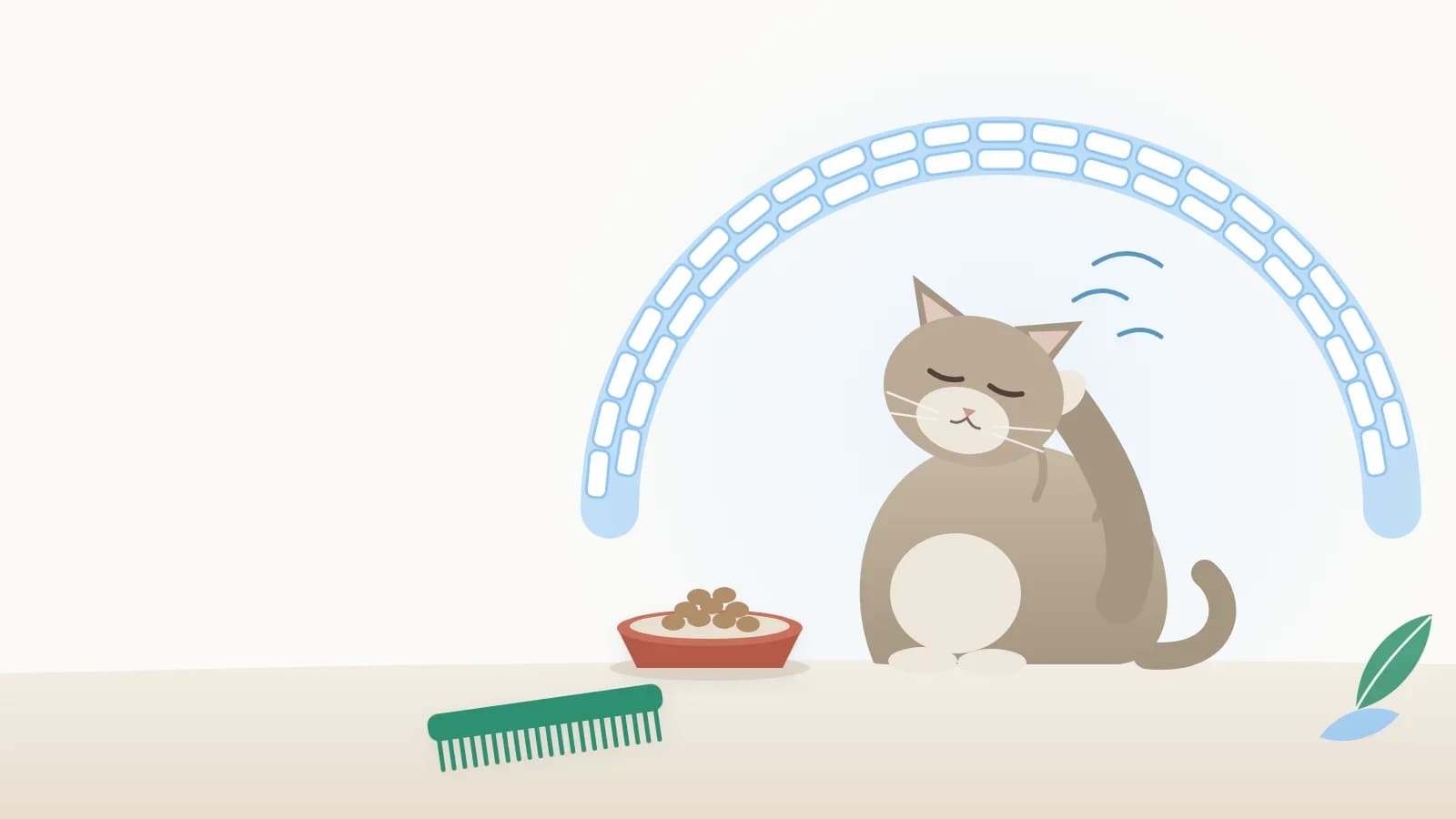
The outermost layer of the skin, the stratum corneum, can be compared to a wall. The bricks are dead, flattened skin cells (corneocytes). The mortar is the fats that fill the spaces between them: orderly layers made up mainly of ceramides, together with cholesterol and free fatty acids. The oily secretion covering the skin surface (sebum) and the coat complete this wall from the outside. A healthy barrier does two basic jobs: it limits the escape of water from the skin, and it makes it harder for irritants, allergens and microbes from outside to get into the skin.
In general terms the itch cycle progresses through these steps:
- 1A trigger: Flea saliva, a food protein or an environmental allergen activates the immune system in a hypersensitive cat.
- 2Signalling molecules are released. Mast cells and other immune cells in the skin release substances such as histamine and messenger molecules called interleukins. These stimulate the fine nerve endings in the skin, and an "itch" signal travels to the brain.
- 3The cat scratches and licks. Scratching, licking and fur pulling mechanically disrupt the structure of the stratum corneum.
- 4The barrier weakens. The mortar layer opens up, water loss from the skin increases, and allergens and microbes reach the skin more easily.
- 5The cycle feeds itself. Bacteria and yeasts multiply more easily on weakened skin, the inflammatory response increases and itching intensifies. This creates a vicious circle of "itch, scratching, barrier damage and more itch".
This cycle has two important consequences. First, the way to break it for good is to find the underlying cause; efforts aimed only at suppressing the itch will not give a lasting result unless the cause is removed. Second, the building blocks of the skin barrier come from the diet, so balanced nutrition plays an important part in maintaining a healthy skin barrier.
Can food sensitivity cause itching?
Yes, it can. Adverse reactions to food are among the causes of itching in cats and are most often linked to the immune system overreacting to a protein in the diet. There are a few points worth knowing:
- The problem is usually not a new protein but one eaten for a long time. Hypersensitivity develops over time; a cat can show signs after eating the same food without problems for years.
- The sources most commonly reported in cats are beef, fish and chicken. This does not mean these proteins are bad; because they are the proteins most used in cat food, they are also the triggers most often encountered.
- Signs may not be limited to the skin. Itching, particularly around the head and neck, may be accompanied in some cats by vomiting, more frequent bowel movements or soft faeces.
- It can start at any age and can produce itching that continues all year round, independent of the seasons.
- Blood, hair or saliva tests are not reliable. Scientific reviews show that there is no blood, hair or saliva test that correctly identifies food sensitivity in dogs and cats. The only valid method today is an elimination diet planned by your vet, followed by a re-challenge test.
What is an elimination diet and why is it done with your vet?
An elimination diet is a diagnostic method used to find out whether food plays a part in a cat's itching. It is not a brand of food but a process carried out under veterinary supervision, with specific rules.
- The food is chosen according to the cat's history. Your vet finds out every food the cat has eaten before and, on that basis, chooses either a food based on a protein source the cat has never encountered or a food whose proteins have been broken down into fragments small enough to make them hard for the immune system to recognise (hydrolysed). In some cases a home-prepared diet planned by the vet may be used.
- The rules are strict. Throughout the process the cat receives only the food the vet has specified. Treats, food from the table, other pets' food, flavoured medicines and complementary feeds not approved by the vet are not given. For cats that go outdoors and hunt, this is taken into account too. Even a small exception can invalidate the result.
- It takes time. The assessment takes weeks, not days. Scientific reviews suggest a period of at least eight weeks to see the result in most cats. Your veterinary surgeon decides how long it should be, based on your cat's situation.
- Improvement alone does not make a diagnosis. When the itching eases, the vet often plans a controlled return to the old food (a re-challenge test). If the signs come back, the diagnosis of food sensitivity is strengthened; the protein causing the problem can then be identified step by step.
There are reasons not to run an elimination diet on your own at home. Shop-bought foods and products labelled "sensitive" can contain traces of protein not declared on the label; scientific reviews have shown that mismatches can exist between the contents of commercial pet foods and what the label declares. Random, frequent changes of food also make it harder to work out which food is causing the problem, introduce the cat to new proteins unnecessarily and delay a correct diagnosis. Which food is used for an elimination diet, for how long and how it is carried out are entirely your veterinary surgeon's decisions.
When should you see a veterinary surgeon?
Itching is uncomfortable for your cat and its cause should be investigated.
- If itching or excessive licking lasts more than a few days, keeps coming back or affects your cat's sleep, appetite and behaviour, book an appointment.
- If you notice bald patches, scabs, scaling or ear scratching, show them to your vet.
- If people or other animals in the home also have itchy skin changes, be sure to tell your vet; some causes, such as fleas and ringworm, are contagious. People with symptoms should also contact a healthcare provider.
- Seek care without delay if you see: the cat scratching itself enough to cause injury, open or weeping areas, bleeding, swelling, a bad smell, a head tilt or balance problems, loss of appetite and lethargy, or heavy flea numbers on a kitten or an elderly cat.
- If trembling, muscle twitching, drooling or seizures appear after a dog flea product has been applied, this is an emergency; take your cat to the vet immediately.
Before the visit, note when the itching started, whether it changes with the seasons, every food and treat your cat eats, any recent changes of food, the parasite products you use and when they were applied, and whether there are other animals in the home. Photos of the itchy areas also help your vet.
What approach will your veterinary surgeon take?
Finding the cause of itching is often a step-by-step process that takes patience. Your veterinary surgeon begins with an examination and, where needed, may use tests such as combing with a flea comb, skin scrapings, taking samples from the skin surface to examine under the microscope, examining hairs, fungal culture and an ear examination.
The general approach is to start with the most common causes and those easiest to rule out. For this reason, in most cats the first step is regular, effective parasite control set by the vet and covering every animal in the home. If the itching continues despite this, and other parasites and ringworm have been ruled out, the vet may plan an elimination diet. Environmental allergy is a diagnosis made once other causes have been excluded. Which medicines are used to ease itching and deal with secondary infections, and for how long, are also your veterinary surgeon's decisions alone.
Do not use allergy medicines made for people, steroid creams or mixtures suggested online on your own initiative. These products may not be suitable for cats, can be swallowed when the cat licks itself and can make it harder for your vet to reach a diagnosis.
How can you care for sensitive skin at home?
While diagnosis and treatment are in your vet's hands, there are things you can do at home:
- Keep up parasite control: Apply the programme your vet recommends regularly for every cat and dog in the home.
- Keep the environment clean: Wash cat beds and blankets regularly, vacuum carpets and sofas often, and empty the vacuum bag or canister outside the home.
- Gentle grooming: Regular combing with a soft comb reduces hairballs and helps you keep an eye on the skin. Do not use human shampoos or skin products your vet has not recommended.
- Avoid essential oils: Some essential oils, tea tree oil in particular, can be toxic to cats; do not apply them to your cat's skin or coat.
- Do not change food at random: Plan any change of diet with your vet, and follow the rules fully during an elimination diet.
- Reduce stress: Hiding places, regular play sessions and a predictable home routine contribute to your cat's overall comfort.
- Keep an itch diary: Note the intensity of itching, any new bald areas and every change in diet, with dates. These records make it easier for your vet to assess progress.
How can nutrition support the skin barrier?
The skin is one of the body's largest organs and is constantly renewed; the building blocks needed for this renewal come from the diet. Good-quality protein is the main raw material of skin cells and hair. Linoleic acid, an omega-6 fatty acid, forms part of the structure of the mortar in the stratum corneum, the ceramides, and plays a role in protecting the skin against water loss. Unlike many other species, cats cannot make enough of certain fatty acids in the body, so they also need to obtain arachidonic acid from their food. Omega-3 fatty acids are built into the structure of cell membranes. Zinc is involved in the maturation of skin cells and biotin in fatty acid metabolism, while vitamin E, as a fat-soluble vitamin, is associated with the fats in cell membranes. A balanced, complete diet is the foundation for meeting these needs; however, nutritional support is not enough on its own unless the cause of the itching is found and addressed.
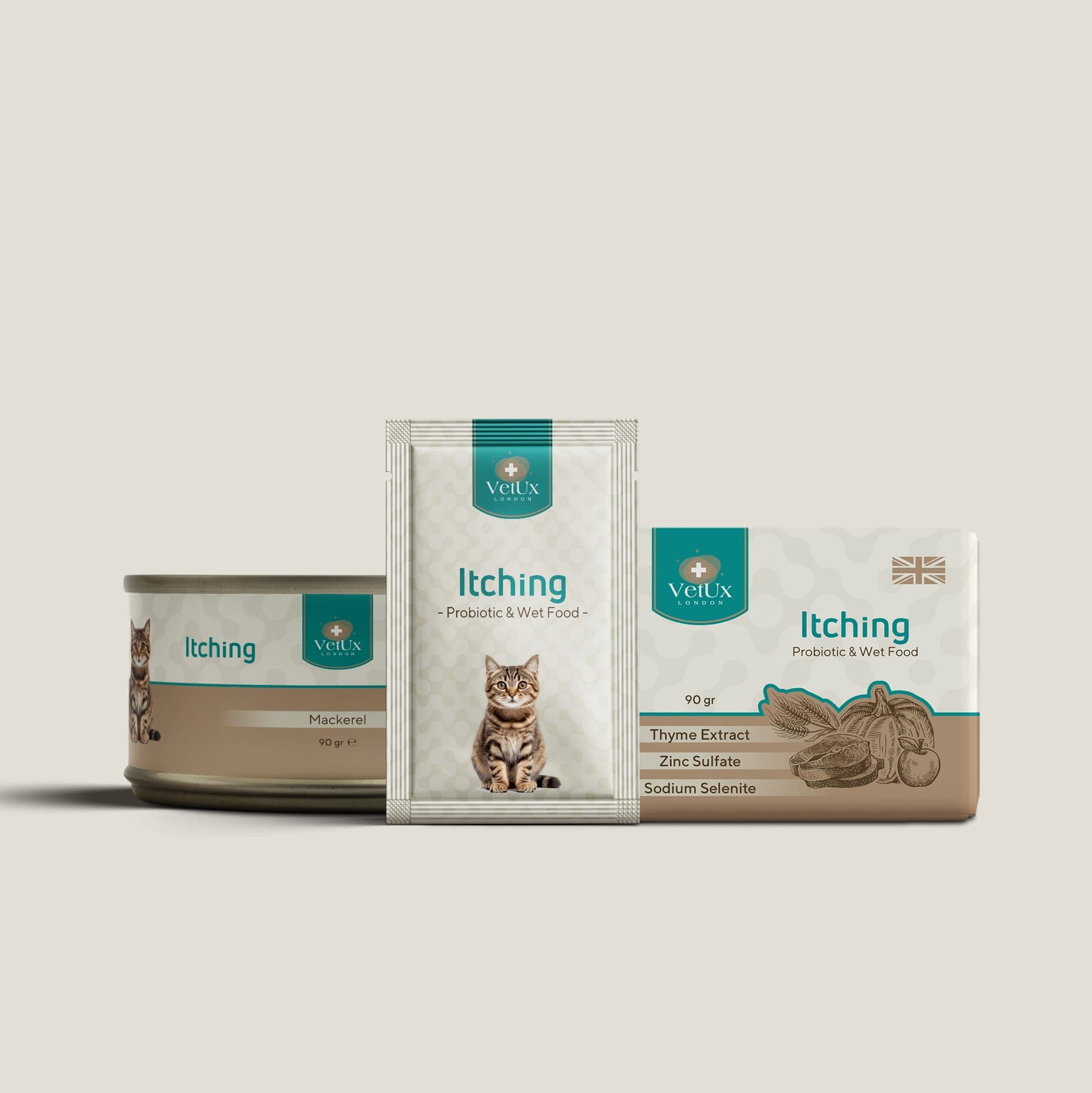
Through periods when skin and coat health need extra attention, and if your veterinary surgeon considers it appropriate, Elixir of Itching can accompany your cat's feeding routine. Elixir of Itching is a complementary feed for cats with sensitive skin, made up of a probiotic wet food and sachet combination prepared on a hydrolysed protein base; its mackerel-based, gluten-free recipe brings together hydrolysed protein, reishi mushroom (Ganoderma lucidum), thyme extract (Thymus vulgaris), probiotic cultures, omega-3 and omega-6 fatty acids, gluten-free carbohydrate sources, zinc, vitamin E, biotin and taurine, and its omega-3 and omega-6 fatty acids contribute to maintaining a normal skin barrier and the natural shine of the coat. Elixir of Itching does not replace an elimination diet, allergy treatment or parasite control; because it contains mackerel, that is, fish, whether it is used in a cat on an elimination diet or a cat suspected of being sensitive to fish, and your cat's feeding plan as a whole, are decided only by your veterinary surgeon.
Frequently asked questions
I never see any fleas on my cat. Could fleas still be the cause of the itching? Yes. Because cats can lick up and swallow fleas while grooming, fleas are often not seen on an itchy cat. In cats that are hypersensitive to fleas, even a few bites can trigger itching. This is why your vet will want to rule out fleas first, even when none are seen.
Can a cat that never goes outside get fleas? Yes. Fleas can come into the home on other animals, on clothes and shoes or via a balcony, and they complete most of their development in places such as carpets, beds and sofas. Your veterinary surgeon sets the right parasite programme for every animal in the home.
Can I find out whether my cat has a food sensitivity by changing its food myself? No. An elimination diet is a diagnostic method with strict rules that usually lasts for weeks and ends with a re-challenge test. Choosing the food, the duration and interpreting the results belong to your veterinary surgeon. Random changes of food make diagnosis harder and slower.
Can a food allergy be detected with a blood test or a hair test? According to scientific reviews, there is no blood, hair or saliva test that reliably shows food sensitivity in dogs and cats. The valid method is an elimination diet planned by your vet, followed by a re-challenge test.
Can I use my dog's flea product on my cat? Absolutely not. Substances in some dog flea products, such as permethrin, are toxic to cats and can cause serious signs. Only use products made for cats and recommended by your veterinary surgeon. If trembling or seizures appear after application, contact your vet immediately.
Do complementary feeds that support the skin barrier remove the cause of itching? No. Complementary feeds can make a nutritional contribution to maintaining a normal skin barrier, but the diagnosis and treatment of causes such as fleas, food sensitivity or environmental allergy are carried out by your veterinary surgeon. During an elimination diet, consult your vet before giving any additional feed.
Final word
Itching in cats often starts quietly and can go unnoticed. Regular parasite control, thinking of fleas even when none are seen, making changes of food according to a vet's plan rather than at random, and supporting the skin barrier with balanced nutrition are the basic steps for the comfort of cats with sensitive skin. Finding the cause of itching is a process; for every decision about diagnosis, elimination diets, treatment and feeding, consult your veterinary surgeon.
References
- 1Hobi S, Linek M, Marignac G, et al. Clinical characteristics and causes of pruritus in cats: a multicentre study on feline hypersensitivity-associated dermatoses. Veterinary Dermatology. 2011;22(5):406-413. doi:10.1111/j.1365-3164.2011.00962.x
- 2Halliwell R, Pucheu-Haston CM, Olivry T, et al. Feline allergic diseases: introduction and proposed nomenclature. Veterinary Dermatology. 2021;32(1):8-e2. doi:10.1111/vde.12899
- 3Santoro D, Pucheu-Haston CM, Prost C, Mueller RS, Jackson H. Clinical signs and diagnosis of feline atopic syndrome: detailed guidelines for a correct diagnosis. Veterinary Dermatology. 2021;32(1):26-e6. doi:10.1111/vde.12935
- 4Olivry T, Mueller RS, Prélaud P. Critically appraised topic on adverse food reactions of companion animals (1): duration of elimination diets. BMC Veterinary Research. 2015;11:225. doi:10.1186/s12917-015-0541-3
- 5Mueller RS, Olivry T, Prélaud P. Critically appraised topic on adverse food reactions of companion animals (2): common food allergen sources in dogs and cats. BMC Veterinary Research. 2016;12:9. doi:10.1186/s12917-016-0633-8
- 6Mueller RS, Olivry T. Critically appraised topic on adverse food reactions of companion animals (4): can we diagnose adverse food reactions in dogs and cats with in vivo or in vitro tests? BMC Veterinary Research. 2017;13:275. doi:10.1186/s12917-017-1142-0
- 7Olivry T, Mueller RS. Critically appraised topic on adverse food reactions of companion animals (5): discrepancies between ingredients and labeling in commercial pet foods. BMC Veterinary Research. 2018;14:24. doi:10.1186/s12917-018-1346-y
- 8Cave NJ. Hydrolyzed protein diets for dogs and cats. Veterinary Clinics of North America: Small Animal Practice. 2006;36(6):1251-1268. doi:10.1016/j.cvsm.2006.08.008
- 9Rust MK. The biology and ecology of cat fleas and advancements in their pest management: a review. Insects. 2017;8(4):118. doi:10.3390/insects8040118
- 10Moriello KA, Coyner K, Paterson S, Mignon B. Diagnosis and treatment of dermatophytosis in dogs and cats: Clinical Consensus Guidelines of the World Association for Veterinary Dermatology. Veterinary Dermatology. 2017;28(3):266-e68. doi:10.1111/vde.12440
- 11Watson TD. Diet and skin disease in dogs and cats. Journal of Nutrition. 1998;128(12 Suppl):2783S-2789S. doi:10.1093/jn/128.12.2783S
- 12ESCCAP (European Scientific Counsel Companion Animal Parasites). Guideline 03: Control of Ectoparasites in Dogs and Cats. ESCCAP; current edition. www.esccap.org
Frequently asked questions
I never see any fleas on my cat. Could fleas still be the cause of the itching?
Yes. Because cats can lick up and swallow fleas while grooming, fleas are often not seen on an itchy cat. In cats that are hypersensitive to fleas, even a few bites can trigger itching. This is why your vet will want to rule out fleas first, even when none are seen.
Can a cat that never goes outside get fleas?
Yes. Fleas can come into the home on other animals, on clothes and shoes or via a balcony, and they complete most of their development in places such as carpets, beds and sofas. Your veterinary surgeon sets the right parasite programme for every animal in the home.
Can I find out whether my cat has a food sensitivity by changing its food myself?
No. An elimination diet is a diagnostic method with strict rules that usually lasts for weeks and ends with a re-challenge test. Choosing the food, the duration and interpreting the results belong to your veterinary surgeon. Random changes of food make diagnosis harder and slower.
Can a food allergy be detected with a blood test or a hair test?
According to scientific reviews, there is no blood, hair or saliva test that reliably shows food sensitivity in dogs and cats. The valid method is an elimination diet planned by your vet, followed by a re-challenge test.
Can I use my dog's flea product on my cat?
Absolutely not. Substances in some dog flea products, such as permethrin, are toxic to cats and can cause serious signs. Only use products made for cats and recommended by your veterinary surgeon. If trembling or seizures appear after application, contact your vet immediately.
Do complementary feeds that support the skin barrier remove the cause of itching?
No. Complementary feeds can make a nutritional contribution to maintaining a normal skin barrier, but the diagnosis and treatment of causes such as fleas, food sensitivity or environmental allergy are carried out by your veterinary surgeon. During an elimination diet, consult your vet before giving any additional feed.
This article is for general information only; it does not replace veterinary examination, diagnosis or treatment. VetUx London products are complementary feed. If you have any concern about your companion, please consult your veterinary surgeon.
Share
The formulas matching the nutritional support described above.
Related articles
All articles Clinical Notes
Fatty Liver in Cats (Hepatic Lipidosis): Why Is a Loss of Appetite Dangerous?
Why does a cat's liver fill with fat when it stops eating for a day or two, why are overweight cats more at risk, and when should you see a veterinary surgeon? The physiology of hepatic lipidosis, its signs and the principles of safe weight loss.
 Clinical Notes
How to Choose a Dog Joint Supplement: Glucosamine, Chondroitin and What to Check on the Label
Which amounts, glucosamine form and weight-based usage information should you check on the label when choosing a joint supplement for your dog? The role of glucosamine and chondroitin in cartilage, the strength of the evidence, how long to wait before judging results, and why dogs on medication need vet approval.
 Clinical Notes
Vomiting in Cats: Hairball or Something Else?
Is your cat's vomiting a hairball or a sign of something else? What the colour and frequency of vomit tell you, and when to see your vet.