
Shedding in Cats: How to Tell Seasonal Moulting from Problem Hair Loss
Shedding in cats is usually seasonal, but bald patches, redness and itching can point to an underlying cause. This guide explains how to tell the two apart and when to see your veterinary surgeon.
Short answer: Shedding in cats is usually physiological: part of the hair cycle, it becomes more noticeable as day length changes, especially in spring and autumn. If the skin looks healthy and the coat thins evenly, it is most likely seasonal. Bald patches, redness, itching, scabs or excessive grooming signal problem hair loss that needs a veterinary examination.
How does the hair cycle work in cats?
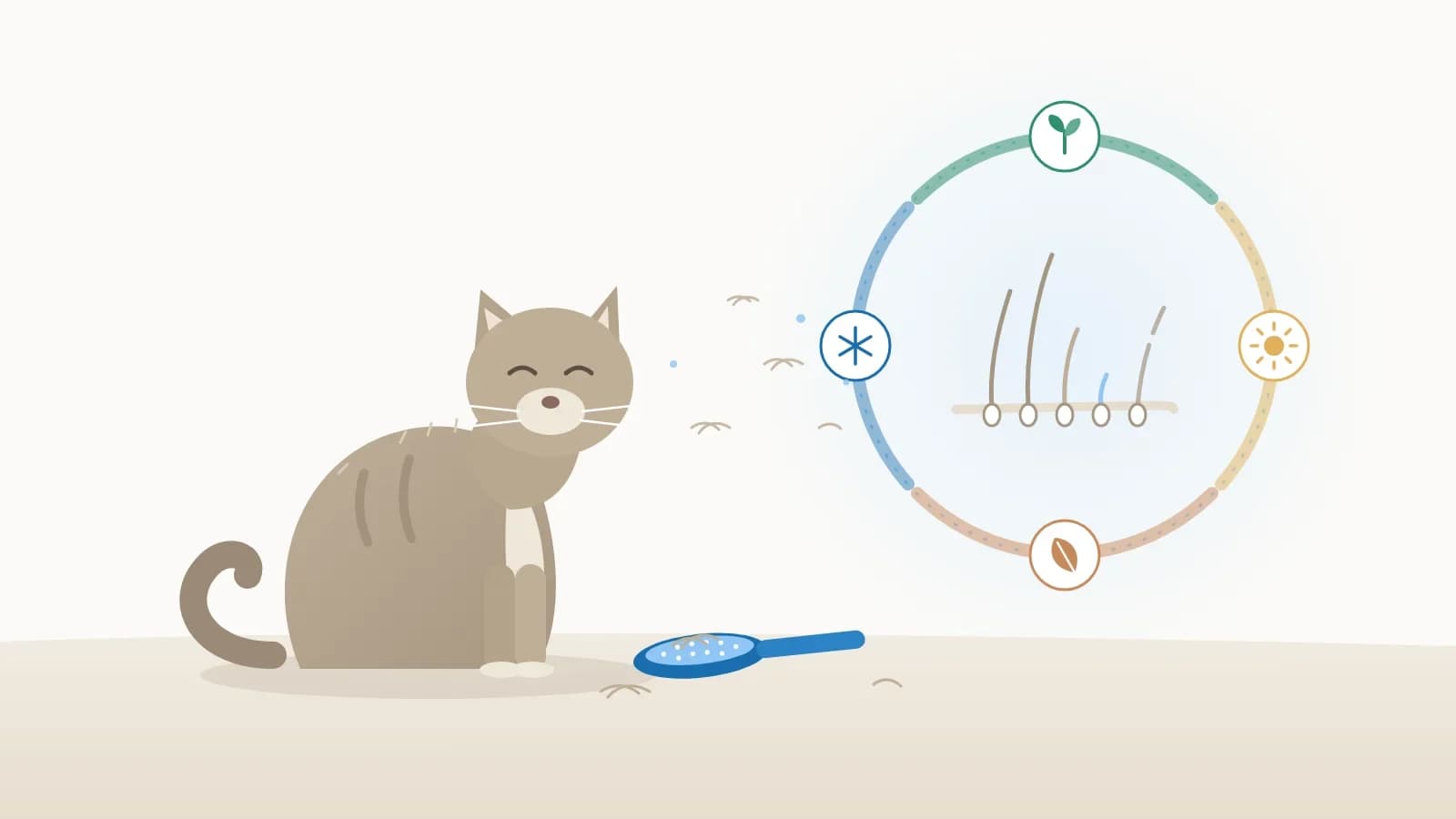
Every hair passes through three phases in its follicle: the growth phase (anagen), in which the hair actively lengthens; a short transition phase (catagen); and the resting phase (telogen), in which the hair stays in place but no longer grows. At the end of the resting phase a new hair comes through from below and the old one is shed. Shedding, in other words, is a natural part of renewal.
In cats this replacement happens in a mosaic pattern: rather than moving across the body in waves, as in rodents, neighbouring follicles change hair at independent times (Baker, 1974). This is why a healthy cat that is shedding has a generally thinner coat but no distinct bald areas. Cat skin also has compound follicles, in which one primary hair and a cluster of fine undercoat hairs emerge from a single opening; it is this dense undercoat that is renewed most during seasonal changes.
Why does seasonal shedding happen, and what does it look like?
Hair growth in cats depends largely on day length (photoperiod). A classic study of feline skin showed that hair-follicle activity falls to its lowest point in mid-winter and picks up again as the days lengthen, and that spring hair loss and regrowth are mainly linked to increasing daylight; neutered cats were reported to follow a similar cycle (Baker, 1974). In practice, many owners notice more shedding in spring, as the winter coat goes, and in autumn, as the summer coat is replaced.
In indoor cats that spend long hours under artificial light, the seasonal boundaries can blur, and shedding may spread across the whole year rather than falling into two distinct periods. On its own, this is not a sign of disease.
Typical features of seasonal shedding:
- Hair is lost evenly across the body; no single area becomes bare.
- The skin underneath is a normal colour, clean and free of scabs.
- The cat does not scratch or groom more than usual.
- Appetite, energy and behaviour are unchanged.
- Brushing removes plenty of dead undercoat; hairballs may be brought up more often during this period.
What causes problem hair loss?
Problem hair loss is not a single disease but a visible sign, on the skin, of an underlying cause. The most common groups in cats are described below.
External parasites
Fleas are among the most common causes of itching and hair loss in cats. In a cat with flea bite hypersensitivity, even a few fleas can cause intense itching, scabs and hair loss, especially over the lower back, the base of the tail and the neck. Ear mites, Cheyletiella and some Demodex species can produce similar pictures. Not seeing fleas on your cat does not mean there are none: cats can remove much of the evidence, fleas and flea dirt included, while grooming. Agree a regular external parasite control schedule with your veterinary surgeon (ESCCAP).
Fungal infection (dermatophytosis)
Dermatophytosis, commonly called ringworm, is seen especially in kittens, long-haired cats and cats living in crowded environments. The classic appearance is round, hairless patches with scaly edges, but signs in cats can vary widely and itching is not always present. Because dermatophytosis can spread to people and other animals, it should be diagnosed by a veterinary surgeon using appropriate tests. The international consensus guideline also stresses that no single test is a gold standard and that results must be interpreted alongside the clinical findings (Moriello et al., 2017).
Allergic skin disease
Cats develop allergic skin disease linked to environmental allergens (such as house dust mites and pollens), to food and to flea bites. In current terminology, the condition associated with environmental allergens is called feline atopic skin syndrome (Halliwell et al., 2021). These cats often show their itch through excessive grooming; symmetrical thinning or bald areas on the belly, inner legs and flanks, and small scabbed lesions on the head and neck, may be seen. Food allergy is diagnosed with an elimination diet carried out under veterinary supervision; changing foods at random at home can make diagnosis harder.
Nutrition
Hair is made almost entirely of protein (keratin), and because it is constantly renewed, skin is one of the body's most nutritionally demanding tissues. Cats fed an inadequate or unbalanced diet, for example a home-prepared ration that has not been properly formulated, may develop a dull, dry, scaly and brittle coat. Protein, essential fatty acids, zinc and the B vitamins stand out among the nutrients important for skin and coat health (Watson, 1998). It is also worth remembering that cats must obtain certain fatty acids (such as arachidonic acid) and vitamin D from their diet.
Hormonal and systemic causes
Coat quality mirrors general health. An overactive thyroid gland (hyperthyroidism), common in older cats, can lead to an unkempt, matted or patchily shedding coat. Diabetes, kidney disease and liver disease can show up as a dull, untidy coat. Adrenal gland disease and skin changes associated with some tumours are rarer, but your vet will keep them in mind, particularly when an older cat suddenly loses hair over wide areas.
Sex hormones are also part of skin physiology. Androgens are linked with sebaceous gland activity; the greasy base of the tail seen in entire male cats is a well-known example. In females, changes in hormonal balance, for instance after spaying, are thought to be reflected in the rhythm of the hair cycle.
A sudden, widespread shed can also appear a few weeks after serious illness, high fever, pregnancy, nursing or anaesthesia (telogen effluvium). Here a large number of follicles enter the resting phase at the same time, so the coat comes away all at once.
Stress and over-grooming
Cats often relieve itching out of their owners' sight, by grooming. That is why the observation "my cat never scratches, but its hair is falling out" can be misleading: the hairs in a bald area may not have been shed at all, but broken off by the rough surface of the tongue. Stress and behavioural factors can drive over-grooming; however, when cats referred with presumed "psychogenic" hair loss were investigated in detail, most turned out to have a medical cause such as allergy, and only a small number were judged to have a purely behavioural problem (Waisglass et al., 2006). A behavioural explanation should therefore be considered only after your veterinary surgeon has ruled out medical causes.
How can you tell seasonal shedding from problem hair loss at home?
| Observation | Points more towards seasonal shedding | Needs veterinary assessment | |---|---|---| | Distribution | Thinning spread across the body | Bald patches in specific areas, symmetrical thinning | | Skin | Normal colour, clean | Redness, scabs, scaling, sores, bumps, darkening | | Itching and grooming | Normal grooming | Frequent scratching, self-biting, constant licking of one area | | Timing | Spring and autumn changes, or mild shedding all year | Sudden onset, steadily increasing, unrelated to season | | Coat structure | Glossy; new hair coming through | Dull, dry, greasy or brittle; no new growth | | General health | Normal appetite, energy and behaviour | Weight loss, change in appetite, drinking more, lethargy | | Household | Other animals and people unaffected | Itching in other pets, round red patches on family members |
A practical tip: brush your cat over a white towel. If black, comma-shaped specks that fall onto the towel leave a reddish-brown mark when placed on a damp tissue, they may be flea dirt. This is not a diagnosis; it is a clue worth passing on to your vet.
When should you see a veterinary surgeon?
Contact your veterinary surgeon without delay if any of the following apply:
- One or more distinct bald patches have appeared,
- There is redness, scabbing, scaling, discharge, sores or odour on the skin,
- Your cat scratches often, bites itself or keeps licking the same area,
- The shedding started suddenly, or is still increasing weeks after the seasonal change should have ended,
- Weight loss, change in appetite, increased drinking, lethargy or a change in behaviour accompany it,
- Round, red patches have appeared on another animal in the household or on the skin of a family member,
- Your cat is a kitten, elderly, or has a known chronic illness.
During the examination your vet will look at the pattern of hair loss, examine hairs under the microscope to tell shedding from breakage, and look for the cause with skin scrapings, combing, fungal tests and, if needed, blood tests. If allergy is suspected, an elimination diet and in some cases a skin biopsy may be considered. Only your veterinary surgeon can set the diagnosis and treatment plan. Trying home remedies based on online information, or using products made for people, can mask the picture and may be harmful to cats.
How can nutrition support skin and coat health?
The foundation of a healthy coat is a complete and balanced diet suited to the cat's age and health. On top of that, where your veterinary surgeon considers it appropriate, nutritional support that accompanies the physiological functions of the skin and coat can be considered. Such support does not replace diagnosis or treatment; if a parasitic, fungal, allergic or hormonal cause is present, it must first be addressed by your vet.
Physiological roles of the ingredients listed in the Glow range's web product record:
- D-Biotin: A cofactor for enzymes involved in fatty acid metabolism; contributes to maintaining keratin structure and the normal strength of the hair shaft.
- Zinc: An essential trace element needed by rapidly dividing skin cells and by keratinisation; contributes to maintaining normal skin integrity.
- Vitamins B5 (pantothenic acid) and B6 (pyridoxine): B5 is a building block of coenzyme A, central to fat metabolism; B6 takes part in amino acid metabolism, including the sulphur-containing amino acids that make up keratin.
- Vitamin D3: Cats cannot make enough vitamin D in their skin and must obtain it from food. The vitamin D receptor plays a part in the normal hair follicle cycle; D3 accompanies this cycle nutritionally.
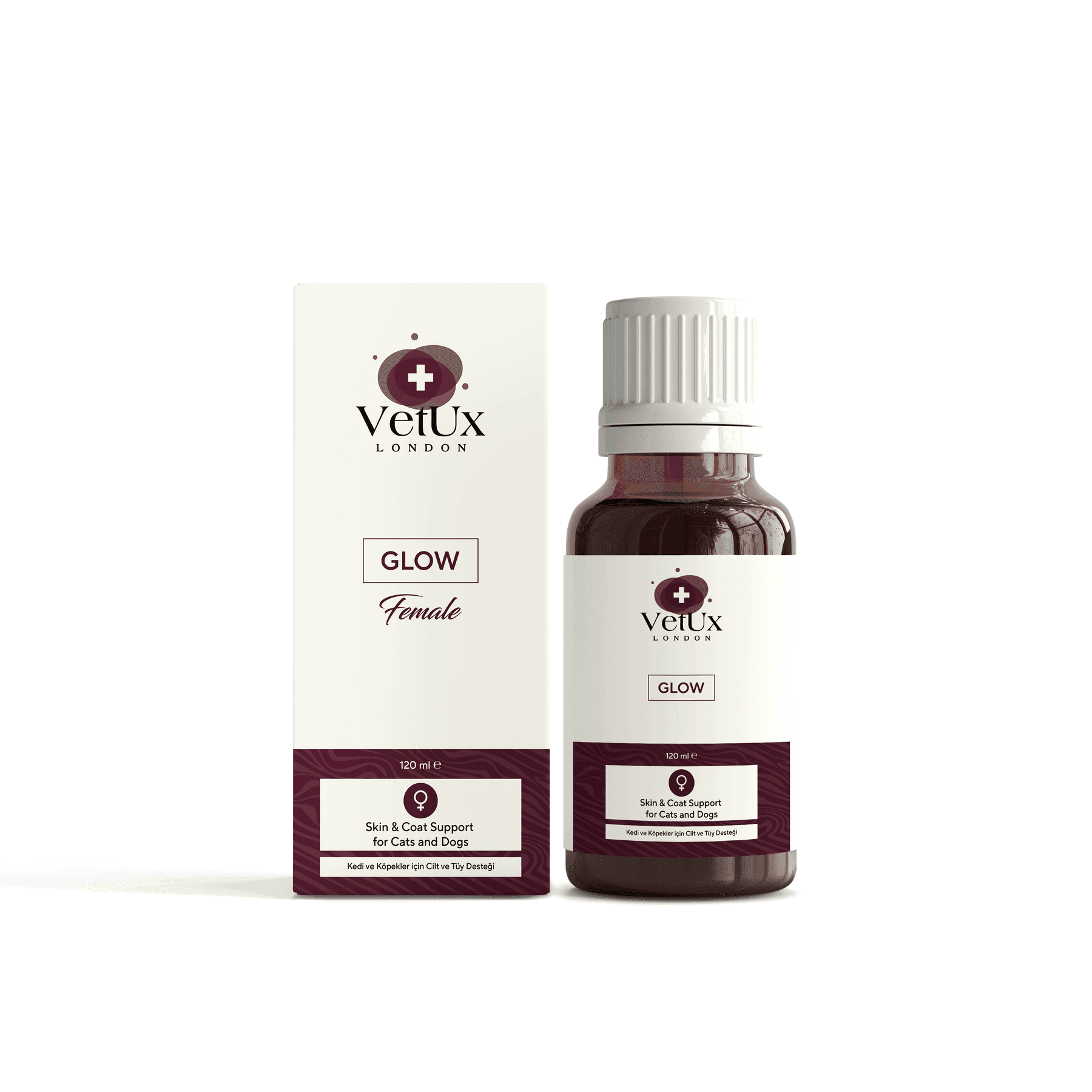
- Evening primrose (Oenothera biennis, Glow Female): A source of gamma-linolenic acid (GLA), an omega-6 fatty acid; helps maintain the integrity of the skin barrier and a normal moisture balance.
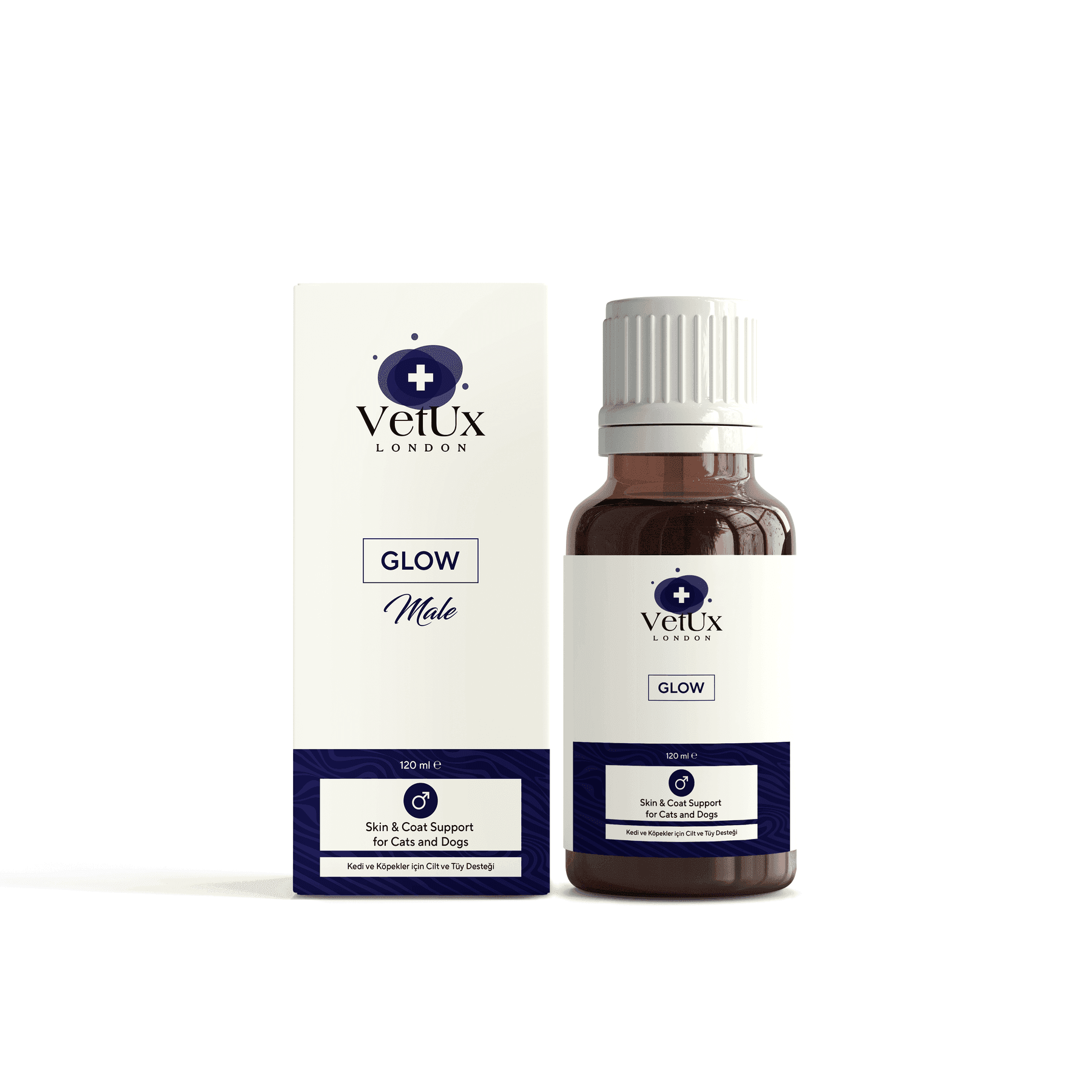
- Saw palmetto (Serenoa repens, Glow Male): A botanical extract used to accompany a normal sebum balance in skin under androgen influence.
- Nettle (Urtica dioica), burdock root (Arctium lappa) and liquorice root (Glycyrrhiza glabra): Plants associated in phytotherapy with skin comfort; they accompany the maintenance of everyday skin balance.
- Beta glucan 1,3-1,6: A polysaccharide that accompanies everyday comfort in sensitive skin.
A scientific note: the place of vitamins and minerals in skin physiology is well established, whereas the role of botanical ingredients in cats rests mainly on phytotherapeutic tradition and limited experimental data. It is therefore most accurate to regard them as support that accompanies a balanced diet and veterinary care.
What are Glow Female and Glow Male?
Vetux London's Glow Female and Glow Male are liquid complementary feeds for cats and dogs, designed to contribute to maintaining skin and coat health. Glow Female is built around female physiology, and particularly the hormonal change that follows spaying, combining evening primrose, nettle, burdock root, liquorice root and beta glucan 1,3-1,6 with vitamin D3, D-biotin, zinc and vitamins B5 and B6; Glow Male is built around male physiology, where skin under androgen influence tends towards oiliness, and contains the same group of botanicals, vitamins and minerals with saw palmetto in place of evening primrose. Both are nutritional support for the physiological functions of the skin and coat during seasonal changes or at times your veterinary surgeon considers appropriate; they are not medicines and do not replace diagnosis or treatment. Decide together with your veterinary surgeon whether they are suitable for your cat and how to use them.
Frequently asked questions
Is it normal for my cat to shed a lot, and how long does it last?
Usually, yes. The hair cycle runs continuously and shedding increases especially during the spring and autumn changes; this period generally lasts a few weeks and settles by itself. If the skin is clean, the coat thins evenly and your cat feels well, the shedding is most likely seasonal. If there are bald patches, redness or itching, or the shedding has been increasing for weeks, contact your veterinary surgeon.
Do indoor cats shed seasonally too?
Yes. However, in indoor cats that spend long hours under artificial light the seasonal boundaries can blur, and shedding may spread across the year rather than falling into two distinct periods. On its own this is not a sign of disease; if the skin and general health are normal, there is no cause for concern.
Does regular brushing help with shedding?
Brushing does not change the hair cycle, but it removes dead undercoat, limits matting and can help with hairballs by cutting down the amount of hair your cat swallows while grooming. It also lets you see the skin regularly and spot changes early.
Can my cat's hair loss spread to me?
Seasonal shedding is not contagious. However, fungal infection (dermatophytosis) can spread to people and other animals. If you notice round bald patches on your cat, or round red patches on your own skin, take your cat to your veterinary surgeon and see a doctor yourself.
Does neutering affect the coat?
Because sex hormones are part of skin physiology, changes in coat structure and in the rhythm of the hair cycle may be seen after neutering. Weight gain can also make self-grooming harder and affect how the coat looks. If you notice a marked change, ask your veterinary surgeon to assess the cause.
Is a complementary feed for skin and coat enough on its own?
No. Complementary feeds are nutritional support that accompanies a balanced diet and veterinary care. If a parasitic, fungal, allergic or hormonal cause is present, a diagnosis must be made first and treatment planned by your veterinary surgeon.
Final word
Most shedding in cats is the coat's natural renewal. What matters is not how much hair is lost but what comes with it: if the skin is clean and the cat is well, the shedding is most likely seasonal; if there are bald patches, redness, itching or a change in general health, a cause should be looked for. If you are unsure which group your cat's shedding falls into, do not decide on your own; consult your veterinary surgeon.
References
- 1Baker KP. Hair growth and replacement in the cat. British Veterinary Journal. 1974;130:327–335.
- 2Waisglass SE, Landsberg GM, Yager JA, Hall JA. Underlying medical conditions in cats with presumptive psychogenic alopecia. Journal of the American Veterinary Medical Association. 2006;228(11):1705–1709. doi:10.2460/javma.228.11.1705
- 3Moriello KA, Coyner K, Paterson S, Mignon B. Diagnosis and treatment of dermatophytosis in dogs and cats: Clinical Consensus Guidelines of the World Association for Veterinary Dermatology. Veterinary Dermatology. 2017;28(3):266–e68. doi:10.1111/vde.12440
- 4Halliwell R, Pucheu-Haston CM, Olivry T, et al. Feline allergic diseases: introduction and proposed nomenclature. Veterinary Dermatology. 2021;32(1):8–e2. doi:10.1111/vde.12899
- 5Watson TDG. Diet and skin disease in dogs and cats. Journal of Nutrition. 1998;128(12 Suppl):2783S–2789S.
- 6Miller WH, Griffin CE, Campbell KL. Muller & Kirk's Small Animal Dermatology. 7th ed. St. Louis: Elsevier; 2013.
- 7ESCCAP (European Scientific Counsel Companion Animal Parasites). Guideline 03: Control of Ectoparasites in Dogs and Cats. Current edition, esccap.org.
This article is for information only. For diagnosis and treatment decisions about your cat's hair loss, consult your veterinary surgeon.
Frequently asked questions
Is it normal for my cat to shed a lot, and how long does it last?
Usually, yes. The hair cycle runs continuously and shedding increases especially during the spring and autumn changes; this period generally lasts a few weeks and settles by itself. If the skin is clean, the coat thins evenly and your cat feels well, the shedding is most likely seasonal. If there are bald patches, redness or itching, or the shedding has been increasing for weeks, contact your veterinary surgeon.
Do indoor cats shed seasonally too?
Yes. However, in indoor cats that spend long hours under artificial light the seasonal boundaries can blur, and shedding may spread across the year rather than falling into two distinct periods. On its own this is not a sign of disease; if the skin and general health are normal, there is no cause for concern.
Does regular brushing help with shedding?
Brushing does not change the hair cycle, but it removes dead undercoat, limits matting and can help with hairballs by cutting down the amount of hair your cat swallows while grooming. It also lets you see the skin regularly and spot changes early.
Can my cat's hair loss spread to me?
Seasonal shedding is not contagious. However, fungal infection (dermatophytosis) can spread to people and other animals. If you notice round bald patches on your cat, or round red patches on your own skin, take your cat to your veterinary surgeon and see a doctor yourself.
Does neutering affect the coat?
Because sex hormones are part of skin physiology, changes in coat structure and in the rhythm of the hair cycle may be seen after neutering. Weight gain can also make self-grooming harder and affect how the coat looks. If you notice a marked change, ask your veterinary surgeon to assess the cause.
Is a complementary feed for skin and coat enough on its own?
No. Complementary feeds are nutritional support that accompanies a balanced diet and veterinary care. If a parasitic, fungal, allergic or hormonal cause is present, a diagnosis must be made first and treatment planned by your veterinary surgeon.
This article is for general information only; it does not replace veterinary examination, diagnosis or treatment. VetUx London products are complementary feed. If you have any concern about your companion, please consult your veterinary surgeon.
Share
The formulas matching the nutritional support described above.
Related articles
All articles Clinical Notes
Diarrhoea in Cats: Causes, Home Monitoring and When to See the Vet
Diarrhoea in cats is most often linked to a change of food, stress or parasites, but signs such as blood, vomiting and lethargy need a veterinary assessment the same day. Here is what to watch at home and when not to wait.
 Clinical Notes
Kidney Health in Cats: A Guide to Signs, Blood Values and Veterinary Check-ups
Drinking a lot, weight loss and a poor appetite can be the first signs of a kidney problem in cats. From a veterinary perspective, we explain what creatinine, SDMA, urea, phosphorus and urine concentration tell you, how IRIS staging works and how often senior cats should be checked.
 Clinical Notes
How Do Free Radicals Age the Cell? A High-Bioavailability Vitamin C Strategy
How do free radicals damage cell membranes, proteins and DNA, and how does this relate to ageing? We explain vitamin C's roles as electron donor, vitamin E regenerator and collagen cofactor, cats' and dogs' own vitamin C synthesis, the saturable absorption that governs bioavailability and who needs extra caution.