
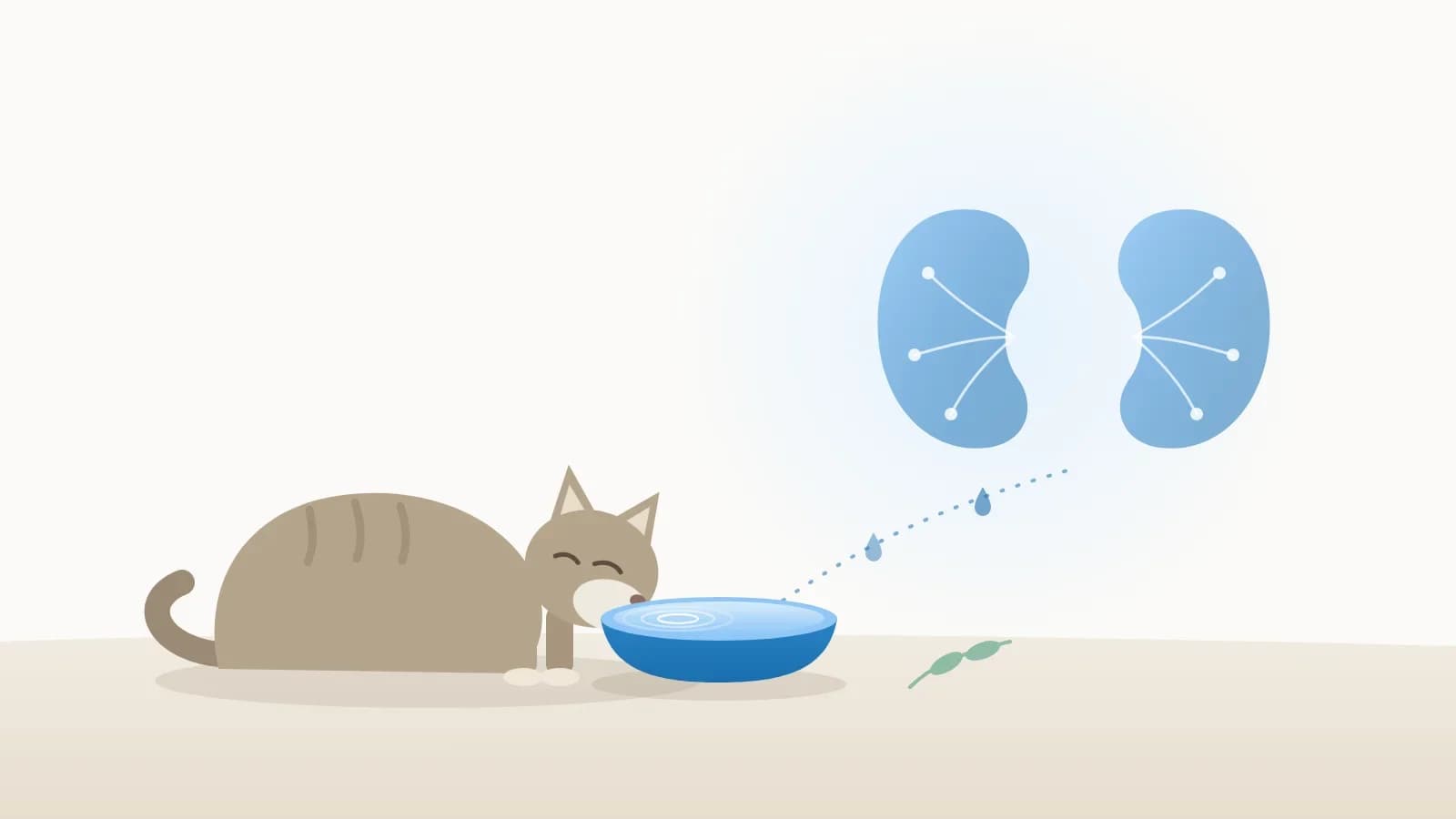
Kidney Health in Cats: A Guide to Signs, Blood Values and Veterinary Check-ups
Drinking a lot, weight loss and a poor appetite can be the first signs of a kidney problem in cats. From a veterinary perspective, we explain what creatinine, SDMA, urea, phosphorus and urine concentration tell you, how IRIS staging works and how often senior cats should be checked.
Quick answer: Chronic kidney problems in cats often progress silently; the most common early signs are drinking a lot, passing more urine, weight loss and a poor appetite. Creatinine, SDMA, urea, phosphorus and urine concentration together describe kidney function. Cats over seven need blood and urine checks at least yearly; diagnosis and staging are the veterinary surgeon's job.
If your cat has been spending more time at the water bowl lately, if the clumps in the litter tray have grown, or if they feel lighter when you pick them up, these are not signs to dismiss as "just getting older". Chronic kidney disease (CKD) is one of the most common internal diseases in middle-aged and older cats, and it can progress for a long time without obvious signs.
In this guide I explain in plain terms what the kidneys do, which signs deserve attention, what the values on a blood and urine test tell you, and how often an older cat should be checked. Our articles going into more detail on topics such as creatinine and urea, phosphorus balance and senior cat care will link back to this guide.
An important reminder before we begin: this article is for information only. Diagnosis, staging and treatment are the responsibility of your veterinary surgeon; please do not interpret test results and make decisions on your own.
What is chronic kidney disease in cats, and why is it so common in older cats?
Chronic kidney disease is the slow loss of function of kidney tissue over months or years. By definition it lasts at least three months and is usually permanent. When the millions of tiny filtering units in the kidneys (nephrons) are damaged over time, the remaining nephrons take on the extra work. Thanks to this capacity to compensate, a cat can look healthy from the outside until a substantial part of the kidney tissue has lost its function.
There is no single cause. Age-related tissue changes, slowly progressing inflammatory and fibrotic processes in the kidney, previous kidney injuries, some inherited conditions (such as polycystic kidney disease), high blood pressure and urinary tract problems can all play a part. In most cats the starting point cannot be clearly identified.
One concept needs to be kept separate: acute kidney injury. Acute injury that develops over hours or days because of poisoning (for example lilies or human painkillers), a urinary blockage or a severe infection is an emergency and calls for a different approach from chronic disease. Telling the two apart is also the veterinary surgeon's job.
What do the kidneys do in a cat's body?
Thinking of the kidneys only as "the organ that makes urine" makes it hard to understand why the disease causes so many different signs. The main tasks of the kidneys are:
- Filtration: they filter protein breakdown products (such as urea), creatinine — a waste product of muscle metabolism — and other waste substances from the blood and excrete them in urine.
- Maintaining water balance: the cat's ancestor is a desert animal, and its kidneys are remarkably good at reclaiming water and concentrating urine. This is one of the first abilities to be lost when kidney function declines.
- Mineral and electrolyte balance: they keep phosphorus, potassium, sodium and calcium within narrow limits.
- Acid-base balance: they regulate the acidity of the blood.
- Hormone production: they produce erythropoietin, which stimulates red blood cell production, and convert vitamin D into its active form.
- Blood pressure regulation: they take part in setting blood pressure through hormonal systems.
When these tasks falter, waste substances build up in the blood (azotaemia), urine becomes dilute, phosphorus may rise, potassium may fall, and anaemia and high blood pressure can develop. This is why the signs are so varied.
Which signs can point to a kidney problem?
In the early stage the signs are very mild and are often only picked up on a blood test. As the disease progresses, the following may become noticeable:
- Drinking and urinating more: the most typical early sign. When the kidneys cannot concentrate urine, the body loses more water, and the cat tries to make up for it by drinking. Larger and more frequent clumps in the litter tray, a water bowl that empties faster, or a new interest in drinking from the sink or tap may catch your eye.
- Weight and muscle loss: bones that are easier to feel along the back and hips are typical. Because the weight loss is slow, a family that sees the cat every day may not notice it.
- Poor appetite and fussiness: sniffing food and walking away, refusing a food they used to love, eating less.
- Nausea and vomiting: waste substances building up in the blood can affect the stomach and the appetite centre.
- A dull coat and an unkempt look.
- Lethargy, sleeping more, losing interest in play.
- Bad breath and mouth ulcers: in the later stages a characteristic smell on the breath and ulcers in the mouth may appear.
- Constipation: the body's water loss can make faeces harder.
- Muscle weakness: with low potassium a cat may carry its head bent downwards or look weak when walking.
- Sudden loss of vision: high blood pressure accompanying kidney disease can affect the back of the eye; dilated pupils and bumping into things are an emergency sign.
An important note: none of these signs is specific to kidney disease. Increased thirst is also seen in diabetes and in an overactive thyroid gland (hyperthyroidism), and weight loss can have dozens of causes. Examination and tests reveal the cause. We explain how to monitor water intake at home in our article on water intake in senior cats.
Which values are checked on blood and urine tests?
Kidney function is assessed not with a single test but with a group of values that complement each other. Below I summarise what each value tells you; what it means for your cat is decided by the veterinary surgeon who knows the whole picture.
Creatinine
A waste product of muscle metabolism that is excreted almost entirely by the kidneys. As the kidneys' filtration rate falls, blood creatinine rises. It is the core value used to stage kidney disease.
Its limitation is this: creatinine can stay within the normal range until a significant part of kidney function has been lost. It is also affected by muscle mass; in a thin, older cat that has lost muscle, creatinine can look "better" than the kidneys really are.
Urea (BUN)
The end product of protein breakdown. It rises when kidney function declines, but it is influenced by more outside factors than creatinine. It can also rise straight after a meal, when the body is dehydrated, or when there is bleeding in the digestive tract. For this reason it is read together with creatinine and other findings, not on its own. Some laboratories report this value as "BUN" (blood urea nitrogen).
SDMA (symmetric dimethylarginine)
A molecule released during protein breakdown inside cells and excreted by the kidneys. It is much less affected by muscle mass than creatinine, and studies in cats have shown that it often reflects a decline in kidney function earlier than creatinine. This makes it a valuable complementary test, especially in older cats with muscle loss. Even so, SDMA does not make a diagnosis on its own; whether it is persistently raised is confirmed by repeat measurement.
Phosphorus
The kidneys excrete excess phosphorus in urine. When the filtration rate falls markedly, phosphorus starts to accumulate in the blood. Because high phosphorus places an extra burden on kidney tissue and affects hormonal balance (parathyroid hormone), it is closely watched when monitoring kidney disease. The veterinary surgeon sets separate target ranges for phosphorus according to the cat's stage. We cover the mechanism in our article on phosphorus retention in chronic kidney disease.
Urine specific gravity (USG)
This shows how concentrated the urine is and reflects the kidney's ability to reclaim water. Healthy cats usually produce very concentrated urine. When waste values in the blood are raised but the urine is not adequately concentrated (in cats, below 1.035 in most sources), the kidney is the likely source of the problem. However, some cats keep this ability for a while in the early stage of the disease. That is why a urine test is always performed alongside the blood test.
Other important parameters
- Urine protein:creatinine ratio (UPC): measures protein loss in urine. Persistent protein loss in kidney disease is an important finding for the course of the disease.
- Blood pressure: high blood pressure can be both a consequence of kidney disease and a factor that increases kidney damage. It also carries risks for the eyes, heart and brain.
- Potassium: can fall in cats with kidney disease because of losses in urine.
- Haematocrit (proportion of red blood cells): anaemia can develop as erythropoietin production declines.
- Urine culture: cats with kidney disease can have a urinary tract infection without showing signs; the veterinary surgeon will request it if needed.
- Imaging: ultrasound shows the size and structure of the kidneys and whether there are cysts or stones.
| Value | What does it tell you? | What to bear in mind when interpreting it | |---|---|---| | Creatinine | The kidneys' filtration rate | Affected by muscle mass; may stay normal early on | | Urea (BUN) | Excretion of protein breakdown products | Affected by diet, dehydration and digestive tract bleeding | | SDMA | Filtration rate | Little affected by muscle mass; confirmed by repeat measurement | | Phosphorus | Mineral balance | Target range set by the veterinary surgeon according to stage | | Urine specific gravity | Ability to reclaim water | Read together with blood values | | UPC | Protein loss in urine | Used for sub-staging | | Blood pressure | Hypertension | Risk assessment for eyes, heart, brain and kidneys |
Does a single high value mean kidney disease?
No. This is one of the points that worries owners most, and the answer is clear: a single test result does not make a diagnosis.
A creatinine or urea value can rise temporarily for many reasons:
- Pre-renal causes: if the cat has not drunk enough, or has lost fluid through vomiting or diarrhoea, blood flow to the kidneys falls and the values rise. Once fluid balance is restored, the values can return to normal.
- Post-renal causes: with a urinary blockage, urine cannot be passed and the values climb quickly. This is an emergency, especially in male cats.
- Acute kidney injury: sudden causes such as poisoning or infection.
- Laboratory differences: reference ranges can vary from one laboratory to another.
The reverse is also true: a normal value does not always mean the kidneys are completely healthy. Hyperthyroidism, for example, increases blood flow through the kidneys and can make creatinine look lower than it really is; once the thyroid problem is brought under control, an underlying kidney problem may come to light. We explain this link in our article on hyperthyroidism in cats.
So when a veterinary surgeon suspects chronic kidney disease, they will usually measure values while the cat's fluid balance is normal, after fasting and on at least two separate occasions, and interpret the blood values together with urinalysis, examination findings, blood pressure and, where needed, imaging.
What is IRIS staging, and why does it matter?
The International Renal Interest Society (IRIS) has developed a widely accepted system for staging chronic kidney disease in cats and dogs. Staging is based on creatinine and SDMA values measured while the cat is stable (fluid balance normal, no sudden deterioration).
| IRIS stage (cat) | Creatinine (mg/dL) | SDMA (µg/dL) | Overall picture | |---|---|---|---| | Stage 1 | Below 1.6 | Below 18 | Blood values normal, but another kidney finding is present (e.g. poorly concentrated urine, protein loss, an imaging finding) | | Stage 2 | 1.6–2.8 | 18–25 | Mild increase; signs mild or absent | | Stage 3 | 2.9–5.0 | 26–38 | Marked increase; signs often appear | | Stage 4 | Above 5.0 | Above 38 | Advanced stage; signs obvious |
Source: IRIS Staging of CKD (2023 update). The values are for general information; please do not try to work out your cat's stage from this table alone. When creatinine and SDMA point to different stages, the veterinary surgeon decides how to combine the results.
Staging is followed by two sub-stages: protein loss in urine (UPC) and blood pressure. These two pieces of information are at least as important as the stage itself for the course of the disease and the monitoring plan.
Why does staging matter? Because the veterinary surgeon's recommendations change with the stage: check-up intervals, the timing of dietary changes, targets for phosphorus and potassium, blood pressure monitoring and, if considered necessary, medication are all planned according to the stage and sub-stage. Nor is the stage a fixed label; the cat is monitored with regular check-ups and the plan is updated as needed.
How often should an older cat's kidneys be checked?
Because chronic kidney disease progresses silently, the most effective tool is regular check-ups. Current feline life stage guidelines broadly recommend the following framework:
- Adult cats: a clinical examination at least once a year.
- Mature cats (roughly 7–10 years): an examination at least once a year, with blood tests, urinalysis and blood pressure measurement recommended as part of it.
- Senior cats (roughly over 10 years): an examination every six months is recommended, with laboratory checks repeated as often as the veterinary surgeon advises.
- Cats diagnosed with kidney disease: the check-up interval is set by the veterinary surgeon according to the stage and the cat's condition.
A few practical tips to get the most out of check-ups:
- Keep track of weight. Weighing your cat at home once a month (for example, weighing yourself holding the cat and subtracting your own weight) helps you notice slow weight loss early. Take the records to the clinic.
- Keep previous results. With kidney values, the trend over time matters more than a single result. Your cat's "own normal" may sit at the low end of the reference range; a slow rise only shows up through comparison.
- Ask your veterinary surgeon about urine samples. A urine test is as important as a blood test; the clinic will decide how the sample should be collected.
- Note what you observe. Water intake, changes in the litter tray, appetite, vomiting and changes in behaviour are valuable information for the veterinary surgeon.
When should you see a veterinary surgeon?
Seek help urgently (the same day) if:
- Your cat has not eaten anything for more than 24 hours. In cats, prolonged fasting can in itself lead to serious liver problems.
- Your cat keeps going to the litter tray but cannot pass urine or passes very little, strains or cries (a blockage is life-threatening, especially in male cats).
- There is repeated vomiting, vomiting blood, or your cat cannot even keep water down.
- There is sudden loss of vision, dilated pupils or bumping into things.
- There is marked weakness, inability to stand, carrying the head bent downwards, or seizures.
- You suspect contact with lilies, swallowing a human medicine (such as a painkiller) or exposure to a poison such as antifreeze — without waiting for signs.
Book an appointment within a few days if you notice:
- A clear increase in water intake or in the amount of clumps in the litter tray.
- Unexplained weight loss.
- A reduced appetite or fussiness with food.
- A dull coat, bad breath or frequent vomiting.
Even without signs: every cat over seven years old is recommended to have a check-up at least once a year that includes blood and urine tests. For cats diagnosed with kidney disease, keeping to the check-up schedule set by your veterinary surgeon is worth more than anything you can do at home.
What can you do at home for kidney health?
What you do at home does not replace a diagnosis or veterinary follow-up, but it contributes to your cat's daily fluid balance and quality of life:
- Make drinking easy. Place several water bowls in different parts of the home, away from food and the litter tray. Many cats prefer wide, shallow bowls or running water (a water fountain). Refresh the water every day.
- Discuss the share of wet food with your veterinary surgeon. Wet food makes a significant contribution to daily fluid intake.
- Do not change the diet on your own. Studies have shown that diets with adjusted phosphorus and protein are associated with longer survival in cats with kidney disease at suitable stages. However, when and how to switch is decided by the veterinary surgeon, and the transition is made gradually. Remember: a cat eating comes before everything else; rather than forcing a diet change on a cat with a poor appetite, make a plan with your veterinary surgeon.
- Never give human medicines. Some painkillers are poisonous to cats and can damage the kidneys. Check every medicine and supplement for your cat with your veterinary surgeon.
- Keep lilies out of the home. The leaves, flowers and pollen of lilies can cause severe kidney injury in cats.
- Reduce stress. Changes in routine, new animals or moving house can affect appetite and water intake.
- Do not neglect oral health. Mouth pain can worsen a poor appetite; dental checks should be part of the annual examination.
Which VetUx products accompany kidney health?
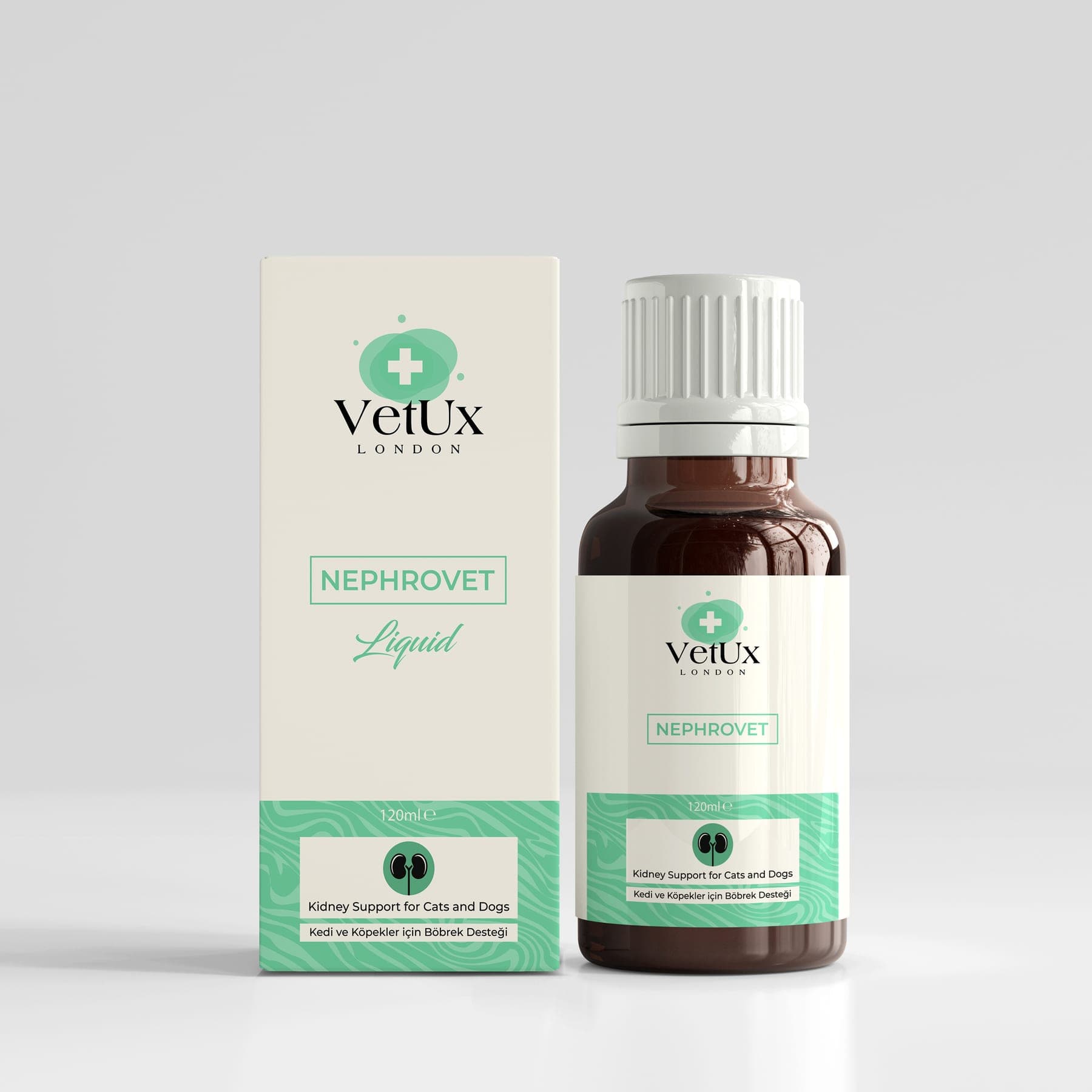
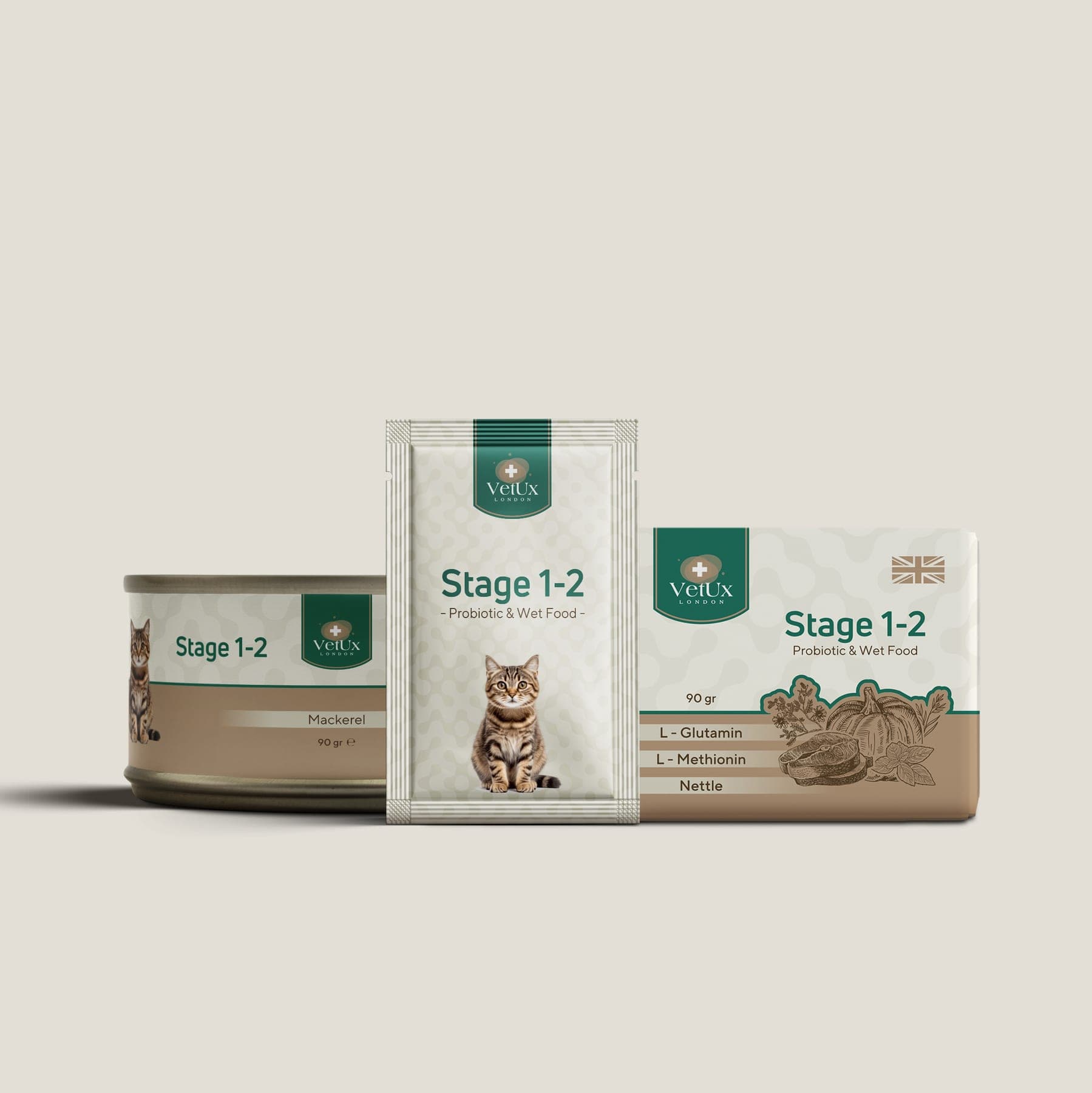
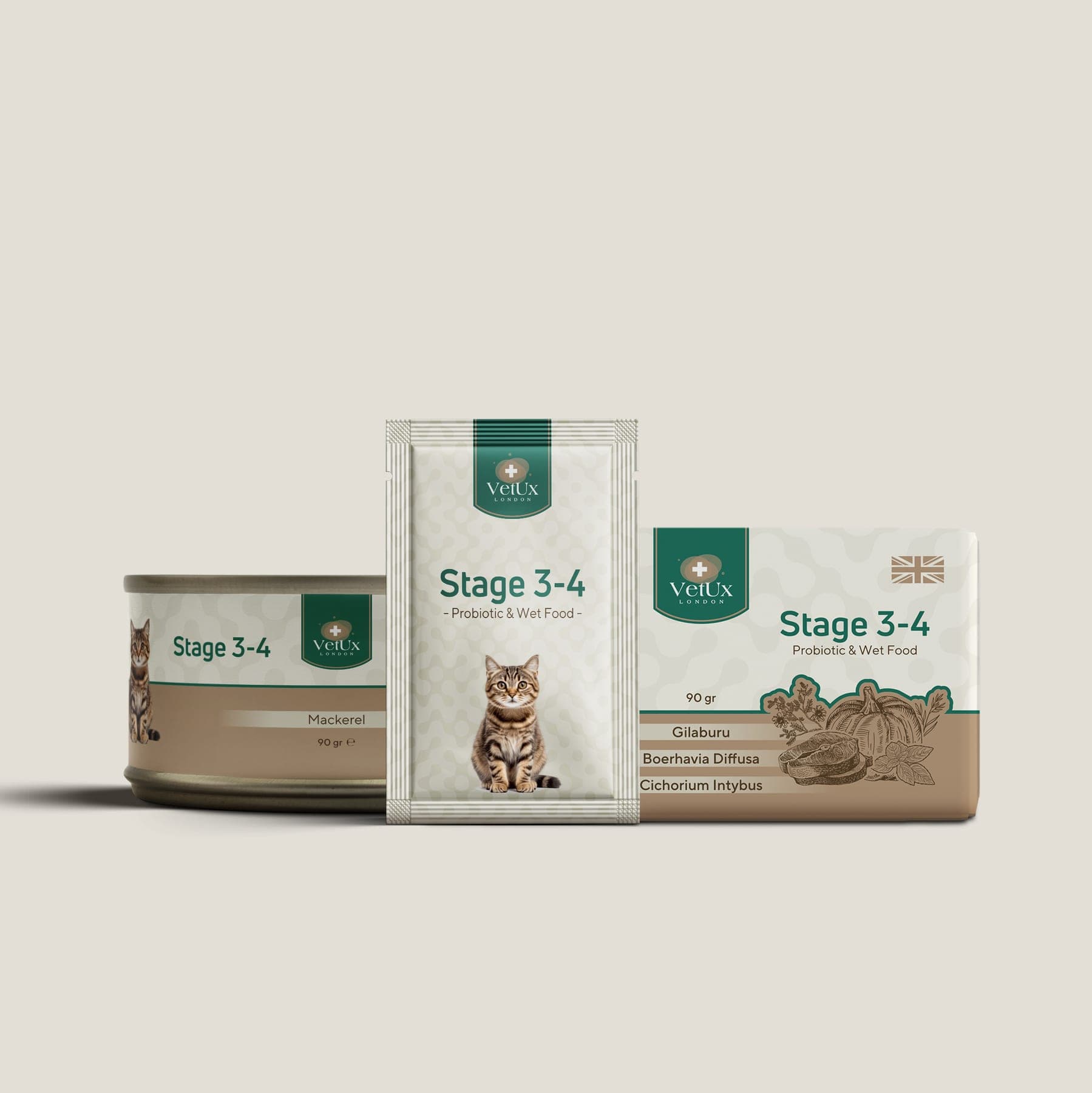
During periods when kidney health needs extra attention, complementary feeds can accompany the care plan drawn up by the veterinary surgeon as nutritional support. Nephrovet is a liquid complementary feed for cats and dogs that brings together extracts of punarnava (Boerhavia diffusa), varun (Crataeva nurvala), gokshura (Tribulus terrestris), palaash (Butea monosperma) and kaasni/chicory (Cichorium intybus); according to its product record, it helps maintain normal kidney function and accompanies a normal fluid balance and the oxidative balance of kidney cells. Among the probiotic wet food and sachet combinations prepared for cats only, Elixir of Stage 1-2 offers a mackerel-based recipe with a moderately restricted protein, controlled phosphorus and low sodium profile, together with L-glutamine, nettle leaf (Urtica dioica) and live probiotic cultures, and contributes to maintaining normal kidney function. Elixir of Stage 3-4, with protein, phosphorus and sodium held more tightly, phosphorus binders and a mineral profile with a low acid load, contributes to maintaining a normal mineral and acid-base balance; both Elixir recipes support daily fluid intake with their high moisture content. These products are complementary feeds, not medicines; the stage in the product names is not there for you to work out your cat's stage yourself — the stage, the choice of product and the plan for use are decided by your veterinary surgeon.
Frequently Asked Questions
My cat drinks a lot; does that definitely mean kidney disease?
No. Increased thirst is one of the most common signs of kidney disease, but it is also seen with diabetes, hyperthyroidism, urinary tract infections and some liver problems. A switch from dry to wet food or hot weather can also change water intake. The veterinary surgeon identifies the cause through examination and blood and urine tests.
My cat's blood test showed slightly high creatinine; what should I do?
Don't panic, but don't ignore the result either. Creatinine can also rise for temporary reasons such as dehydration. Your veterinary surgeon will usually assess the result together with urine concentration, SDMA and examination findings, and ask for a repeat measurement while your cat's fluid balance is normal. Diagnosis and staging are based on these repeat measurements.
Why is an SDMA test requested?
SDMA is a marker of kidney function that is less affected by muscle mass than creatinine and often reflects loss of function earlier in cats. For this reason it is used as a test that complements creatinine, especially in older cats with muscle loss. SDMA does not make a diagnosis on its own either; the veterinary surgeon interprets it alongside the other findings.
How often should my older cat's kidneys be checked?
Feline life stage guidelines recommend a check-up at least once a year from around seven years of age, including blood tests, urinalysis and blood pressure measurement. For cats over about ten, an examination every six months is recommended. For cats diagnosed with kidney disease, the veterinary surgeon sets the check-up schedule according to the stage.
Can chronic kidney disease be reversed?
Chronic kidney damage is usually permanent. However, the rate of progression varies greatly from cat to cat. Many cats whose disease is picked up early and who are monitored regularly by a veterinary surgeon can maintain a good quality of life for a long time with a suitable diet and care plan. This is why early diagnosis and regular check-ups make the difference.
Can complementary feeds replace medical treatment?
No. Complementary feeds are used to provide nutritional support to physiological functions; they are not medicines and do not replace the treatment recommended by your veterinary surgeon. Before starting any complementary feed or supplement, consult your veterinary surgeon so that it can be assessed together with your cat's medicines and diet.
References
- 1International Renal Interest Society (IRIS). IRIS Staging of CKD (2023 update). iris-kidney.com.
- 2International Renal Interest Society (IRIS). Treatment Recommendations for CKD in Cats (2023 update). iris-kidney.com.
- 3Sparkes AH, Caney S, Chalhoub S, Elliott J, Finch N, Gajanayake I, Langston C, Lefebvre HP, White J, Quimby J. ISFM Consensus Guidelines on the Diagnosis and Management of Feline Chronic Kidney Disease. Journal of Feline Medicine and Surgery. 2016;18(3):219–239.
- 4Quimby J, Gowland S, Carney HC, DePorter T, Plummer P, Westropp J. 2021 AAHA/AAFP Feline Life Stage Guidelines. Journal of Feline Medicine and Surgery. 2021;23(3):211–233.
- 5Hall JA, Yerramilli M, Obare E, Yerramilli M, Jewell DE. Comparison of serum concentrations of symmetric dimethylarginine and creatinine as kidney function biomarkers in cats with chronic kidney disease. Journal of Veterinary Internal Medicine. 2014;28(6):1676–1683.
- 6Brown CA, Elliott J, Schmiedt CW, Brown SA. Chronic Kidney Disease in Aged Cats: Clinical Features, Morphology, and Proposed Pathogeneses. Veterinary Pathology. 2016;53(2):309–326.
- 7Taylor SS, Sparkes AH, Briscoe K, et al. ISFM Consensus Guidelines on the Diagnosis and Management of Hypertension in Cats. Journal of Feline Medicine and Surgery. 2017;19(3):288–303.
- 8Acierno MJ, Brown S, Coleman AE, et al. ACVIM consensus statement: Guidelines for the identification, evaluation, and management of systemic hypertension in dogs and cats. Journal of Veterinary Internal Medicine. 2018;32(6):1803–1822.
- 9Ross SJ, Osborne CA, Kirk CA, Lowry SR, Koehler LA, Polzin DJ. Clinical evaluation of dietary modification for treatment of spontaneous chronic kidney disease in cats. Journal of the American Veterinary Medical Association. 2006;229(6):949–957.
- 10Elliott J, Rawlings JM, Markwell PJ, Barber PJ. Survival of cats with naturally occurring chronic renal failure: effect of dietary management. Journal of Small Animal Practice. 2000;41(6):235–242.
Legal notice: Nephrovet, Elixir of Stage 1-2 and Elixir of Stage 3-4 are complementary feeds, not medicines. This article is for general information and does not replace an examination by a veterinary surgeon. If you notice any of the signs described in this article, or if your cat is over seven, consult your veterinary surgeon about a blood and urine check.
Frequently asked questions
My cat drinks a lot; does that definitely mean kidney disease?
No. Increased thirst is one of the most common signs of kidney disease, but it is also seen with diabetes, hyperthyroidism, urinary tract infections and some liver problems. A switch from dry to wet food or hot weather can also change water intake. The veterinary surgeon identifies the cause through examination and blood and urine tests.
My cat's blood test showed slightly high creatinine; what should I do?
Don't panic, but don't ignore the result either. Creatinine can also rise for temporary reasons such as dehydration. Your veterinary surgeon will usually assess the result together with urine concentration, SDMA and examination findings, and ask for a repeat measurement while your cat's fluid balance is normal. Diagnosis and staging are based on these repeat measurements.
Why is an SDMA test requested?
SDMA is a marker of kidney function that is less affected by muscle mass than creatinine and often reflects loss of function earlier in cats. For this reason it is used as a test that complements creatinine, especially in older cats with muscle loss. SDMA does not make a diagnosis on its own either; the veterinary surgeon interprets it alongside the other findings.
How often should my older cat's kidneys be checked?
Feline life stage guidelines recommend a check-up at least once a year from around seven years of age, including blood tests, urinalysis and blood pressure measurement. For cats over about ten, an examination every six months is recommended. For cats diagnosed with kidney disease, the veterinary surgeon sets the check-up schedule according to the stage.
Can chronic kidney disease be reversed?
Chronic kidney damage is usually permanent. However, the rate of progression varies greatly from cat to cat. Many cats whose disease is picked up early and who are monitored regularly by a veterinary surgeon can maintain a good quality of life for a long time with a suitable diet and care plan. This is why early diagnosis and regular check-ups make the difference.
Can complementary feeds replace medical treatment?
No. Complementary feeds are used to provide nutritional support to physiological functions; they are not medicines and do not replace the treatment recommended by your veterinary surgeon. Before starting any complementary feed or supplement, consult your veterinary surgeon so that it can be assessed together with your cat's medicines and diet.
This article is for general information only; it does not replace veterinary examination, diagnosis or treatment. VetUx London products are complementary feed. If you have any concern about your companion, please consult your veterinary surgeon.
Share
The formulas matching the nutritional support described above.
Related articles
All articles Clinical Notes
Diarrhoea in Cats: Causes, Home Monitoring and When to See the Vet
Diarrhoea in cats is most often linked to a change of food, stress or parasites, but signs such as blood, vomiting and lethargy need a veterinary assessment the same day. Here is what to watch at home and when not to wait.
 Clinical Notes
How Do Free Radicals Age the Cell? A High-Bioavailability Vitamin C Strategy
How do free radicals damage cell membranes, proteins and DNA, and how does this relate to ageing? We explain vitamin C's roles as electron donor, vitamin E regenerator and collagen cofactor, cats' and dogs' own vitamin C synthesis, the saturable absorption that governs bioavailability and who needs extra caution.
 Clinical Notes
Calcium Deficiency in Home-Cooked Pet Food: The Superior Absorption of Nano-Technology Vitamin D3
Why do meat-heavy, boneless home-made diets lead to calcium deficiency? We explain calcium-phosphorus balance from vitamin D3 to calcitriol and from PTH to the Ca:P ratio, the rickets risk in fast-growing puppies, the science behind nano-emulsion carrier systems and why too much D3 is dangerous.