

Why Are Phosphorus Retention and Microcirculation Vital in Chronic Kidney Disease?
In chronic kidney disease, blood phosphorus can look normal until the adaptive capacity of the remaining nephrons is exhausted. We explain the FGF-23–PTH axis and renal microcirculation at the level of general physiology.
Summary / Direct answer: In chronic kidney disease, as the number of functioning nephrons falls, phosphorus excretion becomes insufficient; FGF-23 and parathyroid hormone respond long before blood phosphorus rises. This hormonal adaptation is intertwined with renal tissue perfusion and with the structural changes that drive progression. Monitoring and managing phosphorus is planned by the attending veterinary surgeon according to stage.
This article is a general physiology overview written for pet owners and field teams. Diagnosis, staging and treatment of chronic kidney disease fall exclusively within the remit of the attending veterinary surgeon; nothing here replaces a clinical assessment.
Why does phosphorus accumulate in chronic kidney disease?
Phosphorus is a core mineral involved in everything from bone mineralisation to intracellular energy transfer. The kidney is the principal regulator of phosphorus balance: part of the phosphorus filtered at the glomerulus is reabsorbed in the proximal tubule, and the remainder is excreted in urine. In a healthy animal this balance is flexible enough to keep blood levels within a narrow range even when dietary intake varies.
In chronic kidney disease the number of functioning nephrons falls permanently. The remaining nephrons must carry the whole phosphorus load, and excretion per nephron increases. This adaptation works for a long time — which is why serum phosphorus often still sits within the reference interval in earlier stages. A rise in blood phosphorus marks not the moment balance began to fail, but the moment adaptive capacity was exhausted.
A reference interval and a stage-based target are not the same thing
The reference interval on a laboratory report is defined for the general population. For patients with chronic kidney disease, the International Renal Interest Society (IRIS) defines stage-specific phosphorus targets, and in advanced stages the target range is narrower than the laboratory's general interval. For this reason "the value came back normal" cannot be interpreted on its own without the stage. Which target applies is decided by the veterinary surgeon based on the patient's stage.
What does the FGF-23 and parathyroid hormone axis do?
The body's first response to phosphorus retention is hormonal. Fibroblast growth factor 23 (FGF-23), secreted by bone, reduces renal phosphorus reabsorption and increases urinary excretion; it also suppresses production of active vitamin D (calcitriol). Falling calcitriol and the resulting shift in calcium balance stimulate the parathyroid glands to raise parathyroid hormone (PTH), which in turn further increases phosphorus excretion.
Both hormones engage even while blood phosphorus is still unremarkable — the hormonal adaptation begins ahead of the biochemical picture. Studies in cats have shown that FGF-23 can rise before azotaemia develops and that its concentration relates to the course of chronic kidney disease.
Adaptation has a cost. Persistently elevated PTH mobilises mineral from bone and, over time, contributes to renal secondary hyperparathyroidism. Where calcium–phosphorus balance is disturbed, mineral deposition in soft tissue becomes a concern, and renal tissue itself is among the sites affected. Phosphorus management is therefore not simply a matter of correcting a laboratory value, but of relieving the load on a hormonal axis.
Why does renal microcirculation belong in this picture?
Although the kidney accounts for a small share of body weight, it receives a substantial proportion of cardiac output. Filtration is not the only reason: tubular reabsorption is energy-intensive and that energy depends on oxygen. The distinctive architecture of renal circulation — post-glomerular blood passing into the peritubular capillaries — leaves the medulla a relatively low-oxygen region even under normal conditions.
When nephrons are lost, filtration pressure rises in those that remain. In the short term this compensation preserves filtering capacity; over the longer term it strains glomerular structure. At the same time, rarefaction of the peritubular capillary network reduces the oxygen reaching tubular cells. Described in human and experimental nephrology as "chronic hypoxia", this process is characterised as a common pathway in the progression of tubulointerstitial injury.
Microcirculation and mineral balance may read as separate headings, but they meet in the same tissue: where renal perfusion is reduced, both filtering capacity and the tubule's regulation of phosphorus are strained at once. This is why blood pressure, hydration and proteinuria are never considered in isolation from phosphorus monitoring in the clinic.
How is phosphorus management planned in practice?
Phosphorus management classically rests on two pillars: limiting dietary phosphorus intake and, where required, using binders that reduce intestinal phosphorus absorption. The effect of renal diets on the course of disease in cats has been examined in controlled studies, and such diets feature in current guidelines as a core component of management.
Which approach suits which patient, what target range applies, how often to recheck, and whether a binder is needed are entirely clinical decisions. Stage, appetite, concurrent disease and whether the patient accepts the diet all change that decision directly. Phosphorus management is therefore not something an owner starts alone; the plan is set and followed by the attending veterinary surgeon.
Where does Nephrovet sit in this picture?
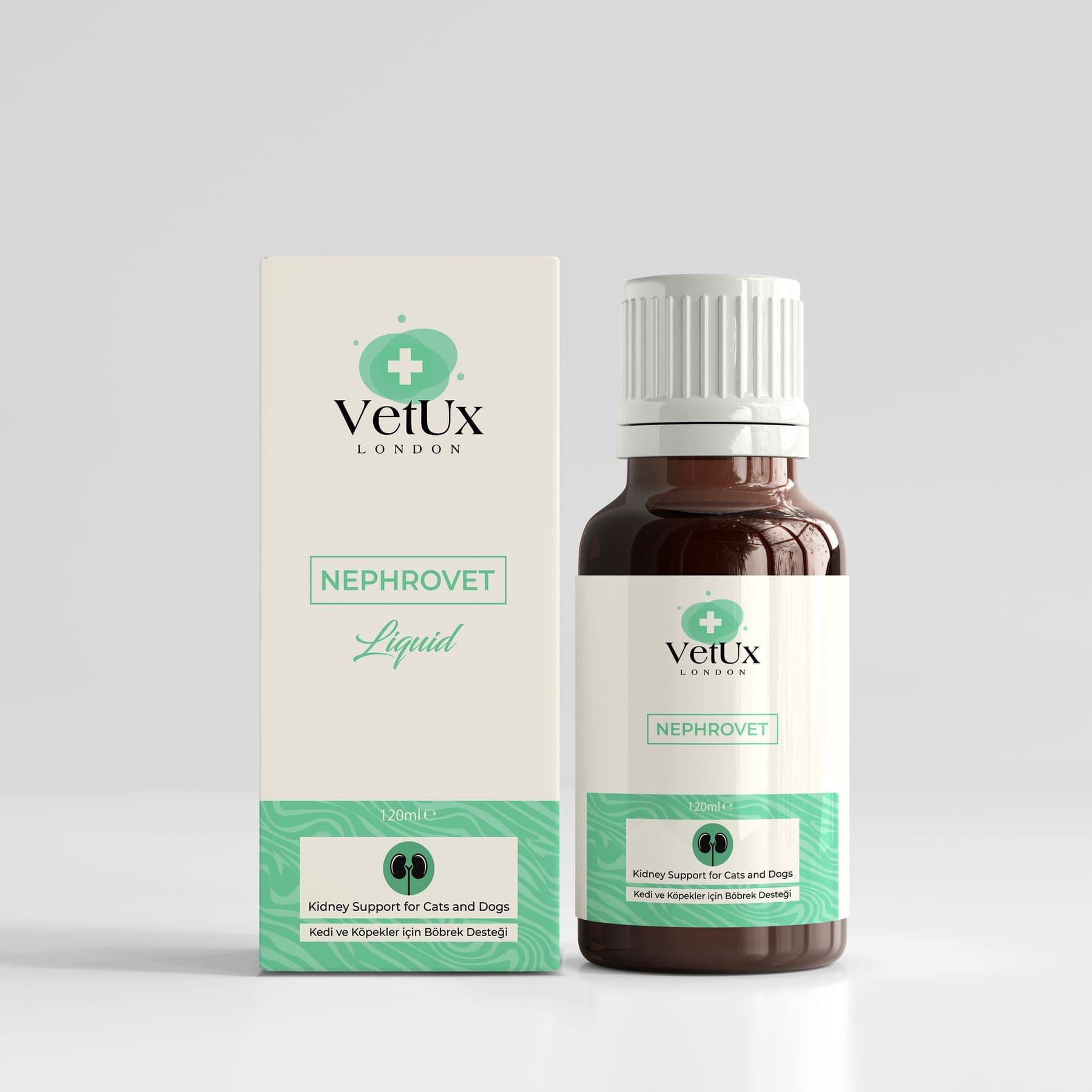
Nephrovet is a liquid complementary feed that helps maintain normal kidney function in cats and dogs. Its formula comprises five botanical extracts: punarnava (Boerhavia diffusa), varun (Crataeva nurvala), gokshura (Tribulus terrestris), palaash (Butea monosperma) and kaasni / chicory (Cichorium intybus).
In the product's own terms, this composition is nutritional support that accompanies a normal fluid balance, the natural rhythm of urine production and the normal oxidative balance of kidney cells. Through periods when kidney health needs extra attention, it accompanies veterinary care.
One boundary must be stated plainly:
- Nephrovet is not a phosphate binder; its formula contains no phosphate-binding component and it is not positioned to lower blood phosphorus.
- Nephrovet is not a medicine; it makes no claim to treat, cure or prevent disease.
- The phosphorus and microcirculation sections of this article describe general renal physiology, not the product's effect. No causal link should be drawn between the two.
- Decisions on use, diagnosis, treatment and follow-up rest with the veterinary surgeon. Every step, including the use of a complementary feed, should be planned in consultation with them.
Scientific references
- 1International Renal Interest Society (IRIS). IRIS Staging of CKD and Treatment Recommendations for CKD in Cats and Dogs. iris-kidney.com
- 2Sparkes AH, Caney S, Chalhoub S, et al. ISFM Consensus Guidelines on the Diagnosis and Management of Feline Chronic Kidney Disease. Journal of Feline Medicine and Surgery, 2016.
- 3Geddes RF, Finch NC, Syme HM, Elliott J. The role of phosphorus in the pathophysiology of chronic kidney disease. Journal of Veterinary Emergency and Critical Care, 2013.
- 4Geddes RF, Finch NC, Elliott J, Syme HM. Fibroblast growth factor 23 in feline chronic kidney disease. Journal of Veterinary Internal Medicine, 2013.
- 5Finch NC, Syme HM, Elliott J. Parathyroid hormone concentration in geriatric cats with various degrees of renal function. Journal of the American Veterinary Medical Association, 2012.
- 6Ross SJ, Osborne CA, Kirk CA, et al. Clinical evaluation of dietary modification for treatment of spontaneous chronic kidney disease in cats. Journal of the American Veterinary Medical Association, 2006.
- 7Elliott J, Rawlings JM, Markwell PJ, Barber PJ. Survival of cats with naturally occurring chronic renal failure: effect of dietary management. Journal of Small Animal Practice, 2000.
- 8Nangaku M. Chronic hypoxia and tubulointerstitial injury: a final common pathway to end-stage renal failure. Journal of the American Society of Nephrology, 2006.
- 9Fine LG, Norman JT. Chronic hypoxia as a mechanism of progression of chronic kidney diseases. Kidney International, 2008.
- 10Brown SA, Brown CA. Single-nephron adaptations to partial renal ablation in cats. American Journal of Physiology, 1995.
Frequently asked questions
If blood phosphorus is normal, does that mean there is no kidney problem?
No. Phosphorus can remain within the reference interval for a long time, until the adaptive capacity of the remaining nephrons is exhausted. The stage-based target may also differ from the laboratory's general interval. Interpretation is made by the veterinary surgeon alongside other parameters and the clinical picture.
Is FGF-23 measured routinely?
It is not a routine test in everyday clinical practice; it is used mainly in academic studies. Follow-up generally relies on parameters such as creatinine, SDMA, urea, phosphorus, calcium, urine specific gravity and blood pressure. Which tests to request is the veterinary surgeon's decision.
Can I start a renal diet on my own?
No. Renal diets are specialised rations with modified protein, phosphorus and sodium content; used at the wrong stage or in the wrong patient they can lead to nutritional problems. Timing and the transition plan are determined by the veterinary surgeon.
Does Nephrovet lower phosphorus?
No. Nephrovet is not presented as a phosphorus-lowering or phosphate-binding product. It is a complementary feed that contributes to maintaining normal kidney function and a normal fluid balance. Phosphorus management is a separate matter and is planned by the veterinary surgeon.
What is the difference between a complementary feed and a medicine?
Complementary feeds support nutrition and contribute to maintaining normal physiological functions; they cannot claim to treat disease. Veterinary medicinal products are authorised with defined indications and are prescribed by a veterinary surgeon.
This article is for general information only; it does not replace veterinary examination, diagnosis or treatment. VetUx London products are complementary feed. If you have any concern about your companion, please consult your veterinary surgeon.
Share
The formulas matching the nutritional support described above.
Related articles
All articles Clinical Notes
What Do Raised ALT and AST Mean in Cats and Dogs? The Hepatoprotective Role of Silymarin and Artichoke
Raised ALT and AST are not a diagnosis but a laboratory finding your vet reads. We look at why these enzymes leak into the blood, the described membrane mechanisms of silymarin, and the role of artichoke extract in bile flow — with the limits of the evidence stated plainly.
 Clinical Notes
Do Hairballs Irritate a Cat's Stomach? Gastritis Risks and Scientific Approach
Accumulation of trichobezoars in cats mechanically erodes the gastric mucosa, predisposing to chronic gastritis. Nutritional and clinical approaches for physiological transit.
 Nutrition
Practical ways to raise water intake in senior cats
Cats rarely show us that they are thirsty. Raising daily water intake is one of the simplest habits that helps maintain normal kidney function — and in most homes it takes only a few small changes.