
What Do Raised ALT and AST Mean in Cats and Dogs? The Hepatoprotective Role of Silymarin and Artichoke
Raised ALT and AST are not a diagnosis but a laboratory finding your vet reads. We look at why these enzymes leak into the blood, the described membrane mechanisms of silymarin, and the role of artichoke extract in bile flow — with the limits of the evidence stated plainly.
Summary / Direct answer: ALT and AST are enzymes inside liver cells; a rise in blood is a laboratory finding showing the cell membrane is more permeable, not a diagnosis. Identifying the cause and deciding on treatment belong to your veterinary surgeon. Silymarin and artichoke extract give nutritional support to hepatocyte membrane integrity and normal bile flow; they do not replace treatment.
"The liver values came back high" is one of the more worrying sentences an owner can hear. Yet the sentence reports a signal, not a diagnosis. ALT and AST do not measure how well the liver is working; they show how much the hepatocyte membrane is under strain. Knowing that distinction prevents both unnecessary alarm and the premature relief of "the value came down, so the matter is closed".
What are ALT and AST, and what is measured in blood?
ALT (alanine aminotransferase) and AST (aspartate aminotransferase) are transaminase enzymes involved in amino acid metabolism. Where they sit differs, and that difference matters in practice:
- ALT in cats and dogs is found mainly in the hepatocyte cytoplasm, which is why it is considered relatively liver-specific.
- AST sits both in the cytoplasm and inside mitochondria, and is also present in muscle tissue. An isolated rise in AST is therefore not always of hepatic origin; it can come from muscle.
What is measured in blood is not the enzyme's function but the amount that has leaked into circulation. When hepatocyte membrane permeability increases, or cell integrity is lost, cytoplasmic enzymes pass into the blood. This is why transaminases are described in the literature as "leakage enzymes". Whether the liver is functioning is assessed not with these enzymes but with function indicators such as albumin, urea, glucose, bilirubin, bile acids and clotting parameters.
Does a raised ALT mean liver disease?
It is not read that way directly. An enzyme rise is a starting point, not a conclusion. Your vet separates several things while building the picture:
- 1The size of the rise does not always reflect the severity of the damage. A broad but slow process may leave values only moderately raised, while a short, reversible event can push them up markedly.
- 2Cholestasis enzymes point to a different mechanism. Raised ALP and GGT suggest a problem on the bile flow side; they do not say the same thing as the transaminases.
- 3There are non-hepatic causes. Some medications, endocrine conditions (such as hyperadrenocorticism in dogs), muscle damage, circulatory and oxygenation problems, and diseases primarily involving other organs can all raise transaminases.
- 4A single measurement is not a curve. Understanding the direction of travel requires repeat testing at the interval your vet sets.
When does the load on the liver increase?
These are the headings vets watch particularly closely:
- Conditions requiring long-term medication (managed under veterinary follow-up),
- Advanced age and accompanying chronic conditions,
- Excess weight and disturbed lipid balance,
- Loss of appetite lasting more than a few days in cats — one of the situations vets act on fastest, because of the risk of hepatic lipidosis,
- Breed predispositions such as copper accumulation,
- Unintended exposure to household chemicals, plants and human medicines.
None of these headings exist to make a diagnosis at home; they exist to complete the history you take to your vet.
Which signs at home mean you should call your vet?
- Reduced appetite, weight loss, fussiness about food,
- Vomiting, diarrhoea, or a marked lightening of stool colour,
- Increased water intake and urine output,
- Yellowing of the gums, the whites of the eyes, or the skin of the ear flap,
- An increase in abdominal size,
- Lethargy, reduced interest in surroundings, changes in behaviour or orientation.
These are not data to interpret at home but observations to take to your vet. Yellowing in particular, and ongoing inappetence in cats, should be assessed without waiting for a routine appointment.
What does silymarin (silibinin) do at the hepatocyte membrane?
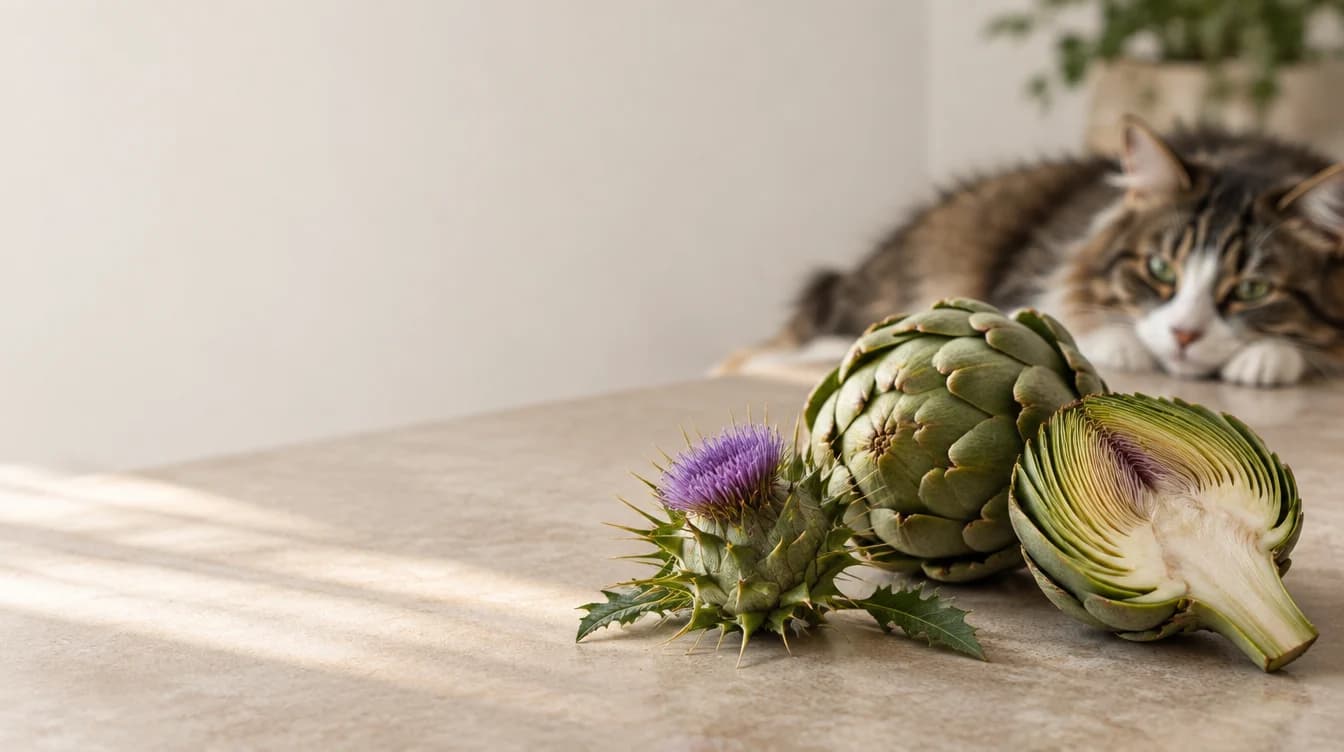
Silymarin, obtained from the seeds of milk thistle (Silybum marianum), is a mixture of flavonolignans; its most studied component is silibinin (silybin). The mechanisms described in experimental work fall under four headings:
- 1Membrane stabilisation. Silibinin interacts with the lipid structure of the hepatocyte membrane and alters its fluidity and permeability. It has been shown to hinder the passive entry of certain hepatotoxic molecules into the cell; the best known example of this mechanism comes from work on the transport of Amanita phalloides toxins into hepatocytes.
- 2Antioxidant balance. Free-radical scavenging activity, reduction of lipid peroxidation, and a contribution to maintaining the intracellular glutathione pool have been reported experimentally.
- 3Intracellular synthesis processes. Effects on ribosomal RNA synthesis have been described in laboratory models. These are observations at cell level and cannot be turned into a product claim.
- 4Inflammation and fibrosis pathways. Regulatory effects on hepatic stellate cell activation have been shown in experimental models.
The limit of the evidence — worth stating plainly. Most of these mechanisms come from cell culture, rodent models and human studies; the number of published controlled studies in cats and dogs is limited. Silymarin also has low oral bioavailability, and not all of an ingested amount reaches the circulation — a constraint discussed openly in the veterinary literature. The honest sentence is therefore this: silymarin is not a substance that repairs the liver, but a botanical component with described mechanisms relevant to normal liver cell function, used for nutritional support.
Artichoke and bile flow: what does cynarin do?
The active components of artichoke (Cynara scolymus) are caffeoylquinic acid derivatives, chiefly cynarin (1,5-dicaffeoylquinic acid) and chlorogenic acid. The principal effect described in studies is choleretic: it increases the volume of bile secreted.
The physiological reading of this sits under three headings:
- The regular arrival of bile salts in the intestine supports the normal course of fat digestion and the absorption of fat-soluble vitamins.
- Bile that keeps moving means bile components are not left standing.
- The in vitro antioxidant capacity of artichoke extract and its effects on lipid metabolism have also been reported.
The same caveat applies here: a substantial part of the choleretic data comes from human and experimental studies, and use in cats and dogs falls within nutritional support.
What do the other components in the formula do?
- *Turmeric (Curcuma longa)* — its curcuminoids belong under antioxidant balance; it is a component known for low bioavailability.
- L-Arginine — a substrate in the urea cycle for the conversion of ammonia to urea. Arginine is essential for cats, a species particularly sensitive to arginine deficiency.
- L-Lysine — an essential amino acid involved in protein synthesis.
- Betaine (trimethylglycine) — a methyl donor; it takes part in the conversion of homocysteine to methionine and is counted among the lipotropic factors in the liver.
- DL-Methionine (liquid formula only) — a methyl donor and a precursor of cysteine, connecting through cysteine to glutathione synthesis.
- Vitamins B2, B6, B9 (folic acid) and B12 — cofactors of one-carbon metabolism and of energy metabolism.
- **Lactobacillus acidophilus CECT 4529** (tablet formula only) — contributes to the normal balance of the gut flora.
Where does Hepalive sit? Two separate lines, two formulas
Let us draw the line first: Hepalive is not a medicine, it is a complementary feed. It does not treat or cure disease; it accompanies the care provided by your veterinary surgeon as nutritional support.
The two lines are not two packages of the same product; their formulas differ.
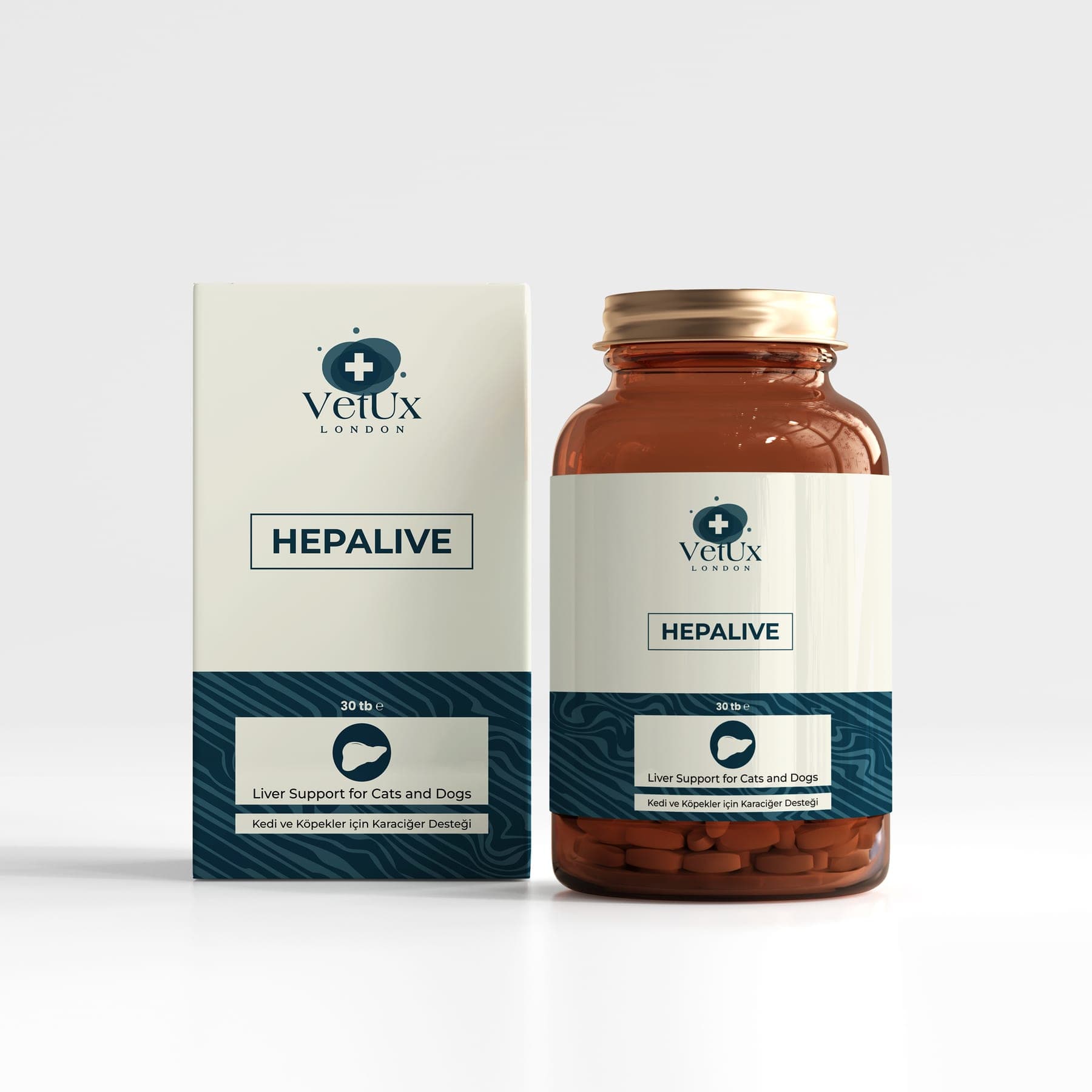
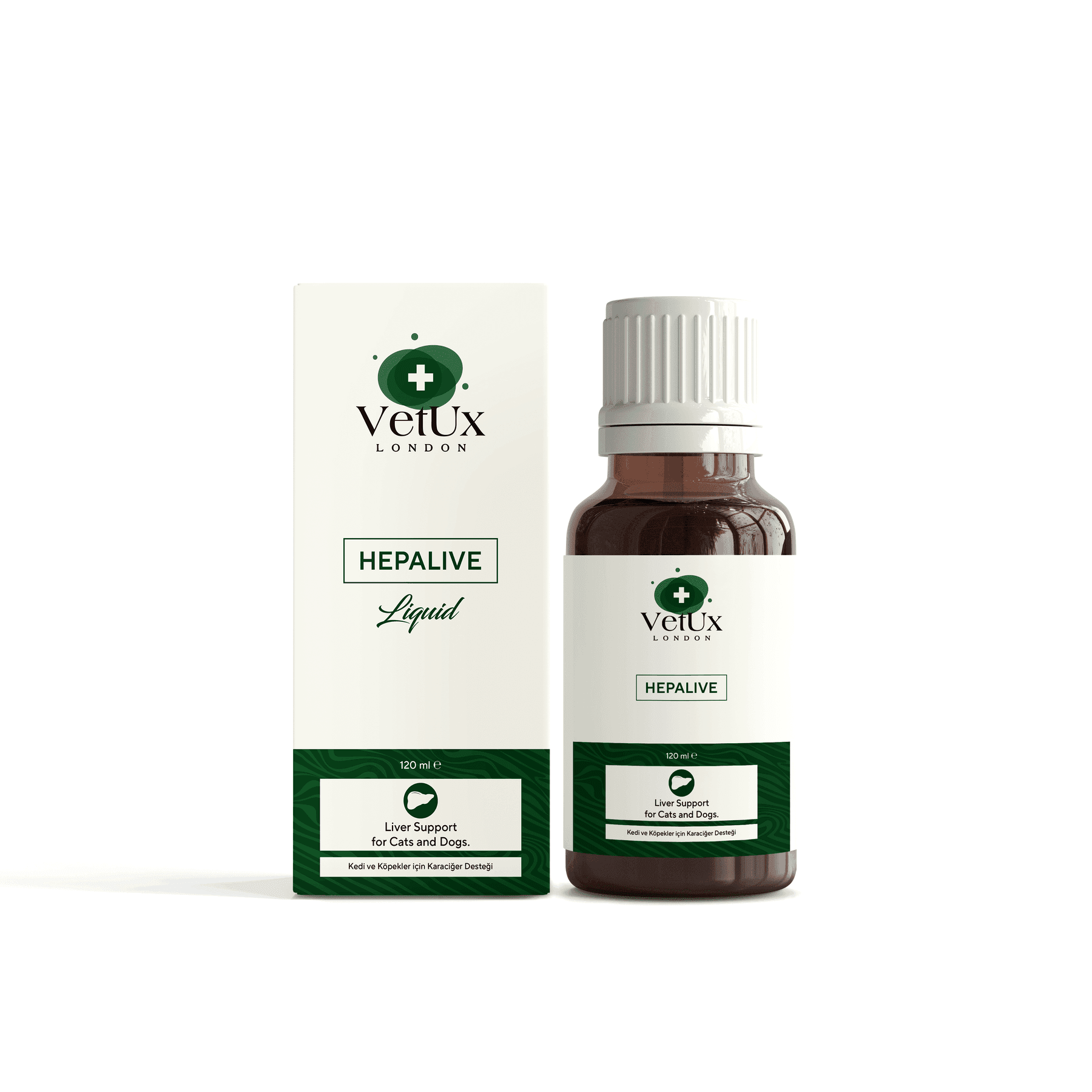
| | Hepalive (tablet) — per tablet | Hepalive Liquid — per kg | |---|---|---| | Milk thistle (Silybum marianum) | 60 mg | 52,000 mg | | Artichoke (Cynara scolymus) | 50 mg | 43,400 mg | | Turmeric (Curcuma longa) | 15 mg | 13,000 mg | | L-Lysine | 299 mg | 21,750 mg | | L-Arginine | 100 mg | 87,000 mg | | DL-Methionine | — | 25,000 mg | | Betaine | 2 mg | 1,750 mg | | L. acidophilus CECT 4529 | 2.99 × 10⁹ CFU | — | | Vitamin B2 (Riboflavin) | 5 mg | 4,350 mg | | Vitamin B6 (Pyridoxine HCl) | 5 mg | 4,350 mg | | Vitamin B9 (Folic acid) | 100 mcg | 87 mg | | Vitamin B12 (Cyanocobalamin) | 1 mcg | 870 mcg | | Pack | 30 tablets | 120 ml |
In practice the difference comes down to two points: the probiotic is in the tablet formula only, and DL-methionine is in the liquid formula only. The liquid can also be dropped onto food for animals that struggle with tablets.
- Hepalive — a complementary feed in tablet form that helps maintain normal liver function in cats and dogs.
- Hepalive Liquid — a liquid complementary feed formulated for the same purpose.
Which line is appropriate depends on the species, age and general condition of the animal and on your vet's assessment. The decision on amount and duration belongs to your veterinary surgeon — no dose is given in this article, deliberately. If you would like to know what to look for behind a complementary feed, see our piece on how to read a supplement label.
How does follow-up usually proceed?
The path followed after an enzyme rise depends on your vet's judgement; broadly, the steps that come up are: reviewing the history and any medication, repeat testing at the interval your vet sets, completing the picture with function tests (bile acids, albumin, clotting), imaging where needed, and sampling in selected cases. Which of these is necessary is decided together with the findings on examination.
Water intake is part of the picture in periods when liver load is increased; our article on water intake in senior cats offers a practical framework on that heading.
This article is for general information and does not replace a veterinary examination. The person who will interpret your cat's or dog's test result, reach a diagnosis and plan treatment is the veterinary surgeon who examines your animal. You can find your nearest clinic on the Find a Clinic page.
Scientific references
- 1Lawrence, Y. A., & Steiner, J. M. (2017). Laboratory Evaluation of the Liver. Veterinary Clinics of North America: Small Animal Practice, 47(3), 539–553.
- 2WSAVA Liver Standardization Group. (2006). WSAVA Standards for Clinical and Histological Diagnosis of Canine and Feline Liver Diseases. Saunders Elsevier.
- 3Center, S. A. (2004). Metabolic, antioxidant, nutraceutical, probiotic, and herbal therapies relating to the management of hepatobiliary disorders. Veterinary Clinics of North America: Small Animal Practice, 34(1), 67–172.
- 4Webster, C. R. L., & Cooper, J. (2009). Therapeutic use of cytoprotective agents in canine and feline hepatobiliary disease. Veterinary Clinics of North America: Small Animal Practice, 39(3), 631–652.
- 5Abenavoli, L., Izzo, A. A., Milić, N., Cicala, C., Santini, A., & Capasso, R. (2018). Milk thistle (Silybum marianum): A concise overview on its chemistry, pharmacological, and nutraceutical uses in liver diseases. Phytotherapy Research, 32(11), 2202–2213.
- 6Federico, A., Dallio, M., & Loguercio, C. (2017). Silymarin/Silybin and Chronic Liver Disease: A Marriage of Many Years. Molecules, 22(2), 191.
- 7Kirchhoff, R., Beckers, C., Kirchhoff, G. M., Trinczek-Gärtner, H., Petrowicz, O., & Reimann, H. J. (1994). Increase in choleresis by means of artichoke extract. Phytomedicine, 1(2), 107–115.
- 8Ben Salem, M., Affes, H., Ksouda, K., Dhouibi, R., Sahnoun, Z., Hammami, S., & Zeghal, K. M. (2015). Pharmacological Studies of Artichoke Leaf Extract and Their Health Benefits. Plant Foods for Human Nutrition, 70(4), 441–453.
Frequently asked questions
My dog's ALT came back slightly raised — is this an emergency?
A moderate rise on a single measurement does not on its own mean an emergency, but "insignificant" would be the wrong word too. It is a laboratory finding; its meaning comes from reading it together with the animal's examination findings, history and other parameters. The person who makes that assessment is the veterinary surgeon who examines your animal.
If the enzyme value returns to normal, has the liver healed?
Transaminases are enzymes that leak from the cell membrane; a fall shows that the leakage has decreased, it does not prove that liver function is intact. Function is assessed with separate indicators such as albumin, bile acids and clotting. Your vet decides when follow-up ends.
Is Hepalive a medicine? Does it treat liver damage?
No. Hepalive is not a medicine, it is a **complementary feed**. It does not treat, cure or resolve disease. With its milk thistle, artichoke, turmeric, amino acids and B vitamins it provides **nutritional support** to maintaining normal liver function and accompanies the care provided by your veterinary surgeon.
Tablet or Liquid?
They are not two packages of one product; the formulas differ. The probiotic is in the tablet formula only and DL-methionine in the liquid formula only. The liquid can be dropped onto food for animals that struggle with tablets. Which is appropriate, and for how long, is decided by **your veterinary surgeon**.
When should I go to the clinic without waiting?
If there is yellowing of the gums, the whites of the eyes or the ear skin; if your cat has not eaten for more than a day; or if you see repeated vomiting, marked lethargy, an increase in abdominal size, or a change in behaviour or orientation, a **veterinary examination** should be arranged without delay.
This article is for general information only; it does not replace veterinary examination, diagnosis or treatment. VetUx London products are complementary feed. If you have any concern about your companion, please consult your veterinary surgeon.
Share
The formulas matching the nutritional support described above.
Related articles
All articles Clinical Notes
Do Hairballs Irritate a Cat's Stomach? Gastritis Risks and Scientific Approach
Accumulation of trichobezoars in cats mechanically erodes the gastric mucosa, predisposing to chronic gastritis. Nutritional and clinical approaches for physiological transit.
 Nutrition
Practical ways to raise water intake in senior cats
Cats rarely show us that they are thirsty. Raising daily water intake is one of the simplest habits that helps maintain normal kidney function — and in most homes it takes only a few small changes.
 Care Guides
Oral care at home: a step-by-step way to build the habit
The hard part of oral care is not the brushing — it is getting there. A patient two-week programme is usually enough for the routine to settle in most dogs and cats.