
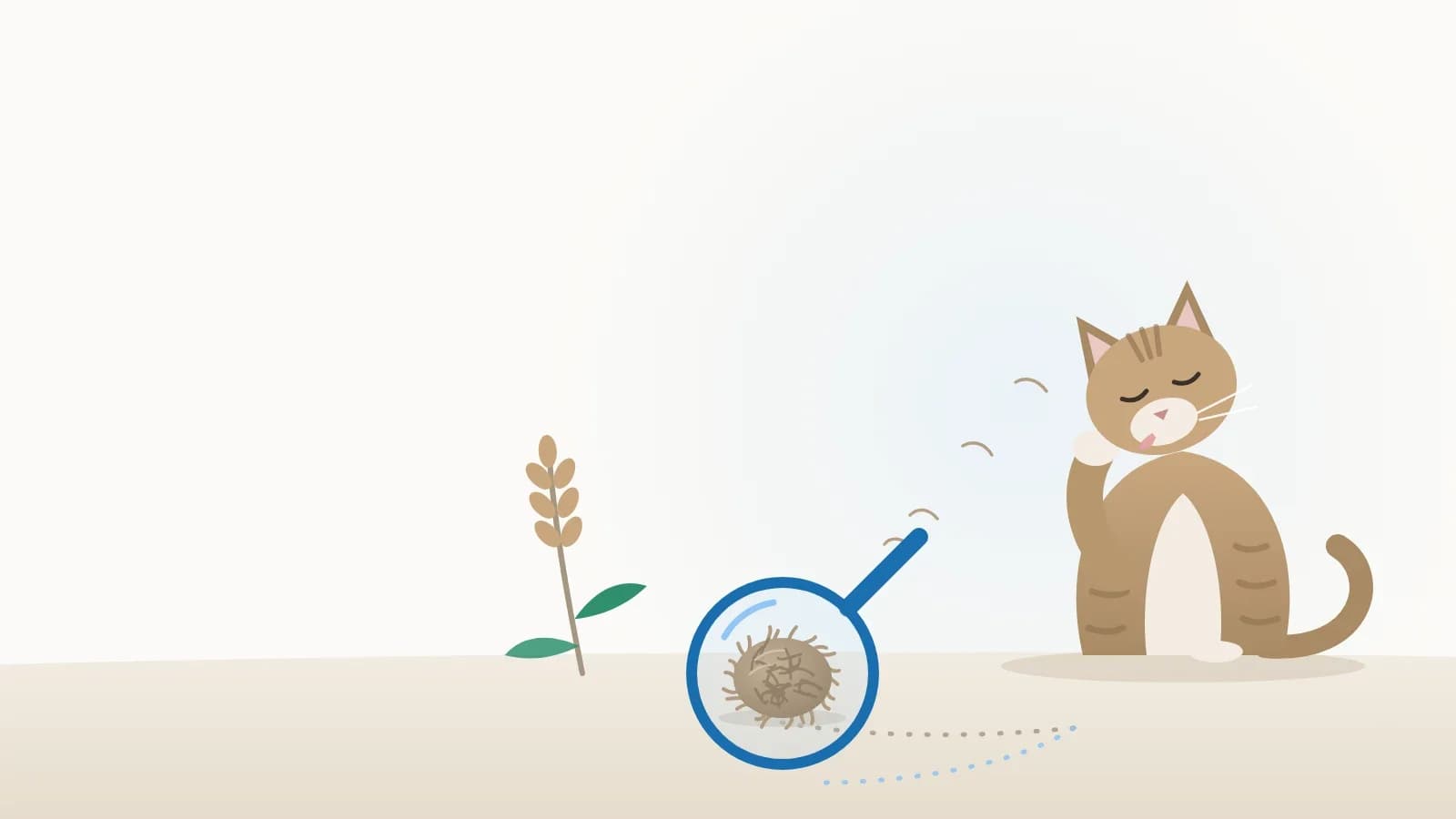
Vomiting in Cats: Hairball or Something Else?
Is your cat's vomiting a hairball or a sign of something else? What the colour and frequency of vomit tell you, and when to see your vet.
Occasional vomiting that brings up a tightly packed, cylindrical mass of hair is most often caused by a hairball. However, frequent or recurrent vomiting; contents containing blood, looking like coffee grounds or smelling of faeces; loss of appetite or lethargy may point to another problem. Note the colour and frequency of the vomiting; diagnosis and treatment belong to your vet.
My cat has been sick: is it really vomiting?
First, it helps to identify what you are actually seeing; it is one of the first things your vet will ask.
- Vomiting: The cat becomes restless, swallows repeatedly and may drool, then visibly contracts the abdominal muscles to bring up stomach contents. The material may be partly digested and may contain bile.
- Regurgitation: Undigested, often tube-shaped food comes back up effortlessly, without abdominal effort, usually shortly after eating. It can be linked to eating too fast, but may also indicate a problem with the oesophagus.
- Coughing: The cat crouches low and stretches its neck forward while coughing; usually nothing comes up. Owners often read this as "trying to bring up a hairball", yet it can also be seen with airway diseases such as feline asthma [1].
The distinction is not always easy. If you can, record a short video of the episode; it gives your vet very valuable information.
How does a hairball form?
A cat's tongue is covered with small, stiff, backward-facing keratin projections (papillae). This structure catches loose hairs during grooming, and a large share of the hair caught is swallowed. In a healthy cat, swallowed hair moves along with the normal movements of the digestive tract and is passed in the faeces.
When hair accumulates in the stomach and becomes a compacted mass (a trichobezoar), the cat brings it up by vomiting. This build-up is usually associated with one of two situations [1]:
- 1Swallowing more hair: Long-haired breeds, seasonal moulting and overgrooming. Overgrooming may be driven by flea allergy, skin disease, itching, pain or stress.
- 2Disturbed gut motility: Hair not moving from the stomach into the intestine at its normal pace. Conditions such as chronic intestinal inflammation can affect this movement.
That is why, in a cat that vomits hairballs often, the real question is usually: "Why is so much hair building up?"
What does the colour of the vomit tell you?
Colour alone does not make a diagnosis, but it guides your vet and helps you judge how urgent the situation is.
| Appearance | Possible meaning | What to do | |---|---|---| | Cylindrical, dark mass containing hair | Hairball | If occasional and your cat seems well, monitor; if it becomes more frequent, speak to your vet | | Undigested food, shortly after eating | Eating too fast or regurgitation | If it recurs, speak to your vet | | White or clear, foamy liquid | Fluid from an empty stomach | If it recurs, speak to your vet | | Yellow or green liquid | Bile; often when the stomach is empty | If it recurs or other signs are present, speak to your vet | | Red streaks or fresh blood | Bleeding from the mouth, oesophagus or stomach | See your vet the same day | | Coffee-ground appearance, dark brown | May be digested blood | Seek emergency care | | Brown contents smelling of faeces | Suspected intestinal obstruction | Seek emergency care | | Plant material | Plant eating | Identify the plant; lilies (Lilium species) are highly toxic to cats, seek emergency care | | String, thread, ribbon, plastic | Foreign body | Do not pull string hanging from the mouth; seek emergency care |
Why does the frequency of vomiting matter?
Many owners believe cats "just vomit now and then". A comprehensive literature review of vomiting disorders in cats stresses that frequent vomiting should not be accepted as normal, and that chronic vomiting usually has a cause that needs investigating [2].
Recurrent vomiting can have many causes, including diseases outside the digestive system [2]:
- Chronic enteropathies, inflammatory bowel disease and food sensitivities [4]
- Alimentary lymphoma, particularly in middle-aged and older cats [3]
- Kidney disease, hyperthyroidism, liver and pancreatic disease, diabetes
- Foreign bodies, parasites, medicines and toxins
In a study of cats with chronic digestive signs such as vomiting, weight loss or diarrhoea, inflammatory bowel disease or lymphoma was found in the great majority of the intestinal biopsies taken [3]. This shows clearly why the "must have eaten something, it will pass" approach carries risk.
Frequent hairballs in a cat that is not long-haired should also be treated as a warning sign in itself; frequent hairball vomiting may point to overgrooming or to a gut motility disorder [1].
A practical rule: if vomiting is becoming more frequent, if the gaps between episodes are getting shorter, or if other signs accompany it, this is not normal.
When should you see a vet?
Emergency (same day, without waiting):
- Vomit containing blood, looking like coffee grounds or smelling of faeces
- Repeated vomiting in a short time, unable to keep even water down
- Frequent retching without bringing anything up
- Lethargy, hiding, pain when the abdomen is touched
- Suspicion of swallowing string, toy parts, medicines, toxic plants or chemicals
- Vomiting together with inability to pass faeces or urine (a male cat unable to urinate is an emergency in its own right)
- Vomiting in a kitten, an elderly cat or a cat with a known chronic illness
Book an appointment (without delay):
- Vomiting that recurs over weeks, or hairballs becoming more frequent
- Weight loss, reduced or changed appetite
- Accompanying diarrhoea, increased drinking or urination
- Overgrooming, bald patches, itching
Cats cope poorly with not eating; refusing food for more than a day is a reason to see your vet on its own. Diagnosis and treatment belong to your vet: examination, blood and urine tests, imaging and, where needed, biopsy reveal the real cause of the vomiting. No support given at home replaces this assessment.
How do malt and oils accompany the natural passage of swallowed hair?
With hairball-related complaints, the aim is to accompany swallowed hair as it moves from the stomach into the intestine and out with the faeces, within the normal movements of digestion. Malt pastes have long been used for this purpose as routine care products.
- Malt: Its dense, sticky consistency forms the main body of the paste; it is used to accompany swallowed hair as it moves along with the contents of the digestive tract.
- Flaxseed oil and olive oil: Oils contribute to the lubrication of gut contents. Flaxseed oil is also a source of alpha-linolenic acid (ALA), a plant-derived omega-3 fatty acid.
- Beta 1,3/1,6 glucan: A natural polysaccharide that supports the balance of the intestinal environment.
Two points deserve emphasis. First, cats cannot taste sweetness; the gene encoding the sweet taste receptor has lost its function in cats [5]. So it is aroma and texture, not sugar, that determine whether a cat accepts a paste. Second, controlled clinical studies directly measuring the effect of malt pastes are limited. Malt support does not replace regular brushing and veterinary assessment; it is a care step that accompanies them. In some cats your vet may also suggest further dietary adjustments, such as a diet with modified fibre content.
What can you do at home?
- Keep a vomiting diary: Date, time, relation to meals, colour and contents; a photo if possible. This record makes your vet's job easier.
- Brush regularly: Especially in long-haired cats and during heavy moulting, every hair removed by the brush is one your cat will not swallow.
- Encourage drinking: Fresh water, several water bowls or a water fountain can help.
- Ease stress and boredom: Offer play, climbing spaces and hiding places; stress can be one cause of overgrooming.
- Plan any diet change with your vet: Sudden food changes can upset digestion.
- Do not medicate on your own: Many human medicines (for example paracetamol) are toxic to cats. Do not force substances such as liquid paraffin by mouth without veterinary advice; there is a risk of them entering the airways.
About Mallia
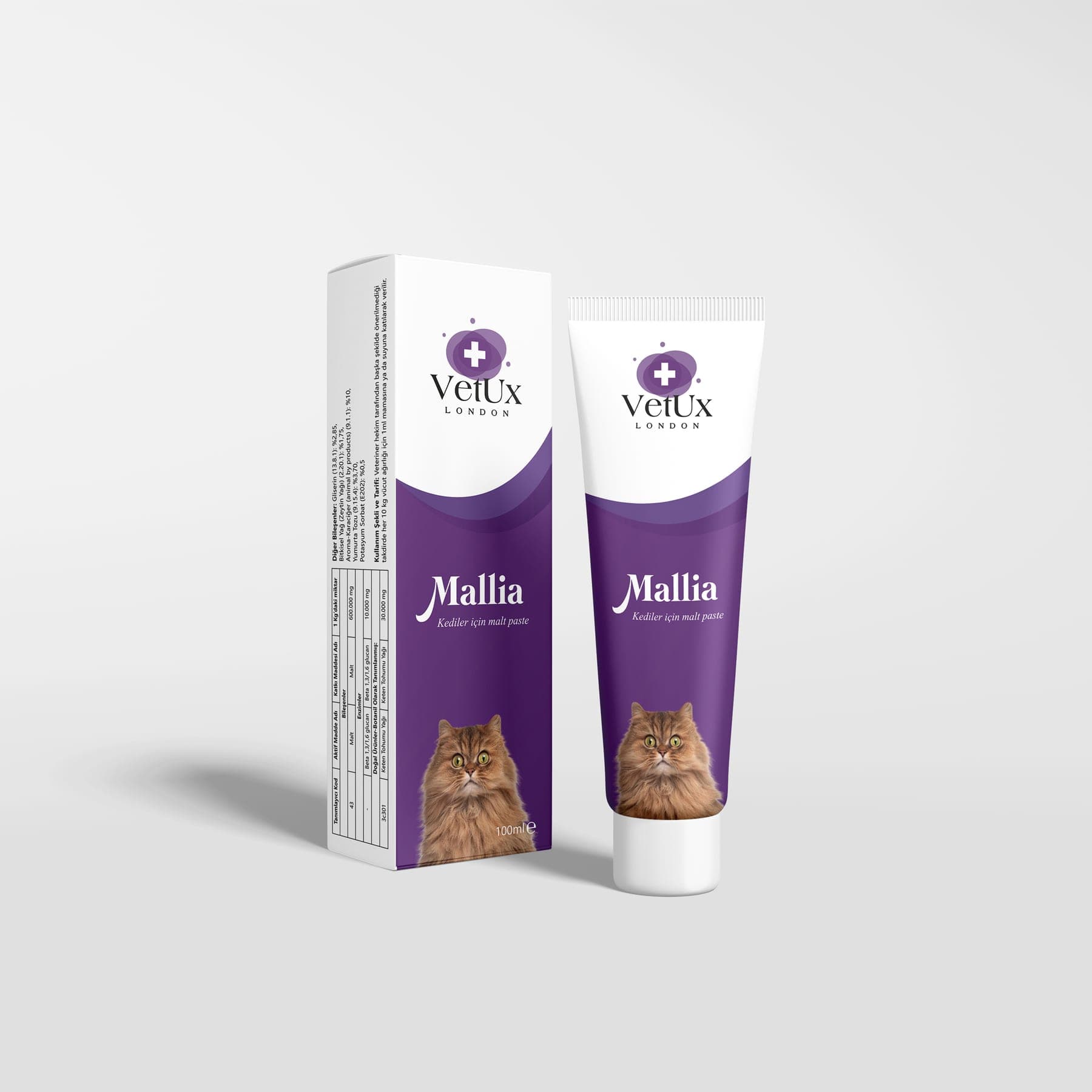
Mallia is a complementary feed for cats in malt paste form. Its formula is malt-based and completed with flaxseed oil and beta 1,3/1,6 glucan; olive oil and glycerine are also part of the paste. Mallia is designed to accompany the natural passage of hair swallowed during grooming through the digestive tract and to support comfortable digestion; it can be considered part of the care routine during periods of heavy moulting. As the formula contains liver flavour and egg powder, speak to your vet before use in cats with food sensitivities. Mallia is not a medicine; it does not replace the assessment of vomiting that is recurrent or accompanied by any of the warning signs above. See the product label for directions and speak to your vet. Product details: Mallia product page
Frequently asked questions
Is it normal for my cat to bring up a hairball now and then?
An occasional hairball can be seen, especially in long-haired cats and during moulting. However, if it is becoming more frequent, occurs often in a short-haired cat or comes with other signs, there may be an underlying cause; speak to your vet.
My cat seems to be trying to bring up a hairball but nothing comes out. What should I do?
An episode where the cat crouches, stretches its neck and nothing comes up may be coughing, which is seen with airway problems such as feline asthma. Repeated retching can also be a sign of obstruction. If possible, film it and show your vet.
Is yellow or white foamy vomit dangerous?
Yellow-green fluid is usually bile, and white foam is usually fluid from an empty stomach. It may be a one-off; if it recurs or is accompanied by loss of appetite and lethargy, see your vet for a diagnosis.
Is malt paste a medicine?
No. Malt paste is not a medicine but a complementary feed; it accompanies the natural passage of swallowed hair through the digestive tract. Finding the cause of vomiting and planning its treatment is your vet's job.
How much malt paste should I give, and how often?
The right way to use it depends on your cat. Check the information on the product label and agree the appropriate use for your cat with your vet.
What should I pay attention to at home regarding hairballs?
Regular brushing, adequate water intake, easing stress and investigating the cause of overgrooming (itching, fleas, pain) are the key steps. Plan any dietary changes with your vet.
References
- 1Cannon M. Hair balls in cats: a normal nuisance or a sign that something is wrong? J Feline Med Surg. 2013;15(1):21–29. doi:10.1177/1098612X12470342
- 2Batchelor DJ, Devauchelle P, Elliott J, et al. Mechanisms, causes, investigation and management of vomiting disorders in cats: a literature review. J Feline Med Surg. 2013;15(4):237–265. doi:10.1177/1098612X12473466
- 3Norsworthy GD, Scot Estep J, Kiupel M, Olson JC, Gassler LN. Diagnosis of chronic small bowel disease in cats: 100 cases (2008–2012). J Am Vet Med Assoc. 2013;243(10):1455–1461. doi:10.2460/javma.243.10.1455
- 4Jergens AE. Feline idiopathic inflammatory bowel disease: what we know and what remains to be unraveled. J Feline Med Surg. 2012;14(7):445–458. doi:10.1177/1098612X12451548
- 5Li X, Li W, Wang H, et al. Pseudogenization of a sweet-receptor gene accounts for cats' indifference toward sugar. PLoS Genet. 2005;1(1):e3. doi:10.1371/journal.pgen.0010003
Final word
An occasional hairball is part of the grooming routine for many cats; but if the colour of the vomit changes, if it becomes more frequent or if your cat's general condition worsens, that is a signal. Record what you observe and have it checked by a professional rather than guessing. Whenever you have a concern about your cat's vomiting, speak to your vet.
Frequently asked questions
Is it normal for my cat to bring up a hairball now and then?
An occasional hairball can be seen, especially in long-haired cats and during moulting. However, if it is becoming more frequent, occurs often in a short-haired cat or comes with other signs, there may be an underlying cause; speak to your vet.
My cat seems to be trying to bring up a hairball but nothing comes out. What should I do?
An episode where the cat crouches, stretches its neck and nothing comes up may be coughing, which is seen with airway problems such as feline asthma. Repeated retching can also be a sign of obstruction. If possible, film it and show your vet.
Is yellow or white foamy vomit dangerous?
Yellow-green fluid is usually bile, and white foam is usually fluid from an empty stomach. It may be a one-off; if it recurs or is accompanied by loss of appetite and lethargy, see your vet for a diagnosis.
Is malt paste a medicine?
No. Malt paste is not a medicine but a complementary feed; it accompanies the natural passage of swallowed hair through the digestive tract. Finding the cause of vomiting and planning its treatment is your vet's job.
How much malt paste should I give, and how often?
The right way to use it depends on your cat. Check the information on the product label and agree the appropriate use for your cat with your vet.
What should I pay attention to at home regarding hairballs?
Regular brushing, adequate water intake, easing stress and investigating the cause of overgrooming (itching, fleas, pain) are the key steps. Plan any dietary changes with your vet.
This article is for general information only; it does not replace veterinary examination, diagnosis or treatment. VetUx London products are complementary feed. If you have any concern about your companion, please consult your veterinary surgeon.
Share
The formulas matching the nutritional support described above.
Related articles
All articles Clinical Notes
Shedding and Skin Changes in Neutered Cats: The Role of Hormones
Why does your cat's coat change after neutering? How hormones affect sebaceous glands, the hair cycle and weight, what must be ruled out first with a bald patch, and when to see your veterinary surgeon.
 Clinical Notes
How to Choose a Probiotic for Cats and Dogs: Strain, Colony Count and Storage Conditions
What should you look for on the label when choosing a probiotic for your cat or dog? Why the strain name and code matter, how to read the colony count (CFU), how storage affects viability and why human probiotics should not be given, with references.
 Clinical Notes
Diarrhoea in Dogs: What to Check in the First 24 Hours, and Which Signs Are an Emergency?
What to watch in the first 24 hours after your dog's diarrhoea starts, the signs of fluid loss, why bloody diarrhoea in a puppy is an emergency and the role of the gut flora, with references.