
Diarrhoea in Dogs: What to Check in the First 24 Hours, and Which Signs Are an Emergency?
What to watch in the first 24 hours after your dog's diarrhoea starts, the signs of fluid loss, why bloody diarrhoea in a puppy is an emergency and the role of the gut flora, with references.
Short answer: In the first 24 hours, watch how often your dog passes stool, its consistency and colour, whether they drink, their energy and any vomiting. If a puppy has bloody diarrhoea, repeated vomiting, marked lethargy or will not drink, do not wait: contact your veterinary surgeon the same day. Diagnosis and treatment are your vet's decision.
Why do dogs get diarrhoea?
Diarrhoea is not a disease in itself; it is a sign. Stools that are more frequent, softer or watery than normal show that something has disturbed the absorption of water and nutrients, the gut wall or gut movement. Common causes of acute (new-onset) diarrhoea in dogs include:
- Dietary causes: A sudden change of food, fatty table scraps, scavenging from the bin, a new treat or a bone.
- Parasites: Intestinal worms and single-celled parasites, especially in puppies.
- Infections: Viral and bacterial agents, above all parvovirus in puppies whose vaccination course is not complete.
- Stress: Travel, kennels, moving house or a new routine at home.
- Foreign bodies and poisoning: A swallowed toy or sock, certain plants, household chemicals.
- Disease in other organs: Problems with the pancreas, liver or kidneys can also show up as diarrhoea.
In adult dogs that are otherwise well, a large share of acute diarrhoea settles on its own within a short time (Jessen et al., 2024). However, it is not possible to tell at home with certainty which diarrhoea is "simple" and which is the first sign of something serious. Finding the cause and planning treatment is your veterinary surgeon's job.
What happens in the gut during diarrhoea?
Every day a healthy gut secretes a large volume of fluid into its lumen and reabsorbs almost all of it. Anything that upsets this fine balance can lead to diarrhoea. There are four main mechanisms:
- 1Osmotic diarrhoea: Undigested food (for example after a sudden food change or a very fatty meal) stays in the gut lumen and draws water in.
- 2Secretory diarrhoea: Substances produced by certain micro-organisms make gut cells secrete excess fluid into the lumen.
- 3Increased permeability: Fluid, protein and sometimes blood leak through an inflamed or damaged gut wall. In parvovirus infection, the cells that line the gut surface are damaged directly (Mazzaferro, 2020).
- 4Altered motility: When contents pass through the gut too quickly, there is not enough time for absorption.
What role does the gut flora play?
The billions of micro-organisms living in the gut (the gut flora, or microbiota) are not mere passengers. By fermenting fibre they produce short-chain fatty acids, an important energy source for gut cells; they take part in converting bile acids; and they accompany the normal functioning of the gut barrier and the immune system (Pilla and Suchodolski, 2020).
In dogs with acute diarrhoea, the faecal microbiota has been shown to differ markedly from that of healthy dogs, with some beneficial bacterial groups reduced; the difference is even more pronounced in bloody diarrhoea (Suchodolski et al., 2012). Even after the diarrhoea has passed, the flora may take time to return to its previous balance. Antibiotics are also known to change the composition of the gut flora (Pilla and Suchodolski, 2020). The current European guideline recommends that antibiotics are not used routinely for acute diarrhoea in dogs that are otherwise well and have no systemic signs (Jessen et al., 2024). Whether an antibiotic is needed is decided by your vet after examination; never give your dog leftover antibiotics on your own.
Probiotics generally do not settle permanently in the gut; they contribute to the gut environment while passing through (Pilla and Suchodolski, 2020). The certainty of the evidence on probiotics in acute diarrhoea is still low, and the guideline makes no firm recommendation for or against them (Scahill et al., 2024; Jessen et al., 2024). Support containing probiotics or prebiotics should therefore be seen as an addition to your vet's plan; it does not replace examination or treatment.
What should you check at home in the first 24 hours?
If your dog is an adult, has normal energy, is drinking and shows none of the emergency signs listed below, you can spend the first hours observing carefully. During this time, make a note of:
- Frequency: How many times have they passed stool, and are the gaps getting shorter?
- Consistency: Soft, porridge-like or watery?
- Colour and content: Is there red blood, mucus (a jelly-like coating), black tar-like stool or pieces of a foreign object?
- Vomiting: Is diarrhoea accompanied by vomiting, and how often?
- Water and appetite: Are they drinking? Are they interested in food?
- Behaviour: How are their interest in play and their walking? Do they show discomfort when their belly is touched?
- Recent changes: New food or treats, scavenging, travel, kennels; dates of the last vaccination and worming treatment.
Points to keep in mind during this time:
- Make sure fresh, clean water is always available.
- Take a photo of the stool and, if possible, keep a fresh sample in a clean, closed container. It helps at the consultation.
- Rather than deciding on food, a home-cooked diet or withholding food yourself, call your veterinary surgeon. Withholding food for long periods is risky, especially in puppies.
- Do not give anti-diarrhoea medicines or painkillers made for people, or leftover antibiotics. Some can poison dogs or mask the underlying problem.
- Do not try a new food or treat during this period; do not add to the load on the gut.
If the signs have not improved within 24 hours, are getting worse or the diarrhoea keeps coming back, do not keep waiting: see your veterinary surgeon.
How can you tell if your dog is losing too much fluid?
With every watery stool the body loses electrolytes such as sodium and potassium as well as water. If there is vomiting too, or the dog is not drinking, the fluid deficit grows quickly. Signs you can look for at home:
- Dry, sticky gums
- Skin at the scruff of the neck returning slowly when gently lifted and released
- Sunken eyes and a dull expression
- Lethargy, reluctance to get up
- A marked drop in the amount of urine
- Slow return of colour after pressing a finger on the gum (normally it returns within about two seconds)
Even one of these signs may mean that fluid loss is advanced. Whether lost fluid is replaced by mouth, under the skin or into a vein is decided by your vet after examination. With sudden, profuse bloody diarrhoea, fluid loss can become serious within a few hours in adult dogs too, particularly small breeds. In this condition, called acute haemorrhagic diarrhoea syndrome, the cornerstone of care is prompt intravenous fluid therapy (Unterer and Busch, 2021).
Why is bloody diarrhoea in a puppy an emergency?
Puppies have limited fluid and energy reserves for their body weight. A loss that an adult could tolerate for a while can become dangerous for a puppy within hours, and low blood sugar may add to the fluid loss.
When bloody diarrhoea, vomiting and lethargy appear together, especially in puppies that have not completed their vaccination course, one of the first causes to consider is parvoviral enteritis. In this infection the gut wall and white blood cells are damaged; diagnosis is supported by a faecal test and blood tests, and intensive supportive care in hospital is regarded as the gold standard (Mazzaferro, 2020). Because antibodies passed on from the mother can blunt the effect of early vaccination, a puppy remains at risk until the vaccination course is complete. Besides parvovirus, a heavy parasite burden, foreign bodies and poisoning can also cause bloody diarrhoea in puppies.
So if you see bloody diarrhoea in a puppy, do not settle for watching at home or decide to "wait until tomorrow": call your veterinary surgeon straight away. The practice may direct you to a separate entrance to prevent spread of infection, so always phone before you go.
When should you see a veterinary surgeon?
If any of the following apply, see your veterinary surgeon the same day, and immediately if possible:
- Diarrhoea in a puppy (especially if vaccinations are incomplete and the diarrhoea is bloody)
- Obvious blood in the stool, or black, tar-like stool
- Repeated vomiting alongside diarrhoea, or vomiting even water
- Not drinking, or refusing food completely
- Marked lethargy, exhaustion, not getting up
- Signs of fluid loss (dry gums, sunken eyes, slow return of the neck skin)
- A swollen, hard or painful belly
- Fever or, conversely, cold ears and paws
- Suspected swallowing of a foreign object, scavenging or contact with a toxic substance
- Very frequent, watery diarrhoea
- An older dog, or a dog with a known long-term condition such as kidney disease, liver disease or diabetes
- Diarrhoea that does not improve within 24–48 hours, comes back after improving or gets worse
If none of these apply but you are still uneasy, do not hesitate to call your vet. The details you give over the phone (frequency, consistency, blood, vomiting, drinking) help them judge how urgent it is. Diagnosis and treatment are the responsibility of the veterinary surgeon who examines your dog.
Can a sudden change of food cause diarrhoea?
Yes, it is one of the most common causes. The gut flora is shaped by the food a dog eats regularly (Pilla and Suchodolski, 2020). When food is changed abruptly, the new protein, fat and fibre content hits this balance all at once; the undigested part holds water in the gut and osmotic diarrhoea can develop.
To prevent this, a gradual changeover spread over roughly one week to ten days is usually recommended: in the first days a small part of the old food is replaced with the new one, and the share of new food is increased every few days. If the stool softens during the changeover, go back a step and move more slowly; if diarrhoea persists, consult your vet. Table scraps, fatty leftovers and frequently changed treats strain the gut balance in the same way.
How can the gut flora be supported after diarrhoea?
In the days after diarrhoea has settled, the aim is to give the gut and its flora time to return to their usual rhythm. The basic steps are: sticking to the feeding plan your vet recommends, returning gradually to the usual food, avoiding unnecessary medicines and sudden food changes, and keeping a record of any repeat episodes with dates and details.
Soluble, fermentable fibres such as pectin provide a substrate for the gut flora's production of short-chain fatty acids (Pilla and Suchodolski, 2020). Complementary feeds containing probiotics and prebiotics can accompany this process where your vet considers it appropriate. Diarrhoea that keeps recurring or lasts longer than three weeks needs a separate assessment, and your vet may plan further tests.
What is Flora Guard Plus?
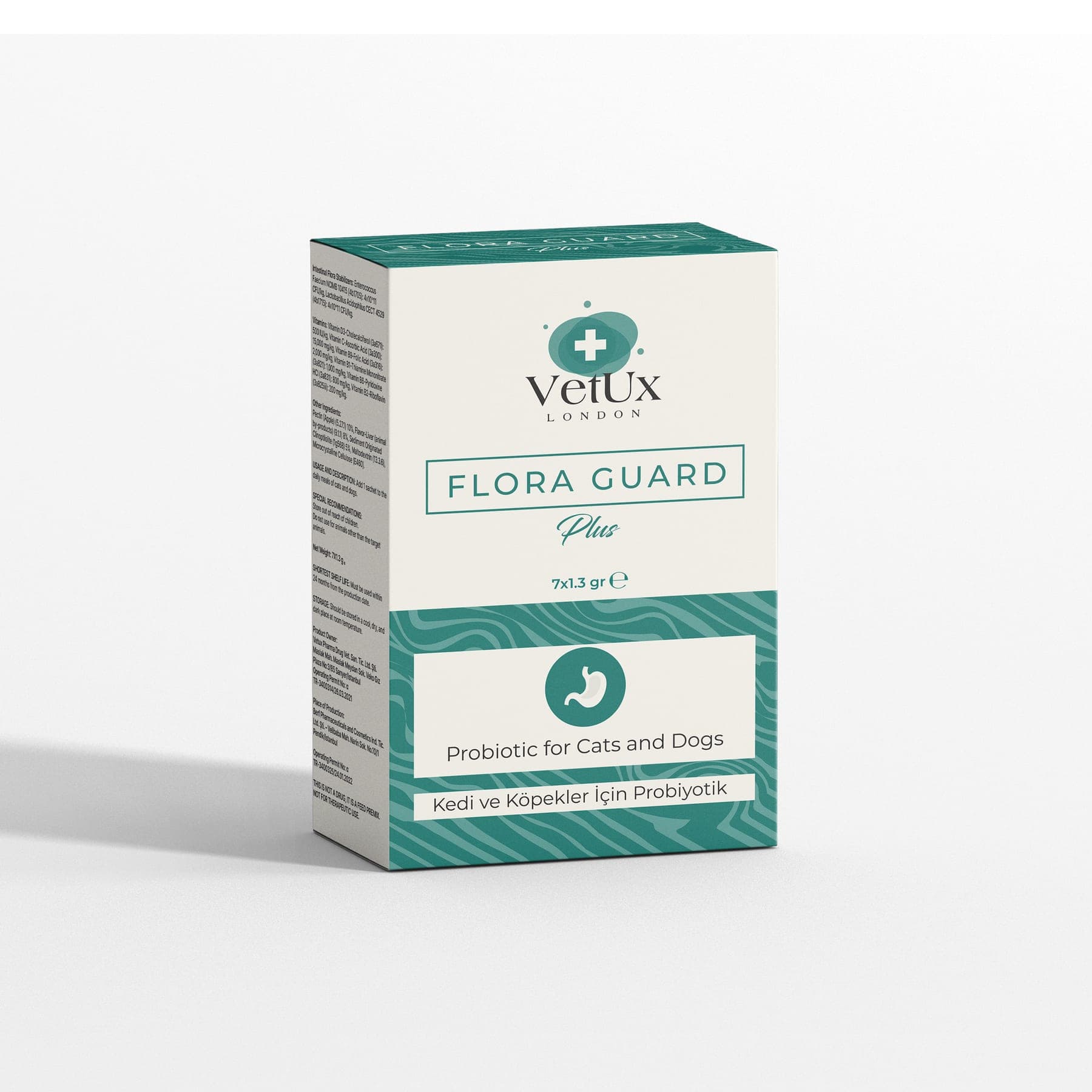
Flora Guard Plus is a complementary feed in powder form, presented in sachets, that contributes to maintaining the normal balance of the gut flora in cats and dogs. Its label composition includes three probiotic strains (Enterococcus faecium NCIMB 10415, Lactobacillus acidophilus CECT 4529 and Lactobacillus reuteri), apple pectin as a prebiotic fibre, zeolite (clinoptilolite) as a natural mineral, and vitamins C, B9 (folic acid), B1, B6, B2 and D3. Apple pectin accompanies the natural transit of gut contents and the regularity of stool consistency; the vitamins support everyday energy metabolism and normal digestion. Flora Guard Plus is not a medicine; it does not remove the cause of diarrhoea and does not replace the correction of fluid loss or examination by a veterinary surgeon. Your vet will decide whether it is suitable for your dog, when and how to use it, and the timing in dogs receiving antibiotics. For product information: Flora Guard Plus product page.
Frequently Asked Questions
My dog has diarrhoea but seems bright; should I wait? An adult dog that is lively, drinking, has no blood in the stool and is not vomiting can be watched carefully for a short time. If the diarrhoea does not improve within 24 hours, gets worse or any emergency sign appears, see your veterinary surgeon. Do not wait with a puppy.
Should I withhold food from a dog with diarrhoea? Withholding food for long periods is risky, especially in puppies and small breeds. Your vet will decide when, what and how much to feed based on your dog's condition. Fresh, clean water should always be available.
What should I do if I see a little blood or mucus in the stool? Small amounts of red blood and mucus can be seen with irritation of the large intestine, but the cause cannot be identified at home. Call your vet immediately if it is a puppy or there is vomiting and lethargy, and the same day for an adult dog. Black, tar-like stool is always an emergency.
Can I give my dog anti-diarrhoea medicines meant for people? No. Medicines made for people can poison dogs or mask a serious underlying problem. Never give your dog any medicine without your vet's advice.
What should I do if diarrhoea started after a change of food? In consultation with your vet, you can go back to the old food and then plan a slower changeover to the new food over about one week to ten days. If diarrhoea persists or any emergency sign appears, see your vet without delay.
Can a complementary feed containing probiotics replace a visit to the vet? No. Complementary feeds containing probiotics and prebiotics contribute to the normal balance of the gut flora, but they are not medicines and do not replace examination. The certainty of the evidence on probiotics in acute diarrhoea is still low; your vet decides on their use.
Conclusion
Diarrhoea is often a short-lived digestive upset; however, bloody diarrhoea in a puppy, vomiting, lethargy or signs of fluid loss can herald a condition that becomes serious within hours. Careful observation in the first 24 hours, noting what you see and recognising the emergency signs help your vet make the right decision quickly. For the right plan for your dog's diarrhoea, consult your veterinary surgeon.
References
- 1Jessen LR, Werner M, Singleton D, et al. European Network for Optimization of Veterinary Antimicrobial Therapy (ENOVAT) guidelines for antimicrobial use in canine acute diarrhoea. Vet J. 2024;307:106208. doi:10.1016/j.tvjl.2024.106208
- 2Scahill K, Jessen LR, Prior C, et al. Efficacy of antimicrobial and nutraceutical treatment for canine acute diarrhoea: A systematic review and meta-analysis for European Network for Optimization of Antimicrobial Therapy (ENOVAT) guidelines. Vet J. 2024;303:106054.
- 3Pilla R, Suchodolski JS. The role of the canine gut microbiome and metabolome in health and gastrointestinal disease. Front Vet Sci. 2020;6:498. doi:10.3389/fvets.2019.00498
- 4Suchodolski JS, Markel ME, Garcia-Mazcorro JF, et al. The fecal microbiome in dogs with acute diarrhea and idiopathic inflammatory bowel disease. PLoS One. 2012;7(12):e51907. doi:10.1371/journal.pone.0051907
- 5Unterer S, Busch K. Acute hemorrhagic diarrhea syndrome in dogs. Vet Clin North Am Small Anim Pract. 2021;51(1):79-92.
- 6Mazzaferro EM. Update on canine parvoviral enteritis. Vet Clin North Am Small Anim Pract. 2020;50(6):1307-1325. doi:10.1016/j.cvsm.2020.07.008
Frequently asked questions
My dog has diarrhoea but seems bright; should I wait?
An adult dog that is lively, drinking, has no blood in the stool and is not vomiting can be watched carefully for a short time. If the diarrhoea does not improve within 24 hours, gets worse or any emergency sign appears, see your veterinary surgeon. Do not wait with a puppy.
Should I withhold food from a dog with diarrhoea?
Withholding food for long periods is risky, especially in puppies and small breeds. Your vet will decide when, what and how much to feed based on your dog's condition. Fresh, clean water should always be available.
What should I do if I see a little blood or mucus in the stool?
Small amounts of red blood and mucus can be seen with irritation of the large intestine, but the cause cannot be identified at home. Call your vet immediately if it is a puppy or there is vomiting and lethargy, and the same day for an adult dog. Black, tar-like stool is always an emergency.
Can I give my dog anti-diarrhoea medicines meant for people?
No. Medicines made for people can poison dogs or mask a serious underlying problem. Never give your dog any medicine without your vet's advice.
What should I do if diarrhoea started after a change of food?
In consultation with your vet, you can go back to the old food and then plan a slower changeover to the new food over about one week to ten days. If diarrhoea persists or any emergency sign appears, see your vet without delay.
Can a complementary feed containing probiotics replace a visit to the vet?
No. Complementary feeds containing probiotics and prebiotics contribute to the normal balance of the gut flora, but they are not medicines and do not replace examination. The certainty of the evidence on probiotics in acute diarrhoea is still low; your vet decides on their use.
This article is for general information only; it does not replace veterinary examination, diagnosis or treatment. VetUx London products are complementary feed. If you have any concern about your companion, please consult your veterinary surgeon.
Share
The formulas matching the nutritional support described above.
Related articles
All articles Clinical Notes
My Cat Keeps Going to the Litter Box: Lower Urinary Tract Signs and Emergencies
Frequent litter box trips, straining and bloody urine are lower urinary tract signs in cats, and a male cat that cannot urinate is an emergency. We explain the signs, the role of stress and water intake, and when to see your vet.
 Clinical Notes
What Is Lanthanum Carbonate? Phosphorus Balance and Phosphate Binders in Cats and Dogs
Lanthanum carbonate is a phosphate binder that forms insoluble lanthanum phosphate with dietary phosphate in the intestinal lumen. Its mechanism, why it is given with meals, its link to diet and key monitoring points, with references.
 Clinical Notes
What Do High Creatinine and Urea Mean in Cats? A Guide to Reading Blood Test Results
High creatinine and urea on a blood test do not always mean kidney disease. We explain what these values measure, how hydration and diet affect them, and how SDMA and urine tests complete the picture.