
What Is Lanthanum Carbonate? Phosphorus Balance and Phosphate Binders in Cats and Dogs
Lanthanum carbonate is a phosphate binder that forms insoluble lanthanum phosphate with dietary phosphate in the intestinal lumen. Its mechanism, why it is given with meals, its link to diet and key monitoring points, with references.
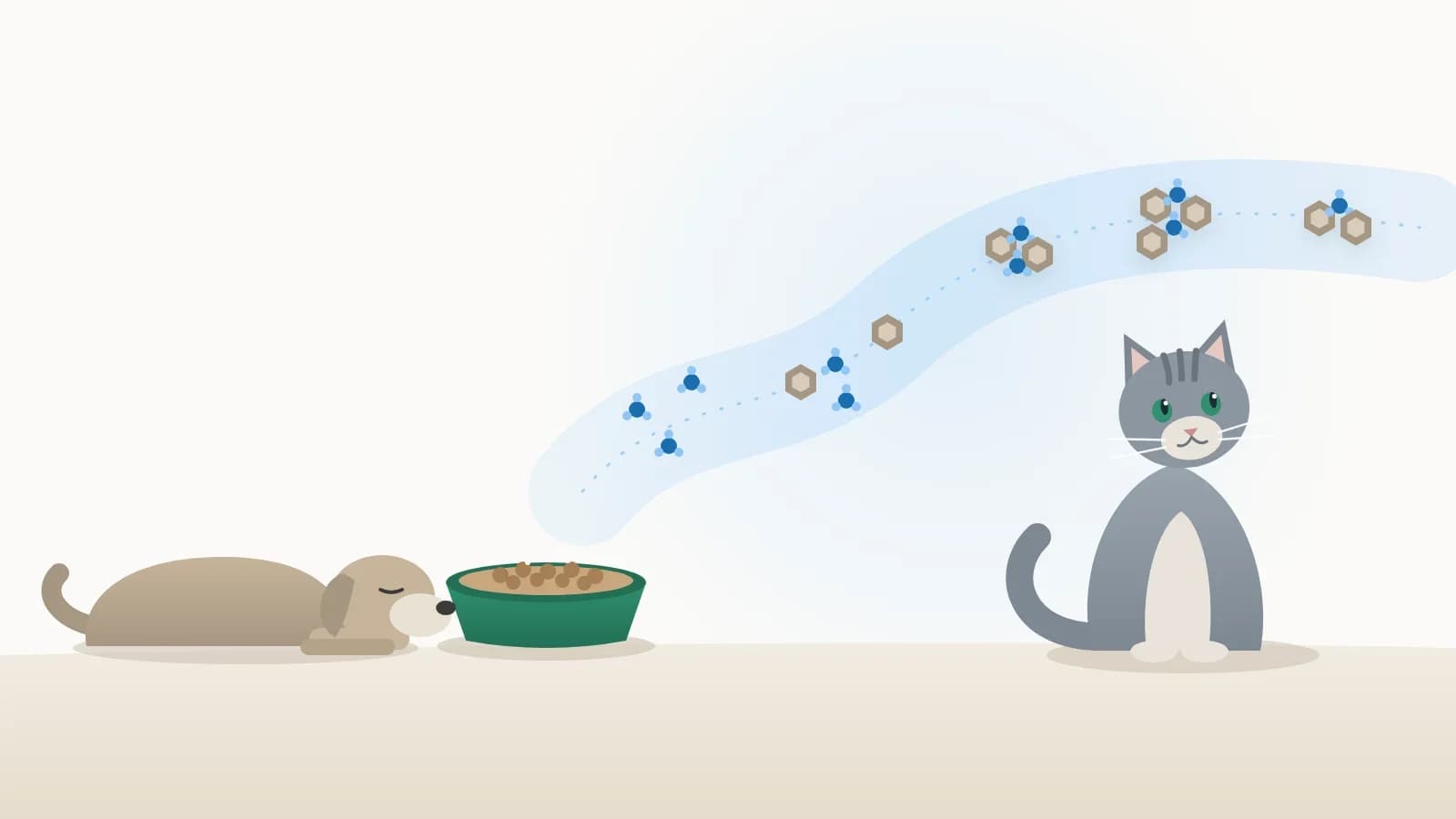
Short answer: Lanthanum carbonate is a phosphate binder that combines with dietary phosphate in the intestinal lumen to form insoluble lanthanum phosphate. This compound is not absorbed and passes out in the faeces. For this reason, phosphate binders are given with meals and used as part of dietary management in cats and dogs, as assessed by the veterinary surgeon.
Why is phosphorus balance disrupted in chronic kidney disease?
Phosphorus homeostasis depends largely on the kidneys. As glomerular filtration rate declines, phosphate excretion becomes limited, and the body responds by increasing FGF-23 and parathyroid hormone (PTH) secretion. This adaptation may initially keep serum phosphorus within the reference interval, but as the disease progresses, hyperphosphataemia and secondary renal hyperparathyroidism become apparent (Geddes et al., 2013). In cats, hyperphosphataemia is common in IRIS stages 3 and 4 and can be documented in some stage 2 patients (Kidder and Chew, 2009).
The IRIS recommendations and the ISFM consensus guidelines therefore identify keeping serum phosphorus within stage-specific target ranges as one of the core goals of chronic kidney disease (CKD) management (IRIS, 2023; Sparkes et al., 2016). Maintaining plasma phosphorus within IRIS targets has been associated with survival and with signs of secondary hyperparathyroidism (Geddes et al., 2013).
Why is diet the first step in phosphorus management?
The intervention with the strongest evidence base is a phosphorus-restricted renal diet. Longer survival in cats with naturally occurring CKD fed a renal diet was reported in a prospective cohort (Elliott et al., 2000), and fewer uraemic crises and renal-related deaths in cats with stage 2–3 CKD were reported in a randomised controlled trial (Ross et al., 2006).
The general approach in the guidelines is this: when diet alone is not enough to reach the target range, or when the patient will not accept a renal diet, an intestinal phosphate binder is added to the plan (IRIS, 2023; Sparkes et al., 2016). The binder does not replace the diet; it complements it. At the same time, excessive phosphorus restriction can affect calcium balance, particularly in cats at earlier stages, so monitoring should cover calcium as well as serum phosphorus (IRIS, 2023; Kidder and Chew, 2009).
How does lanthanum carbonate work in the gut?
The mechanism takes place entirely within the lumen:
- 1Release of the lanthanum ion: In the acidic environment of the stomach, lanthanum carbonate dissolves and releases the trivalent lanthanum ion (La³⁺).
- 2Formation of an insoluble compound: La³⁺ binds dietary phosphate ions with high affinity, forming water-insoluble lanthanum phosphate (LaPO₄).
- 3Faecal excretion: Bound phosphate is not available for absorption; the complex moves along the digestive tract and is excreted in the faeces.
Systemic absorption of lanthanum itself is extremely low. Human pharmacokinetic data show very low oral bioavailability, with the small absorbed fraction cleared mainly via bile and only a very small proportion excreted in urine (Damment and Pennick, 2008). These data come from humans and should not be extrapolated directly across species. In cats, the authorisation of lanthanum carbonate octahydrate as a feed additive rests on an assessment by the European Food Safety Authority (EFSA), which concluded that no adverse effect on animal health was identified under the proposed conditions of use (Commission Implementing Regulation (EU) 2022/1471).
Why are phosphate binders given with meals?
For a binder to work, it has to be in the same place at the same time as the phosphate. Dietary phosphate enters the digestive tract with the meal. When a binder is given independently of meals, there is little dietary phosphate in the lumen for it to bind. Phosphate binders are therefore mixed into food or given at the same time as the meal, and the patient's daily feeding pattern (number of meals, free feeding) should be considered as part of the plan.
Diet choice matters just as much. The EU authorisation requires the labelling of feeds containing lanthanum carbonate octahydrate to state that they should not be fed together with high-phosphorus feeds (2022/1471). This follows naturally from the mechanism: a binder makes sense within a diet whose phosphorus load is already being managed.
What should be considered when choosing a phosphate binder?
Several classes of phosphate binder are used in veterinary practice, including aluminium-, calcium-, lanthanum- and iron-based compounds and chitosan-containing products (Kidder and Chew, 2009). The choice is patient-specific and rests on:
- Serum phosphorus and calcium levels, and IRIS stage
- The patient's acceptance of a renal diet and overall food intake
- Palatability and ease of mixing into food (binders can affect food acceptance; in a patient with reduced appetite, maintaining food intake comes first)
- Concurrent conditions and other products in use
Published work focusing on the safety and efficacy of phosphate binders in veterinary medicine is limited (Kidder and Chew, 2009). Binder use should therefore go hand in hand with regular laboratory monitoring. Diagnosis and treatment decisions always rest with the veterinary surgeon examining the patient.
What is Vetux P-57?
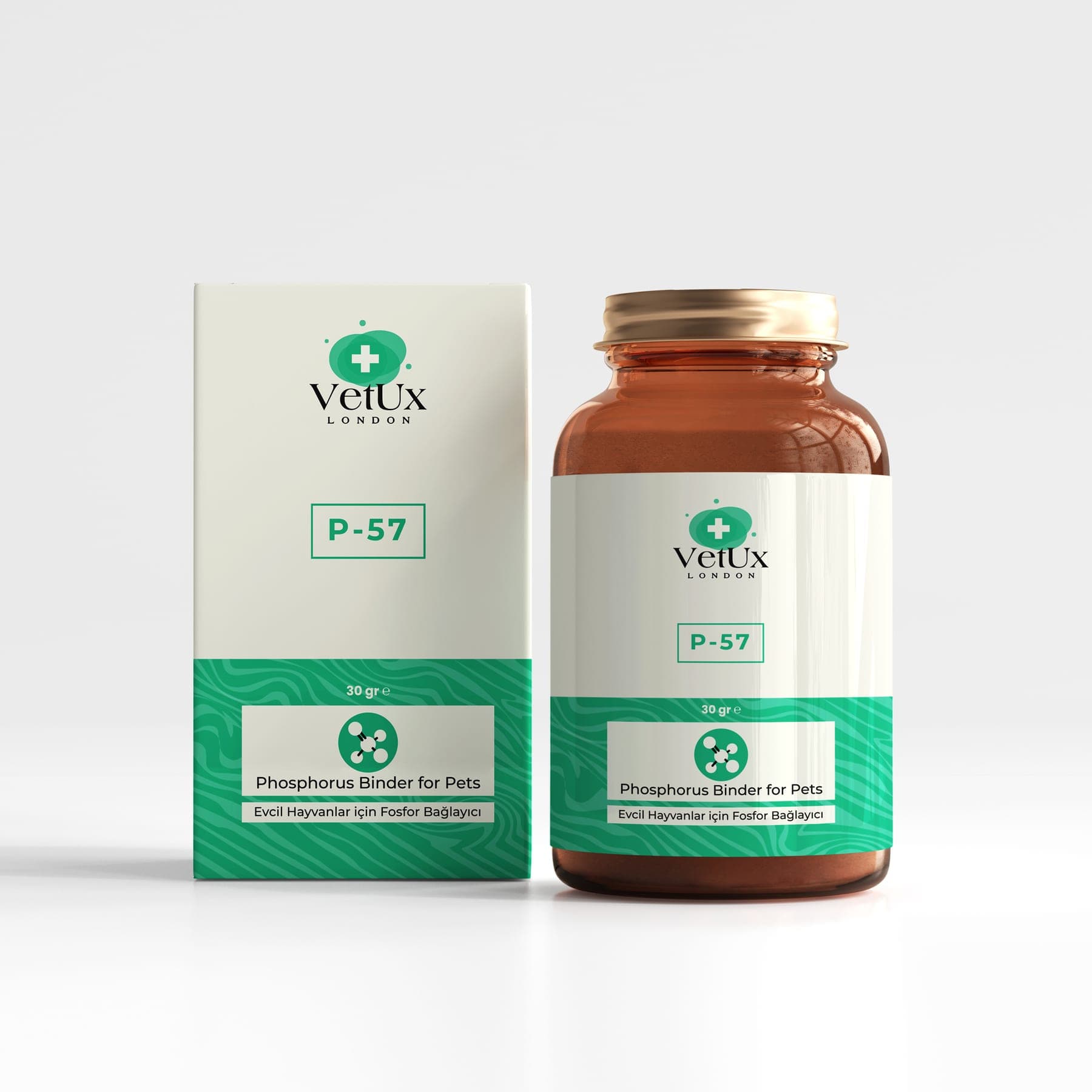
P-57 is a complementary feed in powder form, formulated to help maintain a normal phosphorus balance. According to its label composition, it contains, per kg, 895,000 mg lanthanum carbonate octahydrate (4d23) and 5,000 mg colloidal silica (E551b), which keeps the powder free-flowing. Lanthanum carbonate forms insoluble compounds with dietary phosphate in the digestive tract, so that phosphorus passes out in the faeces; the product is therefore given with meals, mixed into food, and positioned as nutritional support that complements dietary management. Whether and how much to use is decided by the veterinary surgeon on the basis of the patient's clinical and laboratory assessment. Product information: P-57 product page.
When should owners be referred to the veterinary surgeon?
For patients whose kidney function is being monitored or who are receiving a phosphate binder, owners should be told clearly to contact the veterinary surgeon without waiting for the next check-up if they notice:
- Reduced appetite, refusing food, or not eating food with the binder mixed in
- Weight loss or loss of muscle mass
- A marked increase in drinking and urination
- Vomiting, bad breath, or mouth ulcers
- A change in bowel habits (constipation or diarrhoea)
- Lethargy, reduced activity, or general deterioration
The ISFM guidelines recommend regular health checks including blood pressure, biochemistry and urinalysis for cats over seven years of age (Sparkes et al., 2016). Once a phosphate binder has been added, monitoring of serum phosphorus and calcium, including the recheck interval, is planned by the veterinary surgeon. Diagnosis, staging and the treatment protocol are the veterinary surgeon's responsibility; complementary feeds do not take the place of that process.
Frequently Asked Questions
How does lanthanum carbonate bind phosphorus? Lanthanum ions released in stomach acid combine with dietary phosphate to form water-insoluble lanthanum phosphate. This compound is not absorbed and passes out in the faeces (Damment and Pennick, 2008).
Why should a phosphate binder be given with meals? The binder acts on dietary phosphate that reaches the lumen with the meal. Given independently of meals, there is little phosphate to bind; it is therefore mixed into food or given at the same time as the meal.
Does a phosphate binder replace a renal diet? No. Guidelines position a phosphorus-restricted diet as the first step; a binder is added when diet alone is not enough or the patient does not accept the diet (IRIS, 2023; Sparkes et al., 2016).
Does lanthanum enter the systemic circulation? In human data, the oral bioavailability of lanthanum is extremely low and the small absorbed fraction is cleared mainly via bile (Damment and Pennick, 2008). In the EU, conditions of use in cats were set on the basis of an EFSA assessment (2022/1471).
Which parameters are monitored during phosphate binder use? Serum phosphorus and calcium, IRIS stage, body weight and food intake are the main monitoring points. The recheck interval and plan of use are set by the veterinary surgeon managing the patient.
Can a product containing lanthanum carbonate be given with a high-phosphorus feed? EU legislation requires the labelling of feeds containing this additive to advise against feeding them together with high-phosphorus feeds (2022/1471). Diet choice should be made together with the veterinary surgeon.
Conclusion
Lanthanum carbonate acts in the intestinal lumen by turning dietary phosphate into an insoluble compound, which is why it makes sense given with meals and as part of a diet whose phosphorus load is managed. Assessing phosphorus balance, staging and planning monitoring depend on clinical and laboratory findings. Consult your veterinary surgeon to decide the most appropriate approach for your patient.
References
- 1International Renal Interest Society (IRIS). Treatment Recommendations for CKD in Cats; Treatment Recommendations for CKD in Dogs (2023 update). iris-kidney.com.
- 2Sparkes AH, Caney S, Chalhoub S, et al. ISFM Consensus Guidelines on the Diagnosis and Management of Feline Chronic Kidney Disease. J Feline Med Surg. 2016;18(3):219-239. doi:10.1177/1098612X16631234
- 3Geddes RF, Finch NC, Syme HM, Elliott J. The role of phosphorus in the pathophysiology of chronic kidney disease. J Vet Emerg Crit Care. 2013;23(2):122-133. doi:10.1111/vec.12032
- 4Kidder A, Chew D. Treatment options for hyperphosphatemia in feline CKD: what's out there? J Feline Med Surg. 2009;11(11):913-924. doi:10.1016/j.jfms.2009.09.012
- 5Elliott J, Rawlings JM, Markwell PJ, Barber PJ. Survival of cats with naturally occurring chronic renal failure: effect of dietary management. J Small Anim Pract. 2000;41(6):235-242. doi:10.1111/j.1748-5827.2000.tb03932.x
- 6Ross SJ, Osborne CA, Kirk CA, Lowry SR, Koehler LA, Polzin DJ. Clinical evaluation of dietary modification for treatment of spontaneous chronic kidney disease in cats. J Am Vet Med Assoc. 2006;229(6):949-957.
- 7Damment SJP, Pennick M. Clinical pharmacokinetics of the phosphate binder lanthanum carbonate. Clin Pharmacokinet. 2008;47(9):553-563. doi:10.2165/00003088-200847090-00001
- 8Commission Implementing Regulation (EU) 2022/1471 of 5 September 2022 concerning the authorisation of lanthanum carbonate octahydrate as a feed additive for cats. Official Journal of the European Union. (Corrigendum: Implementing Regulation (EU) 2025/647.)
Frequently asked questions
How does lanthanum carbonate bind phosphorus?
Lanthanum ions released in stomach acid combine with dietary phosphate to form water-insoluble lanthanum phosphate. This compound is not absorbed and passes out in the faeces.
Why should a phosphate binder be given with meals?
The binder acts on dietary phosphate that reaches the lumen with the meal. Given independently of meals, there is little phosphate to bind, so it is mixed into food or given at the same time as the meal.
Does a phosphate binder replace a renal diet?
No. Guidelines position a phosphorus-restricted diet as the first step; a binder is added when diet alone is not enough or the patient does not accept the diet.
Does lanthanum enter the systemic circulation?
In human data, the oral bioavailability of lanthanum is extremely low and the small absorbed fraction is cleared mainly via bile. In the EU, conditions of use in cats were set on the basis of an EFSA assessment.
Which parameters are monitored during phosphate binder use?
Serum phosphorus and calcium, IRIS stage, body weight and food intake are the main monitoring points. The recheck interval and plan of use are set by the veterinary surgeon managing the patient.
Can a product containing lanthanum carbonate be given with a high-phosphorus feed?
EU legislation requires the labelling of feeds containing this additive to advise against feeding them together with high-phosphorus feeds. Diet choice should be made together with the veterinary surgeon.
This article is for general information only; it does not replace veterinary examination, diagnosis or treatment. VetUx London products are complementary feed. If you have any concern about your companion, please consult your veterinary surgeon.
Share
The formulas matching the nutritional support described above.
Related articles
All articles Clinical Notes
What Do High Creatinine and Urea Mean in Cats? A Guide to Reading Blood Test Results
High creatinine and urea on a blood test do not always mean kidney disease. We explain what these values measure, how hydration and diet affect them, and how SDMA and urine tests complete the picture.
 Clinical Notes
Caring for Your Cat After Neutering: A Checklist for the First 10 Days
The first 10 days after neutering are the most important stage of recovery. A step-by-step checklist covering the collar, wound checks, the first meal, weight gain and the signs that mean it's time to see your vet.
 Clinical Notes
Liver Health in Cats and Dogs: A Guide to Enzymes, Signs and Nutrition
What do the liver values on a blood test mean, which signs are urgent and how should your pet be fed? An evidence-based guide to liver health for cat and dog owners.