
Liver Health in Cats and Dogs: A Guide to Enzymes, Signs and Nutrition
What do the liver values on a blood test mean, which signs are urgent and how should your pet be fed? An evidence-based guide to liver health for cat and dog owners.
Short answer: In cats and dogs the liver handles hundreds of jobs, from digestion and energy production to blood clotting and clearing harmful substances. ALT, AST, ALP, GGT and bilirubin on a blood test offer clues, but no single value makes a diagnosis; your veterinary surgeon interprets the result. If you notice jaundice, poor appetite or vomiting, contact your vet promptly.
What does the liver do in the body?
The liver is the largest internal organ, sitting at the front of the abdomen just behind the diaphragm. Most nutrients absorbed from the gut reach the liver first through the portal vein, so the liver works like the body's "processing and distribution centre". Its main tasks are:
- Energy metabolism: It stores glycogen to keep blood sugar steady and releases it when needed; it manages fat and protein metabolism.
- Protein production: It makes albumin, the most important carrier protein in the blood, and most of the factors that allow blood to clot.
- Clearance (biotransformation): It turns medicines, metabolic waste and many substances taken in from outside into forms the body can excrete. It converts ammonia, released when protein is broken down, into the less harmful urea.
- Storage: It stores vitamins A, D and B12 and minerals such as iron and copper.
- Bile production: It produces the bile needed to digest fats.
A remarkable feature of the liver is its large reserve capacity and its ability to regenerate. That is good news, but it has a downside: a problem can progress quietly for a long time before clear signs appear. This is why blood tests at routine check-ups are valuable.
What is bile, and why does bile flow matter?
Bile is a yellow-green fluid produced continuously by liver cells, containing bile acids, bilirubin, cholesterol and water. It is collected through fine channels in the liver and carried to the gallbladder, where it is stored and concentrated. When an animal eats, especially after a fatty meal, the gallbladder contracts and bile empties through the common bile duct into the duodenum, the first part of the small intestine.
Bile has two main roles:
- 1Digestion: Bile acids break fats into small droplets, making it easier to absorb fats and the fat-soluble vitamins (A, D, E, K).
- 2Excretion: Substances the body needs to remove, such as bilirubin and cholesterol, pass via bile into the gut and leave the body in the faeces. The bilirubin derivatives that travel this way are what give faeces their brown colour.
When bile flow slows or is blocked (medically called cholestasis), bilirubin backs up into the blood, digestion can be disturbed and the liver cells themselves may be affected. In cats, the common bile duct and the pancreatic duct join before opening into the intestine; because of this close anatomy, liver, biliary, pancreatic and intestinal problems can sometimes occur together in cats. Telling these apart and identifying which organ is involved is the job of your veterinary surgeon.
What do ALT, AST, ALP, GGT and bilirubin tell you on a blood test?
The liver-related values on a biochemistry report are often called "liver function tests". In fact, most of these enzymes do not show how well the liver is working; they show whether liver cells or the bile ducts are under strain. The table below summarises what each value generally points to:
| Value | Where is it found? | What does a rise generally suggest? | Points to bear in mind | | --- | --- | --- | --- | | ALT (alanine aminotransferase) | Mainly inside liver cells | Damage to liver cells or increased leakiness of their membranes | The size of the rise does not, on its own, show how well the liver is working or how a disease will progress | | AST (aspartate aminotransferase) | Liver cells, plus skeletal and heart muscle | Liver cell damage or a rise of muscle origin | Muscle injury, a difficult blood draw or intense exercise can also raise it; vets usually assess it alongside muscle enzymes | | ALP (alkaline phosphatase) | Bile canaliculi, bone and other tissues | Slowed bile flow (cholestasis) | In dogs, corticosteroid medicines and some hormonal conditions, and bone growth in puppies, can raise ALP. Cats have little ALP in the liver and it is short-lived in the blood, so even mild rises are taken seriously | | GGT (gamma-glutamyl transferase) | Cells lining the bile ducts | Problems involving the bile ducts and bile flow | Usually read together with ALP; how the two values compare can help with the differential diagnosis | | Bilirubin | A breakdown product of ageing red blood cells | Increased red cell breakdown, the liver being unable to process bilirubin, or obstructed bile flow | Above a certain level it shows as jaundice in the whites of the eyes, the gums and pale areas of skin |
Why doesn't a single value make a diagnosis?
- Raised enzymes do not always mean liver disease. Conditions outside the liver (for example some hormonal disorders, gut or pancreatic problems), certain medicines, muscle damage and age-related changes in dogs can raise liver enzymes secondarily.
- Normal values do not always mean a healthy liver. In some long-standing liver problems, the number of damaged cells falls, so enzymes may be lower than expected.
- Laboratories use different reference intervals. Whether a value counts as "high" depends on the analyser and method used.
- The liver's true working capacity is assessed with other tests. If needed, your veterinary surgeon may request a bile acid test, albumin, urea, glucose, cholesterol, clotting tests, ammonia, urinalysis and an abdominal ultrasound; in some cases a tissue sample (biopsy) is needed for a definitive diagnosis.
In short, comparing a report with tables found online and drawing conclusions is misleading. Interpreting the test belongs to the veterinary surgeon, who considers your pet's history, examination findings and other results together. Your vet will often look at the trend across measurements repeated a few weeks apart rather than a single result.
What are the signs of liver problems?
Early signs of liver problems are often vague and can be mistaken for other illnesses. The changes owners most often notice are:
- Poor appetite, picky eating or refusing food altogether
- Vomiting and diarrhoea; sometimes pale (grey, clay-coloured) faeces
- Lethargy, dullness, reduced interest in play
- Weight loss and muscle loss
- Drinking and urinating more often
- Dark orange-brown urine
- Jaundice: yellowing of the whites of the eyes, the gums, the inside of the ear flaps and hairless skin
- A swollen belly (fluid building up in the abdomen)
- Bruising easily, or small wounds that keep bleeding
- Behaviour changes: confusion, wobbliness, pressing the head against a wall, aimless wandering, excessive drooling in cats; these may become more obvious after meals
Jaundice does not always come from the liver itself; it also appears when red blood cells are broken down rapidly or when the bile ducts are blocked. The cause can only be distinguished through examination and testing.
A special warning for cats: don't wait out a poor appetite
Cats, especially overweight cats, rapidly move body fat to the liver when they go without food for a few days. When the liver cannot handle this load, fatty liver (hepatic lipidosis) can develop, and it can be serious and fast-moving. So do not wait out a poor appetite lasting more than two to three days on the assumption that "they'll eat when they're hungry", and never put your cat on a strict diet on your own to make them lose weight. Weight control should always be gradual and supervised by your veterinary surgeon.
What are the main factors that strain the liver?
Liver problems have many possible causes, and the correct diagnosis is made by your veterinary surgeon. The main factors owners should know about:
- Medicines made for people: Some human medicines commonly kept at home for pain and fever are extremely dangerous, particularly for cats. Never give your pet any human medicine without asking your veterinary surgeon.
- Toxic substances: Xylitol (found in sugar-free gum and some diet products) in dogs, mouldy food, certain mushrooms and ornamental plants such as the sago palm (cycad) can damage the liver.
- Infections and inflammatory conditions: Some bacterial and viral infections, and inflammatory diseases of the bile ducts in cats.
- Hormonal diseases: In dogs, an overactive adrenal gland, diabetes and thyroid disorders can affect the liver secondarily.
- Inherited and structural conditions: A tendency to copper build-up in the liver in some dog breeds; congenital blood vessel anomalies (portosystemic shunt).
- Excess weight and an unbalanced diet.
- Age: Benign nodules and tumours in the liver are more common in older animals.
How can nutrition support liver health?
Nutrition plays a major role in liver health; however, the feeding plan for an animal diagnosed with a liver problem must be set by your veterinary surgeon according to the type of problem. General principles for healthy animals and for care under veterinary supervision:
- Feed a complete and balanced diet. High-quality, highly digestible commercial food suited to age, species and activity level keeps the liver's everyday workload balanced.
- Do not cut protein on your own. Protein restriction used to be recommended broadly for liver problems. Current thinking is that adequate, high-quality protein is needed for liver regeneration and to maintain muscle mass; your veterinary surgeon adjusts protein only in specific situations.
- Split the meals. Small, frequent meals spread the workload on the digestive system and liver across the day.
- Maintain an ideal weight. Excess weight raises both the risk of fatty liver in cats and the overall metabolic load.
- Avoid table scraps and fatty foods. Fatty, spicy human food can strain the digestive system and bile flow.
- Plan special diets with your vet. Copper-restricted diets for dogs with copper build-up, or veterinary diets for liver conditions, should only be used on your vet's recommendation.
- Discuss supplements with your vet too. Nutritional supplements that support the liver do not replace treatment; your veterinary surgeon decides which product to use, when and how.
What are the Vetux liver and bile support products?
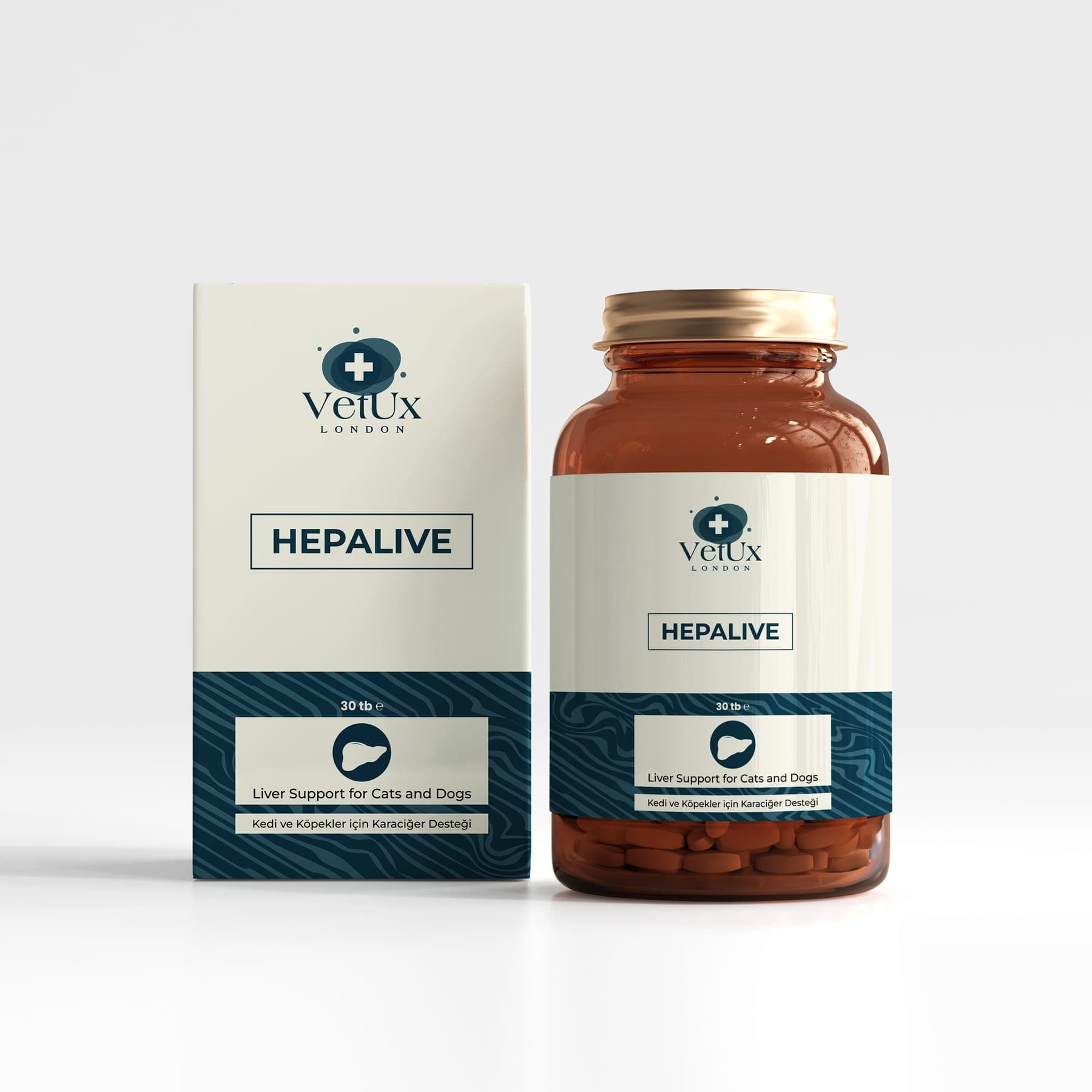
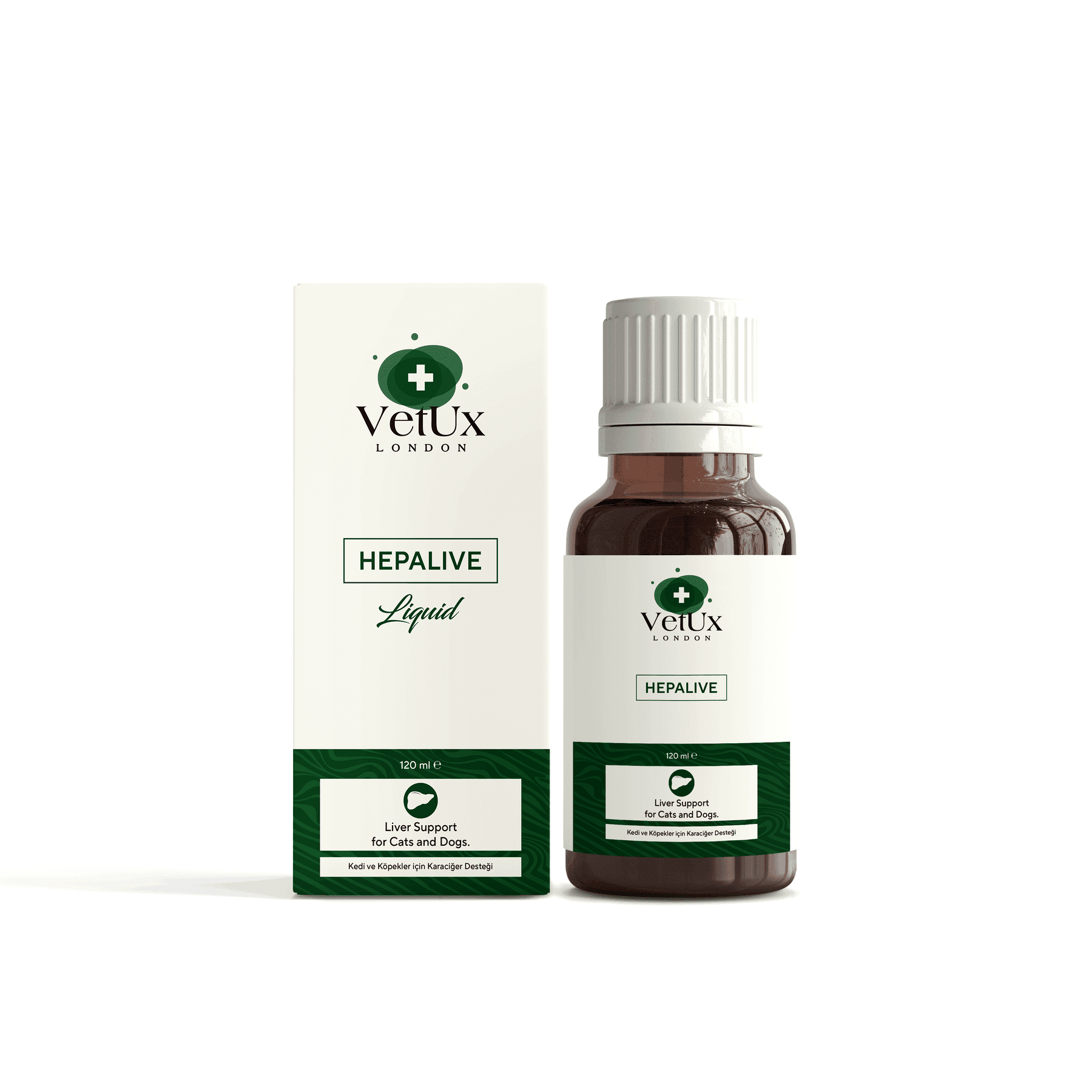
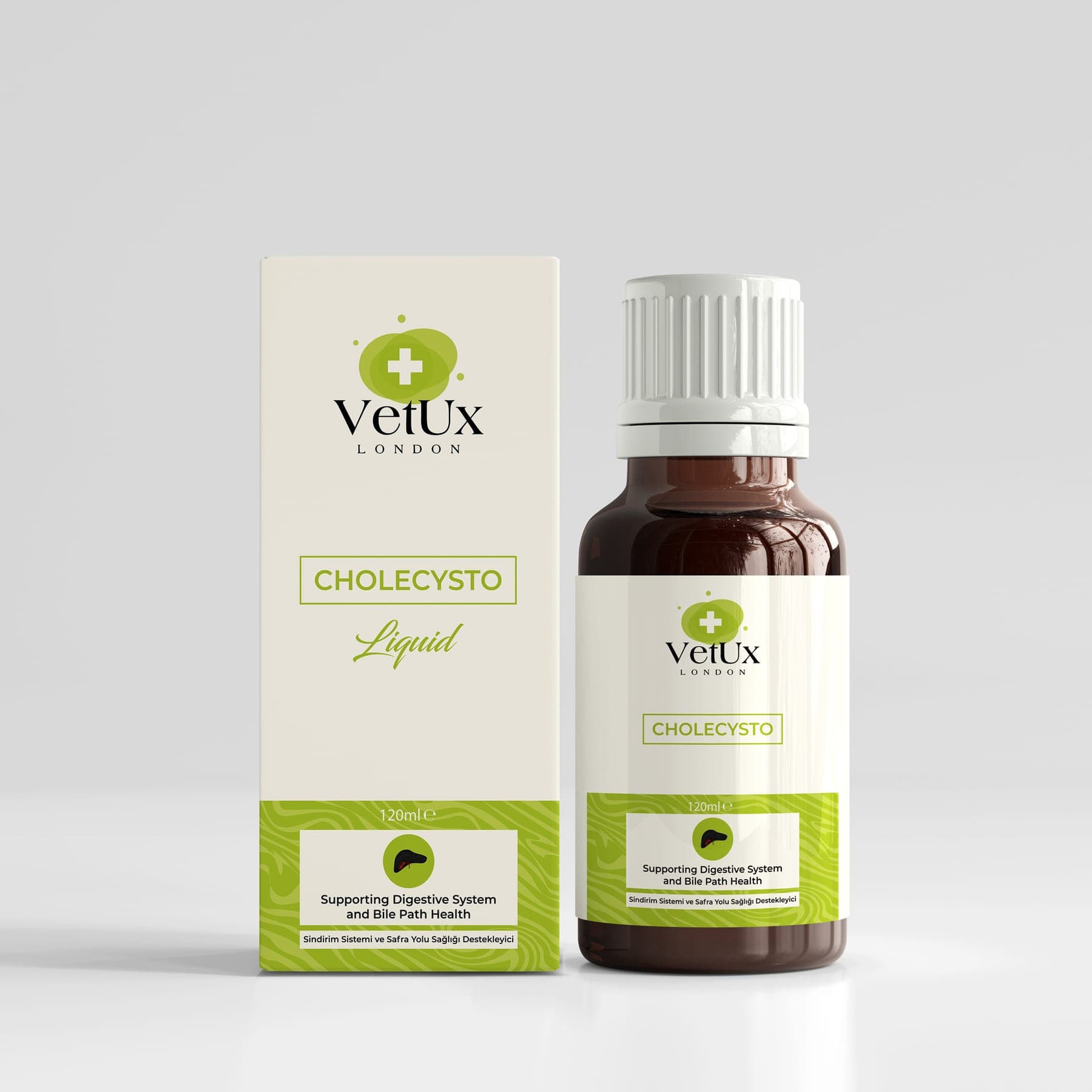
The products in Vetux's liver health range are complementary feeds for cats and dogs and accompany the care recommended by your veterinary surgeon as nutritional support. Hepalive, in tablet form, brings together milk thistle, artichoke and turmeric extracts with L-lysine, L-arginine, betaine, a Lactobacillus acidophilus culture and vitamins B2, B6, folic acid and B12, and helps maintain normal liver function. For animals that struggle with tablets, the liquid Hepalive Liquid offers milk thistle, artichoke and turmeric extracts with L-arginine, DL-methionine, L-lysine, betaine and B vitamins, and can be added to food. The liquid Cholecysto supports normal bile metabolism and a steady flow of bile; its composition is listed on the product page. These products do not replace diagnosis and treatment; your veterinary surgeon decides which is suitable for your pet and how to use it.
When should you see a veterinary surgeon?
Contact your veterinary surgeon the same day if you notice any of the following:
- Yellowing of the whites of the eyes, the gums or pale areas of skin
- Repeated vomiting, vomiting blood, or bloody or black faeces
- Your cat eating nothing for more than a day, or a clearly reduced appetite for more than two to three days
- Wobbliness, confusion, head pressing, seizures or excessive drooling
- A rapidly swelling belly
- Unexplained bruising or bleeding that won't stop
- Suspecting your pet has eaten a medicine, chemical, toxic plant or a product containing xylitol
Book an appointment soon in these cases:
- Poor appetite, lethargy or weight loss lasting several days
- A clear increase in drinking and urinating
- A liver value coming back high on a routine test; your vet may want to repeat it or run further tests
- A routine check falling due for an animal on long-term medication
Remember: liver problems can only be diagnosed and treated by a veterinary surgeon. Regular blood tests in cats and dogs over seven years of age, or in animals on ongoing medication, help problems to be noticed early.
Frequently asked questions
My pet's ALT came back high. Does that mean the liver is diseased?
Not necessarily. A raised ALT shows that liver cells are under strain, but the cause may be the liver itself, another illness or a medicine your pet is taking. The size of the rise alone does not show how serious the problem is either. Your veterinary surgeon will assess the result together with the examination findings and other tests, and repeat it if needed.
Does a high ALP mean the same thing in dogs and cats?
No. In dogs, ALP can rise for many reasons, including corticosteroid medicines, some hormonal diseases, bone growth in puppies and age. Cats have little ALP in the liver and it is short-lived in the blood, so even a mild rise in a cat is taken seriously by the vet.
Does jaundice always mean liver disease?
No. Jaundice is caused by bilirubin building up in the blood. This may be due to rapid breakdown of red blood cells, the liver being unable to process bilirubin, or blocked bile ducts. Telling these apart requires a veterinary examination and tests. If you notice jaundice, contact your veterinary surgeon the same day.
Should protein be reduced for a pet with a liver problem?
Generally, not on your own. Current thinking is that adequate, high-quality protein matters for liver regeneration and for maintaining muscle mass. Protein restriction is applied only in specific situations and on your veterinary surgeon's decision.
Do liver support products change blood test results?
Complementary feeds are used to provide nutritional support for normal liver function; they are not designed to change test values or to treat a disease. Monitoring test results and planning treatment are your veterinary surgeon's responsibility. Ask your vet before starting any product.
How often should a liver blood test be done?
For healthy young adults, a yearly general check-up is usually enough. For older animals, those on long-term medication or those with previously raised values, your veterinary surgeon will set the interval.
Final word
The liver works quietly but affects almost every system in the body. Test results offer important clues, yet reading them correctly needs an expert who assesses the whole animal. Balanced nutrition, an ideal weight, regular check-ups and care with dangerous substances at home are the foundations of liver health. Before making any decision about a test result, a feeding plan or a support product, consult your veterinary surgeon.
References
- 1Webster CRL, Center SA, Cullen JM, et al. ACVIM consensus statement on the diagnosis and treatment of chronic hepatitis in dogs. Journal of Veterinary Internal Medicine. 2019;33(3):1173-1200.
- 2Center SA. Interpretation of liver enzymes. Veterinary Clinics of North America: Small Animal Practice. 2007;37(2):297-333.
- 3Lidbury JA, Suchodolski JS. New advances in the diagnosis of canine and feline liver and pancreatic disease. The Veterinary Journal. 2016;215:87-95.
- 4WSAVA Liver Standardization Group (Rothuizen J, Bunch SE, Charles JA, et al.). WSAVA Standards for Clinical and Histological Diagnosis of Canine and Feline Liver Diseases. Edinburgh: Saunders Elsevier; 2006.
- 5Valtolina C, Favier RP. Feline hepatic lipidosis. Veterinary Clinics of North America: Small Animal Practice. 2017;47(3):683-702.
- 6Dirksen K, Fieten H. Canine copper-associated hepatitis. Veterinary Clinics of North America: Small Animal Practice. 2017;47(3):631-644.
Frequently asked questions
My pet's ALT came back high. Does that mean the liver is diseased?
Not necessarily. A raised ALT shows that liver cells are under strain, but the cause may be the liver itself, another illness or a medicine your pet is taking. The size of the rise alone does not show how serious the problem is either. Your veterinary surgeon will assess the result together with the examination findings and other tests, and repeat it if needed.
Does a high ALP mean the same thing in dogs and cats?
No. In dogs, ALP can rise for many reasons, including corticosteroid medicines, some hormonal diseases, bone growth in puppies and age. Cats have little ALP in the liver and it is short-lived in the blood, so even a mild rise in a cat is taken seriously by the vet.
Does jaundice always mean liver disease?
No. Jaundice is caused by bilirubin building up in the blood. This may be due to rapid breakdown of red blood cells, the liver being unable to process bilirubin, or blocked bile ducts. Telling these apart requires a veterinary examination and tests. If you notice jaundice, contact your veterinary surgeon the same day.
Should protein be reduced for a pet with a liver problem?
Generally, not on your own. Current thinking is that adequate, high-quality protein matters for liver regeneration and for maintaining muscle mass. Protein restriction is applied only in specific situations and on your veterinary surgeon's decision.
Do liver support products change blood test results?
Complementary feeds are used to provide nutritional support for normal liver function; they are not designed to change test values or to treat a disease. Monitoring test results and planning treatment are your veterinary surgeon's responsibility. Ask your vet before starting any product.
How often should a liver blood test be done?
For healthy young adults, a yearly general check-up is usually enough. For older animals, those on long-term medication or those with previously raised values, your veterinary surgeon will set the interval.
This article is for general information only; it does not replace veterinary examination, diagnosis or treatment. VetUx London products are complementary feed. If you have any concern about your companion, please consult your veterinary surgeon.
Share
The formulas matching the nutritional support described above.
Related articles
All articles Clinical Notes
Cat and Dog Joint Health Guide: Signs, Weight and Movement
Struggling to get up, avoiding the stairs or a cat that no longer jumps up high can be quiet signs of joint problems. This guide covers the signs, how weight affects the joints and the right kind of movement.
 Clinical Notes
Shedding in Cats: How to Tell Seasonal Moulting from Problem Hair Loss
Shedding in cats is usually seasonal, but bald patches, redness and itching can point to an underlying cause. This guide explains how to tell the two apart and when to see your veterinary surgeon.
 Clinical Notes
Diarrhoea in Cats: Causes, Home Monitoring and When to See the Vet
Diarrhoea in cats is most often linked to a change of food, stress or parasites, but signs such as blood, vomiting and lethargy need a veterinary assessment the same day. Here is what to watch at home and when not to wait.