
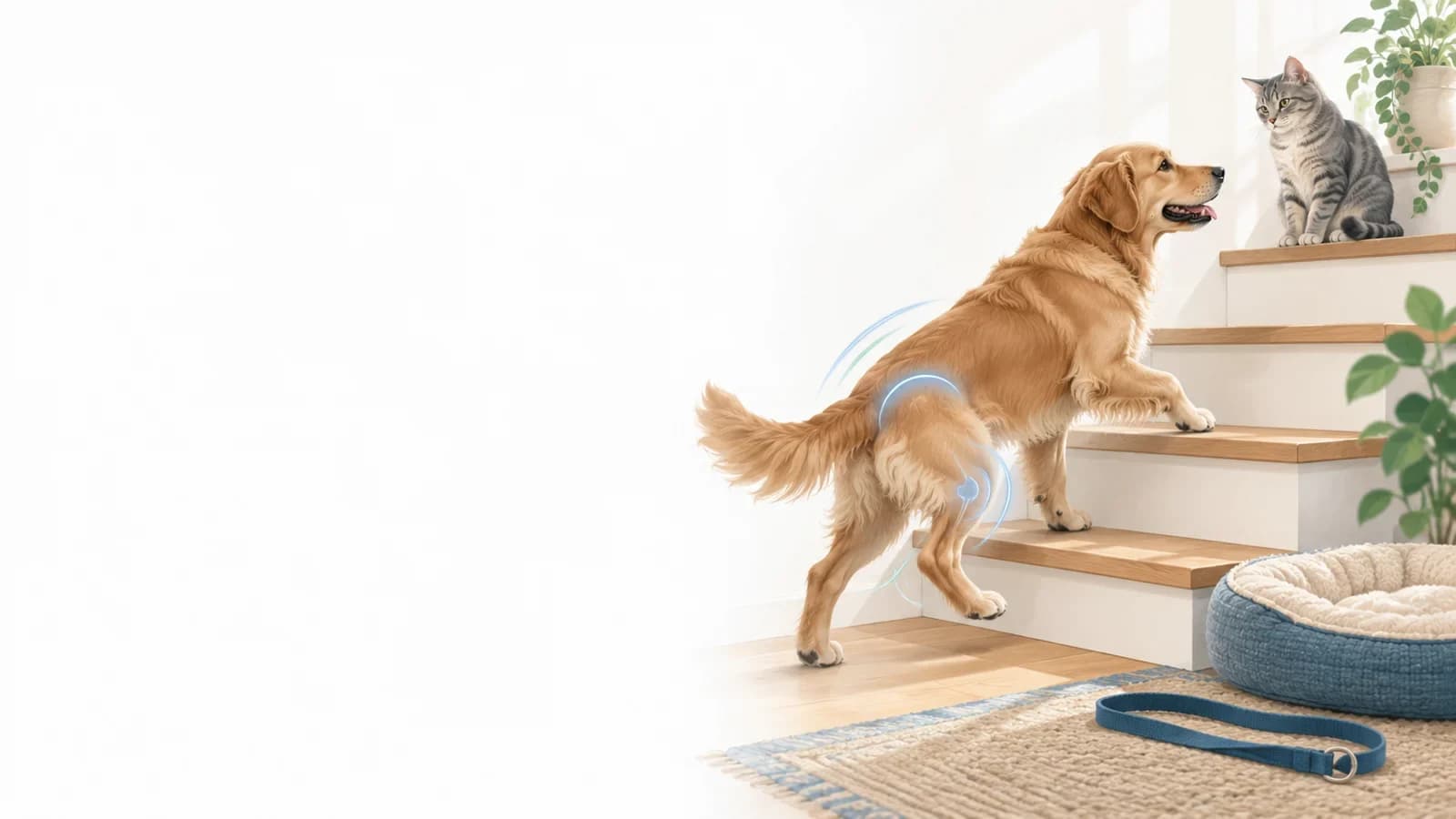
Cat and Dog Joint Health Guide: Signs, Weight and Movement
Struggling to get up, avoiding the stairs or a cat that no longer jumps up high can be quiet signs of joint problems. This guide covers the signs, how weight affects the joints and the right kind of movement.
Short answer: Joint problems in cats and dogs often begin quietly: struggling to get up, avoiding the stairs and, in cats, giving up high jumps are common early signs. Excess weight increases the load on the joints, while regular, controlled movement supports the muscles and joint function. If you notice these signs, see your veterinary surgeon for diagnosis and treatment.
Joint problems are not limited to older animals. Developmental conditions such as hip and elbow dysplasia, past injuries, excess weight and an inactive lifestyle all set the stage for joints to wear over the years. The most common outcome of this process is osteoarthritis, also called degenerative joint disease. In dogs it tends to show itself through lameness, but in cats it is often missed: studies show that radiographic degenerative joint changes are common in cats and become markedly more frequent with age (Lascelles et al., 2010), yet because cats hide pain, the condition frequently goes unnoticed. This guide explains what to look out for at home, how weight affects the joint and why movement matters so much.
What are the signs of joint problems?
Joint pain rarely appears as a single, sharp symptom. More often, small changes in behaviour settle in slowly over weeks or months and are easily put down to "just getting old".
Which signs should you watch for in dogs?
- Struggling to get up from lying down, or needing several attempts to stand
- Stiffness that is most noticeable in the morning or after resting
- Avoiding the stairs, or jumping into the car or onto the sofa
- Lagging behind on walks, wanting to turn for home, losing interest in play
- Using one leg less, or avoiding putting weight on a particular limb
- Loss of muscle in the hind legs, or a change in sitting posture (sitting with a leg kicked out to the side)
- Frequently licking a joint, or grumbling or growling when touched
How can you spot hidden pain signs in cats?
Cats naturally hide pain, and most cats with joint problems do not limp. Checklists developed to detect joint pain in cats focus on everyday behaviour changes such as these (Enomoto et al., 2020):
- No longer jumping up high (sofa, bed, windowsill), or hesitating for a long time before jumping
- Climbing up in stages rather than in one leap; "sliding" down rather than jumping down
- Grooming less, with matted or scurfy fur especially along the back and at the base of the tail
- Toileting outside the litter tray, or struggling to step into it
- Scratching less, leading to overgrown claws
- Sleeping more, hiding, or avoiding being stroked or picked up
- Using the stairs slowly and carefully, playing and hunting less
These changes do not make a diagnosis on their own, but a pattern that keeps recurring or becomes more obvious calls for an examination by your veterinary surgeon. Cats and dogs may not show their home behaviour on the consulting table, so short videos of your pet getting up, using the stairs and jumping are very valuable for your vet.
What happens inside the joint? Cartilage, synovial fluid and weight load
In mobile joints (synovial joints), the facing ends of two bones are covered with smooth, slippery articular cartilage. Cartilage has no blood supply of its own; it takes its nourishment from the surrounding synovial fluid and from the cycle of loading and unloading that happens with every step. This is why regular movement also matters for cartilage nutrition.
Cartilage gets its resilience from its internal structure. Fibres of type II collagen form a scaffold-like network, and the proteoglycans within it (large molecules carrying glycosaminoglycan chains such as chondroitin sulphate) hold water, giving cartilage a sponge-like, shock-absorbing quality. The synovial fluid produced by the membrane lining the joint is thick and slippery thanks to hyaluronic acid; it lets the cartilage surfaces glide with minimal friction and feeds the cartilage (Johnston, 1997).
In osteoarthritis this balance is lost. Breakdown in the cartilage matrix outpaces repair; as proteoglycans are lost, the cartilage can no longer hold water or absorb shock, so it thins and develops fissures. The underlying bone changes and bony spurs (osteophytes) form at the joint margins; the synovial membrane becomes inflamed and the slippery quality of the joint fluid is lost. An animal in pain moves less, its muscles weaken, the joint becomes less stable, and a vicious circle sets in.
Weight load is one of the strongest accelerators of this circle. The force passing through the joints when walking, and especially when running and jumping, rises with body weight; every extra kilo means additional mechanical stress on the cartilage with each step. Fat tissue is not a passive store either: it releases signalling molecules (adipokines) involved in inflammatory processes, creating biochemical stress in the joint as well (German, 2006). A long-term study showed that in dogs fed a controlled diet throughout life, signs of osteoarthritis developed later and were milder (Kealy et al., 2002).
How does weight control support the joints?
When it comes to joint health, ideal body weight is the single most important factor an owner can influence at home. In overweight dogs with hip osteoarthritis, signs of lameness were reported to ease markedly after weight loss (Impellizeri et al., 2000).
- Check body condition: The ribs should be easy to feel with a light touch under a thin layer of fat. From above you should see a waist; from the side, the belly line should tuck up.
- Count every calorie: Training treats, food from the table and snacks are all part of the daily energy intake.
- Don't overlook life after neutering: Neutered animals may have different energy needs, so food portions may need to be reassessed.
- Weigh regularly: A monthly weigh-in helps you spot slow weight gain early.
- Plan weight loss with your vet: Rapid weight loss can lead to serious liver problems (hepatic lipidosis), especially in cats. Target weight, pace and choice of diet should be set by your veterinary surgeon.
Why is movement important for joint health?
Movement is a cornerstone both of maintaining joint health and of quality of life for an animal with joint problems. Strong muscles stabilise the joint and share the load, and regular movement helps nourish the cartilage. What matters is that movement is regular, controlled and suited to the animal's condition.
- For dogs: Choose short, frequent walks at the same pace every day rather than long, tiring runs at the weekend. Limit activities that strain the joints, such as sudden turns, ball chasing and jumping from height. Swimming and hydrotherapy support muscle strength while placing less load on the joints; physiotherapy programmes should be planned under veterinary guidance.
- For cats: Short play sessions spread through the day, games at floor level and wand-type toys keep a cat moving without overdoing it.
- Around the home: Lay non-slip rugs or mats on slippery floors and use a ramp for the car and sofa. For cats, add intermediate steps up to favourite high spots, choose a low-sided litter tray and place food and water bowls where they are easy to reach. A warm, soft, draught-free bed helps ease morning stiffness.
- Claw care: Long claws change the angle of the foot on the ground; check them regularly.
Do not increase exercise on your own while pain is obvious; agree a suitable movement plan with your veterinary surgeon based on your pet's examination findings.
When should you see a veterinary surgeon?
Seek help the same day if you notice:
- Sudden lameness, or not putting a leg down at all
- Swelling or heat in a joint, or pain so severe the joint cannot be touched
- Lameness after a fall, knock or accident
- Weakness, wobbliness or loss of coordination in the hind legs
- Pain together with fever, lethargy or loss of appetite
- In a cat, sudden loss of use of the hind legs, crying out in pain and cold legs: this is an emergency, contact a veterinary surgeon without delay.
Book a planned examination if: changes such as struggling to get up, avoiding stairs, giving up jumping or grooming less have lasted for a few weeks or are getting worse. For senior cats and dogs, ask for a mobility assessment as part of routine check-ups.
Lameness or reluctance to move is not always caused by osteoarthritis; ligament injuries, dysplasia, kneecap luxation, joint infections, bone tumours and neurological disease can all cause similar signs. That is why diagnosis and treatment are the job of your veterinary surgeon: through an orthopaedic examination, and imaging and laboratory tests where needed, they will identify the cause and build a plan suited to your pet (Gruen et al., 2022; Monteiro et al., 2023). Never give your pet painkillers made for people; some of these medicines can have serious, even fatal, consequences for cats and dogs.
How can nutritional support accompany joint health?
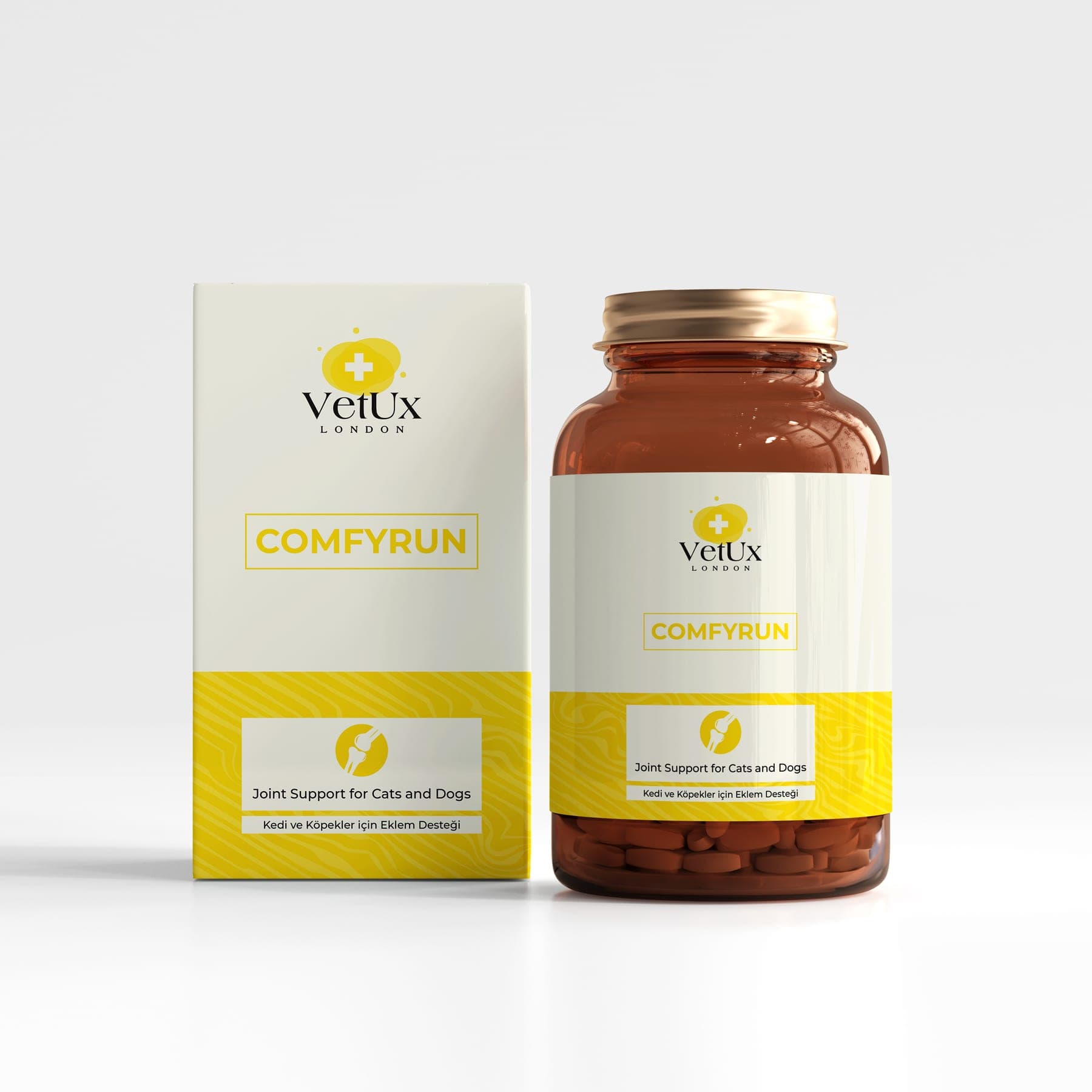
For owners who wish to complement the care plan recommended by their veterinary surgeon through nutrition, Vetux joint products are complementary feeds; they do not replace the diagnosis or treatment of any condition. Comfyrun is a complementary feed in tablet form for cats and dogs: its glucosamine sulphate, chondroitin sulphate, type II collagen and hyaluronic acid contribute to maintaining the natural structure of cartilage and synovial fluid; MSM, boswellia serrata and turmeric extracts accompany the everyday comfort of the joints and their normal oxidative balance; vitamin C contributes to the natural process of collagen formation and vitamin D3 to calcium metabolism. Comfyrun Maxi is the enhanced formula, offering the same ingredient profile in higher amounts. For cats, Elixir of Joint is a mackerel-based probiotic wet food and sachet combination; the glucosamine, chondroitin sulphate, MSM, hyaluronic acid and boswellia serrata extract in the sachet, together with the low-calorie, balanced-protein wet food, contribute to maintaining the normal structure of supple joints and an ideal body weight. Which product to use, in what amount and for how long is decided by the veterinary surgeon who examines your pet.
Frequently Asked Questions
How does my cat show that it has joint pain? Cats usually do not limp. The most common signs are no longer jumping up high, hesitating before jumping, grooming less, toileting outside the litter tray, hiding more and avoiding being stroked. If you notice these changes, talk to your veterinary surgeon.
Is it normal for my older dog to struggle to get up? Ageing can slow movement a little, but struggling to get up, morning stiffness and avoiding stairs are often signs of pain and should not be accepted as "normal old age". A veterinary examination is needed to find the cause.
Does excess weight really affect the joints? Yes. Excess weight increases the mechanical load on the joints with every step, and fat tissue releases substances involved in inflammatory processes. Ideal body weight is one of the most effective steps you can take at home for joint health. Any weight-loss plan should always be made with your veterinary surgeon.
Should an animal with joint problems exercise? Usually yes, but of the right kind and amount. Short, frequent walks at a steady pace, controlled play and swimming support the muscles. Strenuous activities such as sudden turns and jumping from height should be limited. Agree a movement plan suited to your pet's condition with your veterinary surgeon.
Can joint supplements replace medication? No. Joint support products are complementary feeds; they support the physiological function of the joints and contribute to maintaining the natural structure of cartilage and synovial fluid. Diagnosis and treatment are the responsibility of your veterinary surgeon, so plan any use of a complementary feed with them too.
Can I give my cat or dog a human painkiller? No, never. Some painkillers made for people can cause serious, even fatal, poisoning in cats and dogs. If you see signs of pain, contact your veterinary surgeon.
References
- 1Lascelles BDX, Henry JB, Brown J, et al. Cross-sectional study of the prevalence of radiographic degenerative joint disease in domesticated cats. Veterinary Surgery. 2010;39(5):535–544.
- 2Enomoto M, Lascelles BDX, Gruen ME. Development of a checklist for the detection of degenerative joint disease-associated pain in cats. Journal of Feline Medicine and Surgery. 2020;22(12):1137–1147.
- 3Johnston SA. Osteoarthritis: joint anatomy, physiology, and pathobiology. Veterinary Clinics of North America: Small Animal Practice. 1997;27(4):699–723.
- 4Kealy RD, Lawler DF, Ballam JM, et al. Effects of diet restriction on life span and age-related changes in dogs. Journal of the American Veterinary Medical Association. 2002;220(9):1315–1320.
- 5Impellizeri JA, Tetrick MA, Muir P. Effect of weight reduction on clinical signs of lameness in dogs with hip osteoarthritis. Journal of the American Veterinary Medical Association. 2000;216(7):1089–1091.
- 6German AJ. The growing problem of obesity in dogs and cats. The Journal of Nutrition. 2006;136(7 Suppl):1940S–1946S.
- 7Gruen ME, Lascelles BDX, Colleran E, et al. 2022 AAHA Pain Management Guidelines for Dogs and Cats. Journal of the American Animal Hospital Association. 2022;58(2):55–76.
- 8Monteiro BP, Lascelles BDX, Murrell J, et al. 2022 WSAVA guidelines for the recognition, assessment and treatment of pain. Journal of Small Animal Practice. 2023;64(4):177–254.
If you have noticed a change in the way your companion gets up, walks or jumps, don't wait: talk to your veterinary surgeon for an accurate diagnosis and a care plan tailored to them.
Frequently asked questions
How does my cat show that it has joint pain?
Cats usually do not limp. The most common signs are no longer jumping up high, hesitating before jumping, grooming less, toileting outside the litter tray, hiding more and avoiding being stroked. If you notice these changes, talk to your veterinary surgeon.
Is it normal for my older dog to struggle to get up?
Ageing can slow movement a little, but struggling to get up, morning stiffness and avoiding stairs are often signs of pain and should not be accepted as "normal old age". A veterinary examination is needed to find the cause.
Does excess weight really affect the joints?
Yes. Excess weight increases the mechanical load on the joints with every step, and fat tissue releases substances involved in inflammatory processes. Ideal body weight is one of the most effective steps you can take at home for joint health. Any weight-loss plan should always be made with your veterinary surgeon.
Should an animal with joint problems exercise?
Usually yes, but of the right kind and amount. Short, frequent walks at a steady pace, controlled play and swimming support the muscles. Strenuous activities such as sudden turns and jumping from height should be limited. Agree a movement plan suited to your pet's condition with your veterinary surgeon.
Can joint supplements replace medication?
No. Joint support products are complementary feeds; they support the physiological function of the joints and contribute to maintaining the natural structure of cartilage and synovial fluid. Diagnosis and treatment are the responsibility of your veterinary surgeon, so plan any use of a complementary feed with them too.
Can I give my cat or dog a human painkiller?
No, never. Some painkillers made for people can cause serious, even fatal, poisoning in cats and dogs. If you see signs of pain, contact your veterinary surgeon.
This article is for general information only; it does not replace veterinary examination, diagnosis or treatment. VetUx London products are complementary feed. If you have any concern about your companion, please consult your veterinary surgeon.
Share
The formulas matching the nutritional support described above.


Related articles
All articles Clinical Notes
Shedding in Cats: How to Tell Seasonal Moulting from Problem Hair Loss
Shedding in cats is usually seasonal, but bald patches, redness and itching can point to an underlying cause. This guide explains how to tell the two apart and when to see your veterinary surgeon.
 Clinical Notes
Diarrhoea in Cats: Causes, Home Monitoring and When to See the Vet
Diarrhoea in cats is most often linked to a change of food, stress or parasites, but signs such as blood, vomiting and lethargy need a veterinary assessment the same day. Here is what to watch at home and when not to wait.
 Clinical Notes
Kidney Health in Cats: A Guide to Signs, Blood Values and Veterinary Check-ups
Drinking a lot, weight loss and a poor appetite can be the first signs of a kidney problem in cats. From a veterinary perspective, we explain what creatinine, SDMA, urea, phosphorus and urine concentration tell you, how IRIS staging works and how often senior cats should be checked.