
Diarrhoea in Cats: Causes, Home Monitoring and When to See the Vet
Diarrhoea in cats is most often linked to a change of food, stress or parasites, but signs such as blood, vomiting and lethargy need a veterinary assessment the same day. Here is what to watch at home and when not to wait.
Short answer: Diarrhoea in cats is most often triggered by a sudden change of food, stress or intestinal parasites. In an adult cat that is bright, eating and drinking, a short spell of soft stools can be watched closely at home; but if there is blood in the stool, repeated vomiting, lethargy or loss of appetite, contact your veterinary surgeon the same day.
What is diarrhoea in cats and why does it matter?
Diarrhoea means a cat is passing stools more often than usual, or stools that are softer or watery. It is a sign rather than a disease in its own right: behind it may lie a simple dietary indiscretion or a problem that needs medical assessment. Cats are small animals and feel the effects of fluid loss much faster than we do, so even a few hours of diarrhoea matter in kittens, elderly cats and cats with a long-term illness.
Veterinary surgeons usually divide diarrhoea by duration: acute diarrhoea, which settles within a few days, and chronic diarrhoea, which lasts longer than three weeks or keeps coming back. This distinction is the first step in deciding which investigations are needed. Whichever group it falls into, identifying the cause and choosing the right approach is the job of your veterinary surgeon.
What causes diarrhoea in cats?
A sudden change of food and dietary indiscretion
This is the picture owners meet most often. A cat's gut flora and digestive enzymes adapt to the food it is used to; switching food completely from one day to the next can temporarily unsettle that balance. Table scraps, fatty foods, spoiled food, scavenged items and milk can have the same effect. Many adult cats find milk sugar (lactose) hard to digest, and undigested lactose draws water into the gut, softening the stool.
If you need to move to a new food, mixing the old and new food in a gradual transition spread over several days gives the gut time to adapt. If your cat has a particular health condition, plan the transition with your veterinary surgeon.
Stress
Cats are creatures of routine. Moving house, a new pet or baby, visitors, travel, a stay in a cattery, building work or even moving the food bowl can all be sources of stress. Stress can affect gut movement and the balance of the flora through the two-way communication between the nervous system and the gut (the gut–brain axis). One study showed that unusual external events can increase "sickness behaviours" such as vomiting, changes in defecation and reduced appetite not only in unwell cats but in healthy cats too (Stella et al., 2011). The International Society of Feline Medicine (ISFM) and the American Association of Feline Practitioners (AAFP) also stress that a safe space, a predictable routine and easy access to resources are fundamental to a cat's health (Ellis et al., 2013).
Parasites and infections
Intestinal parasites are a common cause of diarrhoea, particularly in kittens, in cats newly adopted from shelters or the street, and in cats living in multi-cat environments. Roundworms (e.g. Toxocara cati), Giardia, coccidia and Tritrichomonas foetus are among them. Because some parasites are shed in the faeces only intermittently, a single negative faecal test is not always enough, and your veterinary surgeon may want to repeat it. The European Scientific Counsel Companion Animal Parasites (ESCCAP) recommends that parasite control is planned by the veterinary surgeon according to the cat's age, lifestyle and risk.
Viral and bacterial infections can also cause diarrhoea. One of these, feline parvovirus (panleukopenia), can become severe very quickly, especially in unvaccinated kittens, and needs urgent veterinary attention.
Other possible causes
Diarrhoea can also be linked to food sensitivity or allergy, chronic intestinal disease, an overactive thyroid gland (hyperthyroidism, common in older cats), kidney, liver or pancreatic problems, some medicines (e.g. antibiotics), swallowing toxic plants or chemicals, string and other foreign bodies, and some tumours. Telling these apart requires examination and tests; observation at home does not make a diagnosis, it simply helps you bring accurate information to your veterinary surgeon.
How does diarrhoea develop? The role of gut flora and fibre
In a healthy gut, the small intestine digests and absorbs nutrients, while the large intestine reabsorbs most of the water in the stool and gives it its consistency. Diarrhoea appears when this balance breaks down at one or more points:
- Osmotic diarrhoea: an undigested substance (e.g. lactose) draws water into the gut.
- Secretory diarrhoea: fluid secretion from the gut wall into the gut lumen increases.
- Permeability and inflammation-related diarrhoea: when the gut wall is damaged, fluid, protein and sometimes blood pass into the gut lumen.
- Motility disturbance: when gut contents move too quickly, there is not enough time for water to be reabsorbed.
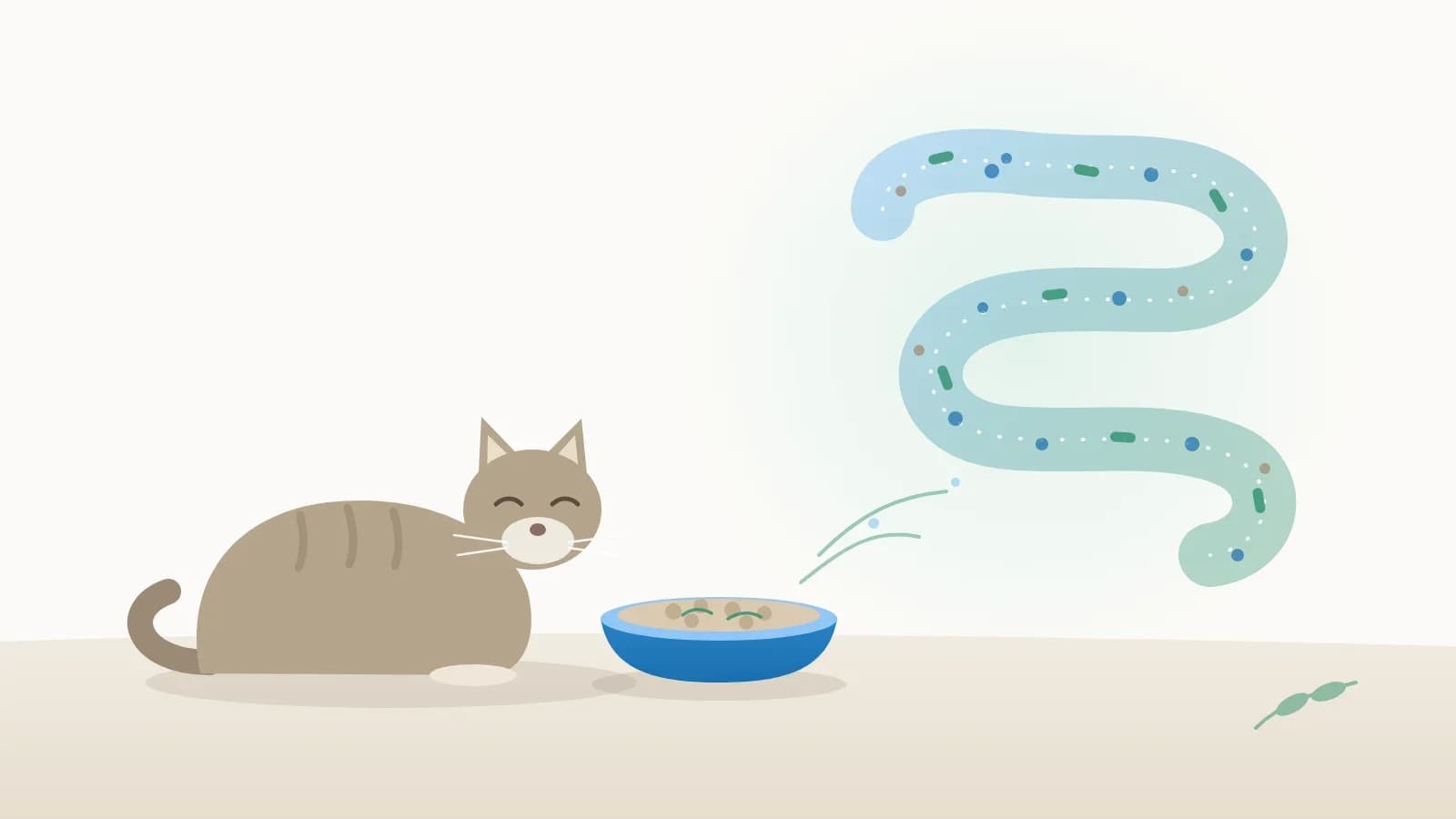
The gut flora (microbiota) is a community of vast numbers of bacteria and other microorganisms living in the gut. It ferments food components that cannot otherwise be digested, producing short-chain fatty acids; one of these, butyrate, is an important energy source for the cells of the large intestine and contributes to the normal function of the gut barrier. A sudden change of diet, stress, infections and antibiotics can temporarily disturb this balance, a state known as dysbiosis (Suchodolski, 2011).
Fibre plays two different roles here. Soluble, fermentable fibres (prebiotic fibres) are a food source for beneficial microorganisms in the flora. Less fermentable fibres bind water and contribute to stool bulk and consistency and to a regular gut transit time. Although cats are obligate carnivores, the right type and amount of fibre plays a physiological role in gut function. Probiotics are live microorganisms that, when taken in adequate amounts, contribute to the health of the host; their effects are strain-specific, so not every product can be judged the same way.
What should I monitor at home?
The most valuable information for your veterinary surgeon is your own regular, written observation. Keep a note of:
- Frequency: How many times a day is your cat passing stools? Are trips to the litter tray more frequent?
- Consistency: Formed but soft, porridge-like, or completely watery?
- Colour and content: Streaks of red blood, black tar-like stools, slimy mucus or visible parasites?
- Volume and straining: Small amounts often (usually the large intestine) or large volumes (usually the small intestine)? Is there straining?
- General condition: Appetite, drinking, interest in play, hiding, vomiting, changes in weight.
- Environment: Has anything changed recently in food, treats, the home or routine? Are other pets in the home showing similar signs?
Taking a photo of the stool and, if your veterinary surgeon asks, bringing a fresh sample in a clean, lidded container will speed up the diagnostic process.
While monitoring at home: Make sure your cat always has access to fresh water. Never give medicines intended for people; some are toxic to cats. Do not withhold food for long periods on your own initiative: cats that go without food for a prolonged time can develop serious liver problems. Because some intestinal parasites can pass to people, wash your hands thoroughly after cleaning the litter tray.
When should you see a veterinary surgeon?
Contact your vet the same day, without delay, if you notice
- Red blood in the stool or black, tar-like stools
- Repeated vomiting, or vomiting together with diarrhoea
- Lethargy, hiding, lack of interest in surroundings, difficulty standing
- Loss of appetite for more than 24 hours or not drinking
- Signs of dehydration: sticky, dry gums, sunken eyes, skin at the scruff slow to return when gently lifted
- A kitten (especially one not fully vaccinated), an elderly cat, or a cat with a long-term condition such as kidney disease or diabetes
- A swollen or painful abdomen, shivering, fever, or conversely cold ears and paws
- Suspected swallowing of medicines, toxic plants, cleaning products or a foreign body such as string
- Straining: in male cats especially, straining in the litter tray can be confused with a urinary blockage; this is life-threatening and must be assessed without delay.
Book an appointment within a few days if
- Diarrhoea lasts longer than 24–48 hours, even if your cat seems well
- Episodes of diarrhoea keep recurring, or there is weight loss or a deterioration in coat quality
- Changes in stool last longer than three weeks (chronic)
- More than one pet in the home has diarrhoea at the same time
Remember: it is not possible to tell at home which sign is linked to which cause. Diagnosis and treatment are the responsibility of your veterinary surgeon; whenever you are in doubt, seeking advice early is always the right choice.
What happens at the veterinary examination?
Your veterinary surgeon will first take a detailed history: diet, changes at home, vaccination and parasite control history, and how long the signs have lasted. After a physical examination, they may plan faecal tests (including parasite and Giardia tests), blood and urine tests, imaging such as ultrasound or X-rays and, in chronic cases, controlled diet trials. The World Small Animal Veterinary Association (WSAVA) nutrition guidelines also recommend a nutritional assessment as a routine part of every examination (Freeman et al., 2011). Your observation notes are a key part of this process.
Nutritional support for the gut flora
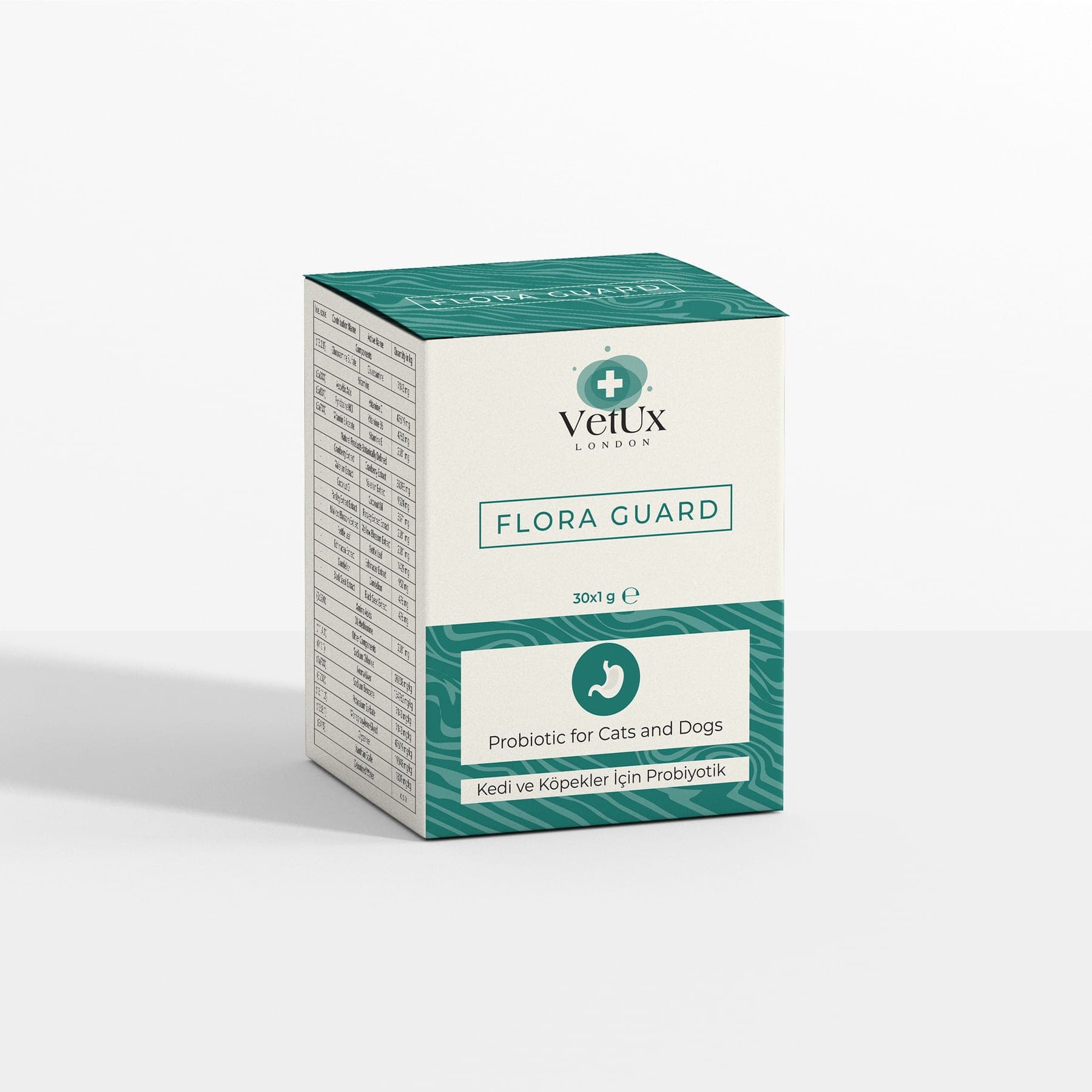
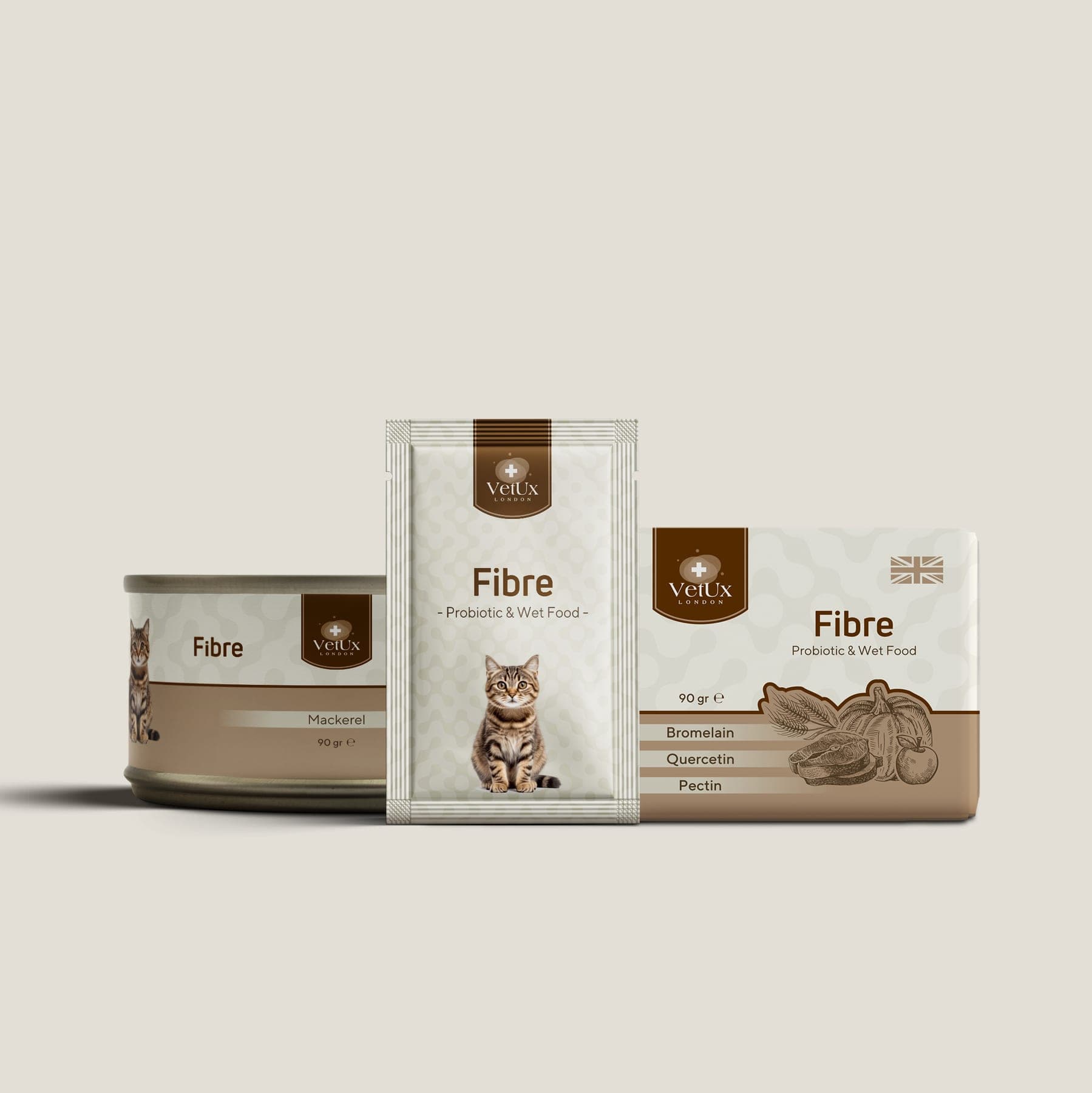
After your veterinary surgeon's assessment, complementary feeds that give nutritional support to the gut flora may be considered to accompany the care they recommend. Flora Guard is a complementary feed in sachet form that helps maintain the normal balance of the gut flora in cats and dogs; it contains the strains Enterococcus faecium NCIMB 10415 and Lactobacillus acidophilus CECT 4529, accompanies digestive comfort through periods such as stress, a change of food and the days after antibiotics, and its vitamins B1, B2 and B6 support normal digestion and energy metabolism. Elixir of Fibre, prepared for cats with a sensitive digestive system, is a mackerel-based, high-fibre, probiotic wet food and sachet combination; its synbiotic blend of prebiotic fibres and probiotic cultures helps maintain a normal stool consistency and regular gut function, while medium-chain triglycerides (MCT) and a gluten-free content offer an easily tolerated nutritional profile. These products do not replace a veterinary assessment of the cause of diarrhoea; whether and how to use them is for your veterinary surgeon to decide.
Frequently Asked Questions
Will my cat's diarrhoea go away on its own?
In an adult cat that is bright, eating and drinking, mild and short-lived diarrhoea, for example after a dietary indiscretion, may settle by itself. But if it lasts longer than 24–48 hours, keeps coming back, or is accompanied by blood, vomiting or lethargy, do not wait: contact your veterinary surgeon.
Should I stop feeding my cat if it has diarrhoea?
Do not withhold food for long periods on your own initiative. In cats, prolonged fasting can lead to serious liver problems. Your veterinary surgeon should decide when and what your cat is fed; throughout, your cat should always have access to fresh water.
Can I give my cat milk or yoghurt?
Many adult cats find lactose hard to digest, and milk can make diarrhoea worse. Yoghurt and probiotic products made for people are not designed for cats either. Speak to your veterinary surgeon before giving your cat any additional food.
Can a change of food really cause diarrhoea?
Yes. A sudden change of food is one of the most common causes of digestive upset in cats. A gradual transition, mixing the old and new food over several days, gives the gut flora time to adapt. For cats with a particular health condition, plan the change with your veterinary surgeon.
Will probiotic or fibre support stop diarrhoea?
No. Complementary feeds containing probiotics and fibre are not medicines. They make a nutritional contribution to the normal balance of the gut flora and to maintaining a normal stool consistency. The cause of diarrhoea (parasites, infection or another disease) can only be established through a veterinary examination, and the approach is chosen accordingly.
Can my cat's diarrhoea spread to me or my other pets?
Some intestinal parasites and infectious agents can pass to other cats, to dogs and, rarely, to people. Clean the litter tray regularly, wash your hands afterwards, and always tell your veterinary surgeon if more than one animal in the home is showing signs.
Conclusion
Diarrhoea in cats is most often linked to manageable causes such as a change of food, stress or parasites; even so, a small sign can herald a more important problem. Careful observation at home, recognising the warning signs and seeing your veterinary surgeon in good time are the safest ways to look after your cat's digestive health.
References
- 1Ellis SLH, Rodan I, Carney HC, Heath S, Rochlitz I, Shearburn LD, Sundahl E, Westropp JL. AAFP and ISFM Feline Environmental Needs Guidelines. Journal of Feline Medicine and Surgery. 2013;15(3):219–230.
- 2Stella JL, Lord LK, Buffington CAT. Sickness behaviors in response to unusual external events in healthy cats and cats with feline interstitial cystitis. Journal of the American Veterinary Medical Association. 2011;238(1):67–73.
- 3Suchodolski JS. Intestinal microbiota of dogs and cats: a bigger world than we thought. Veterinary Clinics of North America: Small Animal Practice. 2011;41(2):261–272.
- 4Freeman L, Becvarova I, Cave N, et al. WSAVA Nutritional Assessment Guidelines. Journal of Feline Medicine and Surgery. 2011;13(7):516–525.
- 5ESCCAP. Guideline 01: Worm Control in Dogs and Cats. European Scientific Counsel Companion Animal Parasites. esccap.org
- 6ESCCAP. Guideline 06: Control of Intestinal Protozoa in Dogs and Cats. European Scientific Counsel Companion Animal Parasites. esccap.org
This article is for information only and does not replace a veterinary examination. Whenever you notice a change in your cat's stools or general condition, consult your veterinary surgeon.
Frequently asked questions
Will my cat's diarrhoea go away on its own?
In an adult cat that is bright, eating and drinking, mild and short-lived diarrhoea, for example after a dietary indiscretion, may settle by itself. But if it lasts longer than 24–48 hours, keeps coming back, or is accompanied by blood, vomiting or lethargy, do not wait: contact your veterinary surgeon.
Should I stop feeding my cat if it has diarrhoea?
Do not withhold food for long periods on your own initiative. In cats, prolonged fasting can lead to serious liver problems. Your veterinary surgeon should decide when and what your cat is fed; throughout, your cat should always have access to fresh water.
Can I give my cat milk or yoghurt?
Many adult cats find lactose hard to digest, and milk can make diarrhoea worse. Yoghurt and probiotic products made for people are not designed for cats either. Speak to your veterinary surgeon before giving your cat any additional food.
Can a change of food really cause diarrhoea?
Yes. A sudden change of food is one of the most common causes of digestive upset in cats. A gradual transition, mixing the old and new food over several days, gives the gut flora time to adapt. For cats with a particular health condition, plan the change with your veterinary surgeon.
Will probiotic or fibre support stop diarrhoea?
No. Complementary feeds containing probiotics and fibre are not medicines. They make a nutritional contribution to the normal balance of the gut flora and to maintaining a normal stool consistency. The cause of diarrhoea (parasites, infection or another disease) can only be established through a veterinary examination, and the approach is chosen accordingly.
Can my cat's diarrhoea spread to me or my other pets?
Some intestinal parasites and infectious agents can pass to other cats, to dogs and, rarely, to people. Clean the litter tray regularly, wash your hands afterwards, and always tell your veterinary surgeon if more than one animal in the home is showing signs.
This article is for general information only; it does not replace veterinary examination, diagnosis or treatment. VetUx London products are complementary feed. If you have any concern about your companion, please consult your veterinary surgeon.
Share
The formulas matching the nutritional support described above.
Related articles
All articles Clinical Notes
Kidney Health in Cats: A Guide to Signs, Blood Values and Veterinary Check-ups
Drinking a lot, weight loss and a poor appetite can be the first signs of a kidney problem in cats. From a veterinary perspective, we explain what creatinine, SDMA, urea, phosphorus and urine concentration tell you, how IRIS staging works and how often senior cats should be checked.
 Clinical Notes
How Do Free Radicals Age the Cell? A High-Bioavailability Vitamin C Strategy
How do free radicals damage cell membranes, proteins and DNA, and how does this relate to ageing? We explain vitamin C's roles as electron donor, vitamin E regenerator and collagen cofactor, cats' and dogs' own vitamin C synthesis, the saturable absorption that governs bioavailability and who needs extra caution.
 Clinical Notes
Calcium Deficiency in Home-Cooked Pet Food: The Superior Absorption of Nano-Technology Vitamin D3
Why do meat-heavy, boneless home-made diets lead to calcium deficiency? We explain calcium-phosphorus balance from vitamin D3 to calcitriol and from PTH to the Ca:P ratio, the rickets risk in fast-growing puppies, the science behind nano-emulsion carrier systems and why too much D3 is dangerous.