
Calcium Deficiency in Home-Cooked Pet Food: The Superior Absorption of Nano-Technology Vitamin D3
Why do meat-heavy, boneless home-made diets lead to calcium deficiency? We explain calcium-phosphorus balance from vitamin D3 to calcitriol and from PTH to the Ca:P ratio, the rickets risk in fast-growing puppies, the science behind nano-emulsion carrier systems and why too much D3 is dangerous.
Short answer: Calcium is the most common weak point of home-cooked pet food: boneless meat is rich in phosphorus but very low in calcium. Vitamin D3 contributes to normal calcium and phosphorus absorption from the gut, but cannot replace calcium missing from the diet. Balance the diet first with your vet or a nutritionist; any D3 support is their decision.
A home-cooked meal is made with care, yet for bone health it is one of the feeding styles where mistakes happen most often. A recipe that looks “clean” — chicken breast, mince, rice and vegetables — can upset the calcium-phosphorus balance of a fast-growing puppy or kitten within weeks. In this article we look at why calcium falls short, the real role of vitamin D3 in that balance, the scientific logic behind “nano-emulsion” carrier systems, and why too much D3 is as serious as too little.
Why does home-cooked food fall short on calcium?
Muscle meat (boneless meat) and most offal are rich in phosphorus and extremely poor in calcium. In the wild, a carnivore closes this gap by eating the bones of its prey; a boneless meal prepared in the kitchen has no such source. The result is an inverted Ca:P ratio, with calcium clearly lower than phosphorus.
This is not an assumption but a documented problem. A study of 200 home-prepared dog recipes collected from websites and books found that the large majority were deficient in at least one essential nutrient, with calcium and vitamin D among the nutrients frequently falling short. A similar evaluation of recipes for cats found at least one nutrient missing in almost all of them.
The main reasons calcium is weak in home-cooked food:
- Meat-heavy, boneless recipes: a high phosphorus load with very little calcium.
- No mineral source added at all: if a recipe names no calcium source, or lists it as “optional”, the diet is very likely deficient.
- Recipes “simplified” over time: owners often drop the supplement components, leaving only meat and carbohydrate.
- An adult recipe fed to a puppy or kitten: mineral needs during growth, and sensitivity to imbalance, differ from adulthood.
How does vitamin D3 work with calcium and phosphorus?
Why must cats and dogs get vitamin D from their food?
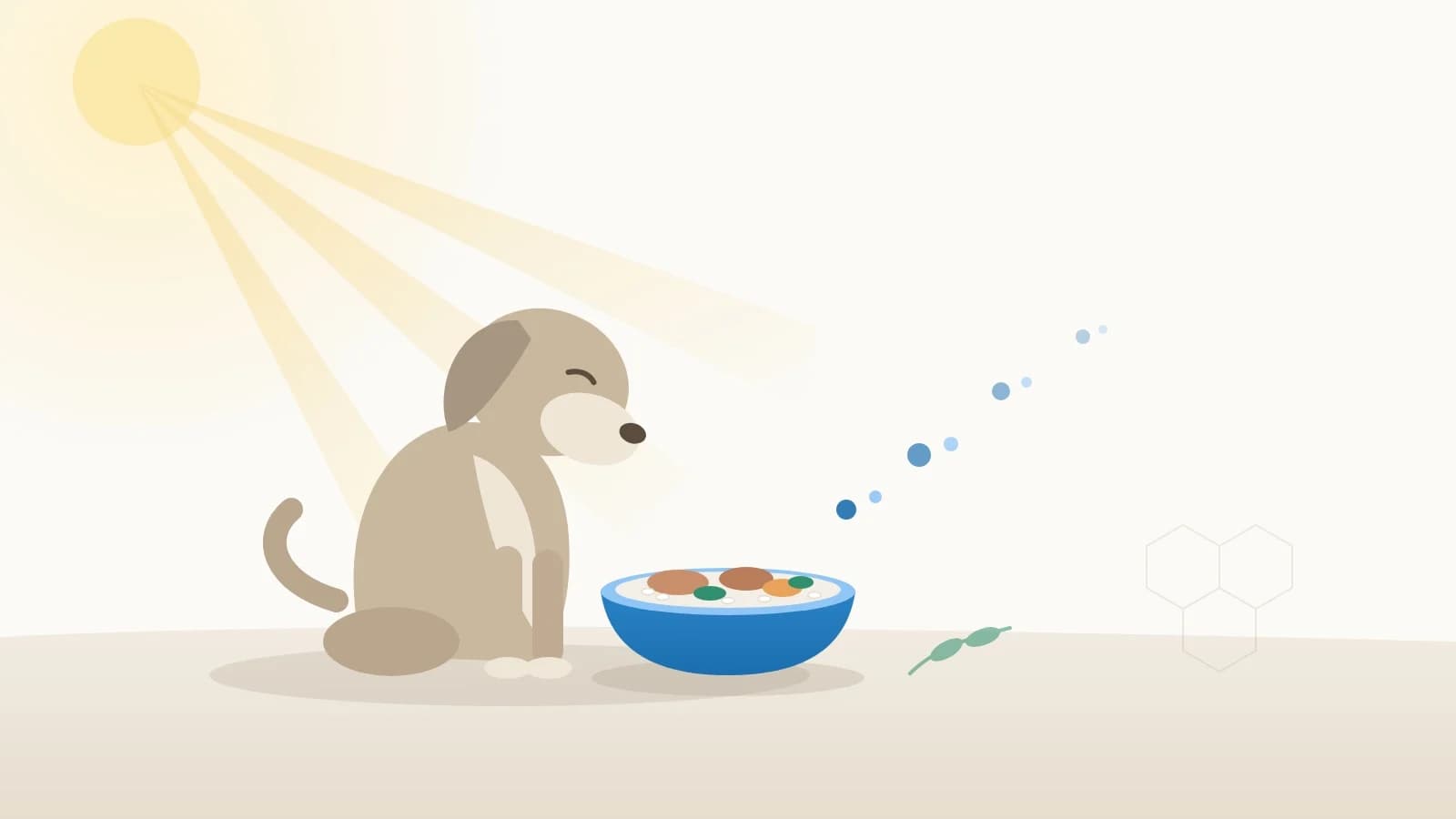
In people, much of the body’s vitamin D3 is made in the skin with sunlight. In cats and dogs, an enzyme that rapidly diverts the skin precursor 7-dehydrocholesterol down another pathway is highly active, so skin synthesis does not meet their needs. Cats and dogs are effectively dependent on their diet for vitamin D. Time in the sun does not make up for a diet lacking vitamin D.
From D3 to calcitriol: a two-step activation
Vitamin D3 (cholecalciferol) taken in with food is not the active hormone itself:
- 1Liver: D3 is converted by 25-hydroxylation into 25-hydroxyvitamin D (calcidiol). This is the form measured in blood to reflect vitamin D status.
- 2Kidney: the enzyme 1-alpha-hydroxylase converts calcidiol into the active hormone 1,25-dihydroxyvitamin D (calcitriol). This step is tightly controlled: parathyroid hormone (PTH) and low phosphate stimulate it, while high calcium, high phosphate and FGF23 suppress it.
Calcium and phosphorus absorption in the gut
Calcitriol binds to the vitamin D receptor (VDR) in small-intestinal cells and increases production of the proteins that carry calcium actively across the cell (calcium channels, calbindin, a basolateral pump). The same hormone also contributes to phosphate transport from the gut. When dietary calcium is low, the body strengthens this active pathway to raise absorption efficiency.
The critical point: this system regulates absorption of the calcium that is present in the gut. If the diet lacks calcium, there is nothing to absorb, however adequate vitamin D3 may be.
PTH: the body’s calcium thermostat
When ionised calcium in the blood falls, calcium-sensing receptors in the parathyroid glands detect it and PTH secretion rises. PTH defends blood calcium in three ways:
- it stimulates calcitriol production in the kidney, increasing gut absorption;
- it increases calcium reabsorption in the kidney and speeds up phosphate excretion;
- it stimulates release of calcium and phosphate from bone (bone resorption).
In the short term this is a rescue mechanism. But if a low-calcium, high-phosphorus diet continues for months, PTH stays persistently high and the skeleton quietly loses calcium while blood calcium still looks “normal”. This picture is called nutritional secondary hyperparathyroidism, and its link with home-made, meat-heavy diets is well recognised.
Why does the Ca:P ratio matter as much as the amount of calcium?
Calcium and phosphorus must be assessed together. High phosphorus stimulates PTH further when calcium is low, and in the gut the two minerals influence each other’s absorption. Canine and feline nutrition guidelines (NRC, FEDIAF) aim for calcium equal to or slightly above phosphorus, with a narrower range during growth. In boneless muscle meat the ratio is inverted, with phosphorus many times higher than calcium. That is why “I added a bit of calcium” is not enough; the ratio must be calculated across the whole diet.
Why are fast-growing puppies and kittens more vulnerable?
A growing skeleton lays down new bone every day, so an error in the calcium-phosphorus balance shows far sooner than in an adult. Two different pictures can be seen in young animals fed home-made diets, and telling them apart is the veterinary surgeon’s job:
- Nutritional secondary hyperparathyroidism: essentially calcium deficiency and an inverted Ca:P ratio. It may present with marked thinning of bone, lameness, reluctance to move and fractures after minor trauma. It is the condition most often linked with home-made diets in dogs and cats.
- Rickets: defective mineralisation of the growth plates, linked with vitamin D deficiency or, more rarely, phosphorus deficiency. Swelling around the joints, bowed limbs and stunted growth may be seen. It is rare in cats and dogs but has been reported on unbalanced home-made diets.
The two can occur together: cases have been published of a puppy growing on a diet low in both calcium and vitamin D that developed fractures alongside vitamin D deficiency.
In large-breed puppies, excess is a risk too
Large and giant-breed puppies, particularly in their first months, cannot adequately limit calcium absorption from the gut when intake is excessive. In this period an excess of dietary calcium and vitamin D can also harm bone and cartilage development; the effects of chronic calcium excess on skeletal development in large-breed puppies have been shown experimentally. So for a fast-growing puppy the goal is not “more” but a calculated balance. An animal fed a commercial puppy food should not be given extra calcium or extra vitamin D unless the veterinary surgeon advises it.
When to see your vet: if a puppy or kitten shows lameness, swelling around the joints, bowed legs, reluctance to move, growth that lags behind its age or an unexplained fracture, see your veterinary surgeon without delay and take the diet recipe with you. Diagnosis and treatment decisions belong to your veterinary surgeon.
Vitamin D3 deficiency or calcium deficiency? How does the vet tell them apart?
The signs may look alike while the cause differs, and support given in the wrong direction can make things worse. A veterinary assessment usually looks at:
- the full recipe and quantities of the diet (the key diagnostic tool);
- blood total and ionised calcium, phosphorus and alkaline phosphatase;
- where needed, PTH and 25-hydroxyvitamin D measurement;
- radiographs to assess bone density and the growth plates;
- ruling out kidney disease and other conditions that affect vitamin D metabolism.
Where calcium deficiency dominates, the priority is adding the right calcium source in the right ratio; D3 support does not replace it. Where vitamin D deficiency is found, the vet calculates the diet’s vitamin D content and any additional support needed.
What does a “nano” carrier system mean for absorption?
Vitamin D3 is a fat-soluble molecule. To be absorbed in the gut it must first be released from fat droplets and taken up into small clusters formed with bile salts (micelles). This process depends on the fat content of the meal and on bile and pancreatic secretions.
Nano-emulsions are carrier systems that disperse a fat-soluble substance in very small oil droplets within a water-based medium. The smaller the droplets, the larger the total surface area digestive enzymes can act on. For this reason, laboratory digestion models and some studies in laboratory animals and people have reported that nano-scale emulsions can increase the bioaccessibility of fat-soluble vitamins (the proportion made ready for absorption after digestion), with results varying by the type of carrier oil and droplet size.
This needs a measured reading:
- Much of the evidence comes from laboratory models; clinical data directly comparing D3 forms in cats and dogs are limited.
- The carrier system concerns how D3 is presented; it does not close a calcium gap in the diet and does not change the dosing decision.
- Easier absorption does not reduce the risk of overuse; if anything, it makes vet-determined dosing more important.
Why is too much vitamin D3 harmful?
Because vitamin D3 is fat-soluble, it is not excreted quickly; it accumulates in fat tissue and the liver. When intake is excessive, calcium and phosphorus absorption from the gut and mineral release from bone rise too far, and hypercalcaemia (raised blood calcium) can develop. Hypercalcaemia may present with loss of appetite, vomiting, drinking and urinating more, lethargy and, as it progresses, kidney damage and mineral deposits in soft tissues. Cases of hypercalcaemia in dogs caused by excessive vitamin D supplementation have been published, and commercial pet foods have been recalled in the past because of excess vitamin D.
Therefore:
- An animal on a complete commercial food already receives vitamin D; adding extra D3 on top needs a veterinary decision.
- Using several vitamin products at once can push total vitamin D intake up without anyone noticing.
- The dose should be set by the veterinary surgeon according to species, body weight, age, diet composition and blood results. This article deliberately gives no dosing advice.
What should you watch for when cooking at home?
- 1Build the recipe with an expert: a home-made diet should be formulated by a veterinary surgeon or veterinary nutritionist for the animal’s species, age and health status.
- 2Treat the calcium source as a mandatory part of the recipe: the expert should set the source and amount; adding bone meal, eggshell or dairy “by eye” does not guarantee the ratio.
- 3Do not change the recipe: dropping ingredients or increasing the meat proportion upsets the balance. Discuss any need for change with your vet.
- 4Regular checks during growth: in young animals, weight, growth rate and, where needed, blood values should be monitored regularly.
- 5Tell your vet about every supplement: list all vitamin and mineral products you use so total intake can be calculated.
Where does the VetUx D3 Nano range fit in?
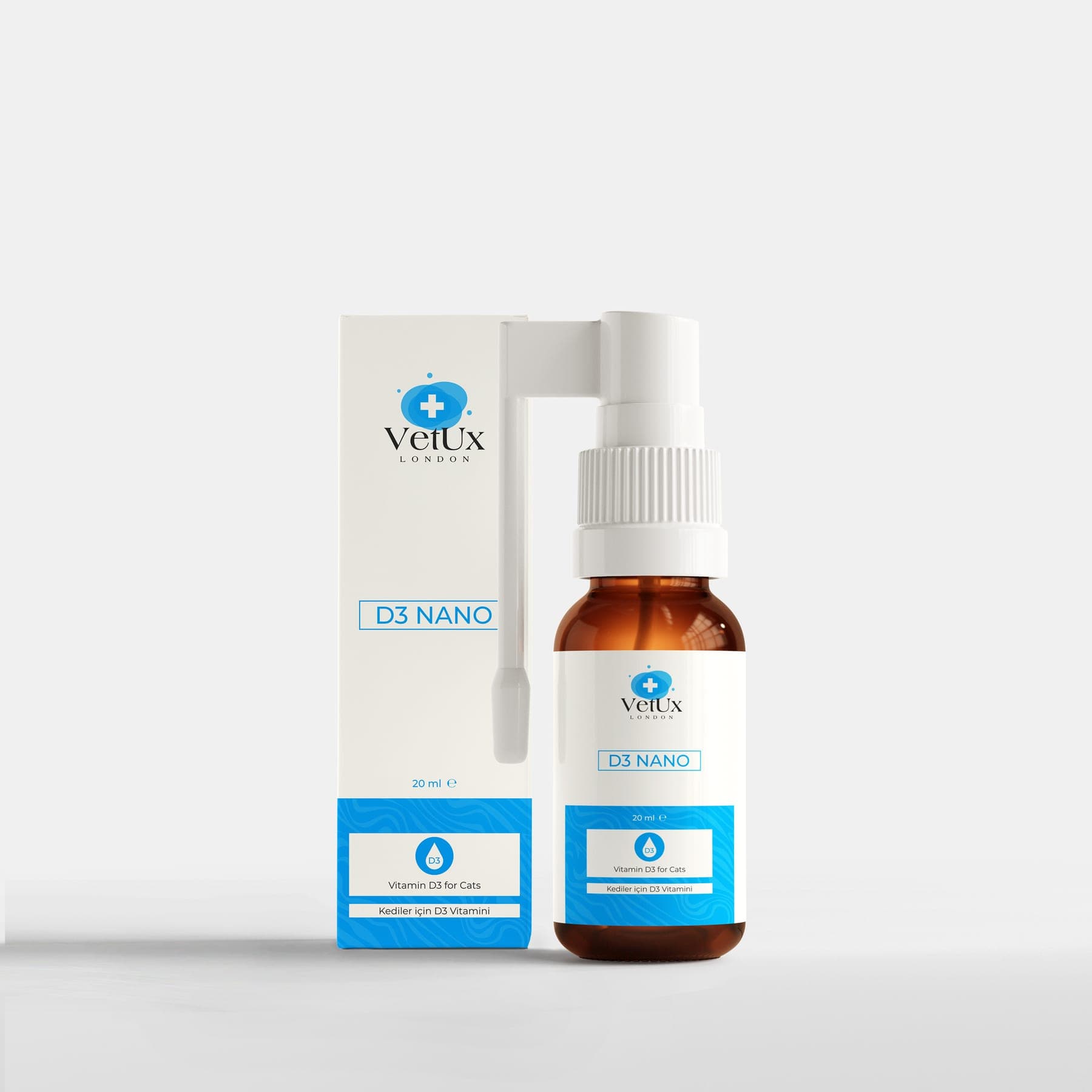
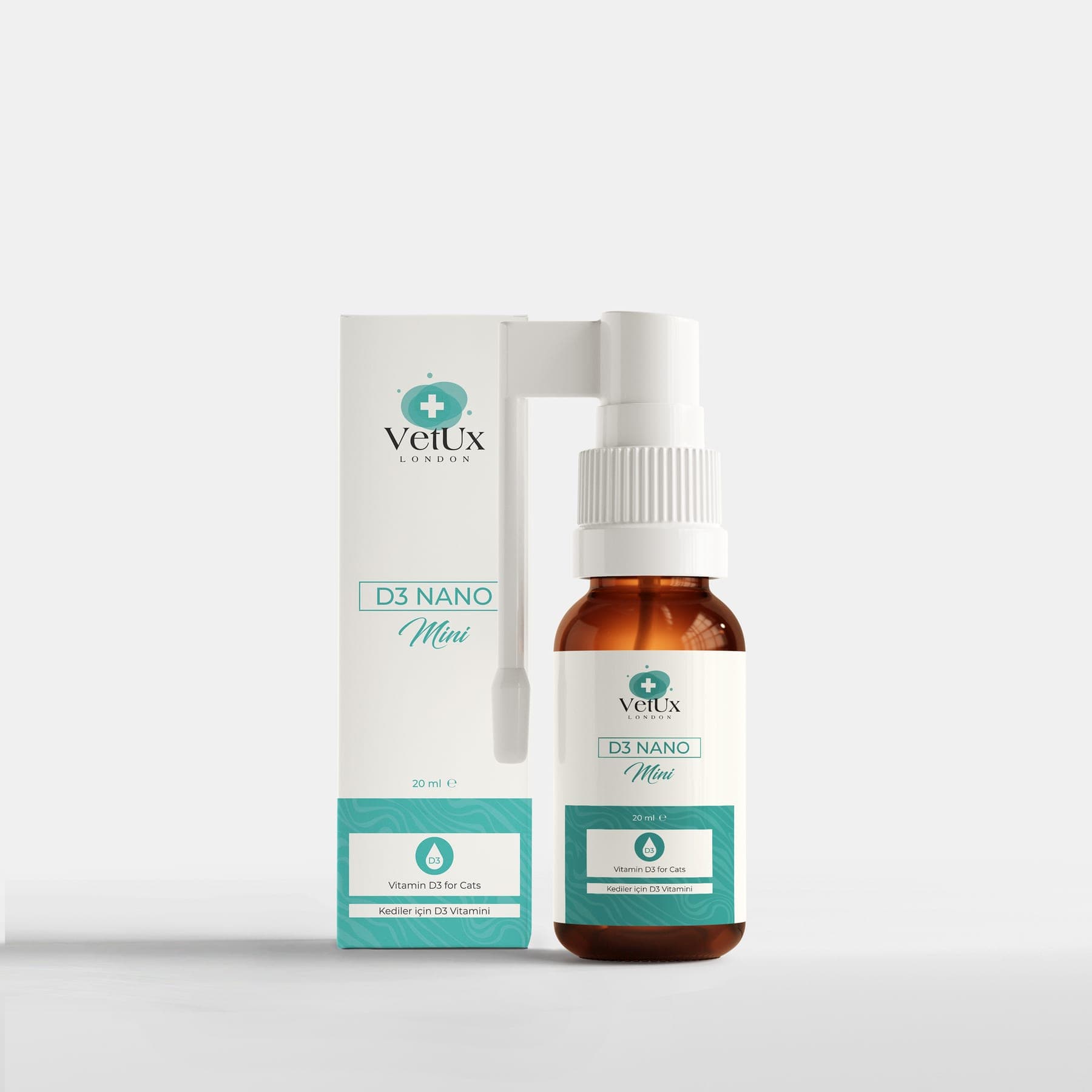
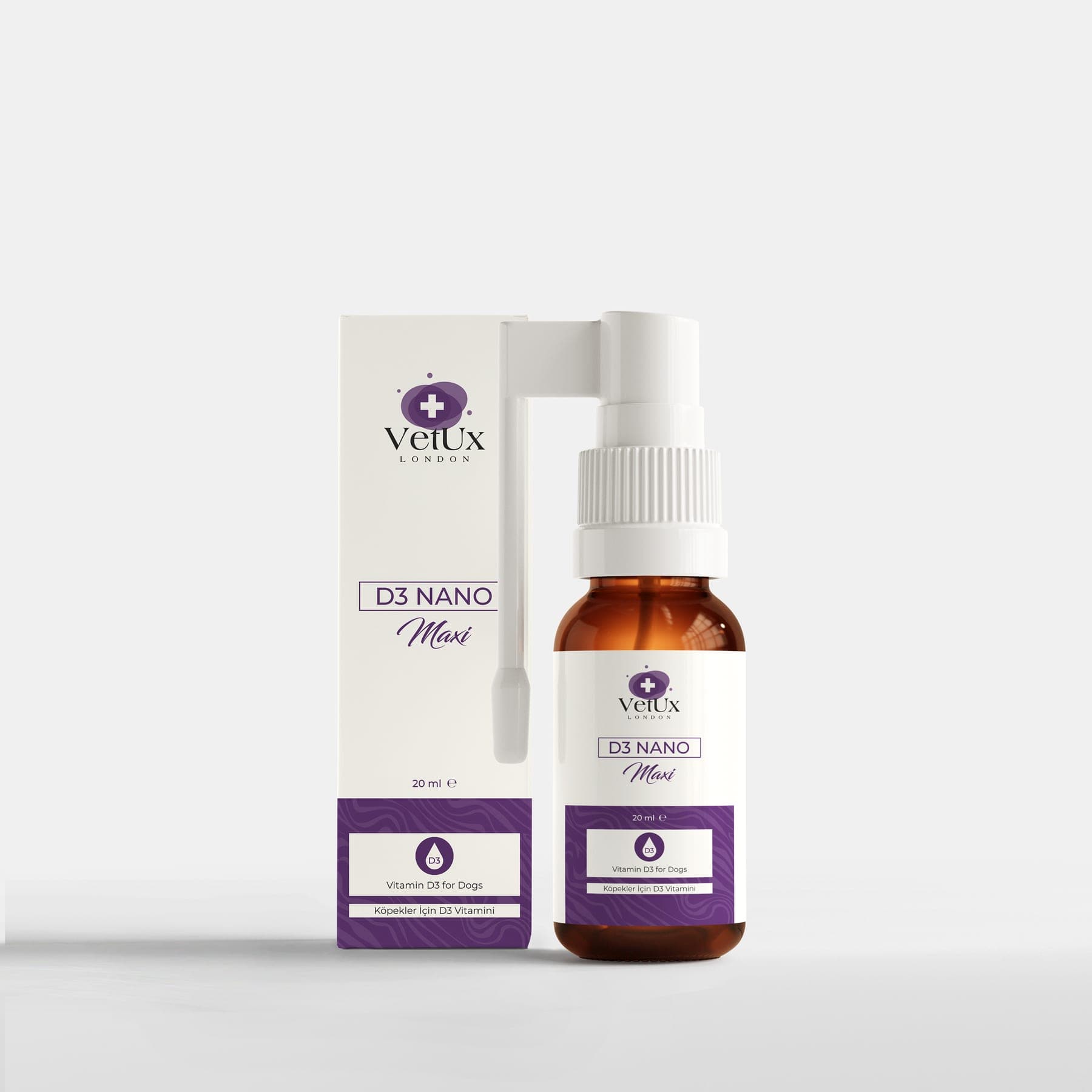
The VetUx D3 Nano range consists of feed additive (premix) sprays containing vitamin D3 (3a671) as the single active ingredient. According to the product records, vitamin D3 contributes to the normal absorption of calcium and phosphorus and to maintaining bone and dental structure. In the range, fat-soluble vitamin D3 is presented in a water-based form through a nano-emulsion carrier system.
- D3 Nano: prepared for cats; the product record defines it for adult cats and states that it should not be used together with vitamin D2.
- D3 Nano Mini: prepared for small-breed dogs, at a concentration set for their lower dose needs.
- D3 Nano Maxi: prepared for medium and large-breed dogs, at a higher concentration.
These products do not make up for a calcium deficit in the diet and do not replace a balanced diet. For an animal on home-made food, whether D3 support is needed, and which product and amount are appropriate, should be decided by the veterinary surgeon based on a diet analysis and, where needed, blood results. In fast-growing large-breed puppies in particular, D3 should not be added without veterinary advice.
Frequently asked questions
If I add vitamin D3 to my home-cooked food, will that fix a calcium deficiency?
No. Vitamin D3 contributes to the absorption of calcium present in the gut, but it cannot replace calcium the diet does not contain. In a meat-heavy, boneless diet the priority is adding the right calcium source in the right ratio. This should be calculated by your veterinary surgeon or a veterinary nutritionist.
My dog or cat spends time in the sun; do they still need vitamin D?
Yes, but from their food. Skin synthesis of D3 in cats and dogs does not reach a level that meets their needs; vitamin D has to come from the diet. Complete commercial foods already contain it. Review with your vet whether a home-made diet includes a vitamin D source.
I think my puppy may be at risk of rickets; can I start giving D3 myself?
This is not advisable. Signs such as lameness, joint swelling or bowed legs can stem from calcium deficiency, vitamin D deficiency or another cause, and they are told apart with blood tests and radiographs. Support given in the wrong direction can harm skeletal development, especially in large-breed puppies. Diagnosis and treatment belong to your veterinary surgeon.
Why is too much vitamin D3 dangerous?
D3 is fat-soluble and accumulates in the body. An excess raises blood calcium (hypercalcaemia) and can lead to loss of appetite, vomiting, increased drinking, lethargy and, as it progresses, kidney damage. That is why use and dose are always the veterinary surgeon’s decision.
Is nano-emulsion D3 better in every situation?
A nano-emulsion is a carrier system that presents fat-soluble D3 in a water-based form. Laboratory studies show such systems can make it easier for fat-soluble vitamins to become ready for absorption during digestion, but comparative clinical data in cats and dogs are limited. Whatever the form, what matters most is the balance of the diet and use as set by the veterinary surgeon.
I feed a commercial puppy food; does my puppy need extra calcium or D3?
A puppy food labelled as complete and suited to age and breed size is generally balanced for calcium, phosphorus and vitamin D. Unless the vet identifies a specific reason, adding extra calcium or D3 on top can tip the balance towards excess.
This article is for general information and does not replace an examination by a veterinary surgeon. The VetUx D3 Nano range is a complementary feed additive, not a medicine. Diagnosis, treatment and decisions on use belong to your veterinary surgeon.
References
- 1How KL, Hazewinkel HAW, Mol JA. Dietary vitamin D dependence of cat and dog due to inadequate cutaneous synthesis of vitamin D. Gen Comp Endocrinol. 1994;96(1):12-18.
- 2Parker VJ, Rudinsky AJ, Chew DJ. Vitamin D metabolism in canine and feline medicine. J Am Vet Med Assoc. 2017;250(11):1259-1269.
- 3Hazewinkel HAW, Tryfonidou MA. Vitamin D3 metabolism in dogs. Mol Cell Endocrinol. 2002;197(1-2):23-33.
- 4National Research Council. Nutrient Requirements of Dogs and Cats. Washington, DC: The National Academies Press; 2006.
- 5FEDIAF. Nutritional Guidelines for Complete and Complementary Pet Food for Cats and Dogs. Brussels: FEDIAF; current edition.
- 6Stockman J, Fascetti AJ, Kass PH, Larsen JA. Evaluation of recipes of home-prepared maintenance diets for dogs. J Am Vet Med Assoc. 2013;242(11):1500-1505.
- 7Wilson SA, Villaverde C, Fascetti AJ, Larsen JA. Evaluation of the nutritional adequacy of recipes for home-prepared maintenance diets for cats. J Am Vet Med Assoc. 2019;254(10):1172-1179.
- 8Tal M, Parr JM, MacKenzie S, Verbrugghe A. Dietary imbalances in a large breed puppy, leading to compression fractures, vitamin D deficiency, and suspected nutritional secondary hyperparathyroidism. Can Vet J. 2018;59(1):36-42.
- 9Hazewinkel HAW, Goedegebuure SA, Poulos PW, Wolvekamp WTC. Influences of chronic calcium excess on the skeletal development of growing Great Danes. J Am Anim Hosp Assoc. 1985;21:377-391.
- 10Mellanby RJ, Mee AP, Berry JL, Herrtage ME. Hypercalcaemia in two dogs caused by excessive dietary supplementation of vitamin D. J Small Anim Pract. 2005;46(7):334-338.
- 11Ozturk B, Argin S, Ozilgen M, McClements DJ. Nanoemulsion delivery systems for oil-soluble vitamins: influence of carrier oil type on lipid digestion and vitamin D3 bioaccessibility. Food Chem. 2015;187:499-506.
- 12Commission Implementing Regulation (EU) 2017/1492 concerning the authorisation of cholecalciferol as a feed additive for all animal species. Off J Eur Union. 2017.
Frequently asked questions
If I add vitamin D3 to my home-cooked food, will that fix a calcium deficiency?
No. Vitamin D3 contributes to the absorption of calcium present in the gut, but it cannot replace calcium the diet does not contain. In a meat-heavy, boneless diet the priority is adding the right calcium source in the right ratio. This should be calculated by your veterinary surgeon or a veterinary nutritionist.
My dog or cat spends time in the sun; do they still need vitamin D?
Yes, but from their food. Skin synthesis of D3 in cats and dogs does not reach a level that meets their needs; vitamin D has to come from the diet. Complete commercial foods already contain it. Review with your vet whether a home-made diet includes a vitamin D source.
I think my puppy may be at risk of rickets; can I start giving D3 myself?
This is not advisable. Signs such as lameness, joint swelling or bowed legs can stem from calcium deficiency, vitamin D deficiency or another cause, and they are told apart with blood tests and radiographs. Support given in the wrong direction can harm skeletal development, especially in large-breed puppies. Diagnosis and treatment belong to your veterinary surgeon.
Why is too much vitamin D3 dangerous?
D3 is fat-soluble and accumulates in the body. An excess raises blood calcium (hypercalcaemia) and can lead to loss of appetite, vomiting, increased drinking, lethargy and, as it progresses, kidney damage. That is why use and dose are always the veterinary surgeon’s decision.
Is nano-emulsion D3 better in every situation?
A nano-emulsion is a carrier system that presents fat-soluble D3 in a water-based form. Laboratory studies show such systems can make it easier for fat-soluble vitamins to become ready for absorption during digestion, but comparative clinical data in cats and dogs are limited. Whatever the form, what matters most is the balance of the diet and use as set by the veterinary surgeon.
I feed a commercial puppy food; does my puppy need extra calcium or D3?
A puppy food labelled as complete and suited to age and breed size is generally balanced for calcium, phosphorus and vitamin D. Unless the vet identifies a specific reason, adding extra calcium or D3 on top can tip the balance towards excess.
This article is for general information only; it does not replace veterinary examination, diagnosis or treatment. VetUx London products are complementary feed. If you have any concern about your companion, please consult your veterinary surgeon.
Share
The formulas matching the nutritional support described above.
Related articles
All articles Clinical Notes
Suture Site Healing in Cats and Dogs: Scarring, Granulation Tissue and Topical Protection
A suture site heals through haemostasis, inflammation, proliferation and remodelling. We explain what is normal at home, how collagen organisation shapes a scar and where topical protection fits; diagnosis and treatment belong to your veterinary surgeon.
 Clinical Notes
Gut Development in Pregnant Mothers and Nursing Young: The Move From Mother's Milk to Solid Food
Why do newborn kittens and puppies gain their immunity from colostrum, when does gut closure happen, and how should the move from mother's milk to solid food be planned? The physiology of nutrition through pregnancy and nursing; every decision belongs to your vet.
 Clinical Notes
Red Blood Cell Losses in Cats and Dogs: Bioavailability of Chelated Iron and Vitamin B12 Absorption
Why do red blood cell losses and anaemia of chronic disease cause lethargy in cats and dogs? Explore the hepcidin-ferroportin axis, the bioavailability of chelated iron and vitamin B12 (cobalamin) absorption, and the physiological principles of bone marrow erythropoiesis support.