
Red Blood Cell Losses in Cats and Dogs: Bioavailability of Chelated Iron and Vitamin B12 Absorption
Why do red blood cell losses and anaemia of chronic disease cause lethargy in cats and dogs? Explore the hepcidin-ferroportin axis, the bioavailability of chelated iron and vitamin B12 (cobalamin) absorption, and the physiological principles of bone marrow erythropoiesis support.
Short answer: Red blood cell losses and anaemia of chronic disease in cats and dogs are linked to functional iron restriction, impaired vitamin B12 (cobalamin) or folate absorption, and reduced bone marrow response. Chelated iron and cobalamin-folate balance support physiological erythropoiesis. Diagnosis and treatment belong to your veterinary surgeon; pale gums require urgent examination.
Why do red blood cell losses and anaemia of chronic disease develop in cats and dogs?
Red blood cells (erythrocytes) carry oxygen from the lungs to tissues and organs throughout the body via haemoglobin. A drop in circulating red blood cell mass, haemoglobin concentration or packed cell volume (PCV/haematocrit) below the physiological reference interval is defined as anaemia (Harvey, 2012). Anaemia is not a single disease in itself; it is a clinical state arising from blood loss, accelerated erythrocyte destruction (haemolysis) or inadequate erythrocyte production in the bone marrow.
In veterinary internal medicine, the most common form of non-regenerative anaemia (where the bone marrow cannot mount an adequate reticulocyte response) is anaemia of chronic disease, also referred to as anaemia of inflammatory disease (Chikazawa and Dunning, 2016; Grimes and Fry, 2015). Key clinical processes that can trigger this state include:
- Chronic inflammatory and infectious conditions: Persistent tissue inflammation alters iron homeostasis and shortens erythrocyte lifespan through inflammatory cytokines.
- Chronic kidney disease (CKD): Particularly in ageing cats, reduced renal synthesis of erythropoietin (EPO) weakens the signal that drives bone marrow erythropoiesis (Chalhoub et al., 2011).
- Gastrointestinal blood loss and malabsorption: Chronic enteropathies can cause both occult iron loss and impaired intestinal absorption of vitamin B12 (cobalamin) and folate (Naigamwalla et al., 2012).
- Ectoparasite and endoparasite burden: Fleas, ticks or hookworms can cause chronic blood and iron depletion, especially in young animals.
Feline erythrocytes have a naturally shorter lifespan (approximately 70–75 days) compared with canine erythrocytes (approximately 100–115 days) (Harvey, 2012). Because of this rapid baseline turnover, chronic inflammation or nutritional malabsorption in cats can manifest earlier as a decline in haematocrit. Identifying the underlying cause of anaemia requires a full veterinary examination, including a complete blood count (CBC), reticulocyte count and serum biochemistry.
What clinical signs appear in an anaemic and lethargic cat or dog?
In slowly developing chronic anaemia, animals may compensate physiologically for some time; indoor cats in particular often mask their condition by quietly reducing daily activity. Owners should watch for the following signs:
- Pale pink or porcelain-white gums, tongue and inner eyelids (conjunctivae)
- Shorter play sessions, tiring quickly on walks or stairs, and prolonged sleeping (lethargy)
- Faster breathing at rest (tachypnoea) and an elevated heart rate (tachycardia)
- Reduced appetite, weight loss and a dull coat
- Eating soil, grit or cat litter (pica), which is a classic behavioural clue in cats and dogs developing iron deficiency anaemia (Naigamwalla et al., 2012)
Mechanism: How do the bone marrow erythropoiesis matrix, chelated iron and vitamin B12 absorption work?
This section explains general haematological and digestive physiology; specific product information for the complementary feed formulation is provided separately below.
The hepcidin-ferroportin axis and functional iron restriction
Iron is the central atom of the oxygen-binding haem ring within haemoglobin. When chronic inflammation develops, inflammatory cytokines—most notably interleukin-6 (IL-6)—stimulate the liver to synthesise the peptide hormone hepcidin (Ganz and Nemeth, 2012; Chikazawa and Dunning, 2016). Hepcidin binds to ferroportin, the sole cellular iron exporter located on intestinal enterocytes and macrophages, triggering its internalisation and degradation.
As a result, dietary iron cannot cross from the small intestine into circulation, and recycled iron remains locked inside reticuloendothelial macrophages. This state is known as functional iron restriction: even when total body iron stores exist, developing erythroblasts in the bone marrow are deprived of bioavailable iron.
Duodenal iron absorption: Inorganic salts vs chelated iron bioavailability
Dietary iron absorption takes place primarily in the duodenum. When inorganic iron salts (such as ferrous sulphate or ferric oxide) dissociate into free ions within the intestinal lumen, they readily form insoluble complexes with dietary phytates, phosphates and polyphenols, lowering absorption and potentially irritating the mucosa.
From a biochemical standpoint, chelated iron (iron coordinated with amino acids or organic ligands) shields the metal ion within a ring structure, limiting premature binding to luminal inhibitors. This structural stability supports the bioavailability of iron reaching the enterocyte brush border and improves gastrointestinal tolerance (Harvey, 2012). In addition, naturally occurring botanical matrices containing organic iron, folate derivatives and antioxidant polyphenols—such as Moringa oleifera leaf—are studied as nutritional sources that accompany the physiological micronutrient profile (Gopalakrishnan et al., 2016).
Intrinsic factor, vitamin B12 (cobalamin) and folic acid synergy
Rapid division and maturation of red blood cell precursors (erythroblasts) in the bone marrow require more than iron alone; they depend on uninterrupted DNA synthesis, where two B-group vitamins act in tandem:
- Vitamin B12 (cobalamin): Cobalamin absorption in cats and dogs is a highly specialised, multi-step pathway. After release from dietary protein in the stomach, cobalamin binds to intrinsic factor (IF) and is absorbed exclusively in the ileum via specific cubam receptors. Crucially, while dogs secrete intrinsic factor from both the stomach and the pancreas, cats produce intrinsic factor almost exclusively in the exocrine pancreas (Simpson et al., 2001; Ruaux, 2013). Consequently, cats with pancreatic or distal small intestinal sensitivity can rapidly deplete their cobalamin stores (Korman et al., 2013).
- Folic acid (vitamin B9): Absorbed in the duodenum and proximal jejunum, folate serves as a one-carbon donor for thymidine nucleotide synthesis. When cobalamin-dependent methionine synthase activity is impaired, folate becomes metabolically trapped inside the cell ("the folate trap"), slowing DNA replication in developing erythroblasts.
Zinc picolinate, L-glutamine and the role of the gut barrier in absorption
For iron, vitamin B12 and folic acid to reach the bone marrow, the intestinal mucosa (villus and microvillus architecture) must remain intact:
- L-Glutamine: Serves as the primary metabolic fuel for small intestinal enterocytes, helping maintain tight-junction integrity and normal villus structure (Kim and Kim, 2017).
- Live probiotic cultures: Support the natural balance of the gut microbiota and contribute to an optimal mucosal environment for normal nutrient absorption.
- Zinc picolinate: Zinc chelated with picolinic acid offers an easily absorbed profile and acts as a physiological cofactor in erythrocyte membrane stability and hundreds of metalloenzymes, including carbonic anhydrase.
When should you seek immediate veterinary attention?
If you notice any of the following signs, contact your veterinary surgeon on the same day rather than attempting home nutritional support:
- Markedly pale, white or yellowish (jaundiced/icteric) gums
- Difficulty standing, sudden severe weakness or collapse (syncope)
- Rapid breathing exceeding 35–40 breaths per minute at rest, or laboured abdominal breathing
- Black, tarry stools (melaena—a sign of upper gastrointestinal bleeding) or blood/dark brown discolouration in the urine
- Suspected ingestion of a foreign body, onions/garlic, rodenticide or human medication (especially paracetamol or ibuprofen)
All diagnostic and treatment decisions belong strictly to your veterinary surgeon. Giving high-dose iron supplements at home without a confirmed diagnosis can irritate the gastrointestinal tract or cause tissue iron overload (haemosiderosis) and must never be done without veterinary supervision.
Where does Elixir of Hemofix fit into this picture?
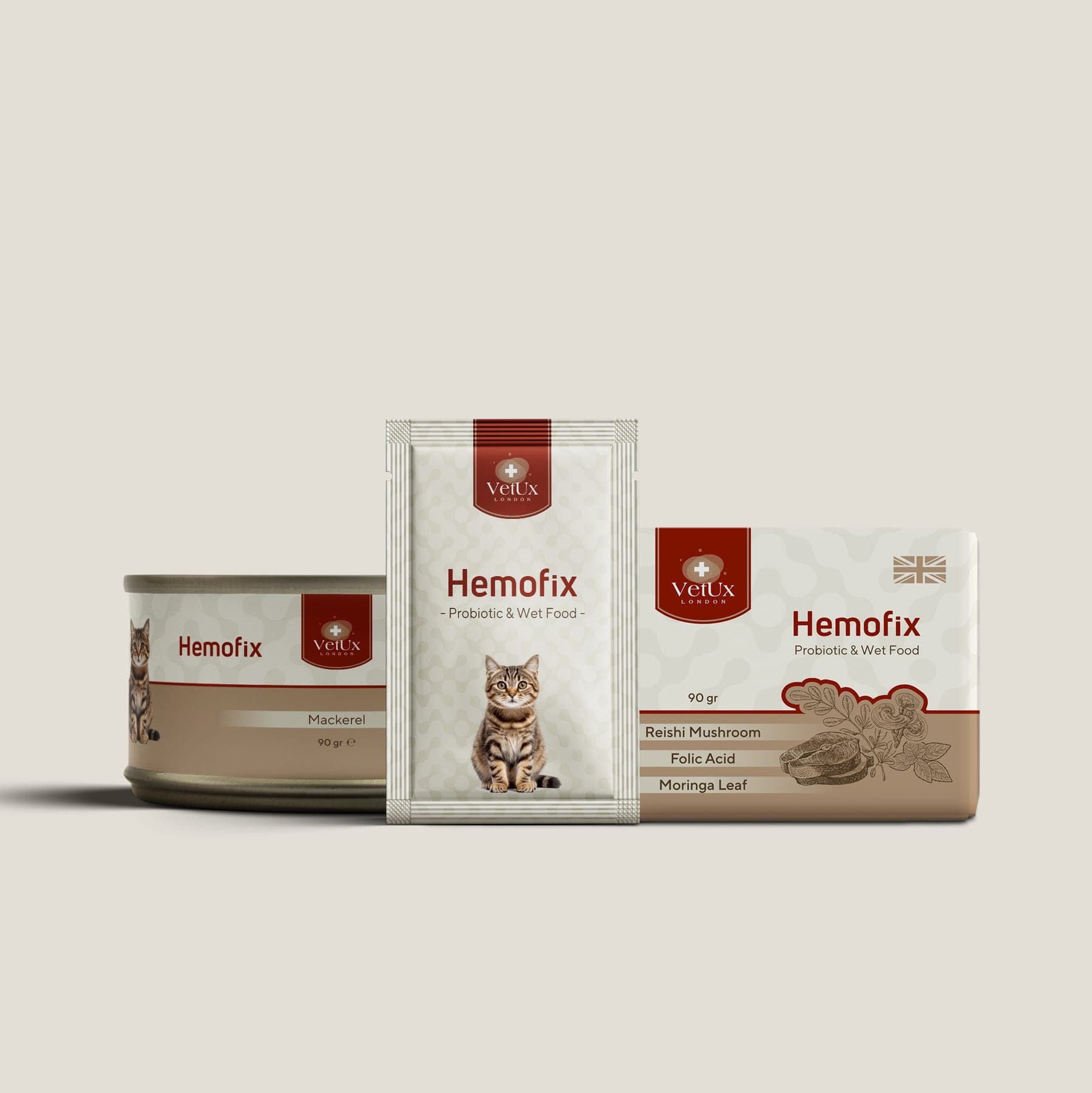
Elixir of Hemofix is a complementary feed prepared as a probiotic wet food and sachet combination (90 g) for cats whose blood values and everyday vitality need extra attention. Built on a gluten-free, low-carbohydrate, high-moisture mackerel (Scomber scombrus) recipe, it contains Moringa leaf (Moringa oleifera), iron, folic acid, vitamin B12, zinc picolinate, live probiotic cultures and L-glutamine.
- Moringa leaf, iron, folic acid and vitamin B12: Contribute to the normal formation of red blood cells and to maintaining normal blood values, supporting physiological erythropoiesis.
- Live probiotics and L-glutamine: Support the natural integrity of the gut barrier, digestive comfort and the normal absorption of nutrients.
- Zinc picolinate and protein-led profile: The easily absorbed picolinate form of zinc, combined with mackerel protein and high moisture content, helps support natural defences, everyday vitality and normal metabolic balance.
- Gluten-free and low-carbohydrate wet format: Offers a gentle option for cats with sensitive digestion and helps maintain a steady flow of energy across the day.
Elixir of Hemofix is not a human or veterinary medicine; it does not treat or cure anaemia, and serves solely as a complementary feed accompanying the care recommended by your veterinary surgeon. Divide across your cat's daily meals according to their weight and daily energy needs, in consultation with your veterinary surgeon. Stir the contents of the sachet into the wet food before serving, and keep refrigerated once opened. The product is formulated for cats; a nutrition and support plan for dogs should be established separately with your veterinary surgeon.
Frequently Asked Questions
Are anaemia of chronic disease and iron deficiency anaemia the same thing in cats and dogs?
No. In iron deficiency anaemia, total body iron stores are genuinely depleted, most often due to chronic blood loss. In anaemia of chronic (inflammatory) disease, iron is present in the body, but elevated hepcidin during inflammation blocks intestinal iron absorption and traps iron inside storage macrophages. Differentiating and managing these two states requires blood tests performed by your veterinary surgeon.
Why does vitamin B12 (cobalamin) deficiency affect blood values and energy in cats?
Vitamin B12 works alongside folic acid as an essential cofactor for DNA synthesis during the division and maturation of red blood cell precursors in the bone marrow. Because cats produce intrinsic factor almost exclusively in the pancreas and absorb B12 in the ileum, digestive sensitivities can rapidly lower cobalamin reserves. An appropriate support plan is determined by your veterinary surgeon.
What is the absorption difference between chelated minerals and inorganic mineral salts?
When inorganic mineral salts dissociate into free ions in the digestive tract, they can bind to dietary phytates and phosphates, reducing absorption. Minerals bound to amino acids or organic acids (chelated or picolinate forms) remain more stable in the intestinal lumen, supporting physiological absorption bioavailability at the enterocyte surface.
Can I give an iron supplement at home to a cat that seems anaemic?
No. Administering iron preparations without identifying the cause of anaemia can irritate the gastrointestinal mucosa and, in cases of haemolytic anaemia or elevated hepcidin, lead to excessive tissue iron accumulation (haemosiderosis). Diagnosis, treatment and nutritional support selection must always be guided by a veterinary surgeon.
How is gut health (L-glutamine and probiotics) connected to maintaining normal blood values?
Iron is absorbed in the duodenum, folic acid in the jejunum and vitamin B12 in the ileum. When the intestinal epithelial barrier is compromised, the uptake of these micronutrients diminishes. L-glutamine and live probiotic cultures support the natural integrity of the gut barrier and the normal absorption of nutrients.
Can Elixir of Hemofix be given to dogs or replace medical treatment?
Elixir of Hemofix is a complementary feed formulated specifically for cats as a probiotic wet food and sachet combination; an appropriate nutritional plan for dogs should be arranged separately with your veterinary surgeon. No complementary feed replaces medical diagnosis or treatment by a veterinary surgeon; it only accompanies veterinary care.
This article is for information only and does not replace examination, diagnosis or treatment by a veterinary surgeon. Consult your veterinary surgeon about every decision concerning your pet's health.
Author: Vet. Hek. Metehan Çalıkuşu
References
- Chikazawa S, Dunning MD. A review of anaemia of inflammatory disease in dogs and cats. J Small Anim Pract. 2016;57(7):348-353.
- Grimes CN, Fry MM. Nonregenerative anemia: mechanisms of decreased or ineffective erythropoiesis. Vet Pathol. 2015;52(2):298-311.
- Harvey JW. Veterinary Hematology: A Diagnostic Guide and Color Atlas. St. Louis, MO: Elsevier Saunders; 2012.
- Naigamwalla DZ, Webb JA, Giger U. Iron deficiency anemia. Can Vet J. 2012;53(3):250-256.
- Ganz T, Nemeth E. Hepcidin and iron homeostasis. Biochim Biophys Acta. 2012;1823(9):1434-1443.
- Ruaux CG. Cobalamin in companion animals: diagnostic marker, deficiency states and therapeutic implications. Vet J. 2013;196(2):145-152.
- Simpson KW, Fyfe J, Cornetta A, et al. Subnormal concentrations of serum cobalamin (vitamin B12) in cats with gastrointestinal disease. J Vet Intern Med. 2001;15(1):26-32.
- Korman RM, Hetzel N, Knowles TG, Harvey AM, Tasker S. A retrospective study of 180 anaemic cats: features, aetiologies and survival data. J Feline Med Surg. 2013;15(2):81-90.
- Chalhoub S, Langston C, Eatroff A. Anemia of renal disease: what it is, what to do and what's new. J Feline Med Surg. 2011;13(9):629-640.
- Gopalakrishnan L, Doriya K, Kumar DS. Moringa oleifera: A review on nutritive importance and its medicinal application. Food Sci Hum Wellness. 2016;5(2):49-56.
- Kim MH, Kim H. The roles of glutamine in the intestine and its implication in intestinal diseases. Int J Mol Sci. 2017;18(5):1051.
Frequently asked questions
Are anaemia of chronic disease and iron deficiency anaemia the same thing in cats and dogs?
No. In iron deficiency anaemia, total body iron stores are genuinely depleted, most often due to chronic blood loss. In anaemia of chronic (inflammatory) disease, iron is present in the body, but elevated hepcidin during inflammation blocks intestinal iron absorption and traps iron inside storage macrophages. Differentiating and managing these two states requires blood tests performed by your veterinary surgeon.
Why does vitamin B12 (cobalamin) deficiency affect blood values and energy in cats?
Vitamin B12 works alongside folic acid as an essential cofactor for DNA synthesis during the division and maturation of red blood cell precursors in the bone marrow. Because cats produce intrinsic factor almost exclusively in the pancreas and absorb B12 in the ileum, digestive sensitivities can rapidly lower cobalamin reserves. An appropriate support plan is determined by your veterinary surgeon.
What is the absorption difference between chelated minerals and inorganic mineral salts?
When inorganic mineral salts dissociate into free ions in the digestive tract, they can bind to dietary phytates and phosphates, reducing absorption. Minerals bound to amino acids or organic acids (chelated or picolinate forms) remain more stable in the intestinal lumen, supporting physiological absorption bioavailability at the enterocyte surface.
Can I give an iron supplement at home to a cat that seems anaemic?
No. Administering iron preparations without identifying the cause of anaemia can irritate the gastrointestinal mucosa and, in cases of haemolytic anaemia or elevated hepcidin, lead to excessive tissue iron accumulation (haemosiderosis). Diagnosis, treatment and nutritional support selection must always be guided by a veterinary surgeon.
How is gut health (L-glutamine and probiotics) connected to maintaining normal blood values?
Iron is absorbed in the duodenum, folic acid in the jejunum and vitamin B12 in the ileum. When the intestinal epithelial barrier is compromised, the uptake of these micronutrients diminishes. L-glutamine and live probiotic cultures support the natural integrity of the gut barrier and the normal absorption of nutrients.
Can Elixir of Hemofix be given to dogs or replace medical treatment?
Elixir of Hemofix is a complementary feed formulated specifically for cats as a probiotic wet food and sachet combination; an appropriate nutritional plan for dogs should be arranged separately with your veterinary surgeon. No complementary feed replaces medical diagnosis or treatment by a veterinary surgeon; it only accompanies veterinary care.
This article is for general information only; it does not replace veterinary examination, diagnosis or treatment. VetUx London products are complementary feed. If you have any concern about your companion, please consult your veterinary surgeon.
Share
The formulas matching the nutritional support described above.
Related articles
All articles Clinical Notes
Hard Stools and Straining in Cats: The Peristaltic Power of Soluble and Insoluble Fibre
Why do cats develop hard stools and straining, and when does chronic constipation turn into a megacolon risk? This article covers the role of soluble and insoluble fibre in faecal bulk, water holding, peristalsis and the microbiota, plus the warning signs that need a veterinary surgeon.
 Clinical Notes
Vet Visits, Moving House and Fear of Thunder: The Neurological Power of L-Theanine and Tryptophan
Vet visits, moving house and thunder activate a cat's stress axis. How L-theanine and L-tryptophan relate to the GABA and serotonin systems, what the limited feline evidence shows, and practical steps at home. Diagnosis and treatment are for your veterinary surgeon.
 Clinical Notes
Feeding Pets That Have Recovered from Acute Pancreatitis: Precautions for Exocrine Pancreatic Insufficiency
Why does digestive load matter after a cat or dog recovers from acute pancreatitis, and which signs of exocrine pancreatic insufficiency should owners watch for? This article covers the mechanisms, feeding principles and the central role of veterinary follow-up.