
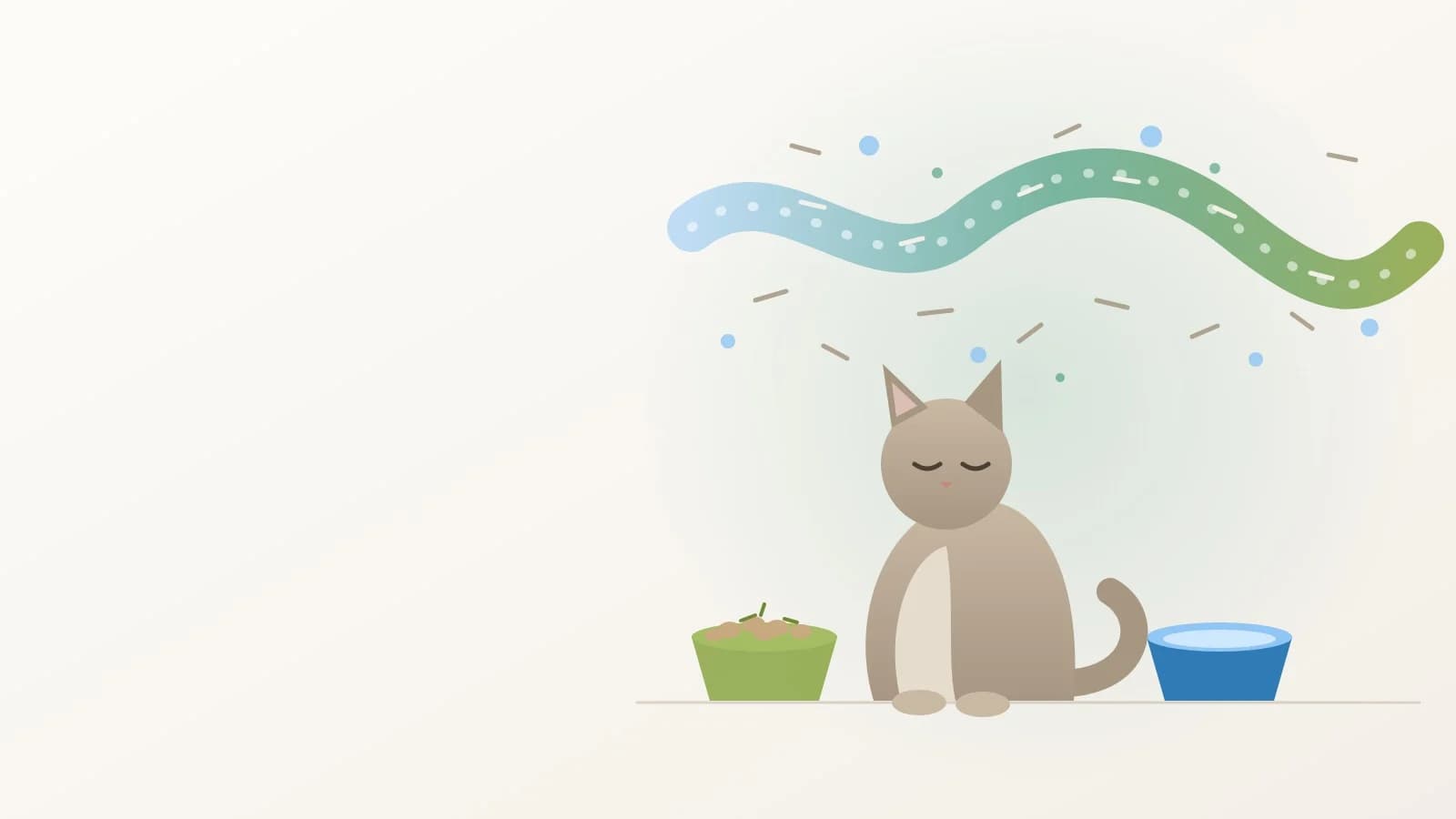
Hard Stools and Straining in Cats: The Peristaltic Power of Soluble and Insoluble Fibre
Why do cats develop hard stools and straining, and when does chronic constipation turn into a megacolon risk? This article covers the role of soluble and insoluble fibre in faecal bulk, water holding, peristalsis and the microbiota, plus the warning signs that need a veterinary surgeon.
Short answer: Hard stools and straining in cats are usually linked to low fluid intake, inactivity, pain or weakened colonic contractions. Insoluble fibre adds faecal bulk and stimulates the gut wall; soluble fibre holds water and is fermented by gut bacteria. Diagnosis and treatment belong to your veterinary surgeon; a cat straining without passing faeces needs same-day examination.
Why do cats develop hard stools and straining?
One of the main jobs of the large intestine (colon) is to reabsorb water and electrolytes from the liquid contents arriving from the small intestine. The longer faeces stay in the colon, the more water they lose, leaving hard, dry, small pieces. Constipation is therefore often a problem of waiting time: when the contractions that push faeces forward weaken, or when defecation is put off, faeces dry out further, become harder to pass and the cycle feeds itself.
The main factors that can start this cycle in cats are:
- Low water intake and loss of body fluids; this is more common in cats with chronic kidney disease
- Inactivity and excess weight
- Hip, knee or spinal pain that makes it difficult to adopt the defecation posture
- Unease about the litter tray (a dirty tray, a change of location, tension with other animals in the home), leading the cat to hold on
- Swallowed hairballs or foreign material
- Narrowing of the pelvic canal after old pelvic fractures, and nerve damage
In a retrospective study of cats presented to an emergency service for constipation, older age, excess weight, chronic kidney disease and previous episodes of constipation were associated with increased risk (Benjamin and Drobatz, 2020). An inactive, overweight, ageing cat is therefore a profile worth watching closely for hard stools.
How does the picture differ in dogs?
Constipation is less common in dogs than in cats, and the causes are partly different. Swallowing indigestible material such as bones or pieces of toys, inactivity, low water intake, prostatic enlargement in entire males and perineal hernia are among the main causes. Because some of these may need surgical assessment, repeated straining in dogs also calls for a veterinary examination.
How can chronic constipation progress to megacolon?
Megacolon is a condition in which the large intestine becomes permanently dilated and loses most of its ability to contract. When the colon stays overfilled for a long time, its smooth muscle fibres are stretched and may gradually lose the strength to push faeces forward. When faeces build up and harden to the point where they cannot be passed at all, this is called obstipation.
A review of cats with obstipation listed the great majority of cases as idiopathic megacolon (cause unknown), pelvic canal narrowing, nerve injury and the spinal cord deformity seen in Manx cats; in most idiopathic cases, dysfunction of the colonic smooth muscle was the leading finding (Washabau and Holt, 1999). Managing this condition can involve emptying the colon, fluid support, medication and dietary adjustment, and surgery in cases that do not respond. When megacolon or obstipation is suspected, every diagnostic and treatment decision belongs to the veterinary surgeon. Giving enemas at home or using medicines made for people can cause serious harm; some enema solutions made for people are toxic to cats.
Is a cat straining in the litter tray always constipated?
No, and this distinction is vital. In a cat that strains in the tray but passes nothing, particularly a male cat, the problem may be a urinary blockage. A urinary blockage is an emergency that can become life-threatening within hours, and from the outside it is easily mistaken for constipation. Colitis and diarrhoea can also cause frequent urges to defecate and straining. In severe constipation, a small amount of liquid stool seeping around the hard mass can even be mistaken for diarrhoea. Telling the real cause of straining apart requires an examination.
The mechanism: how do soluble and insoluble fibre work in the gut?
This section describes general gut physiology; product information is given separately below.
What is dietary fibre?
Dietary fibre is plant carbohydrate that mammalian digestive enzymes cannot break down, so it passes largely unchanged through the small intestine to reach the large intestine. Fibres are grouped by their solubility in water, although this classification does not always match how far they are fermented by bacteria (Moreno et al., 2022; de Godoy et al., 2013).
Insoluble fibre: faecal bulk and a water-holding framework
Insoluble fibres such as cellulose are fermented only to a limited extent by gut bacteria, and most of them pass into the faeces. Their porous structure holds water within itself, which increases faecal bulk and keeps faeces softer and well formed. In dogs, stepwise increases in dietary beet pulp were shown to markedly increase faecal output and shorten the time fibre spent in the gut, at the cost of a modest fall in dry matter digestibility (Fahey et al., 1990).
Peristalsis: the gut's response to stretch
The nerve network in the gut wall (the enteric nervous system) senses stretching of the wall and triggers a coordinated wave: contraction behind the contents and relaxation in front of them. This reflex, called peristalsis, runs more regularly when there is a certain volume in the gut. By increasing faecal bulk, fibre therefore contributes to keeping transit time regular.
This mechanism has an important limit: added bulk only helps a colon that still has its contractile strength. In advanced megacolon, where muscle strength has been lost, extra bulk can increase the build-up. For this reason, in patients with advanced megacolon or a history of obstipation, the veterinary surgeon may prefer a highly digestible, low-residue diet over a high-fibre one.
Soluble fibre: water holding and gel formation
Some soluble fibres form a viscous gel on contact with water. This gel holds water within the faeces, limits the formation of dry, hard stools and makes the contents more slippery. A well-known example in this group is psyllium husk. In two uncontrolled field trials of a psyllium-enriched dry diet in constipated cats, a significant improvement in faecal consistency was reported (Freiche et al., 2011). These results relate to one type of diet and cannot be generalised to every fibre source.
Fermentation, the microbiota and short-chain fatty acids
Fermentable fibres are an energy source for bacteria in the large intestine. Fermentation produces short-chain fatty acids (SCFAs), mainly acetate, propionate and butyrate (Cummings and Macfarlane, 1991). Butyrate is the preferred energy source of the cells lining the colon. SCFAs lower the pH inside the gut and influence the absorption of water and electrolytes. Their effects on colonic motility have been studied in several species, although direct data in cats are more limited. The bacterial mass that grows through fermentation also contributes to faecal bulk.
Cats are obligate carnivores, yet their large intestine hosts a diverse microbiota, and beneficial effects of fermentable fibres such as fructans and beet pulp have been demonstrated in cats (Rochus et al., 2014). In dogs, feeding a prebiotic fibre (fructooligosaccharides) together with a probiotic bacterium was reported to modify gut microbial populations and faecal protein breakdown products (Swanson et al., 2002). The overall composition of the diet is one of the main factors shaping the structure and function of the microbiota (Wernimont et al., 2020).
Fibre balance: why "the more, the better" does not apply
- As fibre intake rises, faecal volume and frequency increase, and the digestibility of some nutrients can fall.
- In an animal that drinks too little, a rapid increase in fibre can dry the faeces further; fibre only works alongside adequate fluid.
- Sudden increases in fibre can cause flatulence and swings in faecal consistency; changes should be made gradually.
- The right balance of soluble and insoluble fibre depends on the individual animal; it should be set for each patient together with the veterinary surgeon.
What can be done at home for inactive cats and dogs prone to constipation?
- Improve access to water: Place several water bowls around the home; some cats prefer running water. Wet foods carry more moisture into the meal than dry foods.
- Encourage movement: Short play sessions repeated several times a day for cats, and regular walks for dogs, also support bowel regularity.
- Review the litter tray: One more tray than the number of cats is generally advised; trays should be clean and in a quiet spot. Low-sided trays help older cats with joint pain.
- Watch body weight: Excess weight increases both inactivity and the risk of constipation; weight management should be supervised by a veterinary surgeon.
- Keep up with grooming: Regular brushing reduces the amount of swallowed hair.
- Keep a simple faeces diary: Changes in frequency, consistency and size give your veterinary surgeon valuable information at check-ups.
- Make dietary changes gradually and after consulting your veterinary surgeon.
When should you contact a veterinary surgeon without waiting?
- Straining in the litter tray without passing any urine or faeces; in male cats especially, this must be assessed the same day, without delay
- No defecation for more than two to three days compared with the animal's usual pattern
- Crying out while straining, obvious pain or a reaction when the abdomen is touched
- Vomiting, loss of appetite, lethargy or hiding
- Blood or mucus in the faeces, or only small amounts of liquid passing instead of stool
- Episodes of constipation recurring at short intervals; this matters for early assessment of megacolon risk
- In dogs, straining or a swollen abdomen after eating bones
Waiting for it to pass on its own can increase the risk of permanent consequences such as megacolon. Diagnosis, any necessary intervention and the follow-up plan are the responsibility of the veterinary surgeon.
Where does Elixir of Fibre fit in?
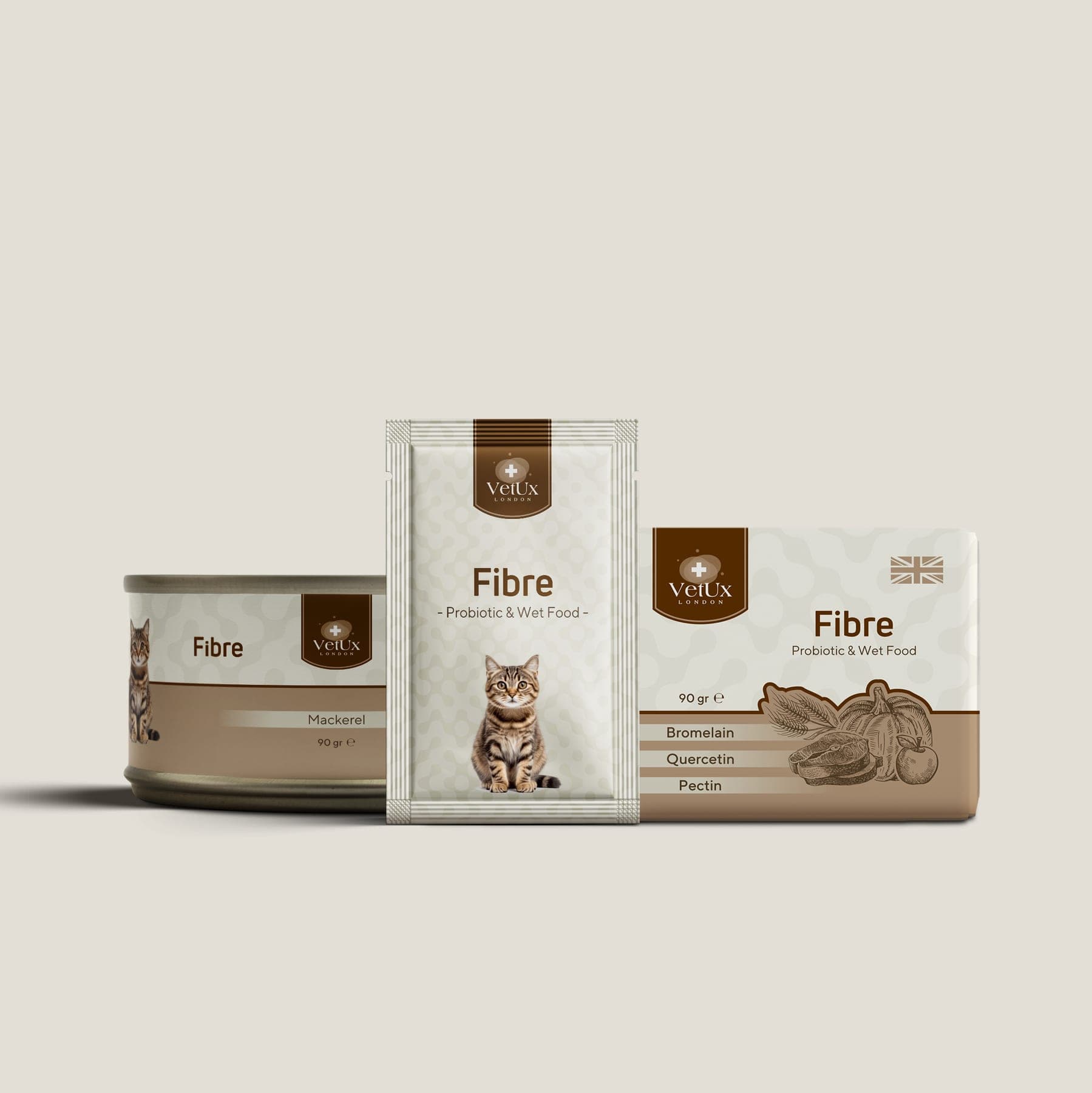
Elixir of Fibre is a complementary feed for cats with a sensitive digestive system, made up of a high-fibre, probiotic wet food and sachet combination. Its mackerel-based formula contains high-fibre sources (prebiotic fibres), probiotic cultures, medium-chain triglycerides (MCT), gluten-free carbohydrate sources, B group vitamins and taurine.
- High fibre: The high fibre content helps keep gut transit time regular and contributes to maintaining a normal stool consistency.
- Synbiotic blend: The blend of prebiotic fibres and probiotic cultures helps maintain the natural balance of the gut microbiota and regular bowel function, supporting physiological gut function.
- A plain formula: Gluten-free carbohydrate sources and MCT, a fat source that takes less effort to digest, offer a nutritional profile that is easily tolerated by cats with sensitive digestion.
- Wet food format: The wet format carries moisture into the meal and can contribute to daily fluid intake in cats that drink little.
Elixir of Fibre is not a medicine; it does not replace the diagnosis and treatment a veterinary surgeon provides for constipation, obstipation or megacolon, and is only a complementary feed that can accompany the care your veterinary surgeon recommends. The daily amount should be decided with your veterinary surgeon according to the cat's weight and energy needs, and divided across meals. The sachet contents are stirred into the wet food before serving; once opened, keep refrigerated. The product is formulated for cats; a feeding plan for dogs should be set up separately with a veterinary surgeon.
Frequently Asked Questions
My cat is straining in the litter tray but nothing comes out. Is it all right to wait?
No. This can point to a urinary blockage just as much as to constipation, and in male cats in particular it can become life-threatening within hours. The two cannot be told apart at home; your cat should be examined by a veterinary surgeon the same day.
Can I give my constipated cat an enema at home, or add fibre on my own?
Enemas should not be given at home; some enema solutions made for people are toxic to cats, and incorrect use can damage the bowel. Adding fibre is not right for every cat either: in a cat that drinks too little or has advanced megacolon, extra fibre can make things worse. Make dietary changes after consulting your veterinary surgeon.
Is soluble or insoluble fibre better?
They do different jobs. Insoluble fibre increases faecal bulk and mechanically stimulates the gut wall; soluble fibre holds water, can form a gel, and its fermentable types feed gut bacteria. The right balance depends on the animal's condition and is decided by the veterinary surgeon.
Does every case of constipation turn into megacolon?
No. Single episodes that resolve quickly usually do not lead to a lasting problem. The risk rises when constipation is long-standing or recurs frequently. That is why repeated episodes should be assessed by a veterinary surgeon to find the underlying cause.
Why does wet food matter for cats prone to constipation?
Cats naturally tend to drink little. Wet foods carry far more moisture into the meal than dry foods and can contribute to total daily fluid intake. Adequate fluid is one of the key factors that limit excessive drying of faeces in the colon.
Can Elixir of Fibre be given to my dog, or to a cat diagnosed with megacolon?
Elixir of Fibre is a complementary feed formulated for cats; a feeding plan for dogs should be set up separately with a veterinary surgeon. For a cat diagnosed with megacolon, the veterinary surgeon who follows the cat decides which diet is appropriate, including its fibre level.
This article is for information only and does not replace examination, diagnosis or treatment by a veterinary surgeon. Consult your veterinary surgeon about every decision concerning your pet's health.
Author: Vet. Hek. Metehan Çalıkuşu
References
- Washabau RJ, Holt D. Pathogenesis, diagnosis, and therapy of feline idiopathic megacolon. Vet Clin North Am Small Anim Pract. 1999;29(2):589-603.
- Benjamin SE, Drobatz KJ. Retrospective evaluation of risk factors and treatment outcome predictors in cats presenting to the emergency room for constipation. J Feline Med Surg. 2020;22(2):153-160.
- Freiche V, Houston D, Weese H, et al. Uncontrolled study assessing the impact of a psyllium-enriched extruded dry diet on faecal consistency in cats with constipation. J Feline Med Surg. 2011;13(12):903-911.
- Moreno AA, Parker VJ, Winston JA, Rudinsky AJ. Dietary fiber aids in the management of canine and feline gastrointestinal disease. J Am Vet Med Assoc. 2022;260(S3):S33-S45.
- de Godoy MRC, Kerr KR, Fahey GC Jr. Alternative dietary fiber sources in companion animal nutrition. Nutrients. 2013;5(8):3099-3117.
- Fahey GC Jr, Merchen NR, Corbin JE, Hamilton AK, Serbe KA, Hirakawa DA. Dietary fiber for dogs: I. Effects of graded levels of dietary beet pulp on nutrient intake, digestibility, metabolizable energy and digesta mean retention time. J Anim Sci. 1990;68(12):4221-4228.
- Rochus K, Janssens GPJ, Hesta M. Dietary fibre and the importance of the gut microbiota in feline nutrition: a review. Nutr Res Rev. 2014;27(2):295-307.
- Cummings JH, Macfarlane GT. The control and consequences of bacterial fermentation in the human colon. J Appl Bacteriol. 1991;70(6):443-459.
- Swanson KS, Grieshop CM, Flickinger EA, et al. Fructooligosaccharides and Lactobacillus acidophilus modify gut microbial populations, total tract nutrient digestibilities and fecal protein catabolite concentrations in healthy adult dogs. J Nutr. 2002;132(12):3721-3731.
- Wernimont SM, Radosevich J, Jackson MI, et al. The effects of nutrition on the gastrointestinal microbiome of cats and dogs: impact on health and disease. Front Microbiol. 2020;11:1266.
Frequently asked questions
My cat is straining in the litter tray but nothing comes out. Is it all right to wait?
No. This can point to a urinary blockage just as much as to constipation, and in male cats in particular it can become life-threatening within hours. The two cannot be told apart at home; your cat should be examined by a veterinary surgeon the same day.
Can I give my constipated cat an enema at home, or add fibre on my own?
Enemas should not be given at home; some enema solutions made for people are toxic to cats, and incorrect use can damage the bowel. Adding fibre is not right for every cat either: in a cat that drinks too little or has advanced megacolon, extra fibre can make things worse. Make dietary changes after consulting your veterinary surgeon.
Is soluble or insoluble fibre better?
They do different jobs. Insoluble fibre increases faecal bulk and mechanically stimulates the gut wall; soluble fibre holds water, can form a gel, and its fermentable types feed gut bacteria. The right balance depends on the animal's condition and is decided by the veterinary surgeon.
Does every case of constipation turn into megacolon?
No. Single episodes that resolve quickly usually do not lead to a lasting problem. The risk rises when constipation is long-standing or recurs frequently. That is why repeated episodes should be assessed by a veterinary surgeon to find the underlying cause.
Why does wet food matter for cats prone to constipation?
Cats naturally tend to drink little. Wet foods carry far more moisture into the meal than dry foods and can contribute to total daily fluid intake. Adequate fluid is one of the key factors that limit excessive drying of faeces in the colon.
Can Elixir of Fibre be given to my dog, or to a cat diagnosed with megacolon?
Elixir of Fibre is a complementary feed formulated for cats; a feeding plan for dogs should be set up separately with a veterinary surgeon. For a cat diagnosed with megacolon, the veterinary surgeon who follows the cat decides which diet is appropriate, including its fibre level.
This article is for general information only; it does not replace veterinary examination, diagnosis or treatment. VetUx London products are complementary feed. If you have any concern about your companion, please consult your veterinary surgeon.
Share
The formulas matching the nutritional support described above.
Related articles
All articles Clinical Notes
Vet Visits, Moving House and Fear of Thunder: The Neurological Power of L-Theanine and Tryptophan
Vet visits, moving house and thunder activate a cat's stress axis. How L-theanine and L-tryptophan relate to the GABA and serotonin systems, what the limited feline evidence shows, and practical steps at home. Diagnosis and treatment are for your veterinary surgeon.
 Clinical Notes
Feeding Pets That Have Recovered from Acute Pancreatitis: Precautions for Exocrine Pancreatic Insufficiency
Why does digestive load matter after a cat or dog recovers from acute pancreatitis, and which signs of exocrine pancreatic insufficiency should owners watch for? This article covers the mechanisms, feeding principles and the central role of veterinary follow-up.
 Clinical Notes
Diabetes Management in Cats and Dogs: Botanical and Nutritional Supports Slowing Carbohydrate Absorption
Blood glucose fluctuations, insulin resistance, and postprandial glycemic control in cats and dogs. Bitter melon, gymnema, chromium picolinate, and Elixir of Diabetic for cellular glycemic balance.