
Diabetes Management in Cats and Dogs: Botanical and Nutritional Supports Slowing Carbohydrate Absorption
Blood glucose fluctuations, insulin resistance, and postprandial glycemic control in cats and dogs. Bitter melon, gymnema, chromium picolinate, and Elixir of Diabetic for cellular glycemic balance.
Summary — Direct Answer: The primary clinical objective in managing diabetes mellitus in cats and dogs is blunting postprandial glycemic excursions while safeguarding cellular insulin sensitivity. In feline patients, pathology predominantly mirrors type 2 diabetes marked by peripheral insulin resistance and beta-cell amyloidosis, whereas canine diabetes predominantly presents as absolute insulin deficiency akin to type 1 diabetes. Primary therapeutic management strictly remains an individualized medical insulin regimen instituted by the veterinary clinician. Complementing this medical baseline with low-carbohydrate nutritional architectures, bitter melon (Momordica charantia), gymnema (Gymnema sylvestre), chromium picolinate, and prebiotic dietary fibres slows enteric glucose absorption, delivering targeted metabolic homeostasis.
Divergent Pathophysiology of Canine and Feline Diabetes Mellitus
- 1Feline Diabetes and Glucotoxicity
As obligate carnivores, cats possess minimal hepatic glucokinase activity, relying largely on gluconeogenic pathways.
- High-carbohydrate dietary burdens combined with obesity foster chronic insulin resistance and sustained hyperglycemia (glucotoxicity).
- Clinical hallmarks include polyuria, polydipsia (PU/PD), and muscle catabolism despite polyphagia.
- 1Canine Insulin Deficiency and Glycemic Kinetics
Canine diabetes is predominantly an immune-mediated or idiopathic destruction of pancreatic endocrine tissue.
- Exogenous daily insulin replacement is virtually mandatory in all canine cases.
- Low glycemic index diets fortified with viscous dietary fibres synchronize intestinal carbohydrate absorption with injected insulin peak action curves.
Key Nutritional and Botanical Modulators of Carbohydrate Absorption
- 1Chromium Picolinate:
An essential cofactor within the Glucose Tolerance Factor (GTF) complex that optimizes insulin-receptor binding affinity, facilitating peripheral glucose uptake into myocytes and adipocytes.
- 1Bitter Melon (Momordica charantia):
Contains charantin and polypeptide-p cofactors that promote peripheral glucose utilization and support balanced gut glucose flux.
- 1Gymnema (Gymnema sylvestre):
Competitively modulates glucose transporters within the intestinal brush-border membrane, dampening rapid sugar absorption into circulation.
- 1Corn Silk (Zea mays):
Supplies potent flavonoids and potassium to protect urinary tract urothelium and support osmotic fluid balance under polyuric strain.
- 1Dietary Fibre & Probiotics:
Viscous soluble fibres prolong gastric emptying and flatten absorption curves, while beneficial probiotic flora strengthen the mucosal barrier against metabolic endotoxemia.
Nutritional Management with Elixir of Diabetic
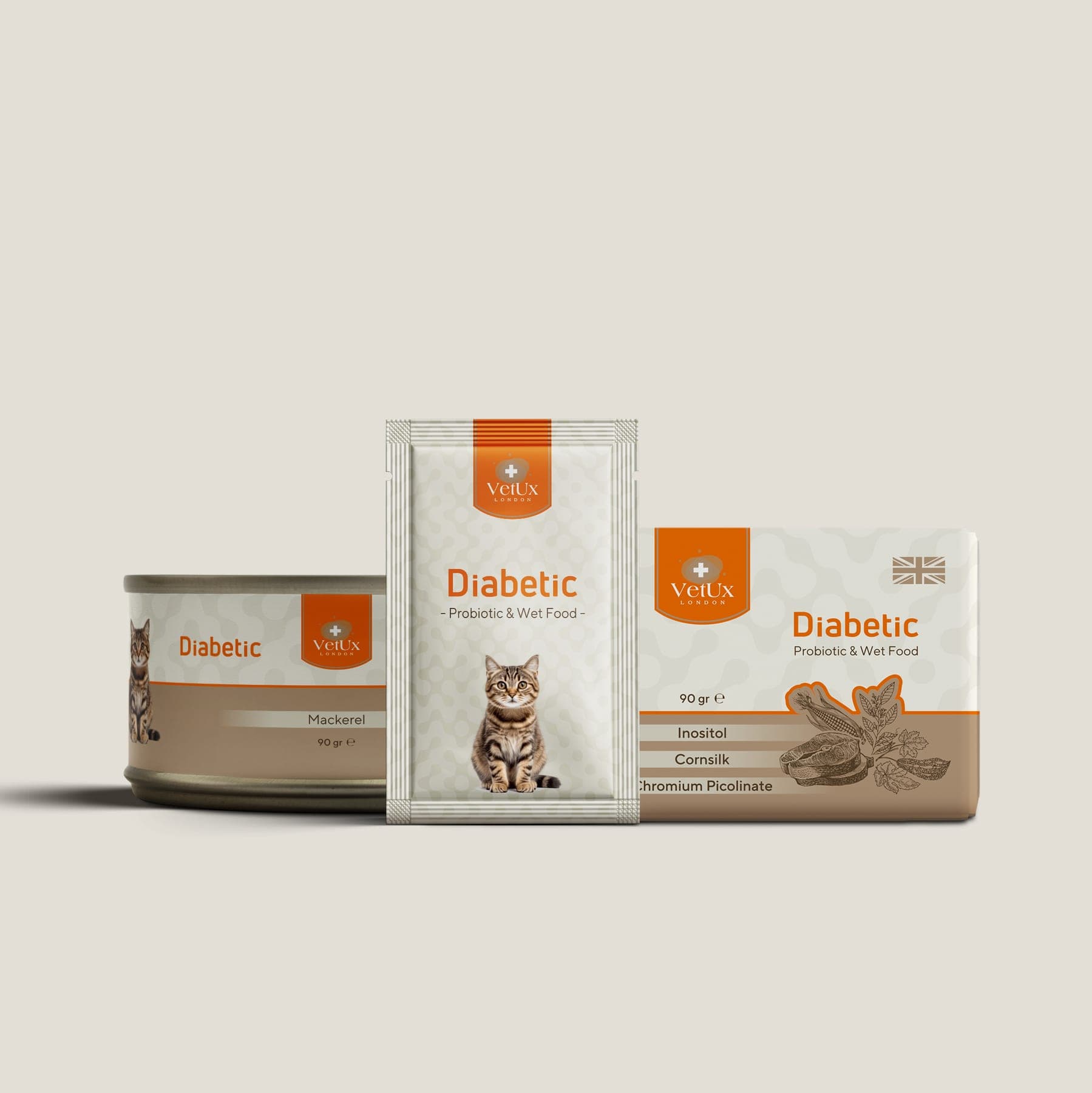
Elixir of Diabetic is an advanced complementary feed combining probiotic wet food and targeted sachet cofactors formulated for cats requiring meticulous carbohydrate control.
- Mackerel-Based Architecture: High-protein, grain-free formulation containing no added sugar or gluten.
- Chromium Picolinate, Bitter Melon & Gymnema Matrix: Delivers bioavailable botanical and mineral cofactors to sustain normal cellular glucose metabolism.
- Moisture and Weight Optimization: Promotes vital hydration and helps preserve lean body mass while facilitating portion management.
Frequently Asked Questions (FAQ)
#### Does Elixir of Diabetic replace prescription insulin? No. Elixir of Diabetic is a complementary feed, not a medicine or an insulin alternative. It is designed to work synergistically alongside the medical treatment plan directed by your veterinary clinician.
#### Why is wet food prioritized in diabetic cats? Feline physiology thrives on high-moisture, high-protein, ultra-low-carbohydrate nutrition. Wet food naturally limits postprandial glucose surges and supports kidney hydration during osmotic diuresis.
#### What are the signs of hypoglycemia in pets? Restlessness, disorientation, tremors, ataxia (wobbly gait), or sudden collapse. Immediate oral administration of honey or glucose syrup to the gums and emergency veterinary intervention are imperative.
#### How should Elixir of Diabetic be served? The sachet contents should be gently blended into the wet food portion and served across daily scheduled meals as advised by your veterinarian. Keep refrigerated once opened.
References
- 1Nelson, R. W., & Reusch, C. E. (2014). Animal models of disease: classification and etiology of diabetes in dogs and cats. Journal of Endocrinology, 222(3), T1-T9.
- 2Frank, G., et al. (2001). Use of a high-protein, low-carbohydrate diet in the management of feline diabetes mellitus. Veterinary Therapeutics, 2(3), 238-246.
- 3Cefalu, W. T., & Hu, F. B. (2004). Role of chromium in human and animal health and in diabetes. Diabetes Care, 27(11), 2741-2751.
- 4Leach, M. J. (2007). Gymnema sylvestre for diabetes: a systematic review. J Altern Complement Med, 13(9), 977-984.
Frequently asked questions
Does Elixir of Diabetic replace insulin therapy?
No. It is a complementary feed supporting nutrition alongside veterinary prescribed insulin protocols.
Why is wet food beneficial for diabetic cats?
It provides high moisture and low carbohydrate levels, curbing postprandial glucose excursions.
What is the biological role of chromium picolinate?
It enhances insulin receptor binding affinity and cellular glucose uptake as a GTF cofactor.
How is pet diabetes definitively diagnosed?
Through veterinary clinical evaluation, persistent hyperglycemia, serum fructosamine assays, and glucosuria.
This article is for general information only; it does not replace veterinary examination, diagnosis or treatment. VetUx London products are complementary feed. If you have any concern about your companion, please consult your veterinary surgeon.
Share
The formulas matching the nutritional support described above.
Related articles
All articles Clinical Notes
Feline Hyperthyroidism vs Canine Hypothyroidism: Balancing Metabolic Harmony
Weight loss with voracious appetite in geriatric cats versus lethargy and weight gain in aging dogs. Understanding thyroid endocrine balance, L-carnitine, selenium, and Thyrovet support.
 Clinical Notes
Liver and Bile Duct Integration: Diet and Phytotherapy in Hyperbilirubinemia
Jaundice, elevated bilirubin, and cholangiohepatitis in cats and dogs. Hepatobiliary drainage, antioxidant cytoprotection, and nutritional support with Elixir of Bile Fix.
 Clinical Notes
From Liver to Gallbladder: Why Biliary Stasis (Cholestasis) is Dangerous in Pets
Biliary sludge and cholestasis in dogs and cats presenting with nausea, vomiting, and elevated liver enzymes. The physiological importance of bile fluidity, cholagogue and choleretic botanical extracts.