
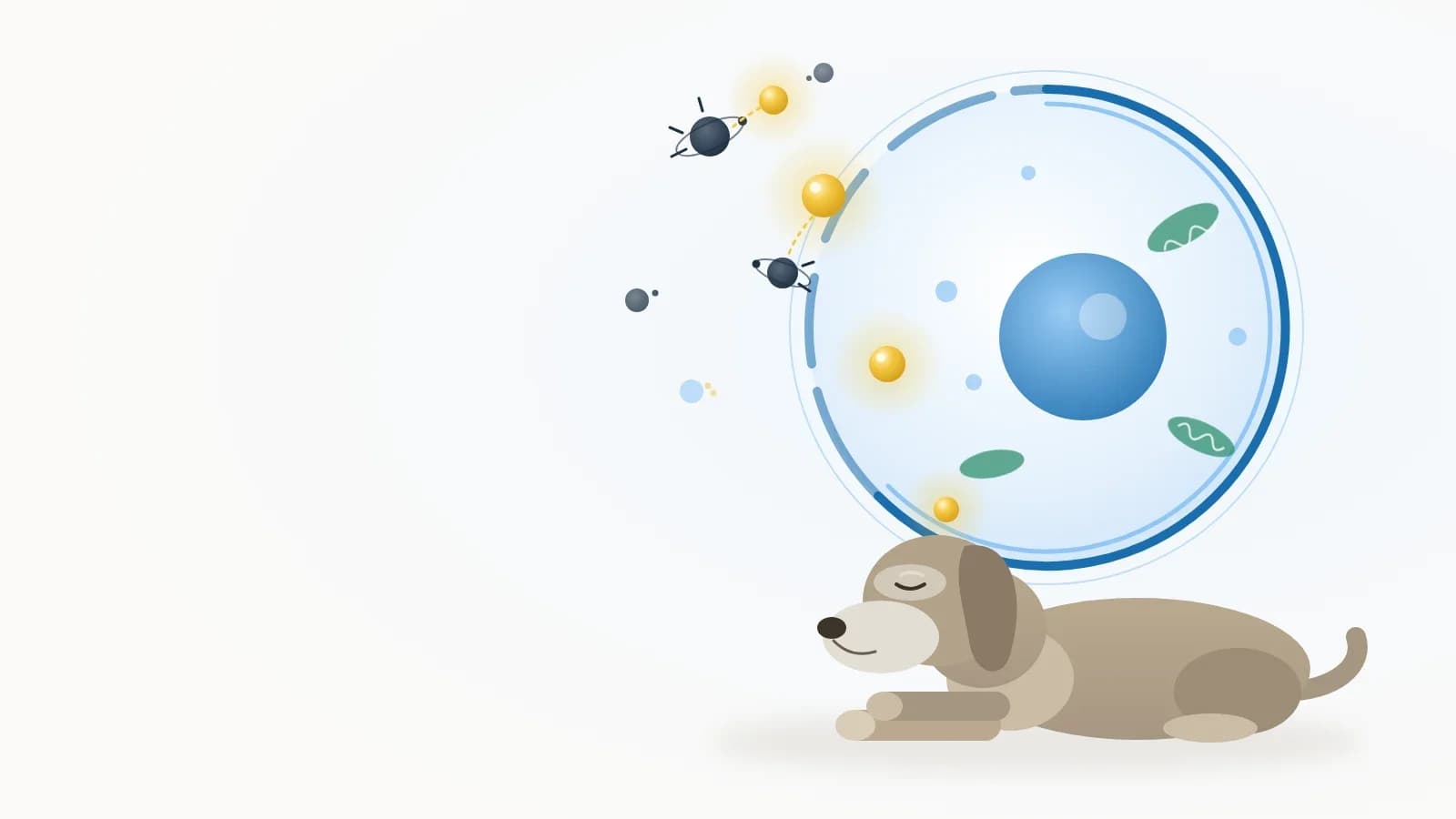
How Do Free Radicals Age the Cell? A High-Bioavailability Vitamin C Strategy
How do free radicals damage cell membranes, proteins and DNA, and how does this relate to ageing? We explain vitamin C's roles as electron donor, vitamin E regenerator and collagen cofactor, cats' and dogs' own vitamin C synthesis, the saturable absorption that governs bioavailability and who needs extra caution.
Quick answer: Free radicals are reactive molecules carrying an unpaired electron; by damaging membrane lipids, proteins and DNA, they contribute to the loss of function associated with ageing. As a water-soluble antioxidant, vitamin C donates electrons to these radicals, regenerates vitamin E and takes part in collagen formation. Your veterinary surgeon assesses whether supplementation is needed and suitable.
A coat that loses its lustre in an ageing dog, an older cat that is no longer as lively as before, an animal that takes longer to bounce back after repeated infections… There is no single cause behind these pictures, but at cellular level they share a common denominator: oxidative load. In this article I look at how free radicals leave their mark on the cell, why vitamin C matters in this balance and what "bioavailability" actually means in practice, in the light of the evidence.
An important reminder before we start: this article is for information only. Diagnosis and treatment are the responsibility of your veterinary surgeon; if you notice a health problem in your pet, the first step is always a clinical examination.
What is a free radical, and why does it form in every cell?
A free radical is a molecule with an unpaired electron in its outer orbital, which makes it unstable and ready to react. The best known are the superoxide anion, the hydroxyl radical and hydrogen peroxide (not itself a radical, but a source of them); together they are known as reactive oxygen species (ROS).
Most ROS are produced not as the result of a "fault", but in the course of life itself:
- Mitochondria: As the electron transport chain runs in the cell's power plant, a small share of electrons "leaks" onto oxygen, forming superoxide.
- Immune cells: Neutrophils and macrophages deliberately produce ROS to neutralise micro-organisms. As the infectious load rises, so does this production.
- External factors: UV light, environmental pollutants, the metabolism of certain drugs and intense physical exertion are additional sources of ROS.
At low levels, ROS are needed for intracellular signalling. The problem arises when production outstrips the body's antioxidant capacity. This imbalance is called oxidative stress.
How do free radicals age the cell?
The free radical theory of ageing, put forward by Denham Harman in 1956, proposed that ageing is partly the result of accumulated oxidative damage. Today we know that ageing is a multifactorial process, but oxidative damage remains one of its well-defined components.
Mechanism: four targets of oxidative damage
1. The cell membrane — lipid peroxidation Polyunsaturated fatty acids in the cell membrane are especially vulnerable to radical attack. When a radical strips an electron from a fatty acid, a chain reaction begins and spreads through the membrane. Membrane fluidity and permeability are impaired, and reactive by-products such as malondialdehyde are formed.
2. Proteins — carbonylation and loss of function Oxidised proteins change shape, enzymes lose activity and damaged proteins can accumulate in the cell. Collagen, the main protein of connective tissue, is not spared.
3. DNA — oxidative base damage The hydroxyl radical can modify DNA bases (the most studied marker is 8-hydroxy-2'-deoxyguanosine). Repair systems correct most of this damage, but as repair capacity declines with age, damage begins to accumulate.
4. Mitochondria — a vicious circle Damaged mitochondria work less efficiently and produce more ROS, which in turn causes further damage. Part of the energy decline seen in ageing tissues is explained by this cycle.
Inflammaging: where oxidation meets chronic low-grade inflammation
The concept Franceschi and colleagues named "inflamm-aging" describes how the immune system stays active at a low but persistent level with age. Inflammatory cells produce ROS, and ROS in turn stimulate inflammatory signalling pathways. This mutual reinforcement is one reason why oxidative load can be higher in geriatric patients and in animals that face frequent infections.
How does the body defend itself against free radicals?
The body's antioxidant defence is a layered network:
- Enzymatic defence: Superoxide dismutase (SOD), catalase and glutathione peroxidase convert radicals into less harmful products.
- Fat-soluble antioxidants: Vitamin E (tocopherol) breaks the lipid peroxidation chain within the cell membrane.
- Water-soluble antioxidants: Vitamin C (ascorbate) and glutathione work in the intracellular fluid and blood plasma.
The parts of this network are interconnected. A shortfall in one increases the burden on the others.
What role does vitamin C play in oxidative balance?
1. A direct electron donor
Ascorbate readily donates electrons to radicals, neutralising them. In doing so it becomes the ascorbyl radical, a relatively stable and harmless intermediate, and then dehydroascorbate. Dehydroascorbate can be converted back to ascorbate via glutathione.
2. The "regenerator" of vitamin E
When vitamin E neutralises a radical within the membrane, it becomes the tocopheroxyl radical. At the aqueous surface of the membrane, ascorbate donates an electron to this radical, restoring vitamin E to its active form. This interaction was directly observed in 1979 and is the classic example of how water- and fat-soluble antioxidants work together.
3. An essential cofactor in collagen formation
For collagen fibres to form a stable triple helix, the amino acids proline and lysine must be hydroxylated. The enzymes that do this, prolyl and lysyl hydroxylase, require ascorbate. Skin, the connective tissue around hair follicles, vessel walls and periarticular tissues are all rich in collagen.
4. A contribution to iron absorption
Vitamin C reduces dietary non-haem iron (Fe³⁺) to the more readily absorbed form (Fe²⁺) in the gut, thereby contributing to the normal absorption of iron.
5. Accumulation in immune cells
Neutrophils accumulate vitamin C at concentrations far higher than plasma. Ascorbate is thought to help protect these cells from the ROS they themselves produce and to support their normal function. Human studies have shown that ascorbate use by these cells rises as the infectious load increases.
Don't cats and dogs make their own vitamin C?
Yes, they do — and this is critical to discussing the subject honestly. Unlike humans and guinea pigs, cats and dogs synthesise vitamin C from glucose in the liver thanks to the enzyme L-gulonolactone oxidase. For this reason, no separate dietary requirement has been set for healthy adult cats and dogs (NRC, 2006).
So why does supplementation come up? Because the body's own production and its consumption are not equal in every situation. Ageing, chronic inflammation, periods of infection and intense physical or environmental stress can increase antioxidant consumption. In these situations, vitamin C taken in from outside is thought to provide nutritional support to oxidative balance.
It is important to be clear here: strong clinical evidence for vitamin C on its own in cats and dogs is limited. Much of the available data comes from studies that used vitamin C together with vitamin E and other antioxidants. This is why the veterinary surgeon decides for which animal supplementation is meaningful.
What does bioavailability mean, and what determines it for vitamin C?
Bioavailability refers to how much of an orally taken substance is absorbed and reaches the circulation and target tissues. For vitamin C, this concept may matter more than "how much is taken". The information below is general scientific context and is largely based on human pharmacokinetic studies; it is not a claim about any specific product.
A saturable transport system
Ascorbate is absorbed from the gut mainly by sodium-dependent transporters called SVCT1, while SVCT2 handles its uptake into tissues. These transporters are saturable. Human studies have shown that as the amount taken at once increases, the fraction absorbed decreases. In other words, "more is better" does not hold for vitamin C.
The renal threshold
Once plasma levels exceed a certain threshold, excess ascorbate is rapidly excreted by the kidneys. This shows that the body regulates its own vitamin C level.
Stability: ascorbate is a delicate molecule
Ascorbic acid oxidises easily on exposure to light, heat, moisture and metal ions. The gap between a product's stated content and the active amount the animal actually receives often comes down to storage conditions.
What this means in practice: a "strategy" framework
A bioavailability-focused approach is not about raising the amount, but about these principles:
- 1Following the plan set by your veterinary surgeon: The amount and frequency are set by the vet according to the animal's age, species, weight and health status.
- 2Regularity: Because vitamin C is not stored in the body for long, regular use makes more physiological sense than occasional large amounts.
- 3Correct storage: Keep cool, dry and away from light; close the packaging after use.
- 4Whole-diet nutrition: The other parts of the antioxidant network (vitamin E, selenium, good-quality protein sources) should be supported by a balanced diet.
- 5Acceptance: The form your pet willingly accepts every day is the form that gives the best compliance.
What does the evidence say about geriatric and infectious load?
- Cognitive function in older dogs: Controlled studies in beagles reported that diets enriched with components such as vitamins C and E, carnitine and lipoic acid, combined with environmental enrichment, supported age-related learning performance (Cotman et al., 2002; Milgram et al., 2005). These results belong to an antioxidant combination and cannot be attributed to vitamin C alone.
- Cats with renal insufficiency: A supplement of vitamins E and C with beta-carotene was reported to favourably affect markers of oxidative stress in cats with renal insufficiency (Yu and Paetau-Robinson, 2006).
- Antioxidant levels: Increasing dietary antioxidant content has been shown to raise serum antioxidant levels and reduce lipid peroxidation markers in dogs and cats (Jewell et al., 2000).
- Immunity and infection: The role of vitamin C in immune cells has been extensively reviewed in human studies (Carr and Maggini, 2017). Data in cats and dogs in this area are more limited.
In short, vitamin C is a logical component of the antioxidant network in geriatric patients and those under high oxidative load; but it is not a stand-alone answer, rather one part of a holistic care plan.
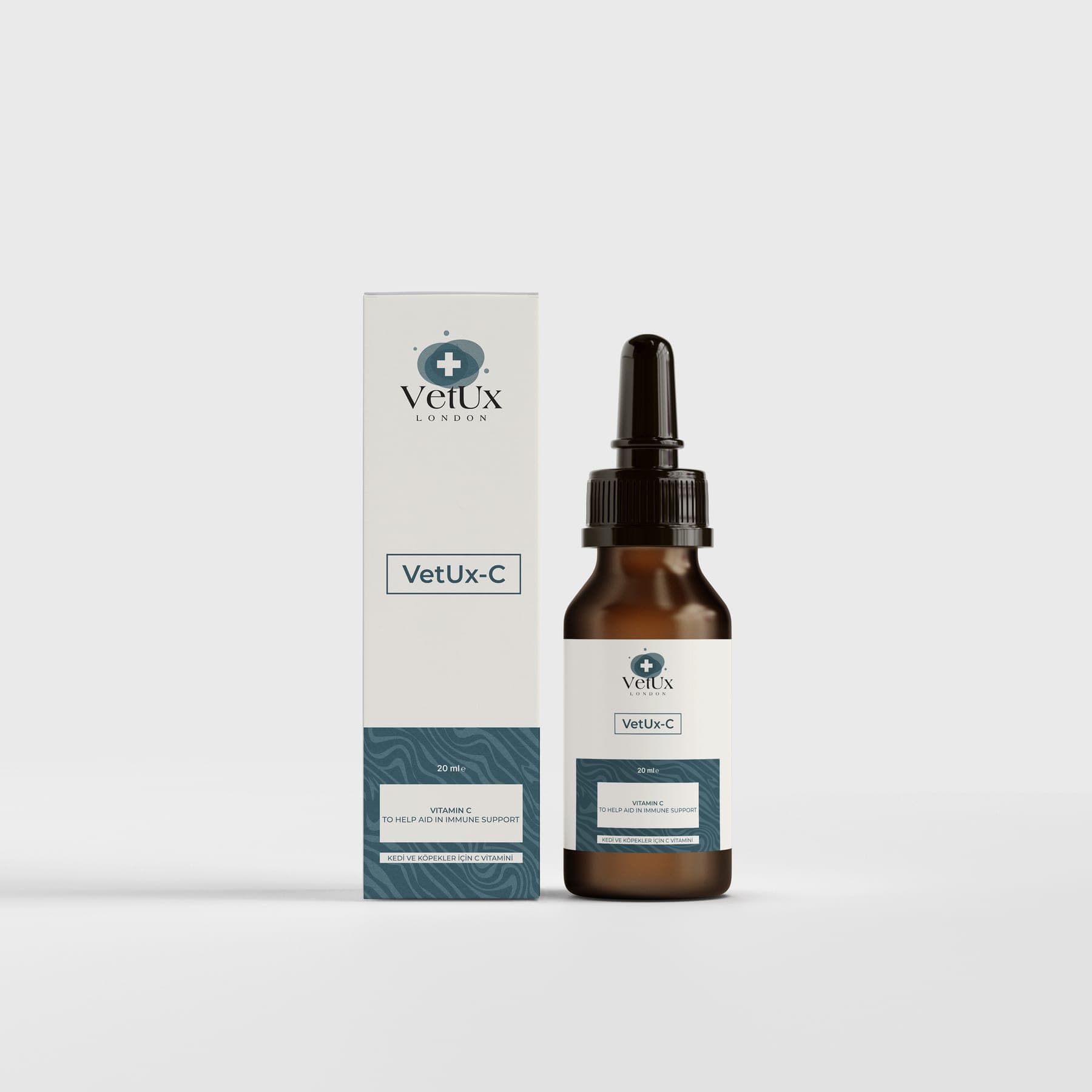
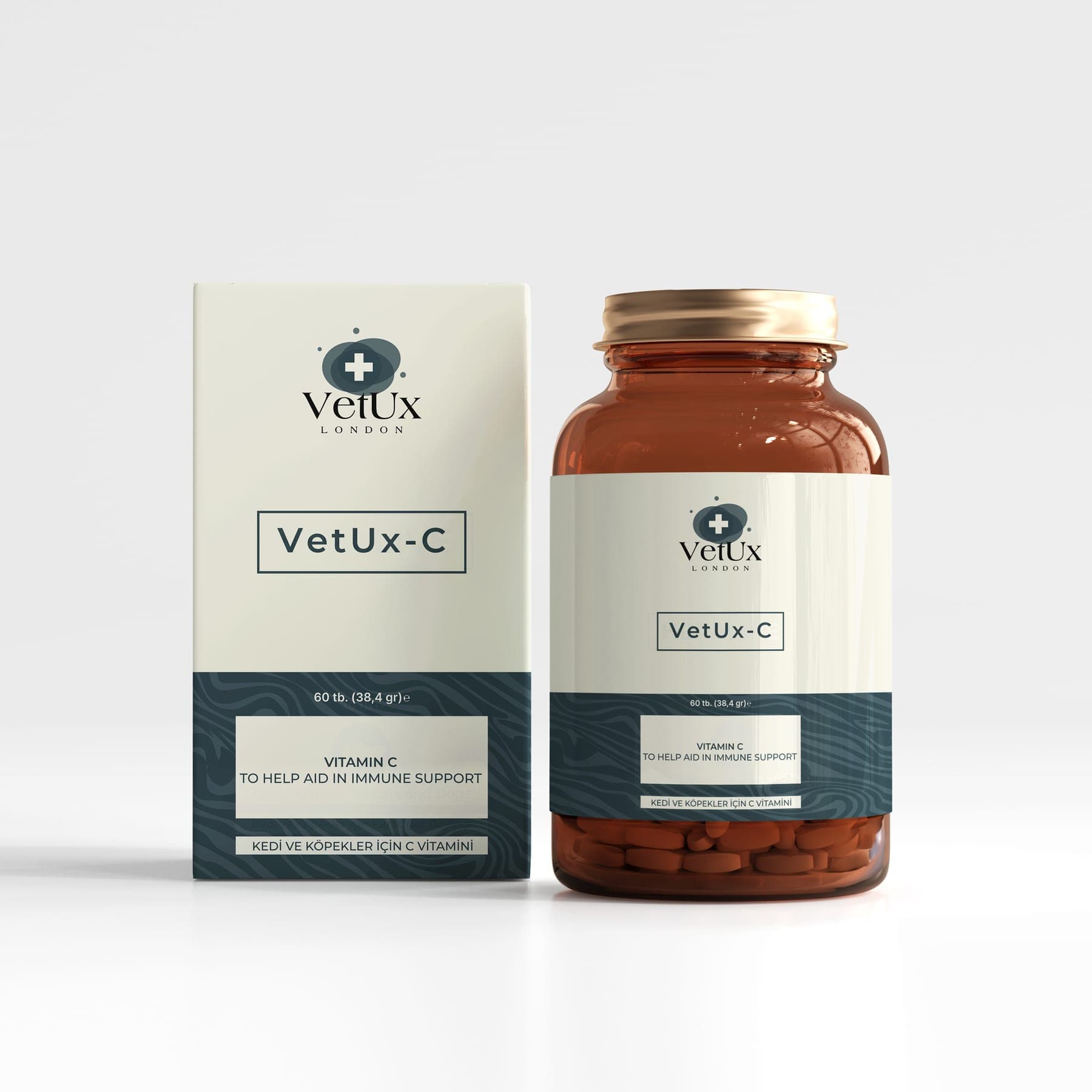
What do VetUx-C Drops and VetUx-C Tablet contain?
The VetUx-C range is offered in two forms as complementary feed for cats and dogs. The information below is taken from the products' official website records.
| | VetUx-C Drops | VetUx-C Tablet | |---|---|---| | Species | Cats and dogs | Cats and dogs | | Form | Liquid drops, 20 ml | Tablet, 60 tablets | | Active component | Ascorbic acid (vitamin C) | Ascorbic acid (vitamin C) | | Composition statement | 200,000 mg ascorbic acid per 1 kg of product | 100 mg ascorbic acid per tablet | | Other components | Maltodextrin, glycerine, natural liver flavour, potassium sorbate (preservative) | Maize starch (Zea mays), colloidal silica (silicon dioxide) |
The values in the table are composition statements, not amounts to give. Your veterinary surgeon will determine the appropriate amount and duration of use for your pet.
According to the product records, vitamin C contributes to the natural process of collagen formation, to maintaining skin and coat health, to the normal absorption of iron and to the antioxidant balance of cells.
The difference between the two forms:
- The drop form contains natural liver flavour and can be mixed into food or given by mouth. It is a practical option for fussy cats and small-breed dogs that are hard to pill.
- The tablet form makes daily tracking easy with its fixed content and can be given with food or directly by mouth.
Which form and which plan of use is appropriate should be decided together with your veterinary surgeon, taking your pet's condition and habits into account.
Who needs extra caution with vitamin C supplementation?
Vitamin C is generally a well-tolerated nutrient, but the same assessment does not apply to every animal:
- History of calcium oxalate uroliths: Part of ascorbate is converted to oxalate in the body. For this reason, vitamin C supplementation in cats and dogs with a history of oxalate stones should be carefully assessed by the veterinary surgeon in line with the ACVIM consensus recommendations.
- Conditions associated with iron accumulation: Because vitamin C contributes to iron absorption, veterinary advice is essential in animals with disorders of iron metabolism.
- Kidney disease: Vitamin C is excreted by the kidneys; in patients with reduced kidney function, the plan should be made with the vet.
- Concurrent medicines and supplements: If any other medicine or supplement is being given, always tell your veterinary surgeon.
- Pregnancy, lactation and puppy/kitten stage: Any supplement should be used under veterinary supervision during these periods.
A practical framework for vets and owners
- A dulling coat, falling energy or recurring infections call for clinical assessment first; a supplement is no substitute for a diagnosis.
- Vitamin C is one part of the antioxidant network; it gains meaning alongside balanced nutrition, appropriate exercise and regular check-ups.
- What matters for bioavailability is regular use, correct storage and adherence to the plan set by the vet.
- Decisions on diagnosis and treatment always rest with your veterinary surgeon.
Frequently Asked Questions
If cats and dogs can make vitamin C, why might supplementation be needed?
Cats and dogs synthesise vitamin C in the liver, and no separate dietary requirement has been set for healthy adults. However, consumption can rise in situations of increased oxidative load such as ageing, periods of infection or chronic inflammation. Your veterinary surgeon assesses whether supplementation is meaningful in these conditions.
Are free radicals only a problem in older animals?
No. Free radicals form at every age as part of normal metabolism and have physiological roles at low levels. The problem is oxidative stress, where production exceeds antioxidant capacity. Because repair and defence capacity declines with age, the accumulation of damage becomes more pronounced.
Does "high bioavailability" mean giving more vitamin C?
No. Vitamin C is absorbed from the gut by saturable transporters; human studies show that the fraction absorbed falls as the amount taken at once increases. The excess is excreted by the kidneys. The way to preserve bioavailability is regular use, correct storage and following the plan set by your veterinary surgeon.
Should I choose drops or tablets?
Both forms contain ascorbic acid as the active component. Because the drop form contains natural liver flavour, it is practical for fussy animals and when pilling is difficult; the tablet form makes daily tracking easy with its fixed content. You are advised to make the choice with your veterinary surgeon based on your pet's condition and habits.
Can vitamin C supplementation have downsides?
Vitamin C is generally well tolerated. However, careful assessment is needed in situations such as a history of calcium oxalate uroliths, disorders of iron metabolism and kidney disease. For this reason, consult your veterinary surgeon before starting supplementation.
Are VetUx-C products medicines?
No. VetUx-C Drops and VetUx-C Tablet are complementary feeds, not medicines. They are used to provide nutritional support to physiological functions such as the antioxidant balance of cells and collagen formation. Diagnosis and treatment are the responsibility of your veterinary surgeon.
References
- 1Harman D. Aging: a theory based on free radical and radiation chemistry. Journal of Gerontology. 1956;11(3):298–300.
- 2Valko M, Leibfritz D, Moncol J, Cronin MTD, Mazur M, Telser J. Free radicals and antioxidants in normal physiological functions and human disease. International Journal of Biochemistry & Cell Biology. 2007;39(1):44–84.
- 3Franceschi C, Bonafè M, Valensin S, et al. Inflamm-aging: an evolutionary perspective on immunosenescence. Annals of the New York Academy of Sciences. 2000;908:244–254.
- 4Packer JE, Slater TF, Willson RL. Direct observation of a free radical interaction between vitamin E and vitamin C. Nature. 1979;278:737–738.
- 5Peterkofsky B. Ascorbate requirement for hydroxylation and secretion of procollagen: relationship to inhibition of collagen synthesis in scurvy. American Journal of Clinical Nutrition. 1991;54(6 Suppl):1135S–1140S.
- 6Hallberg L, Brune M, Rossander L. Iron absorption in man: ascorbic acid and dose-dependent inhibition by phytate. American Journal of Clinical Nutrition. 1989;49(1):140–144.
- 7Carr AC, Maggini S. Vitamin C and immune function. Nutrients. 2017;9(11):1211.
- 8Levine M, Conry-Cantilena C, Wang Y, et al. Vitamin C pharmacokinetics in healthy volunteers: evidence for a recommended dietary allowance. Proceedings of the National Academy of Sciences USA. 1996;93(8):3704–3709.
- 9Padayatty SJ, Levine M. Vitamin C: the known and the unknown and Goldilocks. Oral Diseases. 2016;22(6):463–493.
- 10National Research Council. Nutrient Requirements of Dogs and Cats. Washington, DC: The National Academies Press; 2006.
- 11Cotman CW, Head E, Muggenburg BA, Zicker S, Milgram NW. Brain aging in the canine: a diet enriched in antioxidants reduces cognitive dysfunction. Neurobiology of Aging. 2002;23(5):809–818.
- 12Milgram NW, Head E, Zicker SC, et al. Learning ability in aged beagle dogs is preserved by behavioral enrichment and dietary fortification: a two-year longitudinal study. Neurobiology of Aging. 2005;26(1):77–90.
- 13Yu S, Paetau-Robinson I. Dietary supplements of vitamins E and C and β-carotene reduce oxidative stress in cats with renal insufficiency. Veterinary Research Communications. 2006;30(4):403–413.
- 14Jewell DE, Toll PW, Wedekind KJ, Zicker SC. Effect of increasing dietary antioxidants on concentrations of vitamin E and total alkenals in serum of dogs and cats. Veterinary Therapeutics. 2000;1(4):264–272.
- 15Lulich JP, Berent AC, Adams LG, et al. ACVIM Small Animal Consensus Recommendations on the Treatment and Prevention of Uroliths in Dogs and Cats. Journal of Veterinary Internal Medicine. 2016;30(5):1564–1574.
Legal notice: VetUx-C Drops and VetUx-C Tablet are complementary feeds, not medicines. This article is for general information and does not replace an examination by a veterinary surgeon. Consult your veterinary surgeon for diagnosis, treatment and a plan of use.
Frequently asked questions
If cats and dogs can make vitamin C, why might supplementation be needed?
Cats and dogs synthesise vitamin C in the liver, and no separate dietary requirement has been set for healthy adults. However, consumption can rise in situations of increased oxidative load such as ageing, periods of infection or chronic inflammation. Your veterinary surgeon assesses whether supplementation is meaningful in these conditions.
Are free radicals only a problem in older animals?
No. Free radicals form at every age as part of normal metabolism and have physiological roles at low levels. The problem is oxidative stress, where production exceeds antioxidant capacity. Because repair and defence capacity declines with age, the accumulation of damage becomes more pronounced.
Does "high bioavailability" mean giving more vitamin C?
No. Vitamin C is absorbed from the gut by saturable transporters; human studies show that the fraction absorbed falls as the amount taken at once increases. The excess is excreted by the kidneys. The way to preserve bioavailability is regular use, correct storage and following the plan set by your veterinary surgeon.
Should I choose drops or tablets?
Both forms contain ascorbic acid as the active component. Because the drop form contains natural liver flavour, it is practical for fussy animals and when pilling is difficult; the tablet form makes daily tracking easy with its fixed content. You are advised to make the choice with your veterinary surgeon based on your pet's condition and habits.
Can vitamin C supplementation have downsides?
Vitamin C is generally well tolerated. However, careful assessment is needed in situations such as a history of calcium oxalate uroliths, disorders of iron metabolism and kidney disease. For this reason, consult your veterinary surgeon before starting supplementation.
Are VetUx-C products medicines?
No. VetUx-C Drops and VetUx-C Tablet are complementary feeds, not medicines. They are used to provide nutritional support to physiological functions such as the antioxidant balance of cells and collagen formation. Diagnosis and treatment are the responsibility of your veterinary surgeon.
This article is for general information only; it does not replace veterinary examination, diagnosis or treatment. VetUx London products are complementary feed. If you have any concern about your companion, please consult your veterinary surgeon.
Share
The formulas matching the nutritional support described above.
Related articles
All articles Clinical Notes
Calcium Deficiency in Home-Cooked Pet Food: The Superior Absorption of Nano-Technology Vitamin D3
Why do meat-heavy, boneless home-made diets lead to calcium deficiency? We explain calcium-phosphorus balance from vitamin D3 to calcitriol and from PTH to the Ca:P ratio, the rickets risk in fast-growing puppies, the science behind nano-emulsion carrier systems and why too much D3 is dangerous.
 Clinical Notes
Suture Site Healing in Cats and Dogs: Scarring, Granulation Tissue and Topical Protection
A suture site heals through haemostasis, inflammation, proliferation and remodelling. We explain what is normal at home, how collagen organisation shapes a scar and where topical protection fits; diagnosis and treatment belong to your veterinary surgeon.
 Clinical Notes
Gut Development in Pregnant Mothers and Nursing Young: The Move From Mother's Milk to Solid Food
Why do newborn kittens and puppies gain their immunity from colostrum, when does gut closure happen, and how should the move from mother's milk to solid food be planned? The physiology of nutrition through pregnancy and nursing; every decision belongs to your vet.