
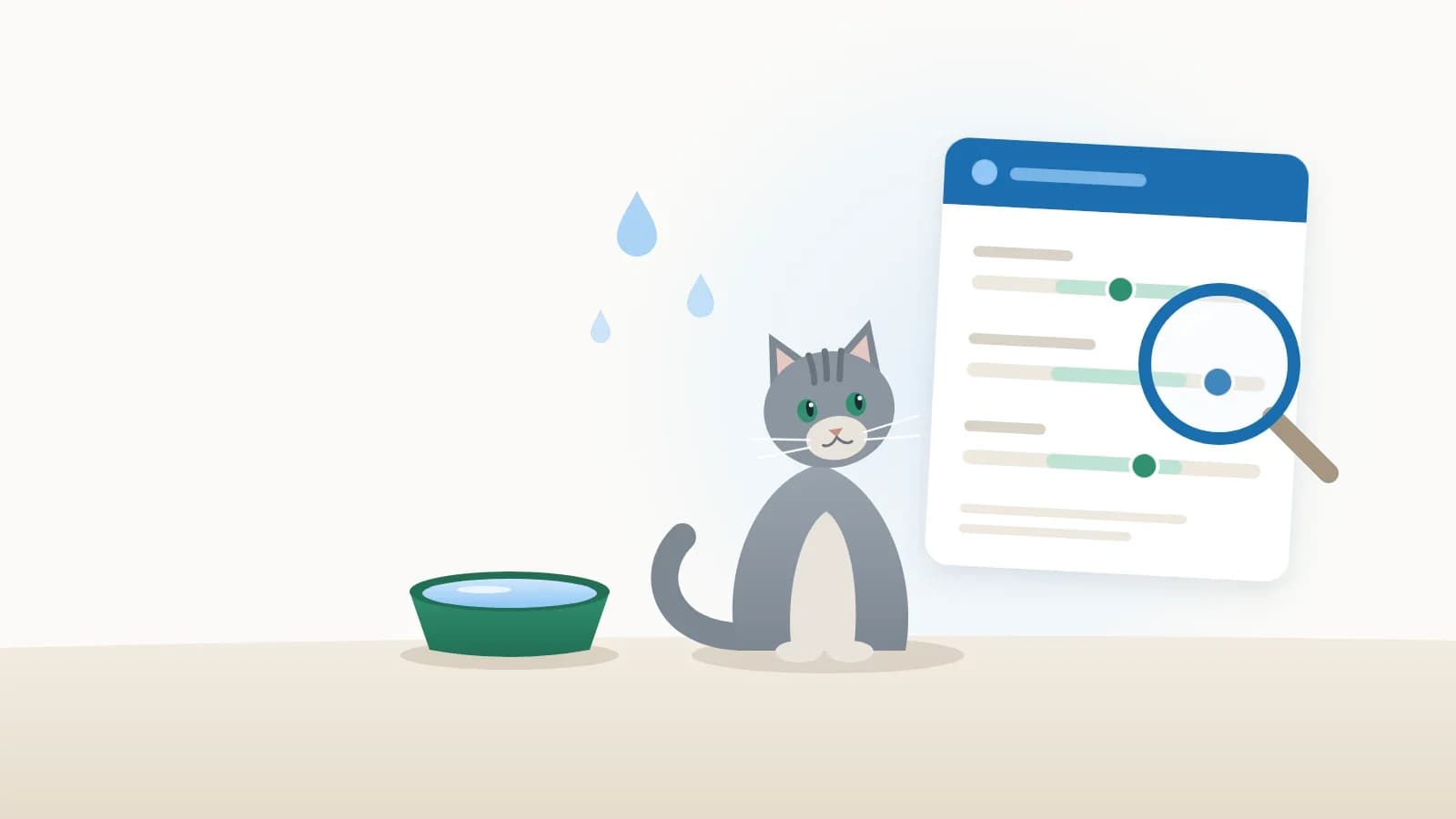
What Do High Creatinine and Urea Mean in Cats? A Guide to Reading Blood Test Results
High creatinine and urea on a blood test do not always mean kidney disease. We explain what these values measure, how hydration and diet affect them, and how SDMA and urine tests complete the picture.
Short answer: Raised creatinine and urea on a blood test can point to a fall in how fast the kidneys filter blood, but a single value does not make a diagnosis. Dehydration and urinary blockage can raise both, while a recent protein-rich meal mainly raises urea. Your vet interprets them together with SDMA, urine testing and repeat measurements.
Seeing an upward arrow next to creatinine or urea on your cat's blood test can be worrying. In this article we explain in plain language what these two values measure, why a single result is not enough, and which additional tests your vet uses to complete the picture. For the wider picture of kidney health, warning signs and check-up frequency, you may want to read our Kidney Health Guide for Cats first.
What exactly do creatinine, urea and SDMA measure?
The kidneys filter the blood and remove metabolic waste in the urine. The speed of this filtering is called the glomerular filtration rate (GFR). Because GFR is difficult to measure directly, routine tests look at the blood levels of substances that the kidneys clear. When filtration slows down, these substances build up in the blood.
| Marker | Where does it come from? | What does it tell us? | What affects it? | |---|---|---|---| | Creatinine | A waste product of muscle metabolism | Gives an idea of the kidneys' filtering capacity | Muscle mass; may read falsely low in thin, older cats | | Urea (BUN) | Made in the liver from ammonia produced when protein is broken down | Reflects filtration but is a "noisier" marker | Recent protein intake, bleeding in the digestive tract, fluid loss, liver function | | SDMA | Released by protein breakdown in all cells and cleared almost entirely by the kidneys | Can pick up a fall in filtration earlier than creatinine | Very little affected by muscle mass; other illnesses and laboratory differences can still affect it |
Creatinine can stay within the reference range until a substantial part of kidney function has been lost, so a "normal creatinine" does not always mean "healthy kidneys". SDMA is a newer marker that helps close this gap and is particularly useful in older cats that have lost muscle.
Why can't one high value make a diagnosis?
Vets call a rise in creatinine and urea azotaemia, and the first step is to work out where it comes from:
- Pre-renal causes: Fluid loss, vomiting, diarrhoea or not drinking enough reduce blood flow to the kidneys. Values can rise even when the kidney tissue itself is healthy, and they often fall again once the cat is well hydrated.
- Renal causes: In chronic kidney disease, acute kidney injury, infection or toxin exposure, filtering capacity really is reduced.
- Post-renal causes: A blockage that stops urine leaving the body, especially a urethral blockage in male cats, raises values quickly and needs emergency care.
Laboratories also use different reference ranges, sampling conditions can influence a single result, and some conditions such as an overactive thyroid (hyperthyroidism) can make kidney values look better than they really are. That is why your vet reads the result alongside the examination findings, your cat's history and previous tests. We recommend not drawing conclusions at home from a single number.
How do hydration and diet affect the results?
Cats naturally drink little. In a cat that has not drunk enough, has been in the heat or has vomited in the days before the test, the blood becomes more concentrated and both creatinine and urea can rise temporarily.
Diet mainly affects urea: blood taken shortly after a protein-rich meal can show higher urea as the digested protein is broken down. Creatinine is less affected by diet but clearly changes with muscle mass. So:
- Your vet may ask you to withhold food for a set time before the test; follow that instruction, but do not take the water bowl away.
- Tell your vet about any change in appetite, drinking or stools in the days before the test.
- Bring previous results with you; a trend says far more than a single value.
How do urine testing and SDMA complete the picture?
Blood values show "how much is being filtered"; urine tests show "how well the kidneys can process urine". Read together, the picture becomes clearer.
- Urine specific gravity: A healthy cat kidney can concentrate urine strongly. If blood values are high while the urine is dilute, a kidney origin becomes more likely. If values are high but the urine is well concentrated, your vet will first look at pre-renal causes such as fluid loss.
- Protein in the urine (UPC ratio): Protein loss in the urine is an important measure when assessing the course of kidney disease.
- Urinalysis and, if needed, culture: Findings such as infection, crystals or blood help your vet rank the possible causes.
- SDMA: Helps reveal reduced filtration in the early phase before creatinine rises, or in cats with muscle loss.
- Blood pressure: Kidney health and blood pressure influence each other, so measuring it is part of the assessment.
The International Renal Interest Society (IRIS) uses creatinine and SDMA together when staging cats already diagnosed with chronic kidney disease, and sub-stages them by urine protein and blood pressure. An important detail: staging is based on repeated measurements taken while the cat is stable and well hydrated. A single blood test is not enough to assign a stage.
When should you see a vet?
Contact your veterinary surgeon without delay if:
- Emergency: Your cat keeps going to the litter tray and straining but passes no urine or only drops (especially male cats) — this needs same-day emergency care.
- There is vomiting, marked lethargy, hiding, or loss of appetite lasting more than a day
- Drinking and urine volume increase noticeably
- There is weight loss, a dull coat, bad breath or sores in the mouth
- A previous test showed borderline or high kidney values and a re-check is due
In older cats without signs, regular blood and urine checks remain the most reliable way to notice changes early. Your vet will set the check-up frequency according to your cat's age and history.
Where does nutritional support fit in?
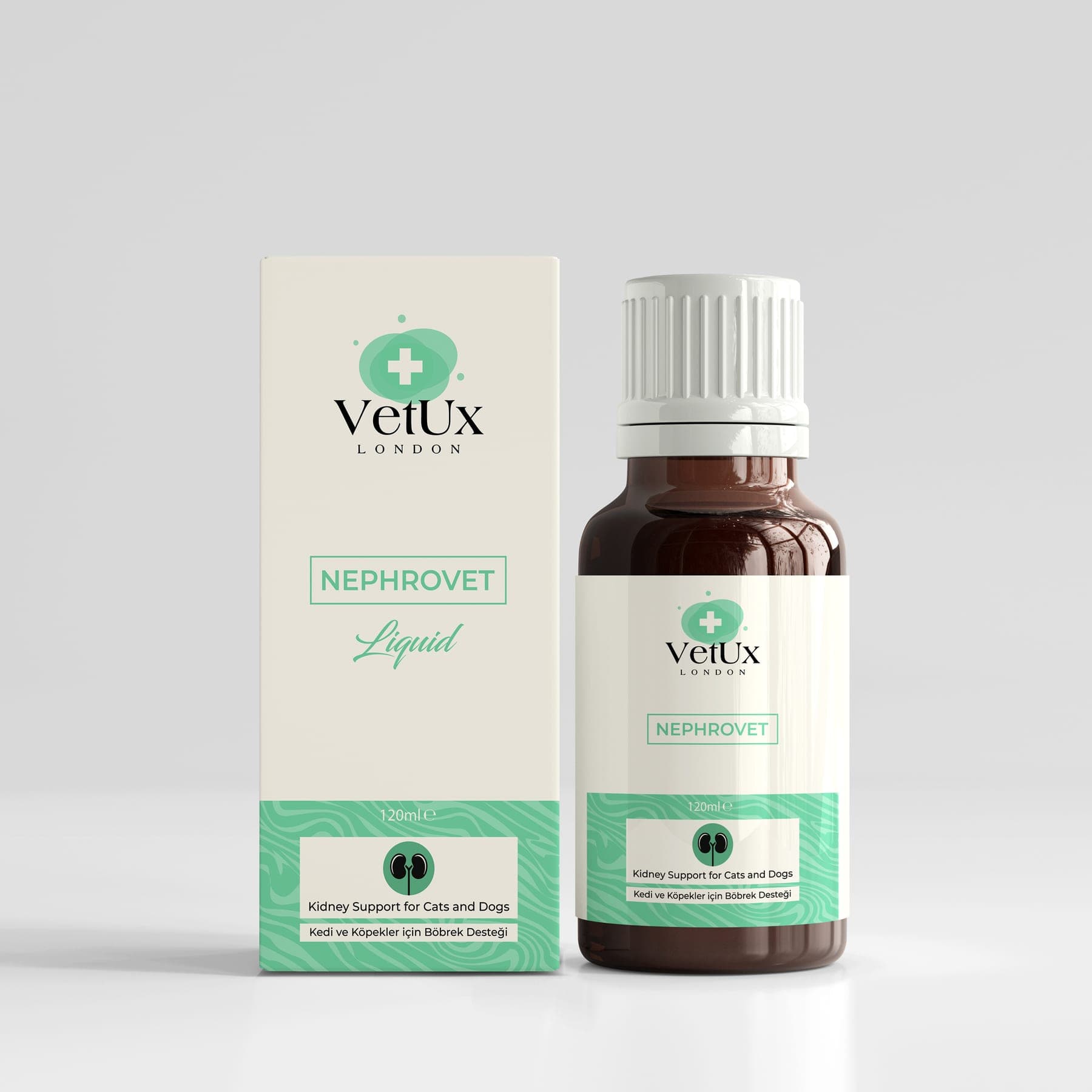
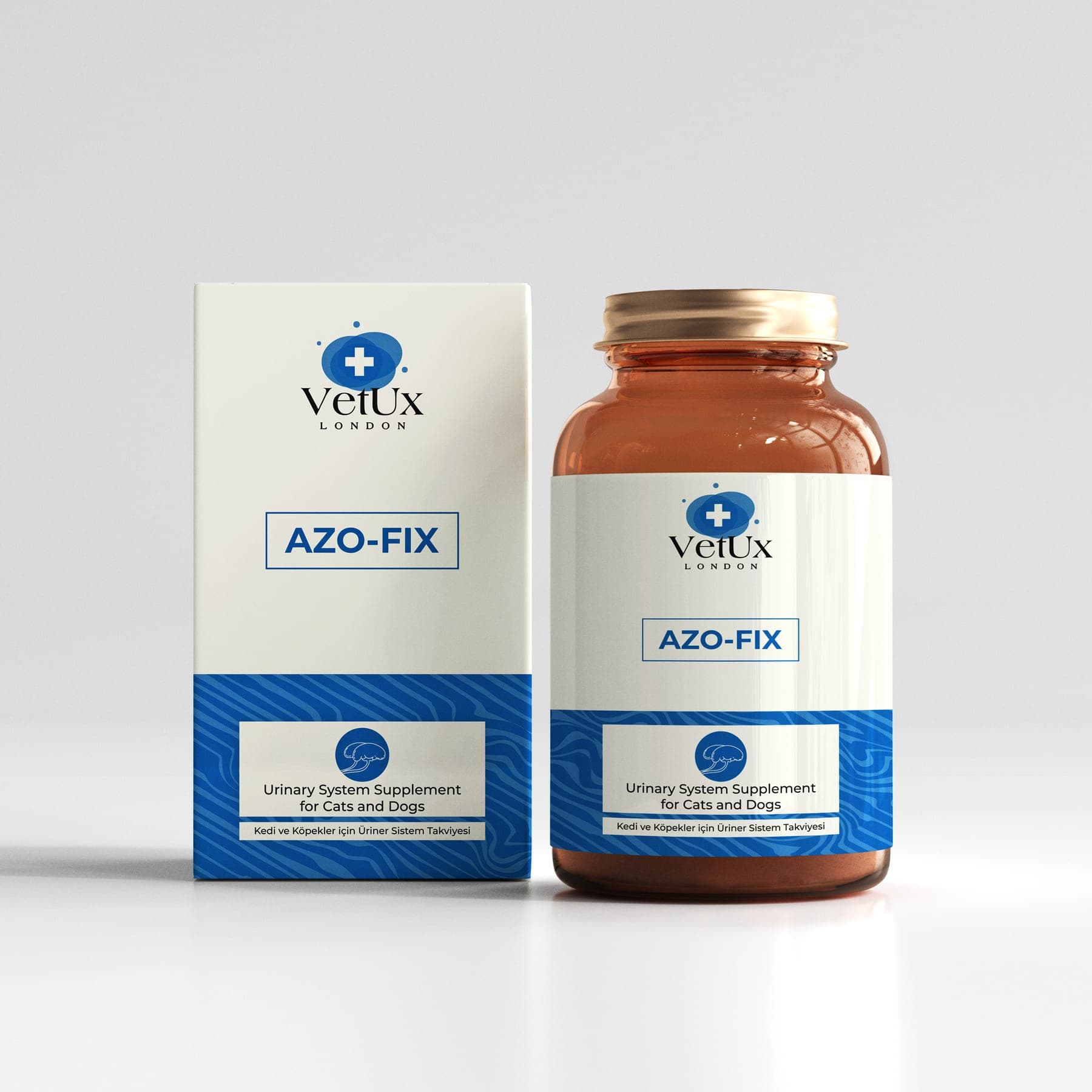
For a cat whose kidney values are being monitored, the core plan is for the vet to identify the cause, followed by an appropriate diet, adequate fluid intake and regular check-ups. Alongside this plan, complementary feeds may be considered if your vet finds them suitable. Nephrovet is a liquid complementary feed combining punarnava, varun, gokshura, palaash and kaasni (chicory) extracts; it helps maintain normal kidney function and accompanies a normal fluid balance and the natural rhythm of urine production. Azo-Fix is a complementary feed in powder form: two defined probiotic strains (Enterococcus faecium and Lactobacillus acidophilus) support the normal balance of the gut flora; taurine, DL-methionine, L-citrulline, L-arginine and vitamin B6 give nutritional support to the natural processes of nitrogen metabolism; and cranberry, nettle leaf, parsley, valerian, pumpkin, rosemary and broccoli extracts accompany the everyday balance of the kidneys and urinary tract. Neither product is a medicine, neither claims to change laboratory values, and neither replaces a veterinary examination, a diagnosis or prescribed care; especially in cats on a renal diet or medication, your vet decides whether and how they should be used.
Frequently asked questions
My cat's creatinine is high — does that mean kidney failure? No, a single high value is not a diagnosis. Fluid loss, a urinary blockage or sampling conditions can also raise creatinine. Your vet will identify the cause through examination, urine testing, SDMA and repeat measurements.
Urea is high but creatinine is normal — what could this mean? Urea is affected by diet and hydration more than creatinine. A recent protein-rich meal, fluid loss or bleeding in the digestive tract are among the first things considered. Your vet will interpret the result.
Why has my vet asked for an SDMA test? SDMA is very little affected by muscle mass and can show a fall in kidney filtration earlier than creatinine. That is why it is read alongside creatinine, especially in older and thinner cats.
Should I withhold food before the blood test? If your vet asks you to, yes — urea can be affected by recently eaten protein. But do not remove the water bowl, because dehydration can also raise values. Always take instructions from the vet who requested the test.
Can the values return to normal at the next check? If the rise was caused by something temporary such as fluid loss, values may fall once the cat is well hydrated. That is why vets follow the trend over time rather than relying on one measurement.
Do complementary feeds correct blood values? No. Complementary feeds are nutritional support that accompanies normal physiological functions; they do not claim to change laboratory values or to treat disease. Decide together with your vet whether to use one.
References
- 1International Renal Interest Society (IRIS). IRIS Staging of CKD (modified 2023). iris-kidney.com.
- 2Sparkes AH, Caney S, Chalhoub S, et al. ISFM Consensus Guidelines on the Diagnosis and Management of Feline Chronic Kidney Disease. Journal of Feline Medicine and Surgery. 2016;18(3):219–239.
- 3Hall JA, Yerramilli M, Obare E, Yerramilli M, Jewell DE. Comparison of serum concentrations of symmetric dimethylarginine and creatinine as kidney function biomarkers in cats with chronic kidney disease. Journal of Veterinary Internal Medicine. 2014;28(6):1676–1683.
- 4Relford R, Robertson J, Clements C. Symmetric Dimethylarginine: Improving the Diagnosis and Staging of Chronic Kidney Disease in Small Animals. Veterinary Clinics of North America: Small Animal Practice. 2016;46(6):941–960.
- 5Lees GE, Brown SA, Elliott J, Grauer GF, Vaden SL. Assessment and management of proteinuria in dogs and cats: 2004 ACVIM Forum Consensus Statement (small animal). Journal of Veterinary Internal Medicine. 2005;19(3):377–385.
Blood test results open an important window onto your cat's health, but looking through that window and drawing conclusions is only possible together with an examination, a history and further tests. For any question about your results and for a follow-up plan that suits your cat, please consult your veterinary surgeon.
Frequently asked questions
My cat's creatinine is high — does that mean kidney failure?
No, a single high value is not a diagnosis. Fluid loss, a urinary blockage or sampling conditions can also raise creatinine. Your vet will identify the cause through examination, urine testing, SDMA and repeat measurements.
Urea is high but creatinine is normal — what could this mean?
Urea is affected by diet and hydration more than creatinine. A recent protein-rich meal, fluid loss or bleeding in the digestive tract are among the first things considered. Your vet will interpret the result.
Why has my vet asked for an SDMA test?
SDMA is very little affected by muscle mass and can show a fall in kidney filtration earlier than creatinine. That is why it is read alongside creatinine, especially in older and thinner cats.
Should I withhold food before the blood test?
If your vet asks you to, yes — urea can be affected by recently eaten protein. But do not remove the water bowl, because dehydration can also raise values. Always take instructions from the vet who requested the test.
Can the values return to normal at the next check?
If the rise was caused by something temporary such as fluid loss, values may fall once the cat is well hydrated. That is why vets follow the trend over time rather than relying on one measurement.
Do complementary feeds correct blood values?
No. Complementary feeds are nutritional support that accompanies normal physiological functions; they do not claim to change laboratory values or to treat disease. Decide together with your vet whether to use one.
This article is for general information only; it does not replace veterinary examination, diagnosis or treatment. VetUx London products are complementary feed. If you have any concern about your companion, please consult your veterinary surgeon.
Share
The formulas matching the nutritional support described above.
Related articles
All articles Clinical Notes
Caring for Your Cat After Neutering: A Checklist for the First 10 Days
The first 10 days after neutering are the most important stage of recovery. A step-by-step checklist covering the collar, wound checks, the first meal, weight gain and the signs that mean it's time to see your vet.
 Clinical Notes
Liver Health in Cats and Dogs: A Guide to Enzymes, Signs and Nutrition
What do the liver values on a blood test mean, which signs are urgent and how should your pet be fed? An evidence-based guide to liver health for cat and dog owners.
 Clinical Notes
Cat and Dog Joint Health Guide: Signs, Weight and Movement
Struggling to get up, avoiding the stairs or a cat that no longer jumps up high can be quiet signs of joint problems. This guide covers the signs, how weight affects the joints and the right kind of movement.