
My Cat Keeps Going to the Litter Box: Lower Urinary Tract Signs and Emergencies
Frequent litter box trips, straining and bloody urine are lower urinary tract signs in cats, and a male cat that cannot urinate is an emergency. We explain the signs, the role of stress and water intake, and when to see your vet.
Short answer: Frequent trips to the litter box, passing only small amounts of urine, straining or urinating outside the tray are lower urinary tract signs. Causes include stress-related cystitis, crystals, stones or infection. A male cat that strains but produces no urine is an emergency: contact a veterinary surgeon immediately. Only a vet can make a diagnosis.
Why is my cat going to the litter box so often?
Vets call this picture "feline lower urinary tract disease" (FLUTD). The term does not describe a single disease. It covers a group of problems that affect the bladder and the urethra, the tube that carries urine out of the body. The main signs you may notice at home are:
- Visiting the litter box much more often than usual
- Passing very small amounts of urine each time, or none at all
- Straining to urinate, or spending a long time in the tray
- Crying or restlessness while urinating
- Urine that looks red, pink or bloody
- Urinating outside the litter box, often on cool, smooth surfaces
- Excessive licking of the genital area
Several different causes can sit behind these signs: feline idiopathic cystitis (bladder inflammation with no identifiable cause, closely linked to stress), crystals or stones in the urine, urinary tract infection, urethral plugs and other, less common conditions. Because the signs look so alike, the cause cannot be worked out at home.
What happens in the lower urinary tract?
The bladder's protective lining. The inner surface of the bladder is coated with a layer of glycosaminoglycans (GAGs). This layer acts as a natural barrier that limits direct contact between substances in the urine and the bladder wall. When the barrier is disrupted, the bladder wall becomes more sensitive and the cat may start to urinate frequently and painfully.
The link between stress and the bladder. Research shows that in cats with idiopathic cystitis the problem is not confined to the bladder: it is also connected to the body's stress-response system. Acting through the nervous system and the hormonal axis, this response can increase sensitivity in the bladder. Moving house, a new pet or baby, a relocated litter box, tension between cats or a disrupted routine can therefore trigger signs or bring them back.
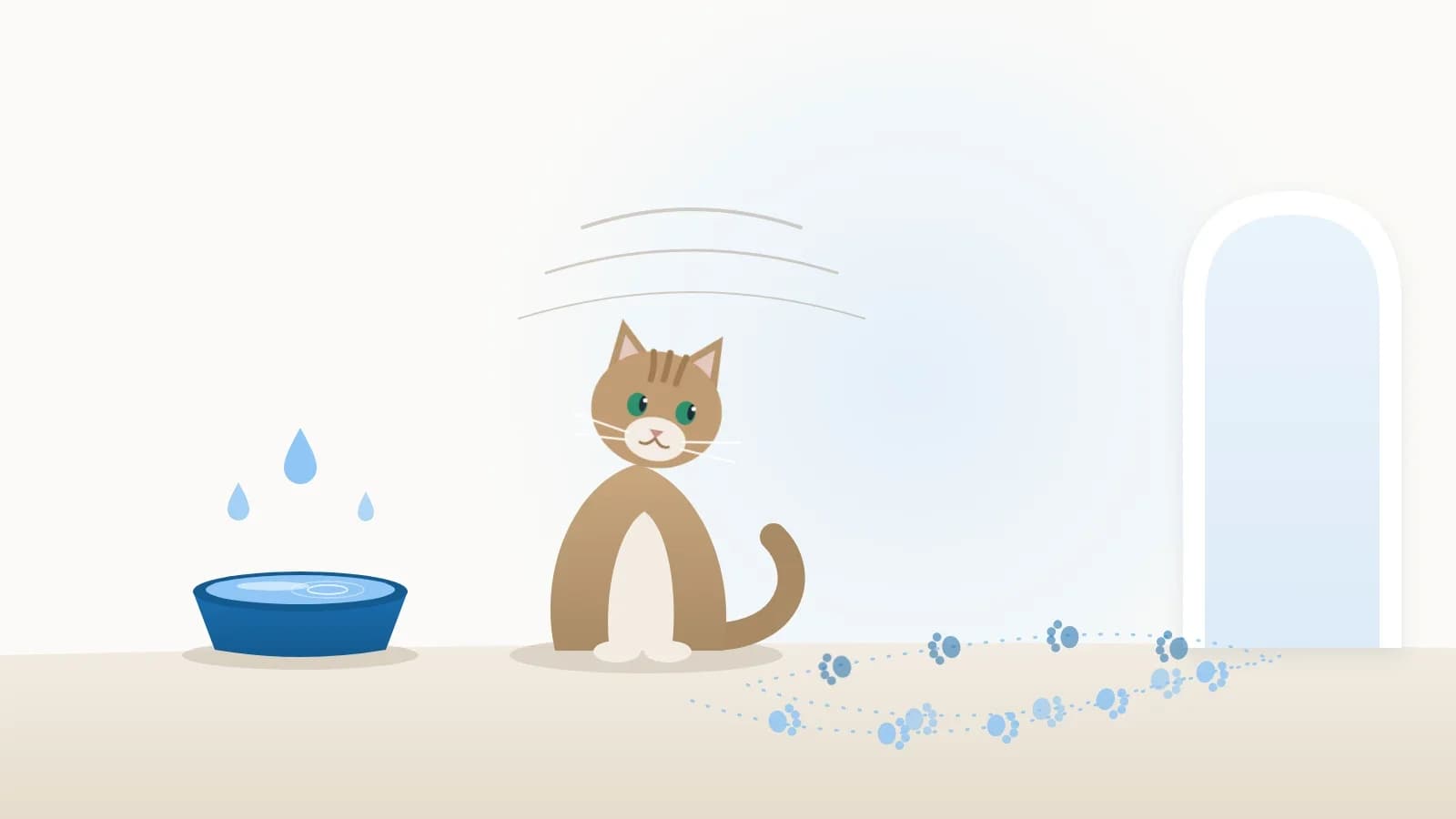
Why water intake matters. Cats naturally drink little and can produce highly concentrated urine. Concentrated urine stays in contact with the bladder wall for longer and can create conditions in which crystals form. When daily fluid intake rises, urine becomes more dilute and the cat urinates more regularly. For this reason, international guidelines count moisture-rich feeding and easy access to water among the cornerstones of lower urinary tract care.
Why is a male cat that cannot urinate an emergency?
In male cats the urethra is long and very narrow, especially towards its tip. A plug made of mucus, cells and crystals, or a small stone, can easily block it. Once the urethra is blocked, urine cannot leave the body, the bladder distends and substances that should be excreted in urine start to build up in the blood. A rise in blood potassium can disturb the heart rhythm. This situation can deteriorate within hours and is life-threatening.
If your male cat is straining in the litter box but producing no urine, or only a few drops, do not mistake it for constipation and do not wait until morning. Whatever the time, contact a veterinary practice or an out-of-hours emergency service.
When should I see a veterinary surgeon?
Immediately (emergency):
- A male cat strains but cannot pass urine, or passes it only drop by drop
- The cat is vomiting, lethargic, hiding or shows pain when the belly is touched
- The cat has stopped eating completely or seems dull or disoriented
The same day or as soon as possible:
- You notice frequent urination, straining or blood in the urine (even if the cat can still pass urine)
- The cat has started urinating outside the litter box
- The signs have appeared before and have come back
Identifying the cause of these signs and choosing the right approach is the job of a veterinary surgeon alone. Waiting at home, or changing products on your own in the hope that things settle, can mean missing a serious problem such as a blockage.
What will the vet check during the examination?
The vet will usually start by feeling the bladder to check whether it is full or tense. They will then often request a urine test (concentration, crystals, blood, bacteria), a urine culture where needed, imaging such as ultrasound or X-ray, and blood tests. Diagnosis, treatment and the feeding plan are decided by your veterinary surgeon on the basis of these findings. Attending the recommended follow-up appointments is important to monitor whether signs recur.
How can I support lower urinary tract health at home?
Alongside your veterinary surgeon's advice, you can:
- Make water appealing: Place wide, shallow water bowls in different spots around the home, away from the food bowl. Try a water fountain for cats that prefer running water. Refresh the water every day.
- Discuss moisture-rich feeding: Plan the share of wet food in the diet together with your vet.
- Organise the litter box: Put it in a quiet, easily reached place and clean it daily. In multi-cat homes, provide enough litter boxes for every cat to use comfortably.
- Manage stress: Give your cat places to hide and high resting spots. Keep play and feeding times regular, and introduce changes at home gradually where possible.
- Keep notes: Record changes in the number and size of urine clumps in the tray; this information is valuable for your vet.
Where do complementary feeds fit in?
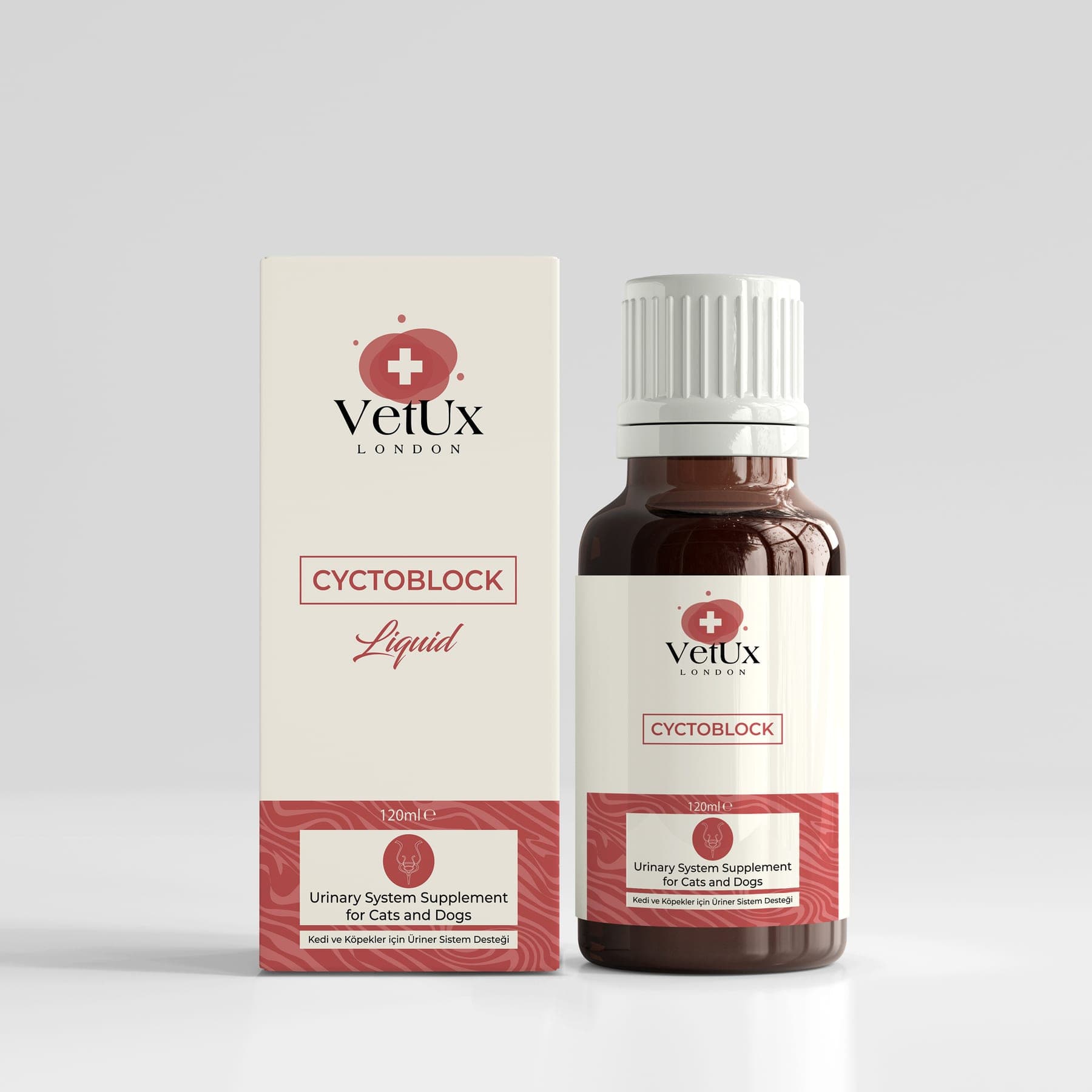
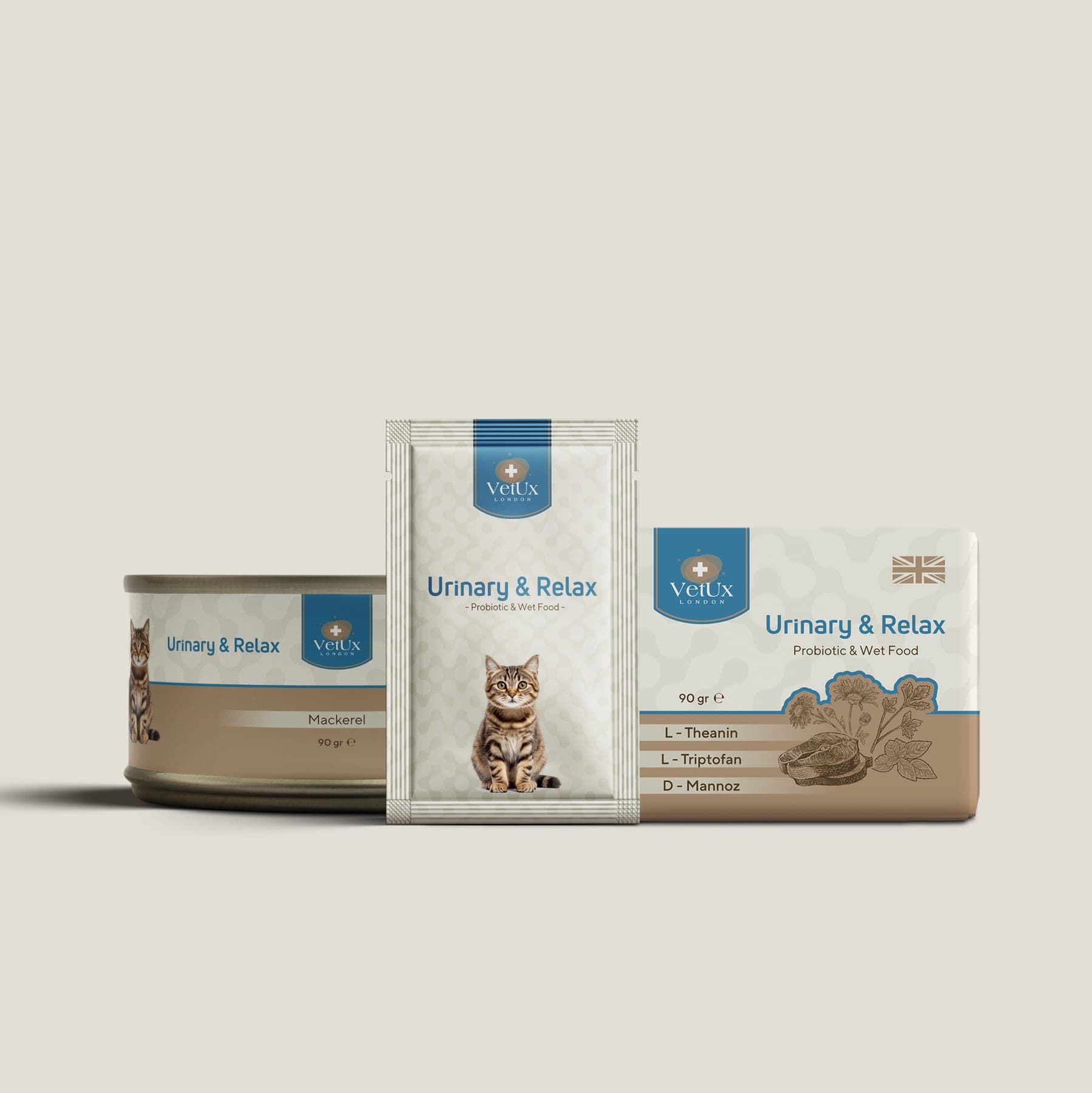
Complementary feeds may also be considered to accompany the care plan set by your veterinary surgeon. Cyctoblock is a liquid complementary feed for cats and dogs: its DL-methionine and glucosamine sulphate accompany the natural integrity of the urinary epithelium and the maintenance of a normal urinary pH, cranberry extract and vitamin C contribute to antioxidant balance, and valerian, marshmallow flower, parsley, nettle leaf, echinacea and dandelion extracts support the everyday comfort of the urinary tract. Elixir of Urinary & Relax is a probiotic complementary feed in wet form for cats: cranberry, D-mannose and live probiotic cultures contribute to maintaining lower urinary tract health and a normal urinary pH balance, L-theanine and L-tryptophan support everyday calm, and its high moisture content contributes to daily fluid intake. These products are not medicines and do not replace emergency care for a cat that cannot urinate. Particularly for cats on a prescription urinary diet, the veterinary surgeon who examines your cat should decide which product to use, when and how.
Frequently asked questions
My cat goes to the litter box often but can still pass urine. Should I still see a vet? Yes. Being able to urinate does not mean there is no underlying problem. If you notice frequent urination, straining or blood in the urine, contact your veterinary surgeon the same day or as soon as possible.
My male cat is straining in the litter box but nothing comes out. What should I do? This is an emergency. The urethra may be blocked and the situation can deteriorate within hours. Contact a veterinary practice or out-of-hours emergency service without delay.
Can stress really cause urinary problems in cats? Yes. Feline idiopathic cystitis is closely linked to the body's stress-response system. Changes at home, tension between cats or a disrupted routine can trigger signs. You can discuss environmental changes that reduce stress with your vet.
How can I get my cat to drink more water? Place wide, shallow water bowls in different spots around the home, keep them away from the food bowl, refresh the water daily and try a water fountain. Plan the share of moisture-rich food with your veterinary surgeon.
Does using a complementary feed replace a veterinary examination? No. Complementary feeds support the normal physiological function of the lower urinary tract, but they do not replace diagnosis and treatment. The veterinary surgeon who examines your cat decides which product is suitable.
The signs have gone. Will they come back? In some cats, especially where stress is involved, signs can recur from time to time. Attending the check-ups your vet recommends and keeping up water, feeding and environmental measures are important.
References
- 1Taylor S, et al. 2025 iCatCare consensus guidelines on the diagnosis and management of lower urinary tract diseases in cats. Journal of Feline Medicine and Surgery. 2025. doi:10.1177/1098612X241309176
- 2Lulich JP, Berent AC, Adams LG, Westropp JL, Bartges JW, Osborne CA. ACVIM small animal consensus recommendations on the treatment and prevention of uroliths in dogs and cats. Journal of Veterinary Internal Medicine. 2016;30(5):1564–1574.
- 3Buffington CAT. Idiopathic cystitis in domestic cats—beyond the lower urinary tract. Journal of Veterinary Internal Medicine. 2011;25:784–796.
- 4Ellis SLH, et al. AAFP and ISFM feline environmental needs guidelines. Journal of Feline Medicine and Surgery. 2013;15(3):219–230.
- 5Weese JS, et al. International Society for Companion Animal Infectious Diseases (ISCAID) guidelines for the diagnosis and management of bacterial urinary tract infections in dogs and cats. The Veterinary Journal. 2019;247:8–25. doi:10.1016/j.tvjl.2019.02.008
Use this article as a guide if you notice a change in your cat's urinary habits, but always consult your veterinary surgeon for diagnosis and treatment.
Frequently asked questions
My cat goes to the litter box often but can still pass urine. Should I still see a vet?
Yes. Being able to urinate does not mean there is no underlying problem. If you notice frequent urination, straining or blood in the urine, contact your veterinary surgeon the same day or as soon as possible.
My male cat is straining in the litter box but nothing comes out. What should I do?
This is an emergency. The urethra may be blocked and the situation can deteriorate within hours. Contact a veterinary practice or out-of-hours emergency service without delay.
Can stress really cause urinary problems in cats?
Yes. Feline idiopathic cystitis is closely linked to the body's stress-response system. Changes at home, tension between cats or a disrupted routine can trigger signs. You can discuss environmental changes that reduce stress with your vet.
How can I get my cat to drink more water?
Place wide, shallow water bowls in different spots around the home, keep them away from the food bowl, refresh the water daily and try a water fountain. Plan the share of moisture-rich food with your veterinary surgeon.
Does using a complementary feed replace a veterinary examination?
No. Complementary feeds support the normal physiological function of the lower urinary tract, but they do not replace diagnosis and treatment. The veterinary surgeon who examines your cat decides which product is suitable.
The signs have gone. Will they come back?
In some cats, especially where stress is involved, signs can recur from time to time. Attending the check-ups your vet recommends and keeping up water, feeding and environmental measures are important.
This article is for general information only; it does not replace veterinary examination, diagnosis or treatment. VetUx London products are complementary feed. If you have any concern about your companion, please consult your veterinary surgeon.
Share
The formulas matching the nutritional support described above.
Related articles
All articles Clinical Notes
What Is Lanthanum Carbonate? Phosphorus Balance and Phosphate Binders in Cats and Dogs
Lanthanum carbonate is a phosphate binder that forms insoluble lanthanum phosphate with dietary phosphate in the intestinal lumen. Its mechanism, why it is given with meals, its link to diet and key monitoring points, with references.
 Clinical Notes
What Do High Creatinine and Urea Mean in Cats? A Guide to Reading Blood Test Results
High creatinine and urea on a blood test do not always mean kidney disease. We explain what these values measure, how hydration and diet affect them, and how SDMA and urine tests complete the picture.
 Clinical Notes
Caring for Your Cat After Neutering: A Checklist for the First 10 Days
The first 10 days after neutering are the most important stage of recovery. A step-by-step checklist covering the collar, wound checks, the first meal, weight gain and the signs that mean it's time to see your vet.