
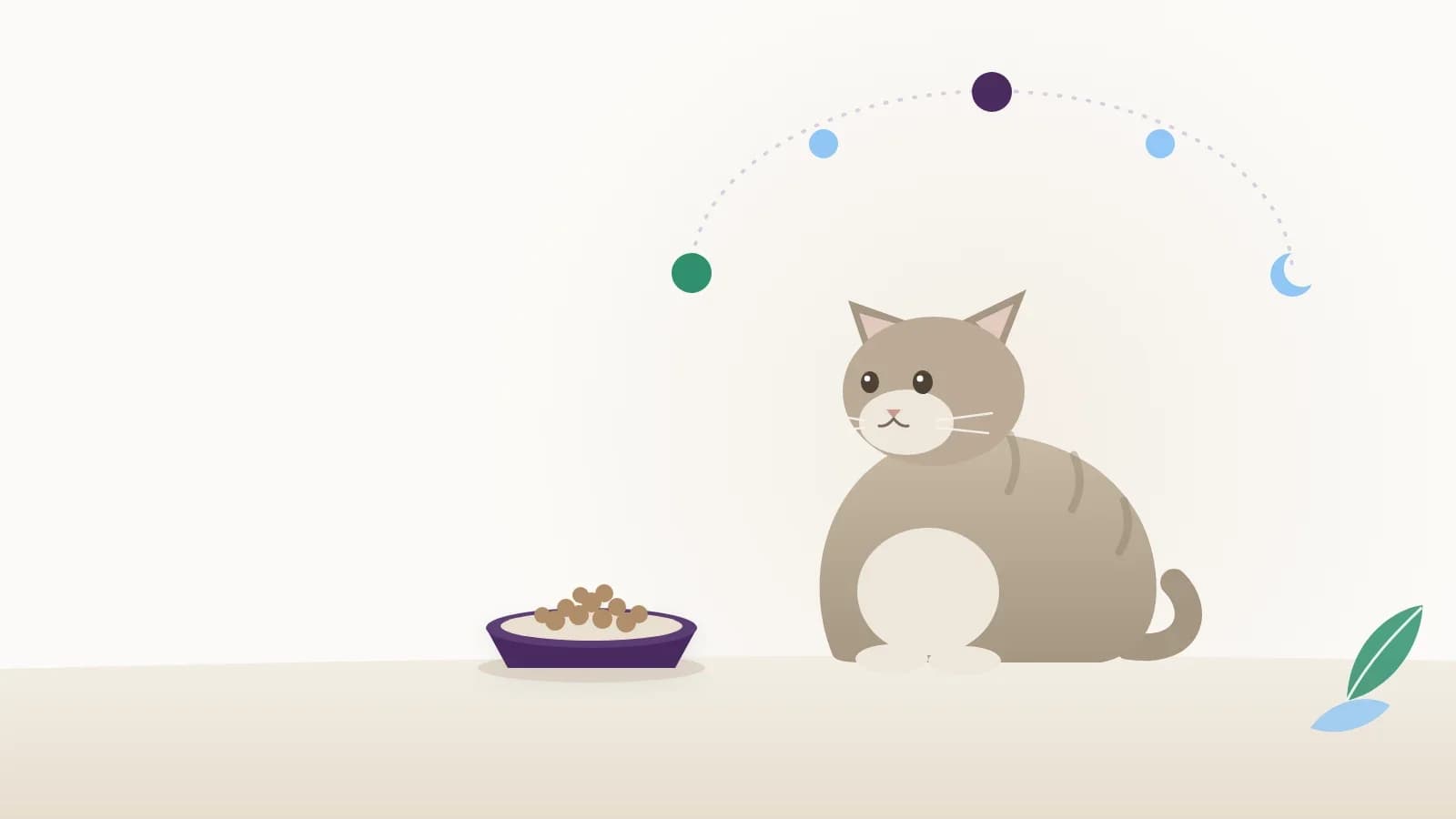
Fatty Liver in Cats (Hepatic Lipidosis): Why Is a Loss of Appetite Dangerous?
Why does a cat's liver fill with fat when it stops eating for a day or two, why are overweight cats more at risk, and when should you see a veterinary surgeon? The physiology of hepatic lipidosis, its signs and the principles of safe weight loss.
Short answer: Fatty liver (hepatic lipidosis) is a serious condition in which body fat floods the liver and builds up in its cells after a cat stops eating. Overweight cats are most at risk. A cat that has not eaten for a day or two should see a vet promptly; diagnosis and treatment, including nutritional support, are the vet's decision.
Cats are far more sensitive to going off their food than dogs or people. A few days of waiting for a cat to "eat when it gets hungry" can set the stage for the liver to fill with fat, especially in an overweight cat. In this article we explain how hepatic lipidosis develops, which cats are at risk, what to watch for at home and why you should contact your veterinary surgeon without losing time.
What is fatty liver (hepatic lipidosis) in cats?
Hepatic lipidosis is the build-up of excess fat, mainly triglycerides, inside liver cells (hepatocytes). The fat-laden cells swell, struggle to carry out their normal work, and the flow of bile out of the liver can be disrupted. It is one of the liver problems most often seen in cats and is regarded as serious because it can progress quickly.
Hepatic lipidosis rarely appears on its own; it usually follows another illness or a stressful period that has made the cat stop eating. This is why your veterinary surgeon investigates not only the liver but also the underlying cause of the loss of appetite. When no underlying cause can be found, the condition is called "primary" hepatic lipidosis.
What happens in the liver when a cat stops eating?
This section describes general physiology. Only your veterinary surgeon can assess your own cat, through examination and tests.
- 1An energy deficit develops. When a cat does not eat, it takes in less energy than it uses; this is called negative energy balance. Insulin levels fall, and the hormones that rise during fasting and stress (such as glucagon, cortisol and adrenaline) take over.
- 2Fat stores are broken down quickly. In this hormonal setting, an enzyme in fat tissue called hormone-sensitive lipase becomes active. Stored triglycerides are broken down into free fatty acids and carried in the blood to the liver. In an overweight cat the store is large, so the load reaching the liver is large too.
- 3The liver has three options. It can burn the incoming fatty acids for energy in the mitochondria, the cells' power stations (beta-oxidation, a process that involves carnitine); it can turn them back into triglycerides and send them out into the blood packaged as very low-density lipoproteins (VLDL); or it can store them inside the cell.
- 4The export route narrows. Building VLDL packages requires protein-based apolipoproteins and building blocks such as phosphatidylcholine. A cat that is not eating is not taking in protein either, so this packaging capacity shrinks. Cats are obligate carnivores with high requirements for protein and certain amino acids (for example arginine and taurine), which is one of the reasons fasting causes problems so quickly in cats.
- 5Triglycerides accumulate in the cell. When the fat arriving at the liver exceeds what is burned and exported, fat droplets build up inside the hepatocytes. The swollen cells can compress the tiny bile channels, which can lead to jaundice and nausea, and so to an even poorer appetite. This creates a vicious circle of "not eating, fat build-up, nausea and eating even less".
Experimental studies have shown that prolonged food deprivation and rapid weight loss can lead to hepatic lipidosis in overweight but otherwise healthy cats. That is why a loss of appetite in a cat is not a "wait and see" sign.
Why are overweight cats most at risk?
Hepatic lipidosis can develop in a cat of any weight, but the risk is clearly higher in overweight and obese cats. The reason is simple: when a cat with large fat stores stops eating, far more fatty acids are carried to the liver. Excess weight is common in indoor, less active, middle-aged cats. Overweight cats are also more prone to other conditions, such as diabetes, that can upset appetite.
The second major risk is attempts to make a cat lose weight quickly. Cutting an overweight cat's food sharply overnight, leaving the cat hungry, or switching to a new food the cat dislikes and waiting for it to "eat when it's hungry enough" is dangerous, however well meant. Weight loss should always be gradual and planned under the supervision of a veterinary surgeon.
What can make a cat lose its appetite?
There is usually another reason behind a loss of appetite:
- Stress and changes in the environment: Moving house, a new pet or baby in the home, a stay in a cattery, a long journey, changes to the household routine, or the owner being away for a long time. We cover the effects of stress in cats in detail in our article on environmental stress.
- Changes of food: Cats can be wary of food they are not used to. A sudden change of diet, or a change in the texture and smell of the food, can make a cat stop eating.
- Underlying illness: Intestinal disease, pancreatitis, kidney disease, diabetes, an overactive thyroid gland, mouth and dental pain, upper respiratory problems that block the sense of smell, tumours and other liver and bile problems are some examples.
- Pain, nausea and medicines: A painful condition, nausea or the side effects of some medicines can also reduce appetite.
Only a veterinary surgeon can work out which of these is involved, through examination and tests.
Which signs need attention?
Hepatic lipidosis often starts quietly. Watch for these signs at home:
- Refusing food completely, or leaving a large part of every meal for several days
- Noticeable weight loss, and muscle loss over the back and hips
- Lethargy, hiding, loss of interest in play and surroundings
- Vomiting, drooling, frequent swallowing, or approaching the food bowl and then walking away (signs of nausea)
- Changes in drinking, diarrhoea or constipation
- Yellowing (jaundice) of the whites of the eyes, the gums, the inside of the ears or pale areas of skin
- Poor grooming, with an unkempt, dull coat
These signs are also seen in other illnesses. Do not try to diagnose at home from the signs; diagnosis belongs to your veterinary surgeon.
When should you see a veterinary surgeon?
In a cat, a loss of appetite on its own is enough reason to contact your veterinary surgeon.
- If your cat has eaten nothing for 24 hours, call your veterinary surgeon and book an examination. Do not let it stretch to two days.
- If your cat is overweight, elderly or has a known long-term condition, do not wait; contact the practice sooner.
- If your cat has been eating noticeably less than usual for a few days (for example leaving half of every meal), let your vet know as well; do not wait for the appetite to stop completely.
- Seek emergency care without delay if you see: jaundice, repeated vomiting, marked weakness or difficulty standing, not drinking either, difficulty breathing, or a sudden change in alertness or behaviour.
Before the visit, note when and how much your cat last ate, any recent changes at home (a move, a new pet, a change of food), every medicine and product your cat is given and the signs you have noticed. This helps your vet find the underlying cause faster. You can find which checks ageing cats need regularly in our guide to check-ups after the age of 7.
Why is force-feeding at home not recommended?
When a cat will not eat, an owner's first instinct may be to mash up food and give it by syringe. Current guidance, including the International Society of Feline Medicine (ISFM) guidelines on the inappetent cat, is that force-feeding is not recommended. The main reasons are:
- It causes the cat considerable stress, and stress suppresses appetite even further.
- The cat may link that food with a bad experience and refuse it in future (food aversion).
- Food or liquid can go down the wrong way into the airway (aspiration risk).
- It is rarely possible to meet the cat's real needs this way at home, and above all it costs time: the underlying illness can progress without a diagnosis.
Do not give appetite stimulants, medicines made for people or mixtures suggested online on your own initiative either. If your cat is not eating, the right step is to contact your veterinary surgeon.
What approach will your veterinary surgeon take?
Diagnosis is made by your veterinary surgeon. This may involve an examination, blood tests, imaging (usually ultrasound) and, where needed, examining a sample taken from the liver. The underlying illness causing the loss of appetite is investigated at the same time. We explain what liver values on a blood test mean in our article on raised ALT and AST.
The cornerstone of treatment for hepatic lipidosis is safely meeting the cat's energy and protein needs again. Your vet will plan fluid and electrolyte support, control of nausea, treatment of the underlying illness and assisted feeding together. If the cat is not eating enough on its own, the vet may decide to place a feeding tube. A feeding tube aims to let the cat receive the nutrition it needs without stress, and many cats gradually start eating on their own during this time. Whether a tube is placed, which food is given in what amount and how often, which medicines are used and how long the process lasts are entirely your veterinary surgeon's decisions.
Many cats whose condition is spotted early and who receive the nutritional support planned by their vet in good time can recover. The process usually takes weeks and needs regular check-ups; the outlook also depends on the underlying cause. Patience and close contact with your vet make the difference during this period.
How can an overweight cat lose weight safely?
Excess weight is one of the most important risk factors for hepatic lipidosis, but the answer is not rapid slimming; it is planned and gradual weight loss.
- A veterinary assessment first: Your veterinary surgeon assesses your cat's body condition score and muscle condition and sets the target weight and daily energy needs. Before starting, they also check for any illness linked to the weight gain.
- No sudden changes: Food is not cut back overnight and the cat is never left hungry. If a new food is introduced, it is mixed with the old food and the switch is made gradually.
- Do not force it: If your cat refuses the new food, do not wait for it to "eat when it's hungry"; go back to the previous routine and tell your vet.
- Regular weighing: Weigh your cat at regular intervals and keep a record. Faster-than-expected weight loss should be reported to your vet just like weight gain.
- Activity and enrichment: Play sessions, climbing spaces and food puzzles increase activity and ease boredom and stress.
- Count the treats: Treats and food from the table are part of the daily intake and should be included in the plan your vet sets.
How should a cat be fed through periods when liver health needs extra attention?
Once a period of poor appetite is over, or in a cat being monitored because of its liver values, the aim of feeding is for the cat to eat regularly, sufficiently and willingly. Cats generally eat fresh food, close to room temperature and with a clear aroma, more readily; food and water bowls should be placed somewhere quiet, clean and away from the litter tray. Which food is given, with what protein and fat levels, depends on the cat's diagnosis. Cats that have had hepatic lipidosis in particular have high protein needs, and their feeding plan is set by your veterinary surgeon. For an overview of how the liver works, see our liver health guide.
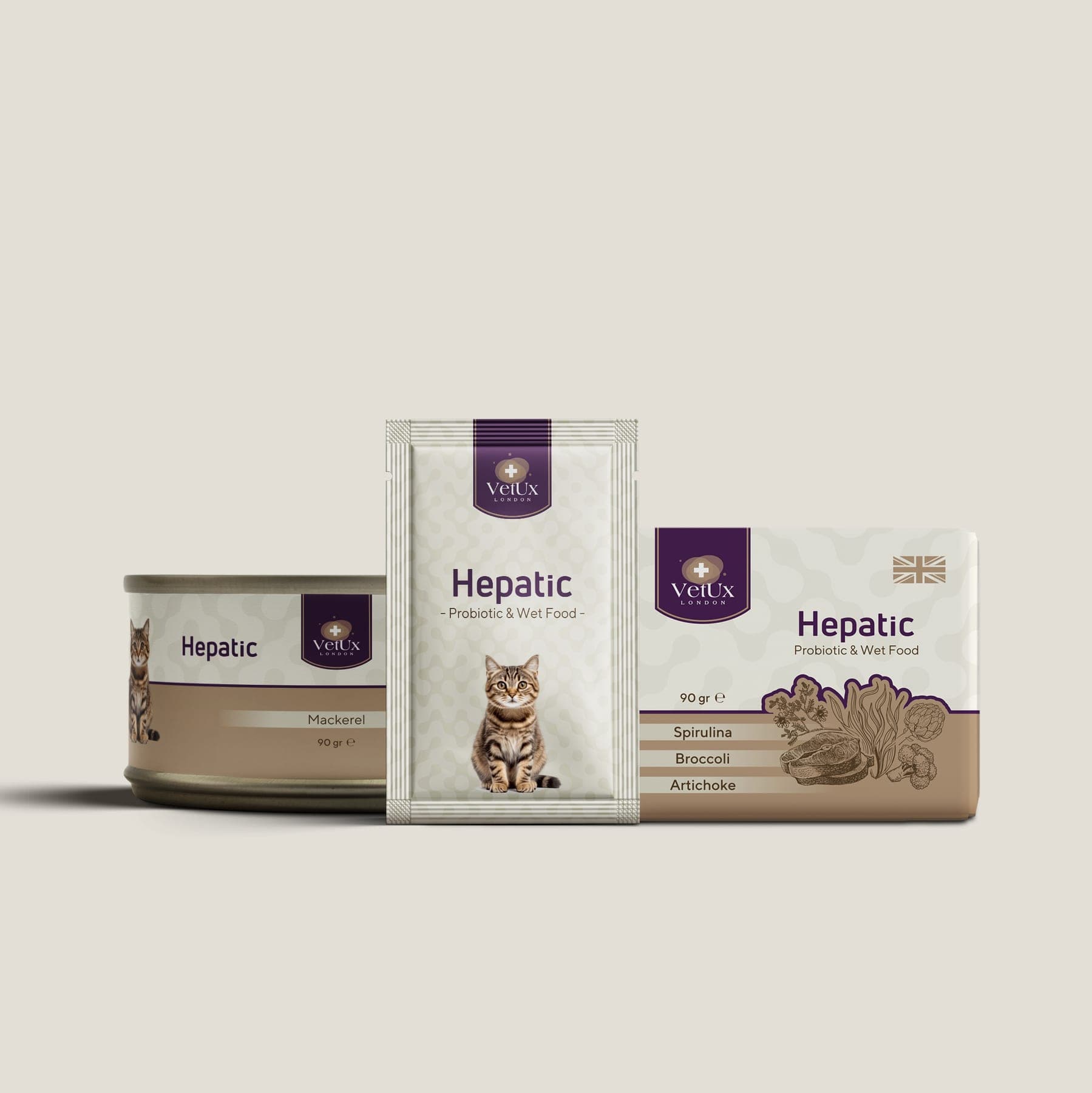
Through periods when liver health needs extra attention, and if your veterinary surgeon considers it appropriate, Elixir of Hepatic can accompany your cat's feeding routine. Elixir of Hepatic is a complementary feed for cats made up of a probiotic wet food and sachet combination; its mackerel-based, low-fat recipe with a controlled protein content works with silymarin (milk thistle extract), SAMe (S-adenosyl-L-methionine), turmeric, artichoke extract, choline, taurine and probiotic cultures to contribute to maintaining normal liver function. A complementary feed does not replace veterinary treatment for hepatic lipidosis: the feeding plan, protein level and which food is started when for a cat with poor appetite or a diagnosis of hepatic lipidosis are decided only by your veterinary surgeon.
Frequently asked questions
My cat hasn't eaten anything for a day. Should I wait? No. In cats, a loss of appetite can set the stage for fatty liver within a few days. Call your veterinary surgeon about a cat that has eaten nothing for 24 hours, and act sooner if your cat is overweight, elderly or has a long-term condition.
Does hepatic lipidosis only affect overweight cats? No, it can occur in cats of any weight. However, overweight cats have larger fat stores, so more fat is carried to the liver and the risk is clearly higher.
Can I give my cat food by syringe if it won't eat? Force-feeding at home is not recommended. It risks stress, food aversion and food going into the airway, and it delays getting veterinary help. Your veterinary surgeon decides whether assisted feeding, including a feeding tube, is needed.
Can I cut my overweight cat's food to make it lose weight quickly? Sudden, severe restriction or leaving a cat hungry can increase the risk of hepatic lipidosis. Weight loss should be gradual; your veterinary surgeon sets the target weight and the programme.
Can a cat with hepatic lipidosis recover? Many cats whose condition is spotted early and who receive the nutritional support planned by their vet in good time can recover. The process usually takes weeks and needs regular check-ups; the outlook also depends on the underlying cause.
Can liver-focused complementary feeds replace veterinary treatment for hepatic lipidosis? No. Complementary feeds can contribute to maintaining normal liver function, but hepatic lipidosis is a serious condition that must be managed by a veterinary surgeon. Consult your vet before using any product.
Final word
A cat not eating is a sign owners often underestimate, yet it can have serious consequences given how cats' bodies work. Avoiding fast, harsh diets for overweight cats, making changes of food gradually, watching appetite closely during stressful periods and taking a cat that has not eaten for a day or two to the vet without delay are the foundations of looking after liver health. For every decision about diagnosis, treatment and feeding, consult your veterinary surgeon.
References
- 1Center SA. Feline hepatic lipidosis. Veterinary Clinics of North America: Small Animal Practice. 2005;35(1):225-269. doi:10.1016/j.cvsm.2004.10.002
- 2Armstrong PJ, Blanchard G. Hepatic lipidosis in cats. Veterinary Clinics of North America: Small Animal Practice. 2009;39(3):599-616.
- 3Valtolina C, Favier RP. Feline hepatic lipidosis. Veterinary Clinics of North America: Small Animal Practice. 2017;47(3):683-702. doi:10.1016/j.cvsm.2016.11.014
- 4Biourge VC, Groff JM, Munn RJ, et al. Experimental induction of hepatic lipidosis in cats. American Journal of Veterinary Research. 1994;55(9):1291-1302. doi:10.2460/ajvr.1994.55.09.1291
- 5Taylor S, Chan DL, Villaverde C, et al. 2022 ISFM Consensus Guidelines on Management of the Inappetent Hospitalised Cat. Journal of Feline Medicine and Surgery. 2022;24(7):614-640. doi:10.1177/1098612X221106353
- 6Cline MG, Burns KM, Coe JB, et al. 2021 AAHA Nutrition and Weight Management Guidelines for Dogs and Cats. Journal of the American Animal Hospital Association. 2021;57(4):153-178. doi:10.5326/JAAHA-MS-7232
- 7WSAVA Nutritional Assessment Guidelines Task Force (Freeman L, Becvarova I, Cave N, et al.). WSAVA Nutritional Assessment Guidelines. Journal of Small Animal Practice. 2011;52(7):385-396.
Frequently asked questions
My cat hasn't eaten anything for a day. Should I wait?
No. In cats, a loss of appetite can set the stage for fatty liver within a few days. Call your veterinary surgeon about a cat that has eaten nothing for 24 hours, and act sooner if your cat is overweight, elderly or has a long-term condition.
Does hepatic lipidosis only affect overweight cats?
No, it can occur in cats of any weight. However, overweight cats have larger fat stores, so more fat is carried to the liver and the risk is clearly higher.
Can I give my cat food by syringe if it won't eat?
Force-feeding at home is not recommended. It risks stress, food aversion and food going into the airway, and it delays getting veterinary help. Your veterinary surgeon decides whether assisted feeding, including a feeding tube, is needed.
Can I cut my overweight cat's food to make it lose weight quickly?
Sudden, severe restriction or leaving a cat hungry can increase the risk of hepatic lipidosis. Weight loss should be gradual; your veterinary surgeon sets the target weight and the programme.
Can a cat with hepatic lipidosis recover?
Many cats whose condition is spotted early and who receive the nutritional support planned by their vet in good time can recover. The process usually takes weeks and needs regular check-ups; the outlook also depends on the underlying cause.
Can liver-focused complementary feeds replace veterinary treatment for hepatic lipidosis?
No. Complementary feeds can contribute to maintaining normal liver function, but hepatic lipidosis is a serious condition that must be managed by a veterinary surgeon. Consult your vet before using any product.
This article is for general information only; it does not replace veterinary examination, diagnosis or treatment. VetUx London products are complementary feed. If you have any concern about your companion, please consult your veterinary surgeon.
Share
The formulas matching the nutritional support described above.
Related articles
All articles Clinical Notes
How to Choose a Dog Joint Supplement: Glucosamine, Chondroitin and What to Check on the Label
Which amounts, glucosamine form and weight-based usage information should you check on the label when choosing a joint supplement for your dog? The role of glucosamine and chondroitin in cartilage, the strength of the evidence, how long to wait before judging results, and why dogs on medication need vet approval.
 Clinical Notes
Vomiting in Cats: Hairball or Something Else?
Is your cat's vomiting a hairball or a sign of something else? What the colour and frequency of vomit tell you, and when to see your vet.
 Clinical Notes
Shedding and Skin Changes in Neutered Cats: The Role of Hormones
Why does your cat's coat change after neutering? How hormones affect sebaceous glands, the hair cycle and weight, what must be ruled out first with a bald patch, and when to see your veterinary surgeon.