
Senior Cat Care Guide: Check-ups, Nutrition and Warning Signs After Age 7
Cats hide pain and illness remarkably well. We explain which check-ups are needed after age 7, which behaviour, mouth, weight and water intake signs to watch for at home, and how to plan a change of food.
Short answer: Cats are mature adults from 7 years and seniors from 10. Because they hide pain and illness so well, a check-up with blood and urine tests and a blood pressure measurement is recommended at least once a year at this stage. Watch water intake, weight, mouth health and behaviour at home; diagnosis and treatment decisions belong to your vet.
When your cat passes the age of seven, little may seem to have changed from the outside: they sleep in the same spot and ask for food at the same time. Yet from around this age, quiet changes begin inside the body, and cats are very good at hiding them from their owners. In this guide we explain in plain language which check-ups an ageing cat needs and why, which signs to look out for at home, how to monitor the mouth, weight, muscle and water balance, and how to plan a change of diet. Our Kidney Health Guide for Cats, which covers kidney health on its own and in depth, is a companion to this guide.
At what age is a cat considered "senior"?
The joint life stage guidelines of the American Animal Hospital Association and the American Association of Feline Practitioners (AAHA/AAFP) divide a cat's life into stages. In this classification, 7–10 years is the "mature adult" stage and 10 years and over is the "senior" stage. These limits are calendar markers; not every cat ages at the same pace. Breed, weight, past illnesses and living conditions all change the picture.
What this means in practice: age 7 is the point at which check-ups shift from a visit "when the vaccine is due" to planned health monitoring. Many health problems that begin at this age can be picked up on examination and testing before they cause any signs.
What changes in a cat's body with age?
Ageing is not a disease, but it reduces the body's reserve capacity. A spell of dehydration, a change of food or a stressful period that a young cat tolerates easily can therefore have more noticeable effects in an older cat.
Kidney reserve shrinks quietly
The kidneys are made up of a large number of tiny filtering units called nephrons and are born with a generous reserve capacity. With age some of these units lose their function; because the remaining ones take over the workload, blood values can look normal for a long time. By the time a change shows up on a blood test, a significant part of kidney capacity has often already been lost. This is why regular blood, urine and blood pressure monitoring is emphasised so strongly in older cats.
Muscle mass wastes away
Loss of muscle mass (sarcopenia) is common in ageing cats, especially at advanced ages. Digestive efficiency can also decline with age; some older cats get less out of fat and protein even when eating the same amount of food. Muscle loss affects more than strength and mobility; it also changes how some blood values are read: as muscle mass falls, creatinine can look better than it really is. For this reason your vet assesses muscle condition alongside weight.
Water balance becomes fragile
Cats descend from ancestors adapted to getting most of their water from prey, and their thirst drive is relatively weak. With age, the kidneys' ability to concentrate urine may decline, and the body needs more water to excrete the same waste. If the cat cannot make up this shortfall by drinking enough, constipation and mild dehydration can become common problems. The opposite matters too: a marked increase in water intake can be the first sign of a change related to the kidneys, the thyroid or sugar metabolism.
Pain is hidden
In nature, cats are both predator and prey; showing weakness makes them vulnerable. They are therefore very skilled at hiding pain, especially chronic pain from the joints and the mouth. In an older cat, pain usually shows up not as crying or limping but as quiet changes in behaviour. Behind many changes put down to "just old age" there may be a source of pain that can be addressed.
Which check-ups are needed after age 7?
The AAHA/AAFP guidelines recommend that every cat has a thorough examination at least once a year, and that cats over 10 have examinations more often, commonly every six months, based on the vet's assessment. The International Society of Feline Medicine (ISFM) hypertension guidelines also recommend measuring blood pressure at least once a year from the age of 7.
| Check | Why it matters | Your part | |---|---|---| | Physical examination | Gives information about heart sounds, the thyroid gland, abdominal organs, joints and skin | Note any changes you have seen since the last visit and bring them along | | Weight, body and muscle condition | Shows silent weight and muscle loss early | Weigh your cat regularly at home and keep a record | | Mouth and dental examination | Gum disease and tooth resorption are common and painful in older cats | Mention signs such as bad breath, drooling or chewing on one side | | Blood tests | Haematology and biochemistry give information about the kidneys, liver and sugar metabolism. If your vet considers it necessary, thyroid hormone (T4) is measured too | Bring previous results; the trend tells more than a single value | | Urinalysis | Shows urine concentration, protein, glucose and signs of infection | Follow your vet's instructions for collecting the sample | | Blood pressure measurement | High blood pressure is a risk to the eyes, kidneys, heart and brain, and often causes no signs | Allow time for the measurement in a setting where your cat is calm |
If you would like to know how blood test results are read, our article on High Creatinine and Urea in Cats covers this in detail. Your vet always decides how often check-ups are needed, based on your cat's age, history and test results.
How can you tell if an older cat is in pain or unwell?
The most reliable sign of pain is a change in your cat's habits. Assessment tools such as the World Small Animal Veterinary Association (WSAVA) pain guidelines and the Feline Grimace Scale, which is based on cats' facial expressions, help vets read these subtle signs systematically. Signs you can watch for at home include:
- Movement: Not jumping up to high places as before, hesitating before jumping, coming down stairs slowly, sleeping in lower places
- Litter tray: Going outside the tray, struggling to get into it, changes in urination or defecation habits
- Grooming: Matting or untidy fur on the back and at the base of the tail (bending may hurt), or the opposite, over-licking one area
- Social behaviour: Hiding, avoiding being touched, not wanting to be picked up, or the opposite, unusual clinginess
- Face and posture: Squinting, ears rotated outwards, sitting hunched with the head held below the shoulders
- Sleep and voice: Restlessness at night, aimless wandering or loud vocalising at night
None of these signs makes a diagnosis on its own; they can have different causes, from joint problems and mouth pain to thyroid and blood pressure changes and age-related cognitive changes. We have also explained how joint pain is hidden in cats in our article on Hidden Joint Pain in Cats.
An important warning: Painkillers made for people, especially paracetamol, are toxic to cats. Never give your cat any medicine your vet has not recommended; assessing and managing pain is your vet's job.
Why should mouth and dental health not be neglected?
Gum disease and tooth resorption are common in older cats and can cause marked pain. Because cats can keep eating even with a painful mouth, the problem is often noticed late. The following signs can suggest a mouth problem:
- Bad breath, drooling, dropping food from the mouth
- Chewing on one side, or leaving dry food and only eating wet food
- Going to the food bowl and walking away without eating, eating with the head tilted
- Pawing at the mouth, swelling on one side of the face
A full assessment of a mouth problem often requires examination under anaesthesia and dental X-rays; that decision is your vet's. You can find home care routines in our article on Gingivitis, Periodontitis and Stomatitis.
How do you monitor weight and muscle loss?
In an older cat, weight is one of the easiest indicators to measure and one of the most informative. Excess weight is more common in the mature adult years, while at advanced ages the picture reverses and unexplained weight loss becomes an important warning sign. A cat that is losing weight despite a normal or increased appetite should be assessed by a vet for causes such as thyroid or sugar metabolism changes.
For monitoring at home:
- Weigh once a month: Weigh yourself first, then weigh yourself holding your cat; the difference is your cat's weight. Note the results with the date.
- Check with your hands: The ribs should be felt under a thin layer of fat. If the spine, hip bones and shoulder blades are becoming prominent, muscle loss may have started.
- Take small changes seriously: In a cat weighing a few kilograms, even a loss of a few hundred grams can be meaningful; if you see a steady downward trend, tell your vet.
Is your older cat drinking enough water?
In an older cat, water intake is both a need to protect and an indicator to monitor. Watch for changes in both directions:
- Drinking too little: Constipation, hard stools and dry mucous membranes can point to insufficient fluid intake. Placing more than one water bowl in different rooms, using wide and shallow bowls, trying water fountains and including wet food in the diet all contribute to fluid intake. For practical tips, see our article on Practical Ways to Increase Water Intake in Older Cats.
- Drinking too much: A water bowl emptying faster than usual, larger or more frequent urine clumps in the litter tray, or the cat starting to wait by taps and sinks all need attention. These changes can be related to the kidneys, the thyroid or sugar metabolism and require assessment by a vet.
Filling the water bowl to the same level every day and watching the clumps in the litter tray is the simplest way to notice a change.
How should you switch an older cat to a new food?
There is no single "senior cat food" need. The guidelines emphasise that most healthy older cats need adequate, good-quality protein, and that at advanced ages protein and energy intake become important for maintaining muscle mass. On the other hand, in cats diagnosed with chronic kidney disease, a renal diet with controlled phosphorus and protein is one of the cornerstones of care in ISFM and IRIS recommendations. In other words, the right food depends on your cat's examination and test results, and you should make this choice together with your vet.
When changing food:
- Switch gradually: Mix the new food into the old one little by little, spreading the transition over a period of several days to a few weeks. Older and fussy cats may respond to a sudden change by refusing to eat.
- Do not let them stop eating: Cats, especially overweight or older ones, do not tolerate going without food for long. If your cat refuses the new food, slow the transition down; call your vet if loss of appetite lasts longer than a day.
- Think about moisture: Wet food makes a meaningful contribution to daily fluid intake.
- Do not restrict on your own: The word "kidney" or "senior" on a food label does not mean the food is right for your cat. In a cat that does not need protein restriction, unnecessary restriction can speed up muscle loss.
How do you look after kidney health in an older cat?
Chronic kidney disease is one of the most common health problems in older cats, and it becomes markedly more frequent with age. The foundation of looking after kidney health is the routine described above: regular blood and urine tests, a yearly blood pressure measurement, supporting and monitoring water intake, and tracking weight and muscle. In cats that have been diagnosed, the International Renal Interest Society (IRIS) divides the disease into stages, helping vets tailor the monitoring and nutrition plan to the individual. For detailed information on signs, blood values and staging, you can read our Kidney Health Guide for Cats.
When should you see a veterinary surgeon?
Seek same-day emergency care in the following situations:
- Going to the litter tray often and straining but passing no urine, or only dribbling (especially in male cats)
- Open-mouth breathing, difficulty breathing, or a bluish tongue and gums
- Sudden loss of vision, bumping into things, pupils that stay dilated
- Sudden weakness or coldness in the hind legs, or crying out in severe pain
- Seizures, collapse, loss of balance or repeated vomiting
Book an appointment with your vet within a few days in the following situations:
- A marked increase in drinking and urine volume
- Unexplained weight loss, or a marked increase or decrease in appetite
- Loss of appetite lasting more than a day
- Bad breath, drooling, difficulty eating
- Reluctance to jump, going outside the litter tray, less grooming
- Restlessness at night, disorientation, unusual vocalising
- Vomiting more than once a week, or a change in toilet habits
In older cats without any signs, regular check-ups are also the most reliable way to notice changes early. Keep notes of your observations, but leave interpretation and diagnosis to your vet.
Where does nutritional support fit in?
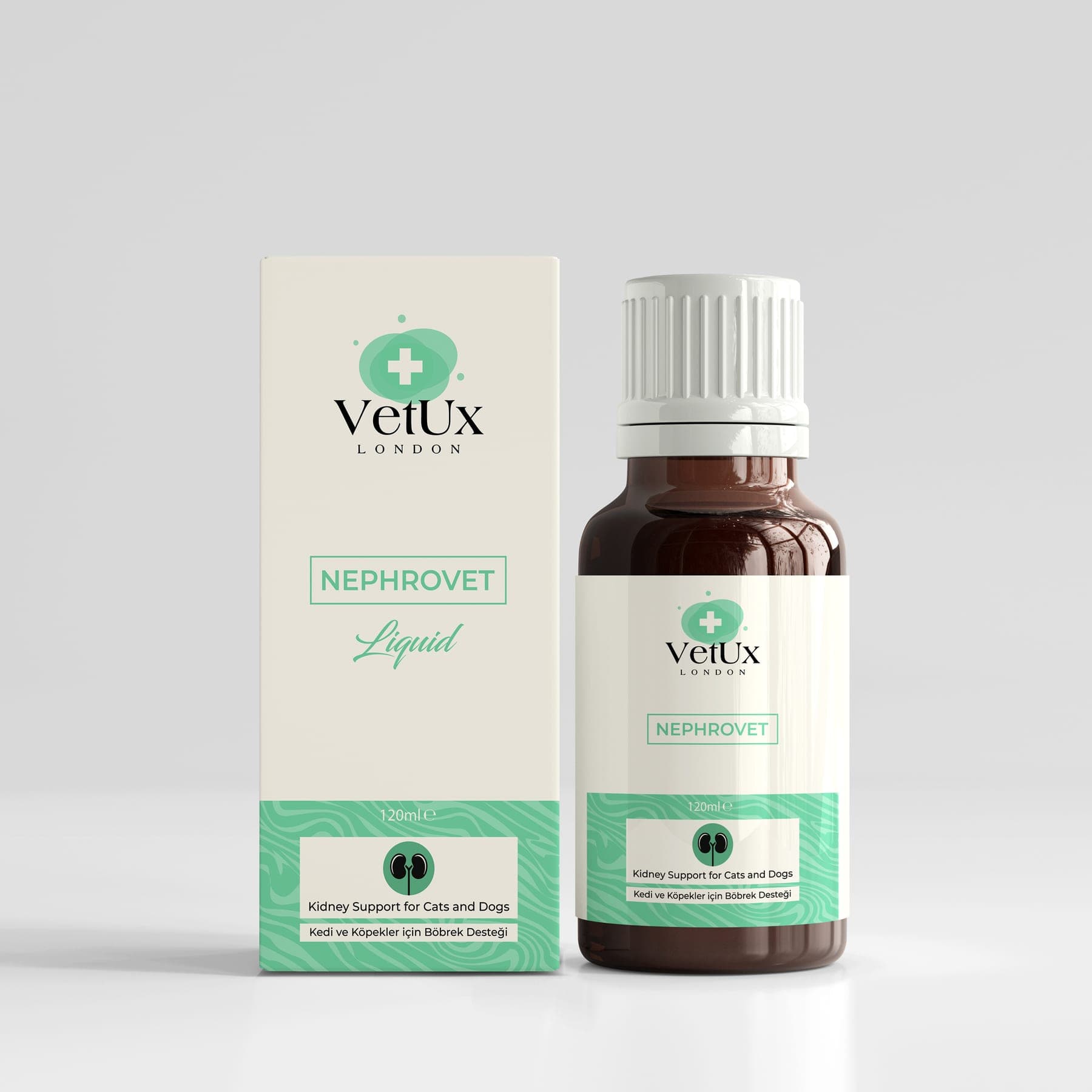
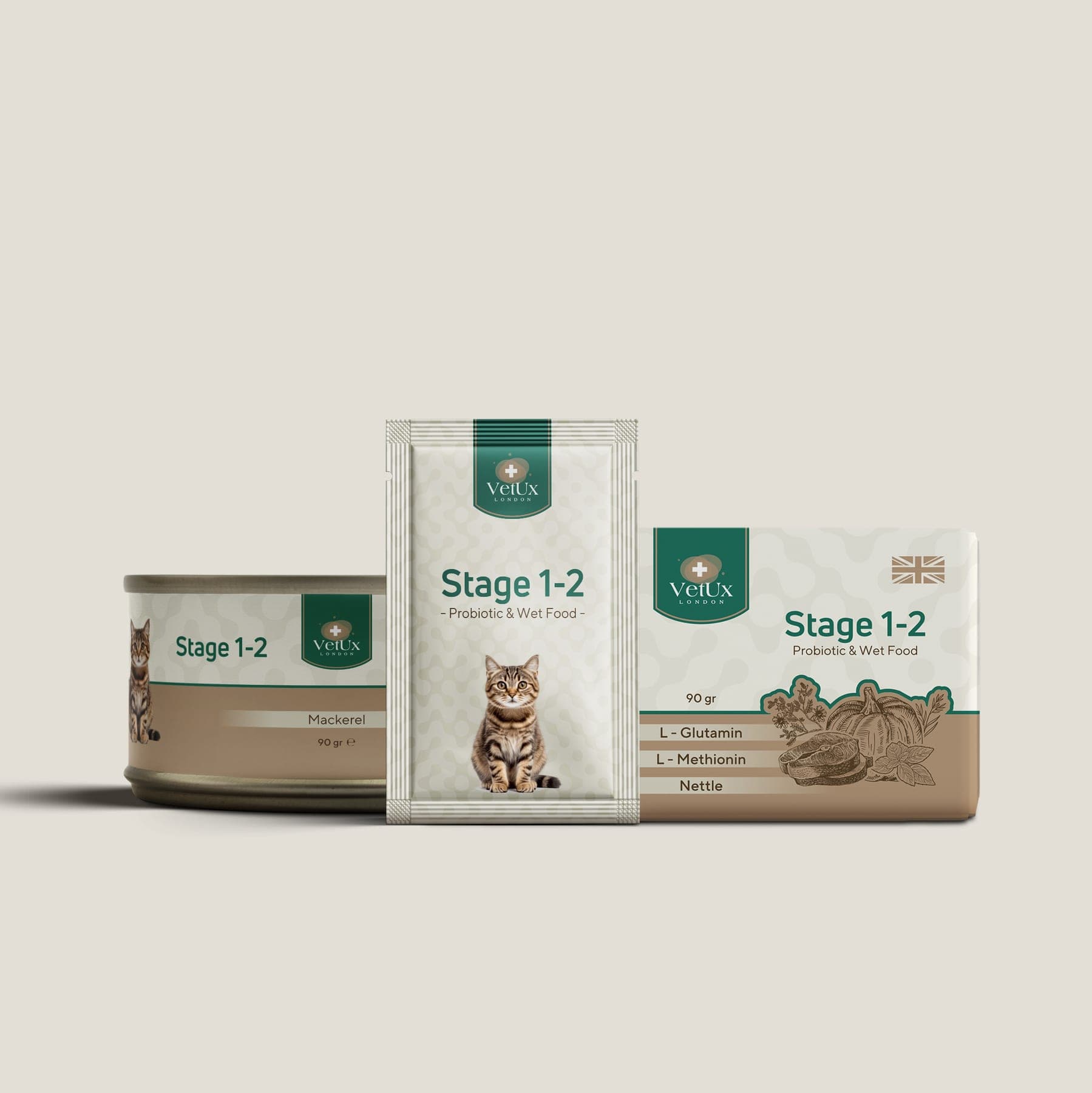
The foundation of a healthy monitoring plan for an older cat is regular veterinary examination, testing, a suitable diet and adequate fluid intake. In periods when kidney health needs extra attention, complementary feeds may also be considered alongside this plan if your vet finds them suitable. Nephrovet is a liquid complementary feed combining punarnava (Boerhavia diffusa), varun (Crataeva nurvala), gokshura (Tribulus terrestris), palaash (Butea monosperma) and kaasni/chicory (Cichorium intybus) extracts; it helps maintain normal kidney function and accompanies a normal fluid balance and the natural rhythm of urine production. Elixir of Stage 1-2 is a mackerel-based probiotic wet food and sachet combination prepared for cats whose kidney health has newly begun to need extra attention; it offers a moderately restricted protein, controlled phosphorus and low sodium profile together with L-glutamine, nettle leaf (Urtica dioica) and live probiotic cultures, and its high moisture content contributes to daily fluid intake. Neither product is a medicine, and neither replaces veterinary examination, diagnosis or prescribed care. Your vet decides whether and how to use them, especially for cats on a renal diet or on medication.
Frequently Asked Questions
From what age is my cat considered senior? According to the AAHA/AAFP guidelines, 7–10 years is the mature adult stage and 10 years and over is the senior stage. Not every cat ages at the same pace, but 7 is the accepted threshold for starting planned health monitoring.
My cat looks healthy; do they still need yearly tests? Yes. Cats hide illness and pain well, and changes related to the kidneys, thyroid and blood pressure may show no signs for a long time. Regular blood, urine and blood pressure checks are the way to notice these changes early. Your vet decides how often.
How can I tell if my cat is in pain? Cats usually show pain not by crying but by changing their behaviour: jumping less, going outside the litter tray, grooming less, hiding or avoiding being touched are some examples. If you notice such a change, talk to your vet and do not give human painkillers.
Should I give my older cat a low-protein food? Not every older cat. Most healthy older cats need adequate, good-quality protein to maintain muscle mass. Protein and phosphorus control is a nutritional decision planned by the vet for cats diagnosed with kidney disease.
Why is my older cat losing weight? Possible causes include declining digestive efficiency with age, muscle loss, mouth pain, changes in thyroid or sugar metabolism, and kidney problems. Your vet identifies the cause of weight loss through examination and testing.
Can complementary feeds replace regular check-ups? No. Complementary feeds are nutritional support that accompanies normal physiological functions; they do not replace examination, testing, diagnosis or treatment. Decide together with your vet whether to use one.
References
- 1Quimby J, Gowland S, Carney HC, DePorter T, Plummer P, Westropp J. 2021 AAHA/AAFP Feline Life Stage Guidelines. Journal of Feline Medicine and Surgery. 2021;23(3):211–233.
- 2Ray M, Carney HC, Boynton B, et al. 2021 AAFP Feline Senior Care Guidelines. Journal of Feline Medicine and Surgery. 2021;23(7):613–638.
- 3Taylor SS, Sparkes AH, Briscoe K, et al. ISFM Consensus Guidelines on the Diagnosis and Management of Hypertension in Cats. Journal of Feline Medicine and Surgery. 2017;19(3):288–303.
- 4Sparkes AH, Caney S, Chalhoub S, et al. ISFM Consensus Guidelines on the Diagnosis and Management of Feline Chronic Kidney Disease. Journal of Feline Medicine and Surgery. 2016;18(3):219–239.
- 5International Renal Interest Society (IRIS). IRIS Staging of CKD (modified 2023). iris-kidney.com.
- 6Monteiro BP, Lascelles BDX, Murrell J, Robertson S, Steagall PVM, Wright B. 2022 WSAVA Guidelines for the Recognition, Assessment and Treatment of Pain. Journal of Small Animal Practice. 2023;64(4):177–254.
- 7Evangelista MC, Watanabe R, Leung VSY, et al. Facial expressions of pain in cats: the development and validation of a Feline Grimace Scale. Scientific Reports. 2019;9:19128.
- 8Bellows J, Berg ML, Dennis S, et al. 2019 AAHA Dental Care Guidelines for Dogs and Cats. Journal of the American Animal Hospital Association. 2019;55(2):49–69.
With the right monitoring and a few small changes at home, an older cat can enjoy long and comfortable years. On this journey, the most valuable information comes from bringing together your observations at home and your vet's examination and test findings. For a check-up schedule and diet that suit your cat, and for any change you notice, please consult your veterinary surgeon.
Frequently asked questions
From what age is my cat considered senior?
According to the AAHA/AAFP guidelines, 7–10 years is the mature adult stage and 10 years and over is the senior stage. Not every cat ages at the same pace, but 7 is the accepted threshold for starting planned health monitoring.
My cat looks healthy; do they still need yearly tests?
Yes. Cats hide illness and pain well, and changes related to the kidneys, thyroid and blood pressure may show no signs for a long time. Regular blood, urine and blood pressure checks are the way to notice these changes early. Your vet decides how often.
How can I tell if my cat is in pain?
Cats usually show pain not by crying but by changing their behaviour: jumping less, going outside the litter tray, grooming less, hiding or avoiding being touched are some examples. If you notice such a change, talk to your vet and do not give human painkillers.
Should I give my older cat a low-protein food?
Not every older cat. Most healthy older cats need adequate, good-quality protein to maintain muscle mass. Protein and phosphorus control is a nutritional decision planned by the vet for cats diagnosed with kidney disease.
Why is my older cat losing weight?
Possible causes include declining digestive efficiency with age, muscle loss, mouth pain, changes in thyroid or sugar metabolism, and kidney problems. Your vet identifies the cause of weight loss through examination and testing.
Can complementary feeds replace regular check-ups?
No. Complementary feeds are nutritional support that accompanies normal physiological functions; they do not replace examination, testing, diagnosis or treatment. Decide together with your vet whether to use one.
This article is for general information only; it does not replace veterinary examination, diagnosis or treatment. VetUx London products are complementary feed. If you have any concern about your companion, please consult your veterinary surgeon.
Share
The formulas matching the nutritional support described above.
Related articles
All articles Care Guides
Oral care at home: a step-by-step way to build the habit
The hard part of oral care is not the brushing — it is getting there. A patient two-week programme is usually enough for the routine to settle in most dogs and cats.
 Clinical Notes
How to Choose a Dog Joint Supplement: Glucosamine, Chondroitin and What to Check on the Label
Which amounts, glucosamine form and weight-based usage information should you check on the label when choosing a joint supplement for your dog? The role of glucosamine and chondroitin in cartilage, the strength of the evidence, how long to wait before judging results, and why dogs on medication need vet approval.
 Clinical Notes
Vomiting in Cats: Hairball or Something Else?
Is your cat's vomiting a hairball or a sign of something else? What the colour and frequency of vomit tell you, and when to see your vet.