
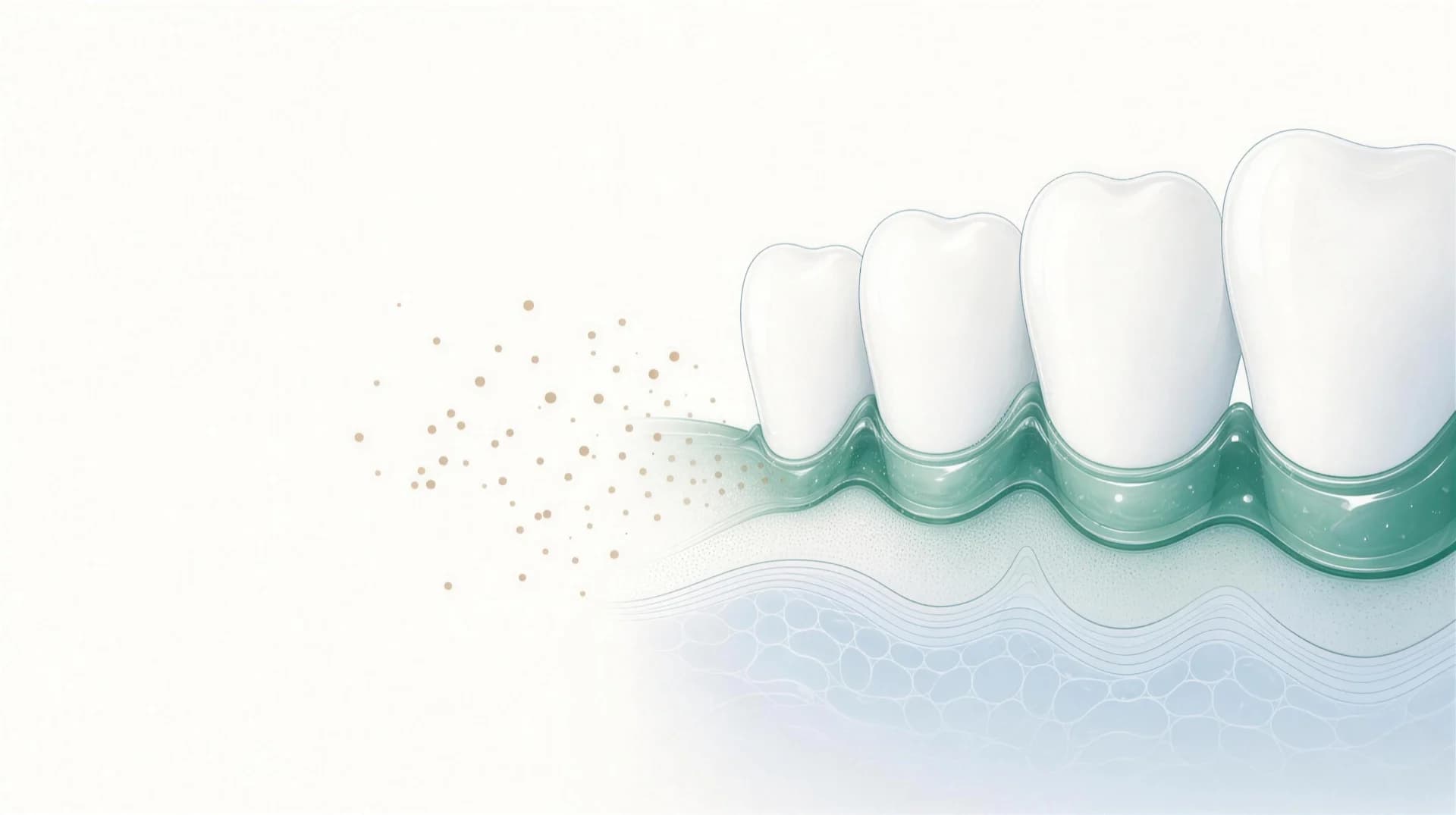
Gingivitis, Periodontitis and Stomatitis in Cats and Dogs: How Is the Oral Mucosa Protected?
Gingivitis is inflammation confined to the gum and is reversible; periodontitis is permanent loss of the supporting structures; stomatitis is a far wider inflammation of the oral mucosa. Distinguishing and treating all three belongs to the veterinary surgeon; everyday oral care sits alongside that plan.
Summary — the direct answer: Gingivitis is inflammation confined to the gum and is reversible in its early stage; periodontitis is the permanent loss of the tooth's supporting structures; stomatitis is a far wider and more severe inflammation of the oral mucosa. Distinguishing, staging and treating all three belongs solely to the veterinary surgeon. Everyday oral care sits alongside that plan, never in place of it.
Why is bleeding from the gums taken seriously?
In cats and dogs, bleeding gums are often dismissed as "it happened while brushing, it will pass". Yet a healthy gum does not bleed on gentle contact. Bleeding is the visible sign that the vascular network at the gum margin has become permeable and fragile through inflammation.
In small animal practice, periodontal disease is among the most common clinical findings in adult cats and dogs, and in most animals it begins before middle age. The difficulty is that it advances quietly: because the animal keeps eating, the owner notices nothing for a long time. By the time it is noticed, the irreversible part has often already happened.
For this reason redness at the gum margin, bleeding, oral malodour, chewing on one side only, increased drooling, avoidance of the mouth being touched and changes in appetite are findings that call for veterinary examination — not findings to be watched and waited out at home.
This article is for information only. Oral inflammatory conditions can be serious and may have systemic disease underlying them. Diagnosis, staging and treatment planning belong solely to the veterinary surgeon.
How do gingivitis, periodontitis and stomatitis differ?
In everyday speech all three are called "a gum problem". In the clinic they are three distinct conditions with different courses.
Gingivitis is the stage at which inflammation remains confined to the gum. The gum margin reddens, swells and may bleed on contact. The defining feature of this stage is that the supporting structures have not yet been lost, so with appropriate clinical care and sustained everyday hygiene it is reversible.
Periodontitis is the stage at which inflammation passes beyond the gum. Biofilm matures in the narrow sulcus between tooth and gum, the sulcus deepens into a pocket, and connective tissue attachment and the surrounding alveolar bone begin to be lost. Lost attachment and bone do not return on their own, which is why periodontitis — unlike gingivitis — is regarded as irreversible. From that point onward the work is about halting damage and slowing progression.
Stomatitis is the picture in which inflammation crosses the gum boundary and spreads to wider oral surfaces such as the buccal mucosa, the palatine arches and the area around the tongue. Feline chronic gingivostomatitis runs with an excessive and persistent immune response to plaque burden; it is painful and difficult to manage. Refusing food, flinching when opening the mouth, increased salivation and weight loss are common in these animals.
Although the three look like a single continuum, not every bleed stays as gingivitis and not every gingivitis progresses to periodontitis. Which one is present can only be determined by veterinary examination and, where indicated, intraoral radiography — because most bone loss occurs below the gum line, in a region invisible to the naked eye.
What can oral malodour indicate?
Halitosis is the most common oral complaint that brings an owner to the clinic. Its source is usually not food residue but the metabolic products of the microbial community living on the tooth surface and in the gingival sulcus. As the sulcus deepens, bacteria that favour an oxygen-poor environment become dominant and produce volatile sulphur compounds; the characteristic sharp odour arises there.
Oral malodour is therefore not a cosmetic matter on its own: it is often the first outward sign of a process continuing in the gingival sulcus. The source is also not always the mouth — kidney function, liver disease and metabolic disorders can alter the breath as well. Making that distinction is the vet's work.
MECHANISM
1) Biofilm: the problem is not a single bacterium but an organised community
A clean tooth surface is covered within minutes by a salivary glycoprotein film. Early-colonising bacteria settle on that film, species diversity then increases, and the community produces its own external matrix to become a biofilm.
What matters about biofilm is this: the microorganisms within it are markedly more resistant to external influence than they are in their free-floating state. Oral health is therefore far less a matter of "killing" individual bacteria than of regular mechanical and everyday care that never lets the biofilm mature.
If biofilm is left in place, minerals from saliva precipitate into it and it hardens into calculus. Calculus itself is not the direct cause of inflammation; the real problem is that its rough surface makes an ideal foothold for new biofilm and continually irritates the gum margin mechanically.
2) The gingival sulcus: where disease starts quietly
The narrow sulcus between tooth and gum is the least protected part of the mouth. As biofilm advances into it the host immune response engages; the inflammatory mediators and enzymes released target the bacteria but also contribute to breakdown in the surrounding tissue. A substantial share of periodontal damage arises from this excessive host response rather than from the bacteria directly.
As the pocket deepens the environment becomes oxygen-poor, the microbial composition shifts, and the cycle feeds itself. This is why clinicians place so much weight on keeping the surface clean early: immature biofilm is far easier to manage than mature biofilm.
3) The mucosal surface and moisture balance
The oral mucosa is not merely a covering but a continuously renewing surface whose function depends heavily on the moist layer above it. Saliva sustains that layer: it lubricates the surface, reduces mechanical friction and contributes to the balance of the oral environment. A surface whose moisture balance is disturbed becomes both more exposed to mechanical irritation and less comfortable day to day.
This is precisely where everyday care products are physiologically meaningful: not to treat disease, but to contribute to the surface staying clean and moist.
Where does Ora Fix sit in everyday care?
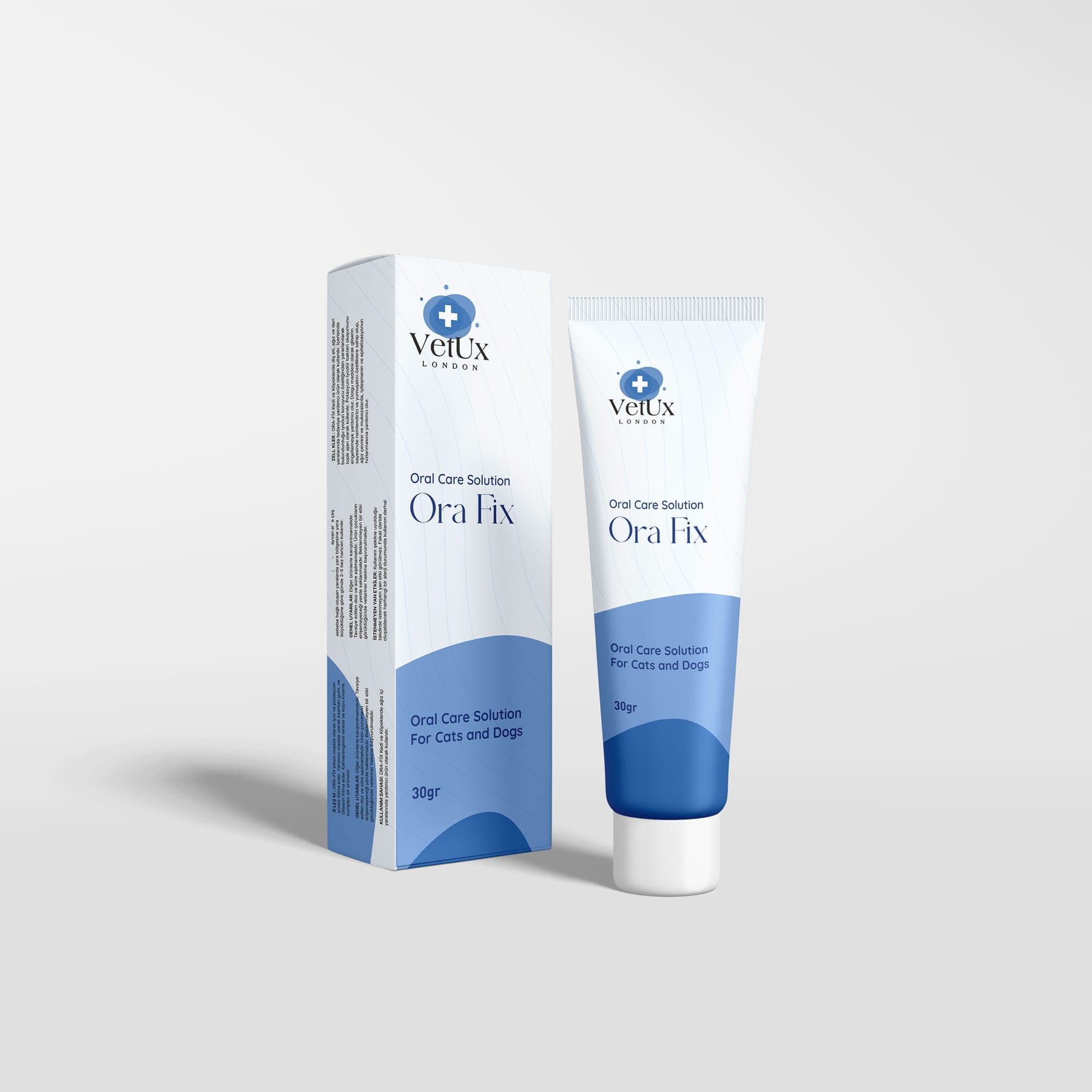
Ora Fix is an ointment for external use, prepared for the everyday care of the gums, the mouth and the skin surface in cats and dogs. Its formulation consists of two components:
| Component | Recorded function | |---|---| | Potassium Iodide (Kalium iodatum) | Contributes to keeping the mouth and the area around the gums clean | | Glycerine (Glycerinum) | Forms a protective layer on the surface it is applied to; keeps the surface moist and accompanies everyday comfort |
What this formulation is not must be stated as plainly as what it is. Ora Fix is not a medicine; it does not treat or cure gingivitis, periodontitis or stomatitis, and it does not replace their treatment. It is not an alternative to professional dental cleaning under general anaesthesia, subgingival debridement, radiography or extraction where indicated. Its role is to be a care support for external use that accompanies the oral care recommended by your veterinary surgeon.
Frequency, duration and suitability of use vary with the individual animal; no dosage is given in this article. The product is used only externally, in consultation with your veterinary surgeon and according to the directions on its label.
What happens at the clinic, and what happens at home?
This distinction is the most frequently confused point in oral health.
What happens at the clinic belongs to diagnosis and treatment: full oral examination, probing of pocket depth, intraoral radiography, supragingival and subgingival cleaning under general anaesthesia, polishing, surgical intervention where required, and whatever medical treatment the clinician judges appropriate. "Cosmetic" dental scaling performed without anaesthesia cannot reach the genuinely diseased region below the gum line and is therefore not recommended in international veterinary dentistry guidelines.
What happens at home is care: check-ups at the intervals the vet plans, a routine of mechanical cleaning to the extent the animal accepts it, and the use of everyday care products the vet recommends. The purpose of home care is not to treat disease but to deny biofilm the chance to mature and to protect the interval between clinical procedures.
Neither replaces the other. Even the best home care does not substitute for clinical examination; and even the best clinical cleaning loses ground quickly if home care does not continue.
Conclusion
Bleeding gums, oral malodour and reluctance to chew can be the shared outward expression of three distinct conditions — gingivitis, periodontitis and stomatitis. Only a veterinary surgeon can determine which is present, how far it has progressed and what it requires. Everyday oral care is not a rival to that process but a complement to it: by contributing to a clean and moist surface, it helps sustain the plan the clinician has set.
Frequently Asked Questions
Does Ora Fix treat gum inflammation? No. Ora Fix is not a medicine but a care ointment for external use. Diagnosing and treating gingivitis, periodontitis and stomatitis belongs to the veterinary surgeon. Ora Fix is an everyday support accompanying the oral care your vet recommends; it does not replace treatment.
My dog's gums bleed but he eats normally. Should I still see a vet? Yes. Animals can mask oral pain for a long time, and appetite is not a reliable measure of disease severity. Bleeding signals an ongoing process at the gum margin; staging it requires examination and, where indicated, intraoral radiography.
Is gingivitis reversible, and why is periodontitis not? In gingivitis the inflammation is confined to the gum and the supporting structures have not yet been lost; with appropriate clinical care and sustained hygiene it can be reversed. In periodontitis, connective tissue attachment and alveolar bone have been lost and do not return on their own, so the aim becomes halting progression.
Does home care replace professional dental cleaning? It does not. Most of the disease advances below the gum line, and that region can only be reached by professional cleaning under general anaesthesia. The role of home care is to deny biofilm the chance to mature between clinical procedures.
My cat has been diagnosed with stomatitis. Can I use an everyday care product? That decision is your vet's. In chronic gingivostomatitis the mouth can be markedly painful and each application may not be comfortable for the animal. Consult your veterinary surgeon before use; they will judge whether and when application is appropriate.
References
- Niemiec B, Gawor J, Nemec A, et al. WSAVA Global Dental Guidelines. Journal of Small Animal Practice, 2020;61(7):E36–E161.
- American Veterinary Dental College (AVDC). Nomenclature: Periodontal Disease Classification and Companion Animal Dental Scaling Without Anesthesia position statements. avdc.org
- Lommer MJ. Oral Inflammation in Small Animals. Veterinary Clinics of North America: Small Animal Practice, 2013;43(3):555–571.
- Marsh PD. Dental plaque as a biofilm and a microbial community — implications for health and disease. BMC Oral Health, 2006;6(Suppl 1):S14.
- Winer JN, Arzi B, Verstraete FJM. Therapeutic Management of Feline Chronic Gingivostomatitis: A Systematic Review of the Literature. Frontiers in Veterinary Science, 2016;3:54.
Frequently asked questions
Does Ora Fix treat gum inflammation?
No. Ora Fix is not a medicine but a care ointment for external use. Diagnosing and treating gingivitis, periodontitis and stomatitis belongs to the veterinary surgeon. Ora Fix is an everyday support accompanying the oral care your vet recommends; it does not replace treatment.
My dog's gums bleed but he eats normally. Should I still see a vet?
Yes. Animals can mask oral pain for a long time, and appetite is not a reliable measure of disease severity. Bleeding signals an ongoing process at the gum margin; staging it requires examination and, where indicated, intraoral radiography.
Is gingivitis reversible, and why is periodontitis not?
In gingivitis the inflammation is confined to the gum and the supporting structures have not yet been lost; with appropriate clinical care and sustained hygiene it can be reversed. In periodontitis, connective tissue attachment and alveolar bone have been lost and do not return on their own, so the aim becomes halting progression.
Does home care replace professional dental cleaning?
It does not. Most of the disease advances below the gum line, and that region can only be reached by professional cleaning under general anaesthesia. The role of home care is to deny biofilm the chance to mature between clinical procedures.
My cat has been diagnosed with stomatitis. Can I use an everyday care product?
That decision is your vet's. In chronic gingivostomatitis the mouth can be markedly painful and each application may not be comfortable for the animal. Consult your veterinary surgeon before use; they will judge whether and when application is appropriate.
This article is for general information only; it does not replace veterinary examination, diagnosis or treatment. VetUx London products are complementary feed. If you have any concern about your companion, please consult your veterinary surgeon.
Share
The formulas matching the nutritional support described above.
Related articles
All articles Clinical Notes
Hypertrophic Cardiomyopathy (HCM) in Cats and Valve Disease in Dogs: Cellular Energy in the Heart
In cats, hypertrophic cardiomyopathy (HCM) thickens and stiffens the heart muscle; in dogs, myxomatous mitral valve disease lets the valve leak. In both, the heart muscle does more work every day and needs more ATP. Diagnosis and treatment belong exclusively to a veterinary surgeon; nutritional support sits alongside that plan, never in place of it.
 Clinical Notes
How Does the Gut Microbiota Manage Immunity? Probiotic Colonisation in Small Animals
The microbiota does not boost immunity; it lays the ground for it by maintaining the barrier and training the mucosal immune tissue day after day. What probiotic colonisation actually means, why strain identity matters, and the physiology of the period after antibiotics.
 Clinical Notes
Post-Antibiotic Diarrhoea and Gut Flora Disruption: How Is the Epithelium Protected?
The physiology behind stools that soften during antibiotic treatment: loss of flora balance, falling short-chain fatty acid production, and why the intestinal epithelium is a heading of its own.