
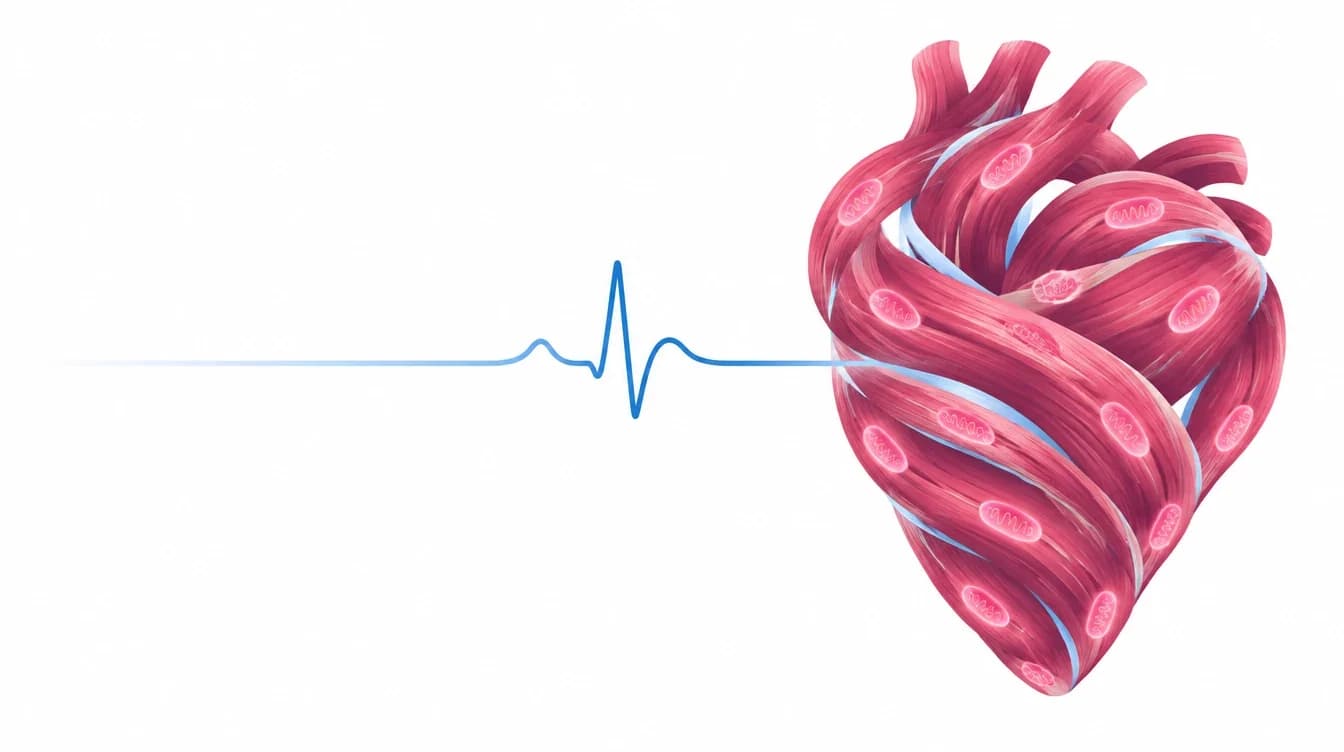
Hypertrophic Cardiomyopathy (HCM) in Cats and Valve Disease in Dogs: Cellular Energy in the Heart
In cats, hypertrophic cardiomyopathy (HCM) thickens and stiffens the heart muscle; in dogs, myxomatous mitral valve disease lets the valve leak. In both, the heart muscle does more work every day and needs more ATP. Diagnosis and treatment belong exclusively to a veterinary surgeon; nutritional support sits alongside that plan, never in place of it.
Summary — the direct answer: In cats, hypertrophic cardiomyopathy (HCM) thickens and stiffens the heart muscle; in dogs, myxomatous mitral valve disease lets the valve leak. In both, the heart muscle does more work every day and needs more ATP. Diagnosis and treatment belong exclusively to a veterinary surgeon; nutritional support sits alongside that plan, never in place of it.
What does "load" on the heart actually mean?
"Load" is the word used most often in cardiac conversations and explained least. Yet load is not abstract: it is a measurable quantity of work.
In feline HCM the left ventricular wall thickens. A thickened muscle no longer relaxes as easily during filling (diastole). The heart now spends energy not only on ejecting blood but on refilling its own chamber — because relaxation is just as active and just as ATP-dependent as contraction. Added to that is the increased oxygen demand of feeding the thickened wall's own mass.
In canine myxomatous mitral valve disease the mechanism differs but the result rhymes. Because the valve does not close completely, part of the blood regurgitates into the left atrium with every contraction. To deliver the same amount of blood to the body, total stroke volume has to rise. The heart works more in gross terms to accomplish the same net work.
The common ground is this: the myocardium must produce more ATP every second of the day. That is why, in cardiac patients, the nutritional conversation centres not on vitamins but on the energy production chain.
This article is for information only. HCM and valve disease are serious cardiac conditions; diagnosing, staging and planning treatment belong exclusively to a veterinary surgeon. If you see laboured or rapid breathing, coughing, reduced exercise tolerance, loss of appetite, or sudden weakness in the hind limbs, contact your vet without delay.
Where does heart muscle get its energy?
In healthy myocardium most ATP comes not from carbohydrate but from the oxidation of long-chain fatty acids. Even at rest, the heart is an organ that prefers fat as fuel — the most energy-dense option for a muscle that never stops.
The critical detail: long-chain fatty acids cannot cross the inner mitochondrial membrane on their own. They need a carrier. That transport is done by the carnitine shuttle — the fatty acid binds carnitine in the cytosol, crosses the inner membrane, is released in the matrix, and enters beta-oxidation.
Without the shuttle's carrier molecule, fuel accumulates at the door but cannot get in. The description of a failing heart as "an engine out of fuel" in both human and veterinary cardiology speaks to exactly this point: the problem is not always the absence of fuel, but making fuel usable.
That Cardiac's highest-dosed component is L-carnitine (112,500 mg per kilogram) follows this physiological logic. L-carnitine supports the natural process of fatty acid use in heart and skeletal muscle and everyday energy production.
MECHANISM
1) L-Carnitine and fatty acid oxidation
Carnitine sits at the rate-limiting step of beta-oxidation. The carnitine pool — dietary plus endogenously synthesised — is part of the myocardium's capacity to turn over fatty acids. In the veterinary literature, carnitine-responsive dilated cardiomyopathy cases have shown this link can be clinically meaningful, particularly in American Cocker Spaniels when taurine and carnitine are assessed together.
To be clear: this does not mean HCM is a carnitine deficiency disease. Feline HCM is largely genetic in origin and has been associated with sarcomeric protein mutations in Maine Coon and Ragdoll cats. Nutrition does not change the cause of the disease; it offers a nutritional framework for the everyday energy demand layered on top of it.
2) Taurine and calcium balance
Taurine is the most abundant free amino acid in the cardiomyocyte. Its role is far more specific than that of a generic antioxidant: it accompanies the normal flow of calcium release from, and re-uptake into, the sarcoplasmic reticulum. The rhythm of the contraction–relaxation cycle depends on intracellular calcium being in the right place at the right moment.
Taurine is essential for cats — they cannot synthesise enough from their sulphur amino acids and must obtain it from the diet. The study regarded as a turning point in veterinary cardiology showed that myocardial failure associated with low plasma taurine in cats could be reversible; that finding permanently changed taurine standards in commercial cat foods.
Cardiac contains 87,500 mg of taurine per kilogram, intended to accompany the normal working rhythm of the heart muscle and its intracellular calcium balance.
3) Omega-3, astaxanthin and endothelial oxidative balance
Krill oil makes two distinct contributions. The first is its omega-3 fatty acids (EPA and DHA): incorporated into membrane phospholipids, they alter membrane fluidity and the profile of membrane-derived signalling molecules. In small animal cardiology, fish oil supplementation has been studied for its effects on inflammatory cytokine profile and appetite in dogs with congestive heart failure.
The second is astaxanthin — a carotenoid whose structure allows it to span both faces of the lipid bilayer, positioning it not only at the membrane surface but within it. The natural astaxanthin of krill oil, together with its omega-3 fatty acids, contributes to the normal oxidative balance of cell membranes and the vascular endothelium.
This matters, because as polyunsaturated fatty acid content rises, so does the membrane's need for oxidative protection. The vitamin E in the formula (10,000 mg per kilogram as alpha-tocopheryl acetate) is therefore not an arbitrary addition: it is a fat-soluble component that accompanies the protection of membrane lipids.
4) Hawthorn (Crataegus)
Hawthorn berry extract is a phytotherapeutic tradition rich in oligomeric procyanidins and flavonoids, and one of the most extensively reviewed botanical topics in human cardiology. It is present in Cardiac at 11,250 mg per kilogram, as a complementary component accompanying the natural balance of vascular tone.
5) A second option for cats: sachet plus wet food
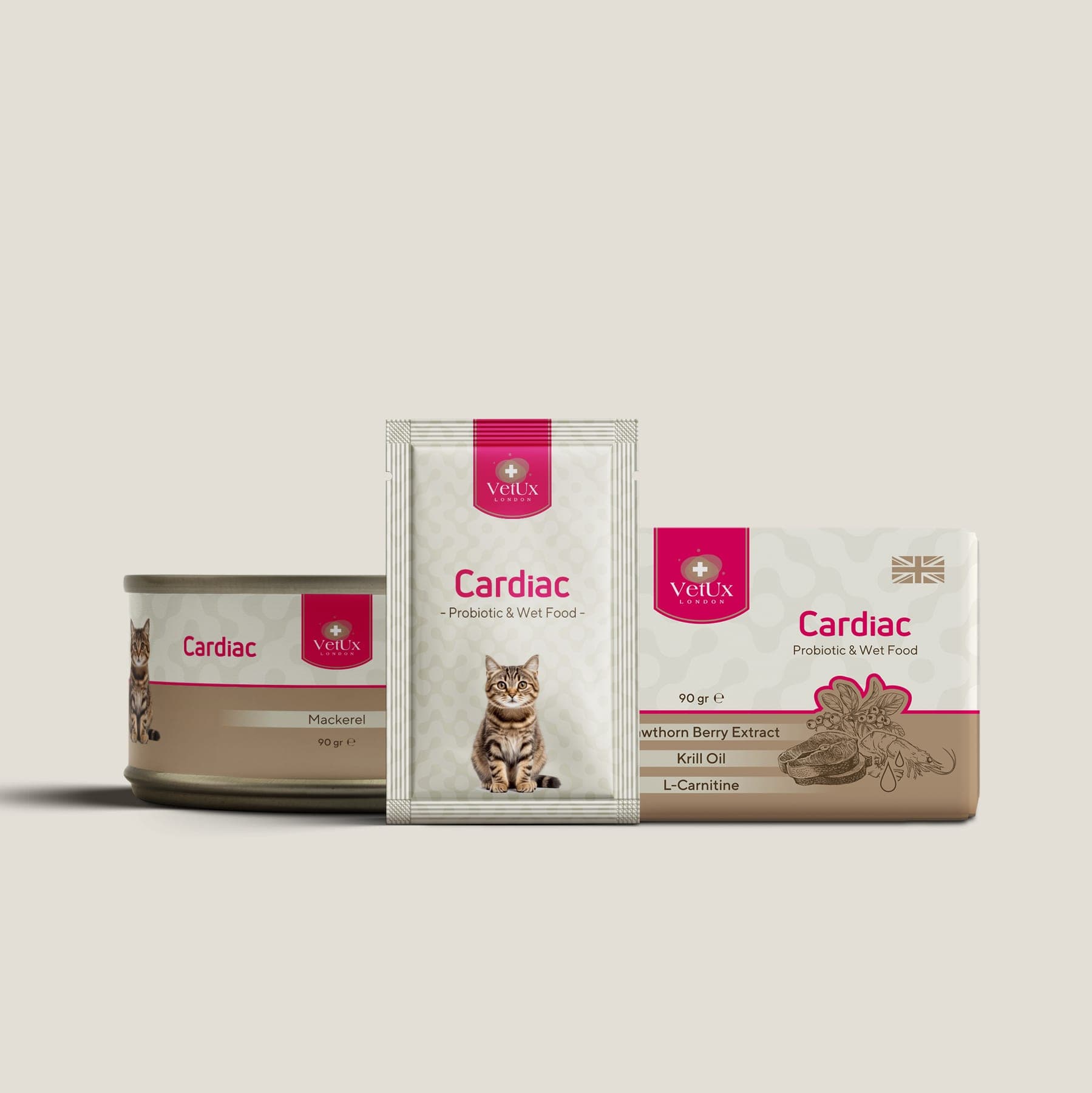
For cats whose heart health needs extra attention, Elixir of Cardiac offers a different approach as a probiotic wet food and sachet combination. The sachet contains hawthorn extract, taurine, L-carnitine, krill extract and coenzyme Q10. Coenzyme Q10 is a fat-soluble molecule involved in the mitochondrial electron transport chain, and it is specific to this product — Cardiac's liquid formulation does not contain coenzyme Q10.
The food side of Elixir of Cardiac is part of the mechanism too: a mackerel-based, low-sodium, balanced-protein and controlled-fat profile, built to support the maintenance of normal circulatory balance and muscle mass. This product is for cats only.
None of the mechanisms described here is a treatment claim. Cardiac and Elixir of Cardiac are complementary feeds; they contribute to maintaining normal physiological function. The product does not replace the treatment plan established by your veterinary surgeon; it is nutritional support that accompanies it. Deciding which product is appropriate, at which stage, and alongside which medications, rests solely with the veterinary surgeon examining your animal.
For the clinician: where does this framework fit in practice?
Nutritional conversations with cardiac patients usually compress into three headings: sodium, body condition and muscle mass. Energy metabolism underlies all three and is the layer hardest to convey to an owner.
One practical benefit: once an owner is given the frame — "heart muscle runs on fat, there is a system that carries fat into the mitochondrion, taurine accompanies the rhythm of calcium" — it becomes self-evident why nutritional support does not substitute for medication. The most common driver of poor compliance is an owner believing a supplement is an alternative to a drug.
The second practical point is species difference. In cats taurine is essential and taurine status stands as a separate question in HCM management; in dogs, taurine and carnitine are assessed together with breed and dietary history, particularly in the context of the diet-associated dilated cardiomyopathy discussion. The same text does not say the same thing for both species.
References
- 1Pion PD, Kittleson MD, Rogers QR, Morris JG. Myocardial failure in cats associated with low plasma taurine: a reversible cardiomyopathy. Science. 1987;237(4816):764–768.
- 2Kittleson MD, Keene B, Pion PD, Loyer CG. Results of the Multicenter Spaniel Trial (MUST): taurine- and carnitine-responsive dilated cardiomyopathy in American Cocker Spaniels with decreased plasma taurine concentration. Journal of Veterinary Internal Medicine. 1997;11(4):204–211.
- 3Luis Fuentes V, Abbott J, Chetboul V, et al. ACVIM consensus statement guidelines for the classification, diagnosis, and management of cardiomyopathies in cats. Journal of Veterinary Internal Medicine. 2020;34(3):1062–1077.
- 4Keene BW, Atkins CE, Bonagura JD, et al. ACVIM consensus guidelines for the diagnosis and treatment of myxomatous mitral valve disease in dogs. Journal of Veterinary Internal Medicine. 2019;33(3):1127–1140.
- 5Kittleson MD, Côté E. The feline cardiomyopathies: 2. Hypertrophic cardiomyopathy. Journal of Feline Medicine and Surgery. 2021;23(11):1028–1051.
- 6Freeman LM, Rush JE, Kehayias JJ, et al. Nutritional alterations and the effect of fish oil supplementation in dogs with heart failure. Journal of Veterinary Internal Medicine. 1998;12(6):440–448.
- 7Freeman LM. Beneficial effects of omega-3 fatty acids in cardiovascular disease. Journal of Small Animal Practice. 2010;51(9):462–470.
- 8Freeman LM, Stern JA, Fries R, Adin DB, Rush JE. Diet-associated dilated cardiomyopathy in dogs: what do we know? Journal of the American Veterinary Medical Association. 2018;253(11):1390–1394.
- 9Schaffer SW, Jong CJ, Ramila KC, Azuma J. Physiological roles of taurine in heart and muscle. Journal of Biomedical Science. 2010;17(Suppl 1):S2.
- 10Lopaschuk GD, Ussher JR, Folmes CDL, Jaswal JS, Stanley WC. Myocardial fatty acid metabolism in health and disease. Physiological Reviews. 2010;90(1):207–258.
- 11Neubauer S. The failing heart — an engine out of fuel. New England Journal of Medicine. 2007;356(11):1140–1151.
- 12Ambati RR, Phang SM, Ravi S, Aswathanarayana RG. Astaxanthin: sources, extraction, stability, biological activities and its commercial applications — a review. Marine Drugs. 2014;12(1):128–152.
- 13Pittler MH, Guo R, Ernst E. Hawthorn extract for treating chronic heart failure. Cochrane Database of Systematic Reviews. 2008;(1):CD005312.
- 14Payne JR, Brodbelt DC, Luis Fuentes V. Cardiomyopathy prevalence in 780 apparently healthy cats in rehoming centres (the CatScan study). Journal of Veterinary Cardiology. 2015;17(Suppl 1):S244–S257.
Product composition information is taken from the VetUX London live product record (Cardiac and Elixir of Cardiac, 01.10.2026).
Frequently asked questions
Will Cardiac treat my cat's HCM?
No. Cardiac is a complementary feed, not a medicine; it contributes to maintaining normal heart function and vascular health. Diagnosing, staging and treating HCM belong exclusively to a veterinary surgeon, and no medication your vet has prescribed should be stopped or reduced because of a supplement.
Does Cardiac contain coenzyme Q10?
No. Cardiac's liquid formulation contains L-carnitine, taurine, krill oil, hawthorn berry extract and vitamin E. Coenzyme Q10 is present only in the sachet of Elixir of Cardiac, which is for cats.
Can a complementary feed be given to an animal on heart medication?
That decision is your vet's. The effects of medications used in cardiac patients are intertwined with renal function, electrolytes and blood pressure, so the veterinary surgeon following your animal must always be consulted before any complementary feed is added. Dosing information has deliberately been omitted from this article — appropriate use is determined by the vet according to weight, stage and current treatment.
Can I use Elixir of Cardiac for my dog?
No. Elixir of Cardiac is formulated for cats only. The product suitable for both cats and dogs is Cardiac.
Is taurine supplementation also necessary in dogs?
Dogs can synthesise taurine under certain conditions, so there is no absolute dietary requirement as there is in cats. In some breeds and with certain dietary histories, however, taurine status is clinically meaningful. This is a question that requires laboratory assessment, and the decision is your vet's. ---
This article is for general information only; it does not replace veterinary examination, diagnosis or treatment. VetUx London products are complementary feed. If you have any concern about your companion, please consult your veterinary surgeon.
Share
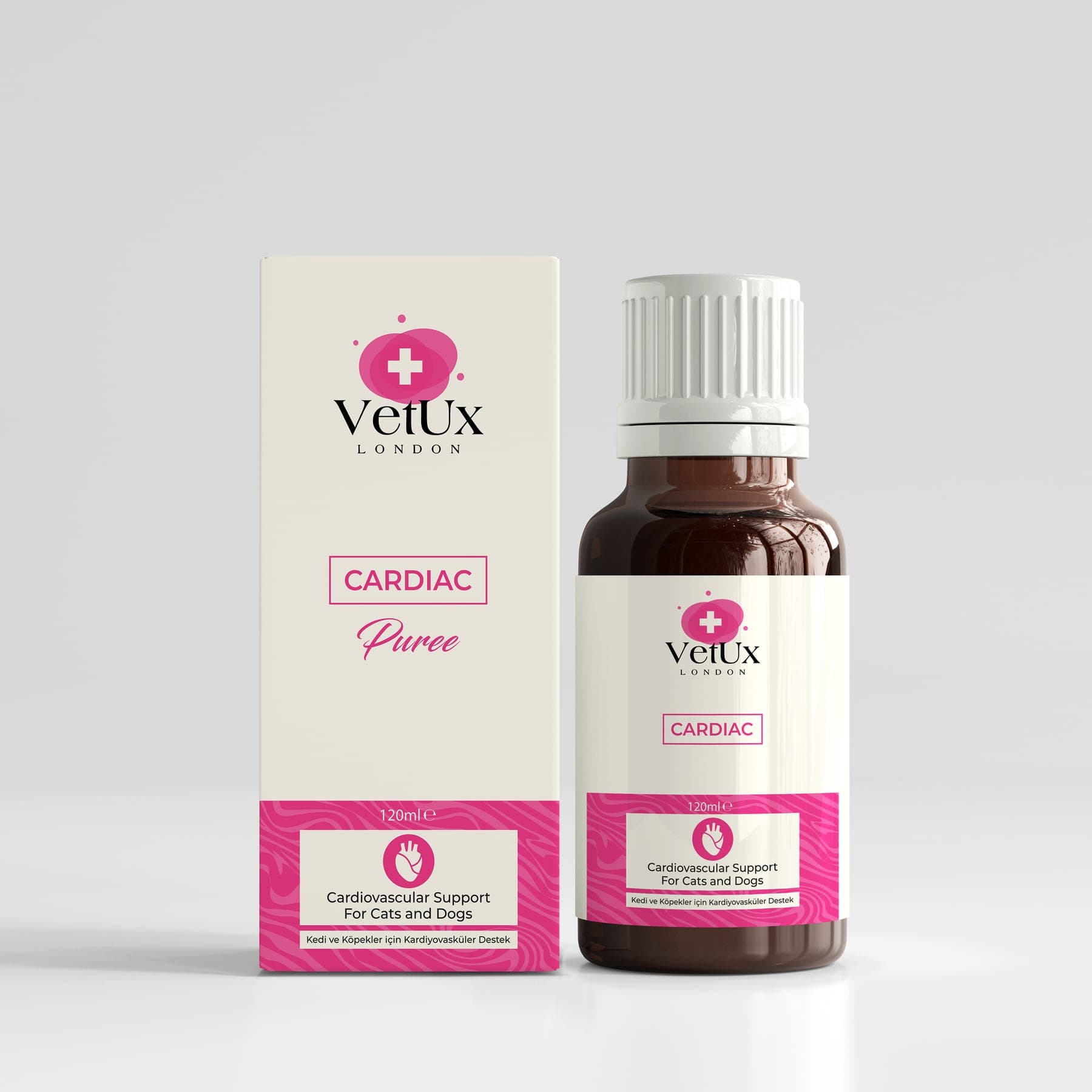
The formulas matching the nutritional support described above.
Related articles
All articles Clinical Notes
How Does the Gut Microbiota Manage Immunity? Probiotic Colonisation in Small Animals
The microbiota does not boost immunity; it lays the ground for it by maintaining the barrier and training the mucosal immune tissue day after day. What probiotic colonisation actually means, why strain identity matters, and the physiology of the period after antibiotics.
 Clinical Notes
Post-Antibiotic Diarrhoea and Gut Flora Disruption: How Is the Epithelium Protected?
The physiology behind stools that soften during antibiotic treatment: loss of flora balance, falling short-chain fatty acid production, and why the intestinal epithelium is a heading of its own.
 Clinical Notes
Can Two Supplements Be Used Together in Cats and Dogs with Kidney Disease? How the Vet Builds the Plan
Whether two different complementary feeds can sit in the same plan for a patient with reduced kidney function is not a product question — it is a clinical decision. This article sets out, at ingredient level, which separate lines Nephrovet and Azo-Fix occupy, where they overlap when given together, and what a veterinary surgeon actually looks at when building the plan. Dosage and sequencing are deliberately not covered here: that decision belongs to the veterinary surgeon examining the animal.