

Recovery After Surgery: Cellular Immunonutrition and Tissue Regeneration
After an operation the body enters a catabolic phase: protein breakdown accelerates, nitrogen balance turns negative and oxidative load rises. Nutritional need rises while appetite falls.
Summary — direct answer: Recovery after surgery is not simply waiting for a suture line to close. Following an operation the body enters a catabolic phase: protein breakdown accelerates, nitrogen balance turns negative and oxidative load rises. Adequate intake of protein, amino acids, antioxidant vitamins and minerals during this window provides the nutritional groundwork for the natural physiological processes of tissue renewal. Diagnosis and treatment decisions belong to your veterinary surgeon.
Why does the body work differently after surgery?
The metabolic response to surgical trauma has been described for close to a century. The classical two-phase model, accepted since Cuthbertson's early work, describes an initial ebb phase focused on preserving circulation, followed by a flow phase lasting days. The second phase is hypermetabolic: cortisol, catecholamines and glucagon rise, peripheral insulin sensitivity falls, and the body begins drawing on its own tissue as a source of amino acids.
In practice this means that in the first days after an operation the patient's nutritional requirement does not fall — it rises, while appetite moves in the opposite direction. Pain, post-anaesthetic nausea, stress and an unfamiliar environment suppress intake just as metabolic demand climbs. The real fragility of convalescence lies in that gap.
What is negative nitrogen balance, and why does it matter?
Nitrogen balance is the difference between protein nitrogen taken in and nitrogen excreted. In the catabolic phase excretion exceeds intake and the balance turns negative. When the body cannot obtain enough amino acids from the diet for the work of repair, it breaks down its own skeletal muscle to feed the free amino acid pool. Clinically this appears as rapid loss of muscle mass, weakness and a prolonged recovery.
In cats the picture moves faster. In an obligate carnivore the protein requirement is high by species and tolerance of protein restriction is low; even a few days of inadequate intake can leave a measurable deficit in lean body mass. This is precisely why the WSAVA nutritional assessment guidelines recommend recording nutritional status as the fifth vital assessment at every examination.
MECHANISM: The nutritional groundwork of tissue regeneration
The amino acid pool and protein synthesis
New tissue is built from the existing amino acid pool. When that pool contracts, the rate of protein synthesis falls — this is not a question of therapy but of substrate. Post-Op Liquid's 50,000 mg of L-lysine per kilogram provides concentrated nutritional support to one essential component of that pool. Lysine cannot be synthesised by mammals; all of it must come from the diet.
The collagen matrix and cross-linking
The triple helix of collagen, the structural scaffold of connective tissue, is composed largely of glycine, proline and hydroxyproline residues. Two points here intersect directly with nutrition:
- Hydroxylation: The prolyl and lysyl hydroxylase enzymes that convert proline to hydroxyproline and lysine to hydroxylysine use vitamin C as a cofactor. Where ascorbate is insufficient, helical stability is impaired — the best-characterised nutritional dependency in collagen biochemistry.
- Cross-linking: The covalent cross-links formed through hydroxylysine residues determine the tensile strength of the matrix. The enzyme driving this reaction, lysyl oxidase, is copper-dependent — which is where the copper in Elixir of Postop's enriched mineral profile becomes meaningful.
Alongside lysine, the DL-methionine in Post-Op Liquid contributes to the cysteine pathway as a sulphur donor; cysteine is a precursor both of structural proteins and of glutathione, the cell's principal antioxidant. L-arginine feeds proline synthesis via ornithine and behaves as semi-essential during periods of increased demand — one of the most studied amino acids in repair physiology since Barbul's classical reviews.
Oxidative load and cellular balance
Metabolic activity concentrated at a site of repair inevitably generates reactive oxygen species. In the lipid phase of cell membranes vitamin E (alpha-tocopherol, 5,000 mg/kg) interrupts the lipid peroxidation chain, while vitamin C acts in the aqueous phase and in the re-reduction of oxidised tocopherol. This cooperation, set out mechanistically by Traber and Stevens, contributes to maintaining oxidative balance.
The turmeric extract (1,500 mg/kg) and milk thistle extract (200 mg/kg) in the formulation are botanical companions within this picture. The literature on curcumin and silymarin is extensive; here, however, these components appear not as therapeutic agents but as part of the whole nutritional support of convalescence.
Energy metabolism
Increased synthetic work demands energy. Vitamin B1 (thiamine, 200 mg/kg), in its thiamine pyrophosphate form, is the cofactor of central enzymes such as pyruvate dehydrogenase and transketolase, and contributes to sustaining normal energy metabolism. Intake of this water-soluble vitamin gains importance in periods of high metabolic flux.
Components that accompany the natural defences
Beta 1,3/1,6 glucan (7,500 mg/kg) is a polysaccharide investigated for its action through pattern-recognition receptors on immune cells; the review by Stier and colleagues gathers the immune-modulation literature on dietary beta-glucan. Propolis (1,500 mg/kg) and echinacea (500 mg/kg) complete the formulation as botanical components that accompany the body's natural defence balance. These components do not prevent infection, do not replace antibiotics and are not an alternative to surgical asepsis.
What "immunonutrition" means — and what it does not
The term immunonutrition describes treating specific nutrients not merely as calories and building blocks but as substrates that influence immune and repair physiology. It developed as a sub-topic of critical care nutrition in human surgery and entered the veterinary intensive care literature through work such as Chan's.
What the term does not mean should be stated plainly: immunonutrition is not a treatment protocol. Nutritional support does not replace a correctly established diagnosis or a treatment plan set by a veterinary surgeon. Diagnosis, treatment and medication decisions rest with the veterinary surgeon alone; this text is a framework on the nutritional physiology of convalescence, not clinical decision support.
Where do Post-Op Liquid and Elixir of Postop sit in this picture?
Both products are complementary feeds — not veterinary medicinal products or drugs.
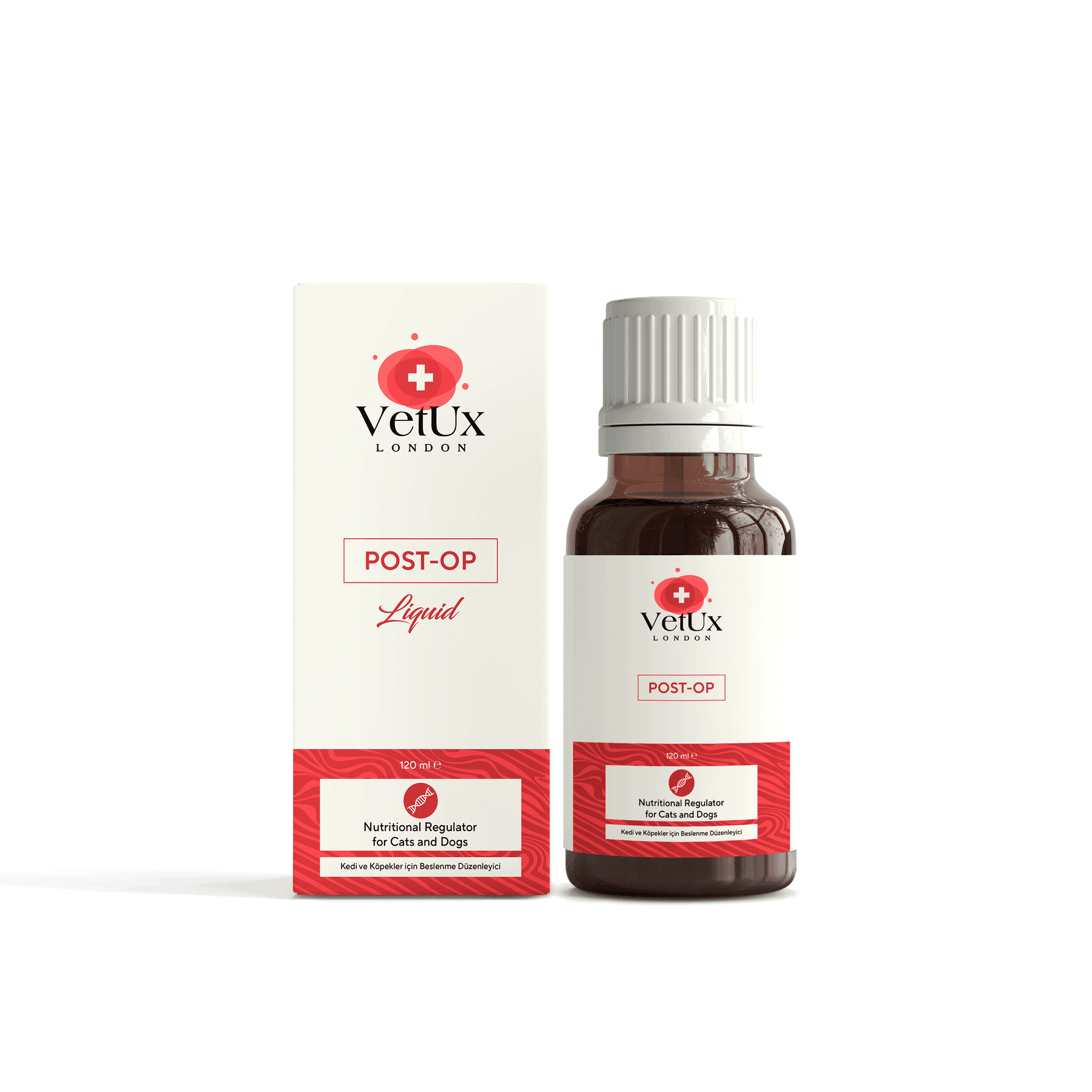
Post-Op Liquid (liquid, 120 ml, cats and dogs) is a liquid form designed to deliver a dense nutritional contribution in a small volume during periods when appetite is suppressed. That it can be mixed into food or given directly by mouth is a practical advantage on days when voluntary intake falls. With an amino-acid-weighted backbone, vitamin support and botanical components, it focuses on the increased nutritional needs of convalescence.
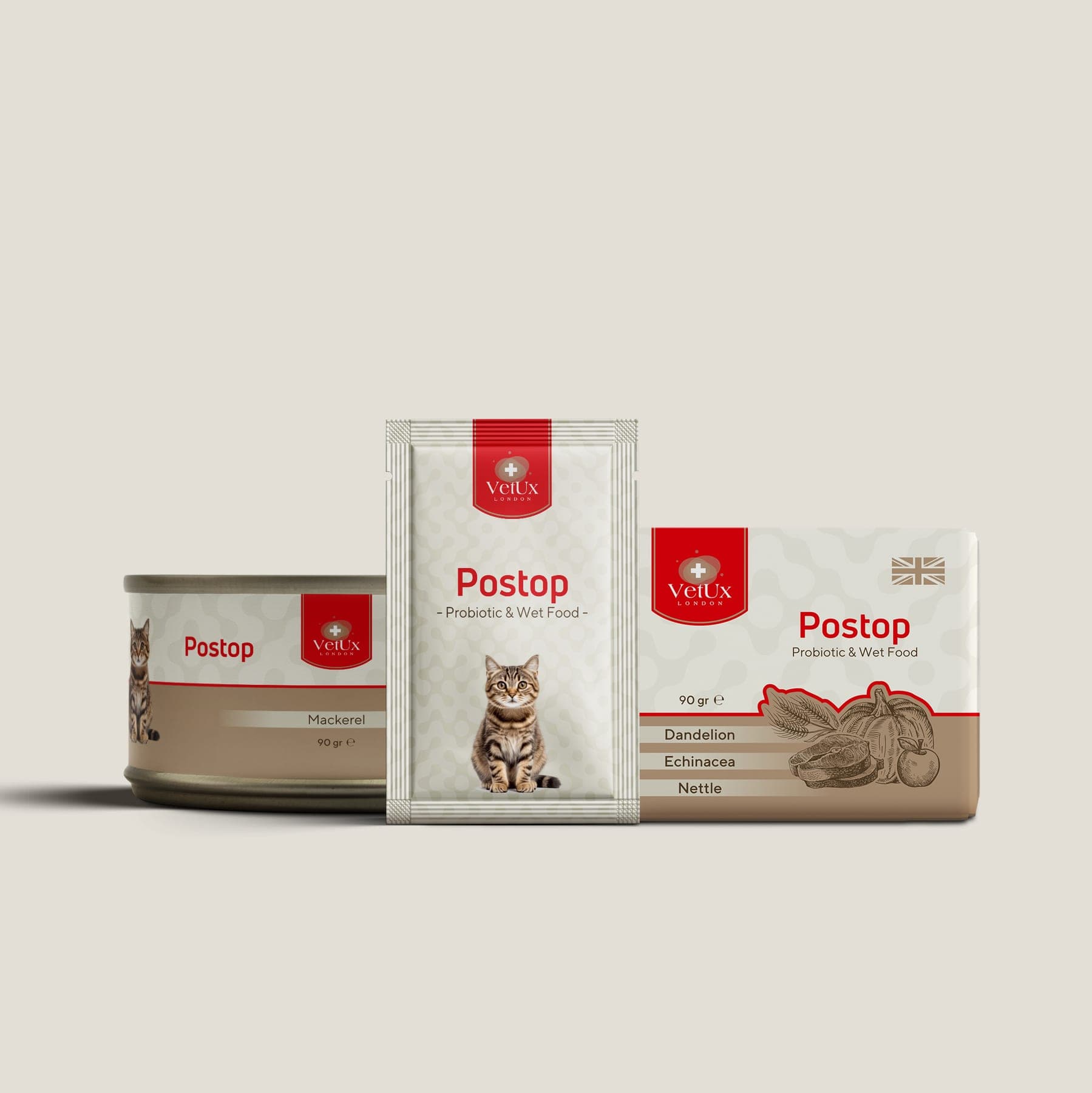
Elixir of Postop (wet food plus sachet, 90 g, cats) addresses the same period from the feeding side. Its high mackerel-based protein content gives nutritional support to maintaining muscle mass, while a high energy density helps meet daily energy needs in small portions. Probiotic cultures, a zinc–iron–copper–manganese mineral profile, B group vitamins, vitamin E and taurine — essential for cats — complete the formulation, with echinacea, dandelion and nettle forming the botanical contribution.
The two are not alternatives to one another but answers to two different questions: Post-Op Liquid is a concentrated nutritional contribution, Elixir of Postop a feeding form that carries the meal through the period. Which to use, in what order and in what amount depends on the patient's species, weight, appetite and clinical picture, and should follow the dose determined by your veterinary surgeon.
A practical framework for the clinician
- Record nutrition as a parameter. Body weight, body condition score and muscle condition score belong in postoperative monitoring — serial measurement, not a single glance, is what informs.
- Quantify voluntary intake. The answer to "did it eat?" should be a number, not an impression; where intake is low, how many days the deficit has run is critical data.
- Account for volume tolerance. Where nausea and early satiety are present, dense small-volume forms help preserve voluntary intake.
- Set the owner's expectations accurately. Nutritional support feeds a process; it carries no promise of shortening a timeline.
References
- Cuthbertson DP. Observations on the disturbance of metabolism produced by injury to the limbs. Quarterly Journal of Medicine, 1932.
- Freeman L, Becvarova I, Cave N, et al. WSAVA Nutritional Assessment Guidelines. Journal of Small Animal Practice, 2011;52(7):385–396.
- Chan DL. Nutritional support of the critically ill small animal patient. Veterinary Clinics of North America: Small Animal Practice — critical care nutrition reviews.
- National Research Council. Nutrient Requirements of Dogs and Cats. National Academies Press, 2006.
- Barbul A. Arginine: biochemistry, physiology, and therapeutic implications. Journal of Parenteral and Enteral Nutrition, 1986.
- Stechmiller JK. Understanding the role of nutrition and wound healing. Nutrition in Clinical Practice, 2010;25(1):61–68.
- Molnar JA, Underdown MJ, Clark WA. Nutrition and chronic wounds. Advances in Wound Care, 2014;3(11):663–681.
- Traber MG, Stevens JF. Vitamins C and E: beneficial effects from a mechanistic perspective. Free Radical Biology and Medicine, 2011;51(5):1000–1013.
- Stier H, Ebbeskotte V, Gruenwald J. Immune-modulatory effects of dietary yeast beta-1,3/1,6-D-glucan. Nutrition Journal, 2014;13:38.
- Hewlings SJ, Kalman DS. Curcumin: a review of its effects on human health. Foods, 2017;6(10):92.
- Regulation (EC) No 767/2009 of the European Parliament and of the Council — placing on the market and use of feed; definition of complementary feed.
Author: Vet. Hek. Metehan Çalıkuşu — Scientific Content, VetUX London
This content is for information only and does not replace veterinary examination, diagnosis or treatment. Post-Op Liquid and Elixir of Postop are complementary feeds; they are not veterinary medicinal products.
Frequently asked questions
Does Post-Op Liquid heal a surgical wound?
No. Post-Op Liquid is a complementary feed; it carries no claim to heal wounds, to treat, or to prevent infection. What it does is supply, as nutritional support, the nutrients that the natural physiological processes of tissue renewal require — amino acids, vitamins and botanical components. **Assessment, treatment and follow-up of a wound are the responsibility of your veterinary surgeon.**
How much should be given per day?
No dosage recommendation is given in this text. The amount used varies with species, body weight, appetite and clinical picture, and should follow **the dose determined by your veterinary surgeon**. The "per kg" figures in the composition table indicate the product's ingredient density, not a dose of use.
Can it be used alongside antibiotics or analgesics?
Use of complementary feeds alongside prescription medicines should be assessed by the veterinary surgeon who knows the patient's treatment plan. Do not add, remove or change anything on your own, and do not substitute a complementary feed for an existing treatment.
What is the difference between Post-Op Liquid and Elixir of Postop?
Post-Op Liquid is a liquid form (120 ml) developed for cats and dogs, a concentrated contribution weighted towards amino acids and vitamins. Elixir of Postop is a wet food and sachet combination for cats (90 g), carrying the meal of the period with mackerel-based high protein, high energy density and an enriched mineral profile.
My animal is not eating at all after surgery — is the product enough on its own?
It is not. A picture in which voluntary intake has stopped entirely is not something resolved by adding nutritional support; it calls for urgent clinical assessment. Complementary feeds do not replace an adequate feeding plan or veterinary care — they accompany it.
This article is for general information only; it does not replace veterinary examination, diagnosis or treatment. VetUx London products are complementary feed. If you have any concern about your companion, please consult your veterinary surgeon.
Share
The formulas matching the nutritional support described above.
Related articles
All articles Clinical Notes
Gingivitis, Periodontitis and Stomatitis in Cats and Dogs: How Is the Oral Mucosa Protected?
Gingivitis is inflammation confined to the gum and is reversible; periodontitis is permanent loss of the supporting structures; stomatitis is a far wider inflammation of the oral mucosa. Distinguishing and treating all three belongs to the veterinary surgeon; everyday oral care sits alongside that plan.
 Clinical Notes
Hypertrophic Cardiomyopathy (HCM) in Cats and Valve Disease in Dogs: Cellular Energy in the Heart
In cats, hypertrophic cardiomyopathy (HCM) thickens and stiffens the heart muscle; in dogs, myxomatous mitral valve disease lets the valve leak. In both, the heart muscle does more work every day and needs more ATP. Diagnosis and treatment belong exclusively to a veterinary surgeon; nutritional support sits alongside that plan, never in place of it.
 Clinical Notes
How Does the Gut Microbiota Manage Immunity? Probiotic Colonisation in Small Animals
The microbiota does not boost immunity; it lays the ground for it by maintaining the barrier and training the mucosal immune tissue day after day. What probiotic colonisation actually means, why strain identity matters, and the physiology of the period after antibiotics.