
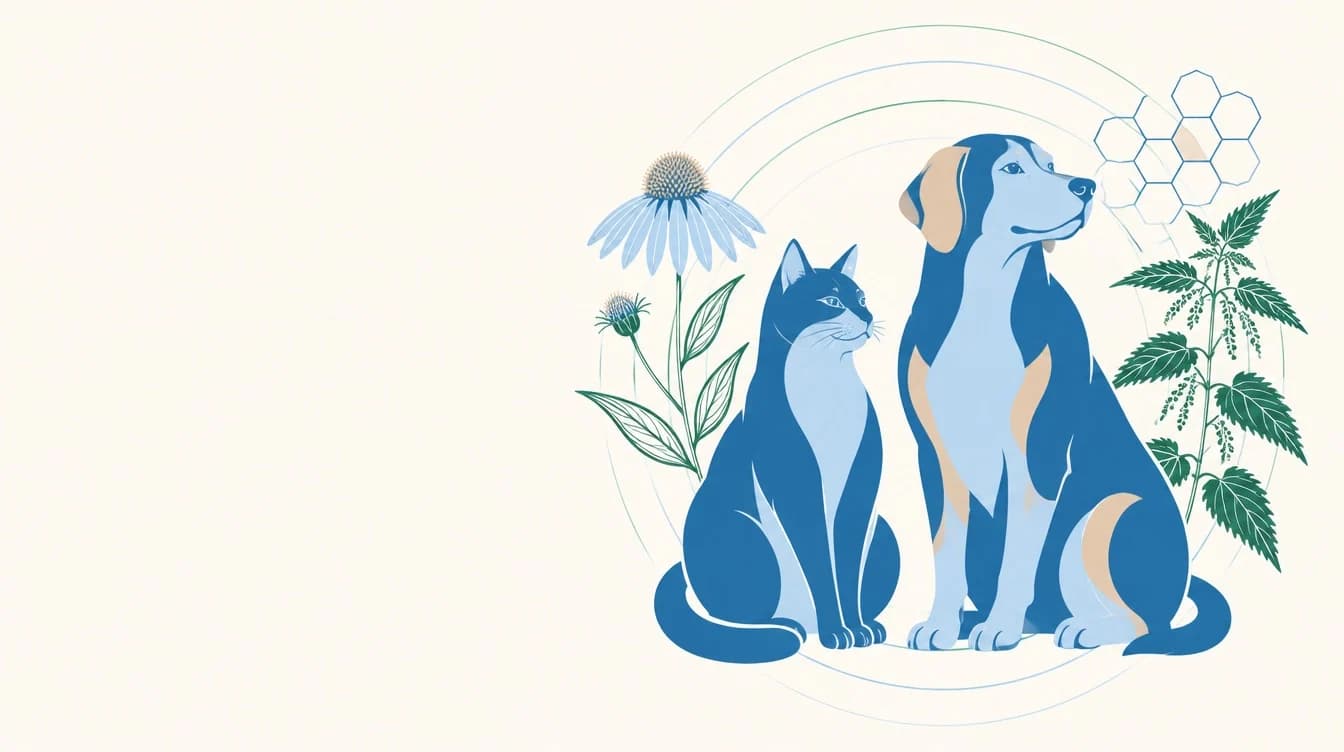
Cat Flu and Viral Threats: The Role of Propolis, Echinacea and Antioxidant Vitamins in Immune Defence
Immunity does not collapse at seasonal transitions; the defence balance narrows. When environmental load, stress and a disrupted feeding rhythm overlap, the renewal rate of immune cells becomes more dependent on its nutritional foundation.
Summary — direct answer: "Cat flu" is not a single disease but a cluster of viral conditions targeting the upper respiratory tract. Seasonal transitions, multi-cat environments and stress strain the body's natural defence balance. Adequate antioxidant vitamins, B-group vitamins and balanced nutrition give nutritional support to the normal working environment of immune cells. Diagnosis, treatment and vaccination decisions belong to your veterinary surgeon.
What does "cat flu" actually describe?
What owners call "cat flu" is known clinically as the feline upper respiratory tract complex. Two viral agents account for the majority of cases: Feline herpesvirus-1 (FHV-1) and Feline calicivirus (FCV). The corresponding picture in dogs is usually grouped under canine infectious respiratory disease complex.
These agents share one feature: they first target the epithelial barrier of the respiratory mucosa. Sneezing, increased lacrimation, nasal discharge and loss of appetite form a picture in which mucosal irritation and loss of smell run together — a cat that cannot smell its food stops eating, and recovery slows once it stops eating.
One distinction must be made at the outset: the diagnosis, course and treatment of a viral infection are the veterinary surgeon's domain. This article does not replace that plan; it describes where immune physiology intersects with nutrition.
Why is immunity strained during seasonal transitions?
The immune system is not an organ of fixed capacity; it is a metabolically expensive, continuously renewing cell population. Neutrophils turn over in hours, lymphocytes in days. That renewal rate requires uninterrupted cellular energy metabolism and cofactor availability.
At seasonal transitions three factors overlap:
- 1Environmental load rises. Changes in temperature and humidity slow mucociliary clearance; viral particles remain on the mucosa longer.
- 2Stress load rises. Relocation, boarding, a new animal, crowded settings — cortisol rises and the balance of the cellular defence response shifts.
- 3Feeding rhythm is disrupted. Fluctuating appetite reduces micronutrient intake precisely when the requirement increases.
What emerges where these three intersect is not "immune collapse" but a narrowing of the defence balance. This is the space in which nutritional support is discussed.
What do antioxidant vitamins do inside the immune cell?
The immune response is oxidative by nature: the reactive oxygen species generated during phagocytosis are part of the defence, yet the same molecules can damage the defending cell's own membrane. The organism manages this balance through an antioxidant buffer system.
- Vitamin E is the principal fat-soluble antioxidant within the membrane lipid layer and contributes to maintaining membrane integrity.
- Vitamin C works in the water-soluble phase and is part of the cycle that returns oxidised vitamin E to a usable state.
- Vitamin A is associated with the normal differentiation of epithelial tissue — and the respiratory mucosa is an epithelium serving as a barrier.
- Taurine is an amino sulfonic acid that cats must obtain from the diet and contributes to the normal oxidative balance of cells.
What these components do is not to neutralise a virus. What they do is nutritionally support the normal working environment of defence cells. The difference is real in physiological terms as much as in regulatory ones.
Why does the role of B-group vitamins appear to sit in the background?
The B-group vitamins (B1, B2, B3, B5, B6, B9, B12 and biotin) are not defence molecules in themselves; they are cofactors of cellular energy metabolism. Every rapidly dividing cell population — immune cells foremost among them — requires these cofactors continuously.
In practice: during a period of suppressed appetite, the cofactor foundation of energy metabolism weakens alongside it. B-group support is discussed not to "boost immunity" but to sustain the nutritional foundation of the renewal rhythm.
Where do propolis, echinacea and other botanical extracts stand?
Propolis is a matrix produced by honeybees from plant resins and is rich in flavonoids and phenolic acids. Echinacea (Echinacea purpurea) is among the botanicals with the longest record of traditional use and a classic subject of immune research in the literature.
Honesty is required here: no therapeutic effect may be claimed for these plants in veterinary practice. Complementary feed regulation is closed to such claims, and the scientific literature in small animals is not homogeneous enough to support a firm verdict at the level of clinical outcome. What can be said is this: through their antioxidant constituents, these botanical extracts form a nutritional matrix that accompanies the body's natural defence balance.
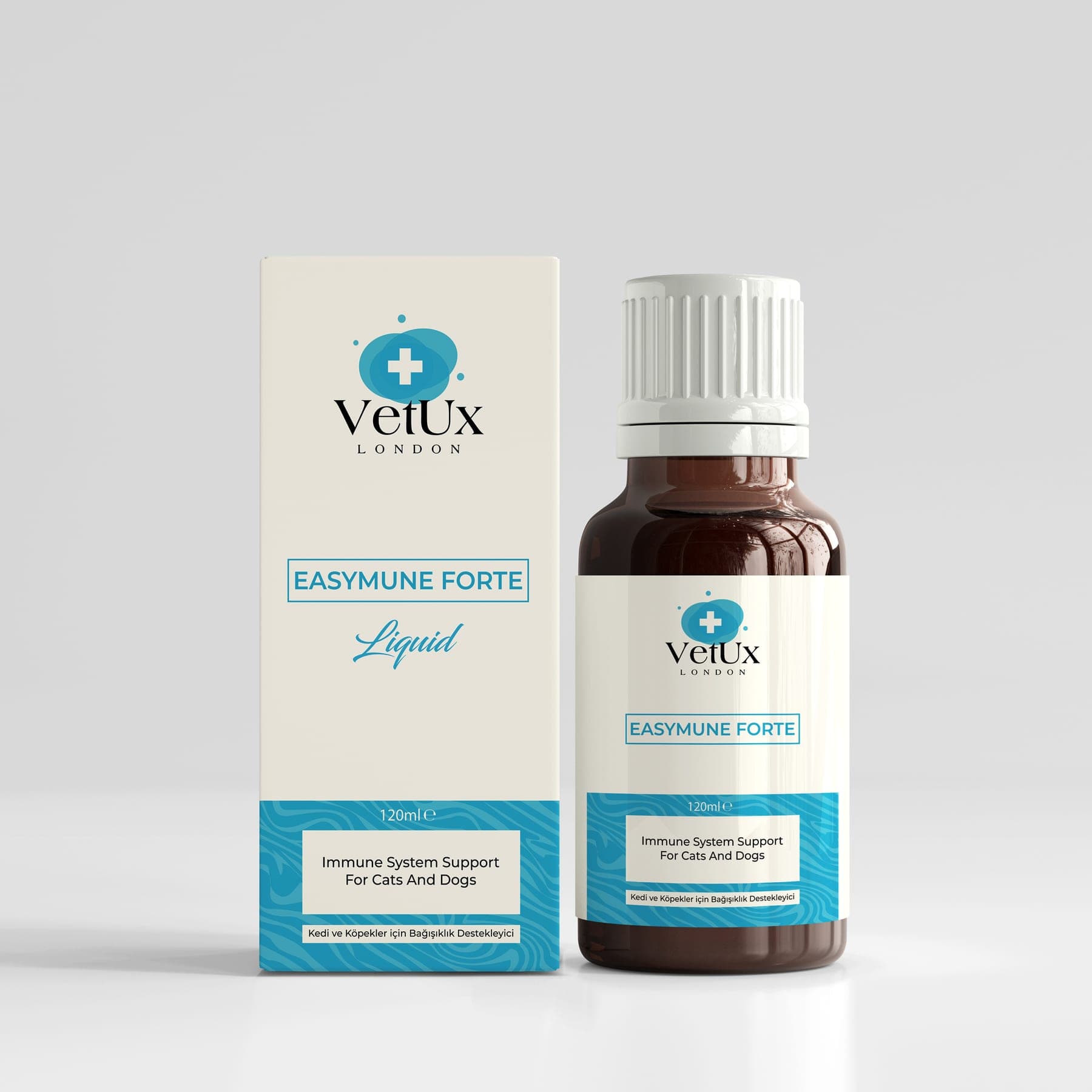
In the VetUX London portfolio this composition comes together in Easymune Forte, a liquid complementary feed: vitamins A, E and C with taurine; eight B-group vitamins; and extracts of propolis and nettle together with dandelion, echinacea, turmeric, milk thistle and liquorice root. The product stands alongside, not in place of, the plan set by your veterinary surgeon.
How does the veterinary plan differ from nutritional support?
| Question | Whose domain | |---|---| | Which agent, which picture? | Veterinary surgeon — clinical examination and diagnosis | | Vaccination schedule | Veterinary surgeon | | Antiviral/antibiotic decision | Veterinary surgeon | | Supportive care plan | Veterinary surgeon | | Daily nutrition and micronutrient foundation | Owner, on veterinary advice |
This table summarises the place of a complementary feed in one sentence: it sits on the nutritional foundation, not on the decision line.
Frequently asked questions
This section answers the four questions most often raised in the field.
References
- Gaskell R, Dawson S, Radford A. Feline Respiratory Disease. In: Greene CE, ed. Infectious Diseases of the Dog and Cat, 4th ed. Elsevier, 2012.
- Radford AD, Addie D, Belák S, et al. Feline calicivirus infection: ABCD guidelines on prevention and management. Journal of Feline Medicine and Surgery, 2009;11(7):556–564.
- Thiry E, Addie D, Belák S, et al. Feline herpesvirus infection: ABCD guidelines. Journal of Feline Medicine and Surgery, 2009;11(7):547–555.
- National Research Council. Nutrient Requirements of Dogs and Cats. National Academies Press, 2006.
- Traber MG, Stevens JF. Vitamins C and E: beneficial effects from a mechanistic perspective. Free Radical Biology and Medicine, 2011;51(5):1000–1013.
- Stephensen CB. Vitamin A, infection, and immune function. Annual Review of Nutrition, 2001;21:167–192.
- Ripps H, Shen W. Taurine: a "very essential" amino acid. Molecular Vision, 2012;18:2673–2686.
- Sforcin JM. Propolis and the immune system: a review. Journal of Ethnopharmacology, 2007;113(1):1–14.
- Barnes J, Anderson LA, Gibbons S, Phillipson JD. Echinacea species: a review of their chemistry, pharmacology and clinical properties. Journal of Pharmacy and Pharmacology, 2005;57(8):929–954.
- Regulation (EC) No 767/2009 of the European Parliament and of the Council — placing on the market and use of feed; definition of complementary feed.
Author: Vet. Hek. Metehan Çalıkuşu — Scientific Content, VetUX London
This content is for information only and does not replace veterinary examination, diagnosis or treatment. Easymune Forte is a complementary feed; it is not a veterinary medicinal product and is not used to treat, prevent or diagnose any disease.
Frequently asked questions
Does Easymune Forte treat cat flu?
No. Easymune Forte is a complementary feed; it makes no claim to treat, prevent or diagnose any disease. What it does is provide, as nutritional support, the nutrients required by the normal working environment of immune cells — antioxidant vitamins, B-group vitamins, taurine and botanical extracts. **The diagnosis, treatment and follow-up of a viral condition are your veterinary surgeon's responsibility.**
Can it replace vaccination?
No, in no way. Vaccination is a veterinary medical procedure and its schedule is set **solely by your veterinary surgeon**. A complementary feed is neither an alternative nor an adjunct to a vaccination plan; these are different categories and do not substitute for one another.
How much should be given per day?
No dosage recommendation is given in this text. The amount used varies with species, bodyweight, age and clinical picture; it should be used **at the dose determined by your veterinary surgeon**. The "per kg" figures in the composition table indicate content density, not a usage dose.
Can it be used in both cats and dogs?
Easymune Forte is a liquid complementary feed defined for cats and dogs. However, which animal, at which stage and alongside which care plan it is used are clinical questions — **that decision rests with your veterinary surgeon.**
My animal is sneezing with a runny nose; what should I do first?
Consult your veterinary surgeon. Upper respiratory signs may point to more than one agent, and differential diagnosis requires clinical examination. Nutritional support does not replace veterinary assessment; it can be discussed alongside the plan only once that plan is in place.
This article is for general information only; it does not replace veterinary examination, diagnosis or treatment. VetUx London products are complementary feed. If you have any concern about your companion, please consult your veterinary surgeon.
Share
The formulas matching the nutritional support described above.
Related articles
All articles Clinical Notes
Recovery After Surgery: Cellular Immunonutrition and Tissue Regeneration
After an operation the body enters a catabolic phase: protein breakdown accelerates, nitrogen balance turns negative and oxidative load rises. Nutritional need rises while appetite falls.
 Clinical Notes
Gingivitis, Periodontitis and Stomatitis in Cats and Dogs: How Is the Oral Mucosa Protected?
Gingivitis is inflammation confined to the gum and is reversible; periodontitis is permanent loss of the supporting structures; stomatitis is a far wider inflammation of the oral mucosa. Distinguishing and treating all three belongs to the veterinary surgeon; everyday oral care sits alongside that plan.
 Clinical Notes
Hypertrophic Cardiomyopathy (HCM) in Cats and Valve Disease in Dogs: Cellular Energy in the Heart
In cats, hypertrophic cardiomyopathy (HCM) thickens and stiffens the heart muscle; in dogs, myxomatous mitral valve disease lets the valve leak. In both, the heart muscle does more work every day and needs more ATP. Diagnosis and treatment belong exclusively to a veterinary surgeon; nutritional support sits alongside that plan, never in place of it.