
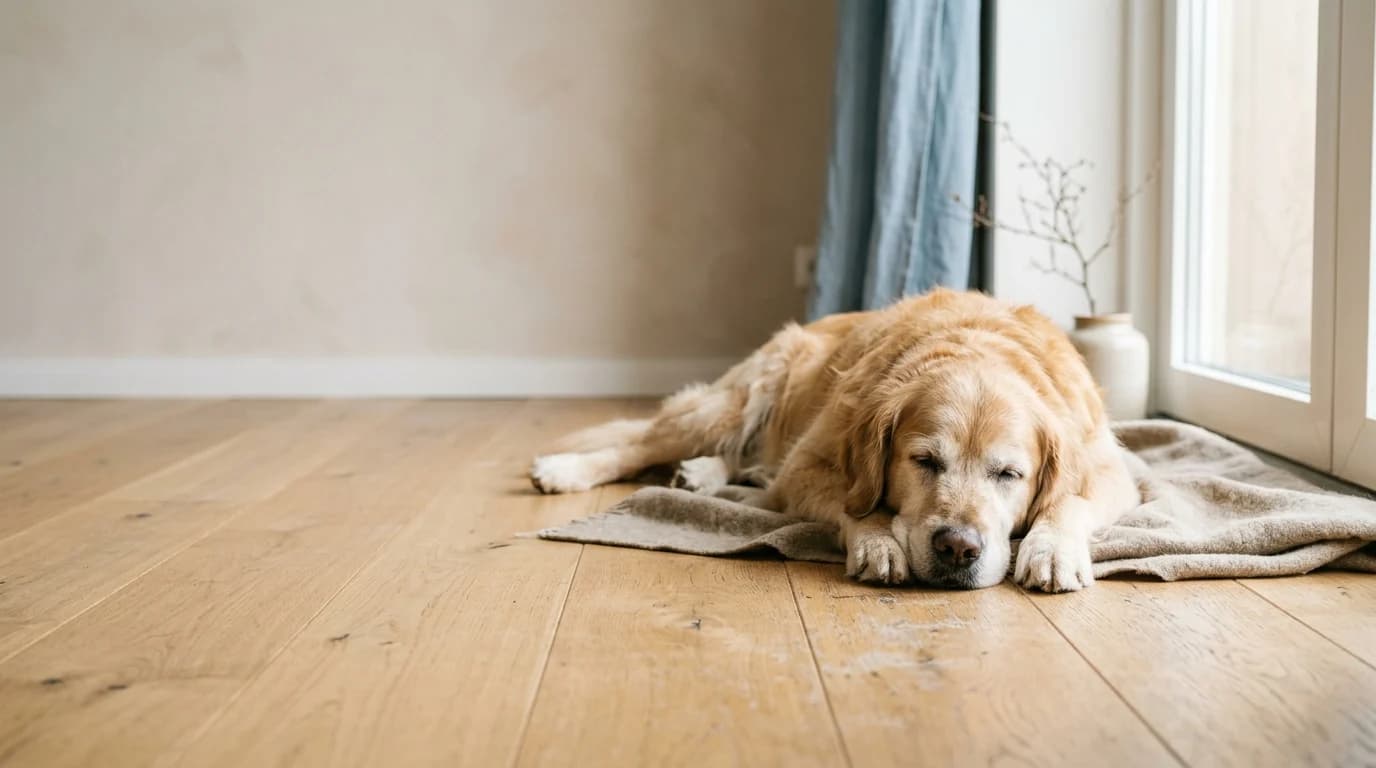
Joint Stiffness and Fear of Stairs in Aging Dogs: The Truth About Glucosamine and Chondroitin
In senior dogs struggling to get up in the morning, hesitating at stairs and showing reluctance to walk, cartilage wear is a physiological process. The scientific mechanism of glucosamine and chondroitin support and joint fluid balance.
Summary — direct answer: Reluctance to move and fear of climbing stairs in aging dogs are usually mechanical stiffness symptoms stemming from cartilage wear and loss of synovial fluid viscosity. This should not be regarded as an unavoidable consequence of old age; it should be nutritionally supported early on with cartilage matrix precursors (glucosamine, chondroitin sulfate, MSM and hyaluronic acid). Clinical diagnosis and follow-up must always be performed by your veterinary surgeon.
Why Does Joint Stiffness Occur in Senior Dogs?
As dogs age, the biosynthesis of glycosaminoglycans in the hyaline cartilage covering the joint surface declines. Because cartilage tissue is avascular, it relies directly on diffusion from synovial fluid for its nutrition. Over time, the viscosity of this fluid decreases, cartilage loses elasticity, and friction between bone surfaces increases.
Stiff gait upon waking, difficulty rising in cold weather, and hesitation before climbing stairs are the most common early warning signs seen in clinical practice. Over time, this progression may combine with sarcopenia (loss of muscle mass) to deepen mobility limitations.
How Do Glucosamine and Chondroitin Support the Cartilage Matrix?
Glucosamine is a fundamental precursor in the synthesis of proteoglycans and glycosaminoglycans (GAGs). Chondroitin sulfate retains water molecules within the cartilage matrix, preserving its shock-absorbing capacity.
- 1Limiting Cartilage Enzymatic Breakdown: Chondroitin helps suppress the degradative activity of aggrecanase and collagenase enzymes.
- 2Improving Synovial Fluid Quality: Glucosamine and hyaluronic acid synergy supports the viscosity of lubricating joint fluid, mechanically reducing bone wear.
- 3Restoring Movement Comfort: When paired with organic sulfur sources like MSM, collagen cross-linking strengthens and rising rhythm eases.
Complementary Support Strategy in Large Breeds and Geriatrics
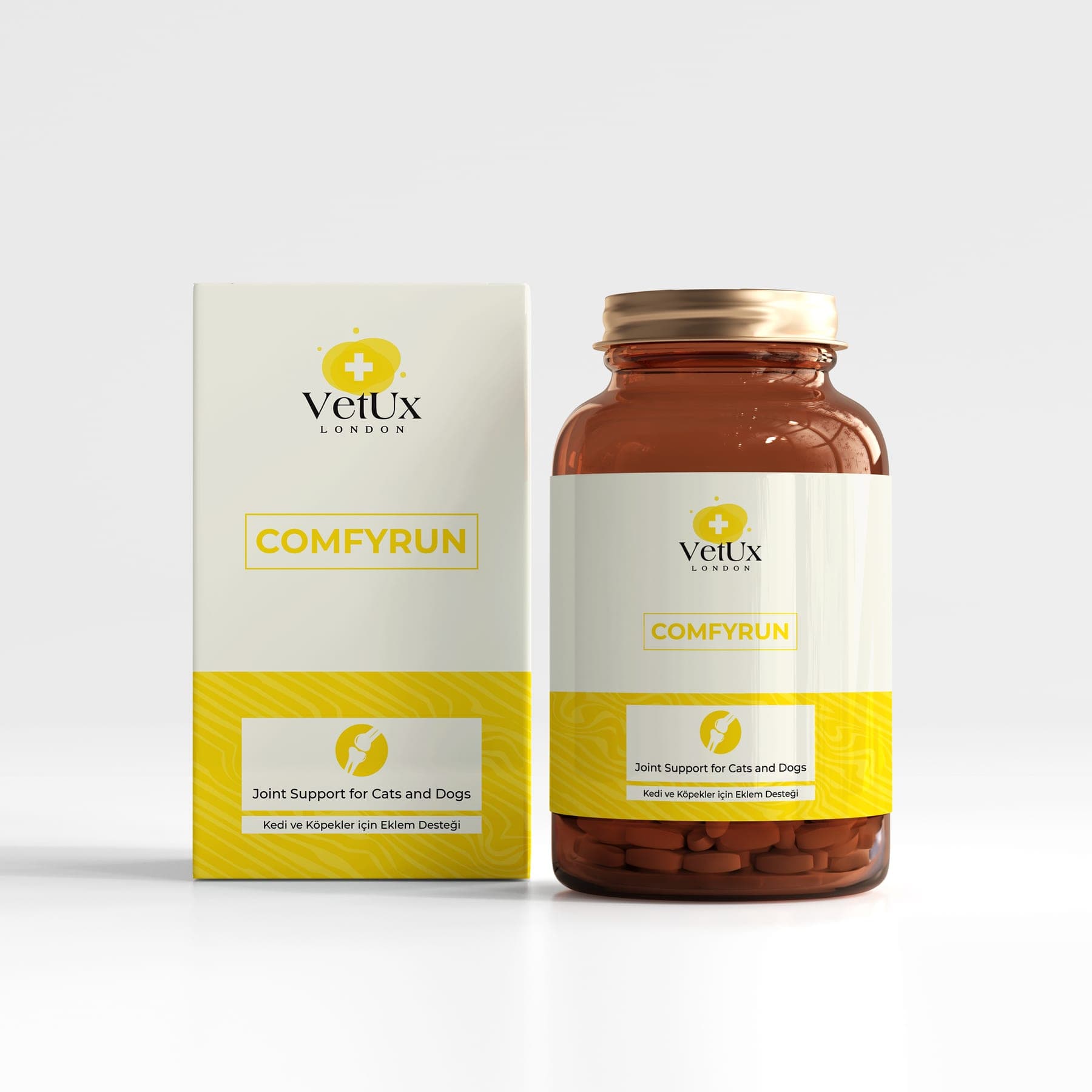
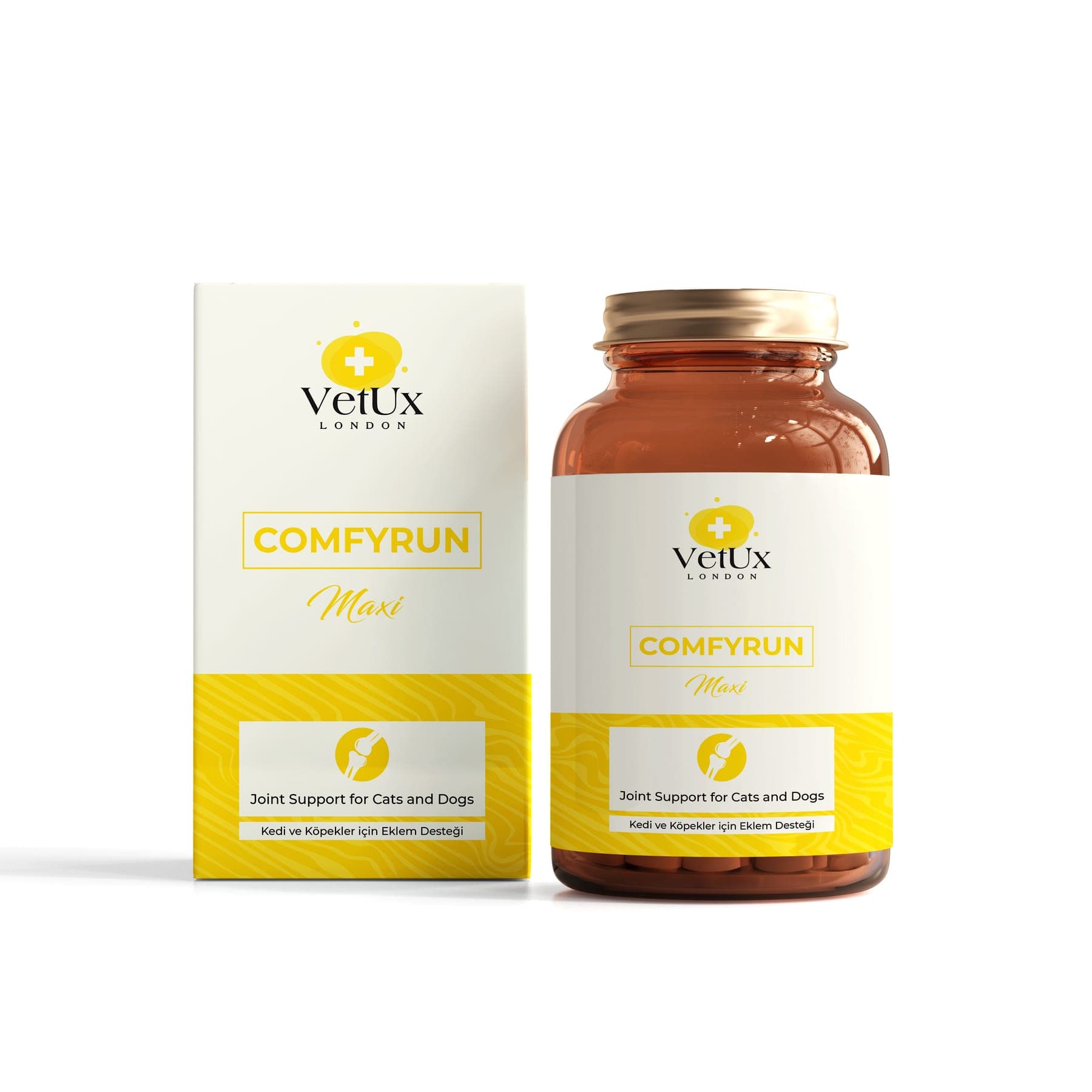
In large breed dogs such as Golden Retrievers, German Shepherds, Labradors, and Kangals, the mechanical load on each joint is significantly higher. In these breeds, proactive joint care should begin in middle age rather than waiting for geriatric onset. Comfyrun and Comfyrun Maxi provide high-purity glucosamine HCl, chondroitin sulfate, and synergistic botanicals to support joint capsule homeostasis.
Frequently Asked Questions (FAQ)
Does Comfyrun cure osteoarthritis?
No. Comfyrun is a complementary feed and does not claim to cure, prevent, or reverse chronic joint conditions like osteoarthritis. Its purpose is to deliver bioavailable nutrients to support normal cartilage physiology. Clinical diagnosis and therapeutic plans belong to your veterinarian.
How long should joint support be administered?
Because cartilage is avascular, nutrient diffusion and tissue response require time. Consistent administration for at least 4 to 8 weeks is typically recommended under veterinary guidance.
What is the difference between Comfyrun and Comfyrun Maxi?
Comfyrun is formulated for standard sized cats and dogs, whereas Comfyrun Maxi is tailored for the high body weight and intense joint load of large and giant breeds.
Frequently asked questions
Does Comfyrun cure osteoarthritis?
No. Comfyrun is a complementary feed and does not treat joint disease directly. It nutritionally supports cartilage matrix physiology. Diagnosis and medical treatment belong to your veterinarian.
How long should joint support be continued?
Because cellular response in cartilage takes time, regular administration for 4-8 week periods under veterinary supervision is typically advised.
What is the difference between Comfyrun and Comfyrun Maxi?
Comfyrun is suited for standard breeds, while Comfyrun Maxi is formulated for the higher metabolic and mechanical demands of large breeds.
This article is for general information only; it does not replace veterinary examination, diagnosis or treatment. VetUx London products are complementary feed. If you have any concern about your companion, please consult your veterinary surgeon.
Share
The formulas matching the nutritional support described above.
Related articles
All articles Clinical Notes
Non-Seasonal Excessive Shedding in Pets: The Balance of Omega 3-6 Fatty Acids and Biotin
Beyond typical spring moulting, relentless year-round coat shedding, dull fur and flaky skin indicate deeper physiological concerns. Sex-specific hormonal sebum dynamics, epidermal lipid barriers, and the Vetux Glow Male / Glow Female philosophy.
 Clinical Notes
Why Does the Feline Bladder Mucosa Become Irritated? The Crucial Role of the Glycosaminoglycan Layer
In cats visiting the litter box repeatedly, straining with discomfort, or urinating outside their box, Feline Idiopathic Cystitis (FIC) is a primary concern. The science behind the protective Glycosaminoglycan (GAG) urothelial barrier and environmental stress management.
 Clinical Notes
Night-time Vocalisation and Spatial Disorientation in Aging Dogs: The Role of Neuronal Choline
In senior dogs wandering aimlessly at night, getting trapped behind furniture, and losing familiarity with household routines, Canine Cognitive Dysfunction Syndrome is a progressive concern. Nutritional support with phosphatidylcholine, citicoline and antioxidants.