
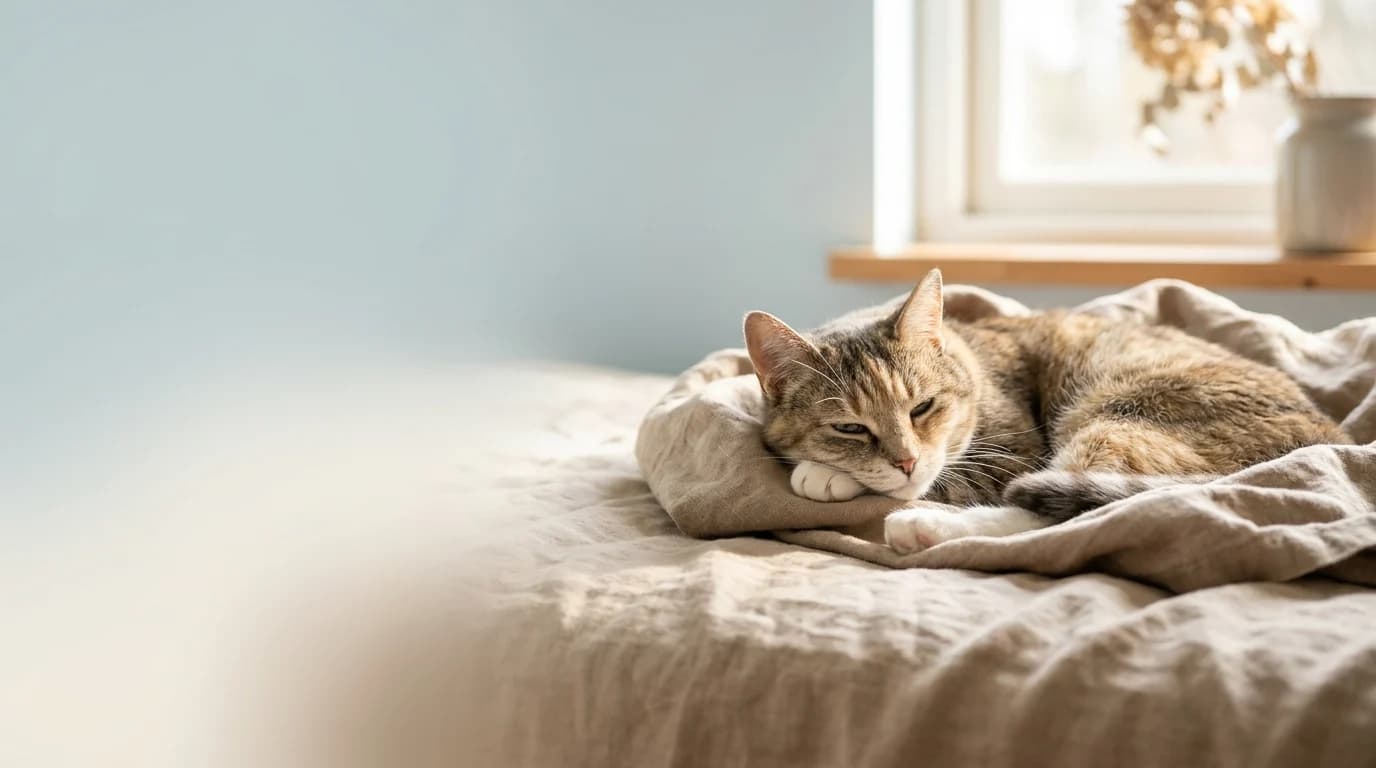
Recognising Hidden Joint Pain in Cats: The Difference Between Hyaluronic Acid and Type II Collagen
Cats are masters of masking pain. In senior cats reluctant to jump to high places, refusing grooming, or struggling with litter boxes, degenerative joint disease is a frequent reality. The role of hyaluronic acid and undenatured Type II collagen in synovial fluid support.
Summary — direct answer: Joint pain in cats does not typically present as limping as in dogs; it manifests through subtle behavioural changes such as reluctance to jump, reduced grooming, and litter box hesitation. Although radiological evidence of osteoarthritis is found in up to 90% of cats over 12 years of age, owners often dismiss this as mere 'old age lethargy'. Nutritional support with hyaluronic acid and Type II collagen promotes synovial viscosity and cartilage matrix resilience. Clinical diagnosis must always be made by your veterinarian.
Why Cats Experience Joint Pain Differently from Dogs
Domestic cats' evolutionary ancestors were both predators and prey. In nature, exhibiting weakness or lameness immediately compromises survival. Consequently, even in cases of advanced cartilage wear and joint degeneration, cats rarely display overt limping.
Common subtle behavioural signs reported by owners include:
- Hesitation or refusal to jump onto high countertops or shelves.
- Using intermediary steps (e.g. hopping onto a chair first rather than leaping straight onto the sofa).
- Twitching the tail or resisting touch along the lumbar spine.
- Matted fur caused by difficulty twisting to groom the hindquarters.
Hyaluronic Acid and Type II Collagen: Biochemical Synergies
- 1Hyaluronic Acid (Synovial Fluid Lubricant): As the primary viscoelastic component of synovial fluid, hyaluronic acid creates a slippery barrier that minimises bone-on-bone friction. Supplemental hyaluronic acid supports joint cushioning in aging cats.
- 2Undenatured Type II Collagen (Cartilage Resilience): As the structural framework of hyaline cartilage, oral intake of Type II collagen supports tolerance and tissue integrity.
- 3Chondroprotective Matrix: While hyaluronic acid optimises fluid viscosity, Type II collagen strengthens tensile strength.
Administration Comfort with Liquid Formulations
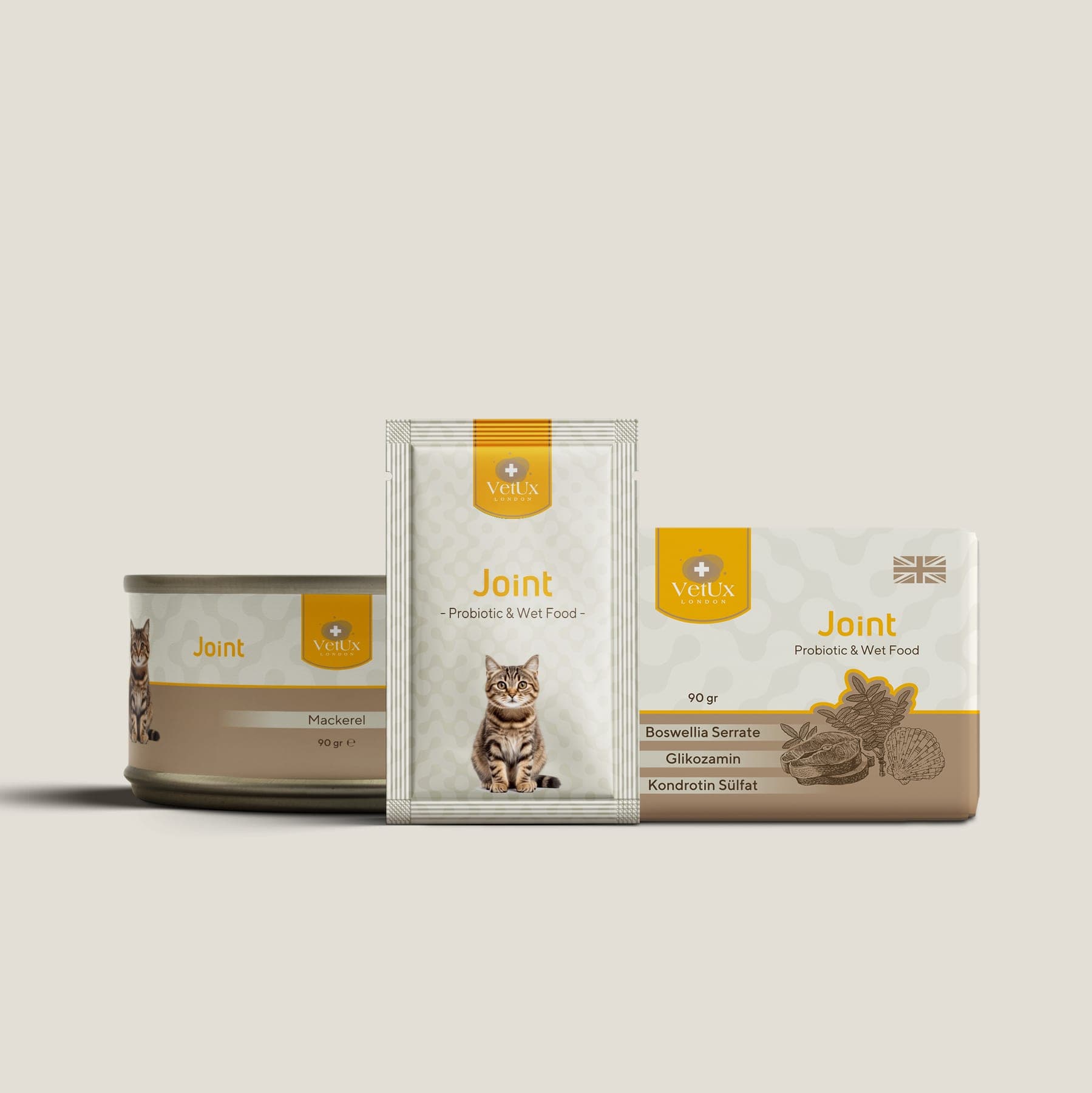
Tablets are notoriously stressful to administer to cats. Elixir of Joint delivers high-purity hyaluronic acid and Type II collagen in an easy-to-use liquid dropper format that blends seamlessly into wet or dry food.
Frequently Asked Questions (FAQ)
Does Elixir of Joint cure feline osteoarthritis?
No. Elixir of Joint is a complementary feed and does not cure, prevent, or treat diseases. It provides nutritional support for synovial fluid and cartilage physiology.
Can I give dog joint supplements to my cat?
Never. Dogs and cats have fundamentally different metabolic requirements and toxic thresholds. Always use species-specific formulas approved by your veterinarian.
Frequently asked questions
Does Elixir of Joint cure feline osteoarthritis?
No. It is a complementary feed designed to support joint fluid viscosity and cartilage nutrition, not a drug or cure.
Can dog joint supplements be given to cats?
No. Species-specific dosing and ingredient safety are critical for feline health.
This article is for general information only; it does not replace veterinary examination, diagnosis or treatment. VetUx London products are complementary feed. If you have any concern about your companion, please consult your veterinary surgeon.
Share
The formulas matching the nutritional support described above.
Related articles
All articles Clinical Notes
Non-Seasonal Excessive Shedding in Pets: The Balance of Omega 3-6 Fatty Acids and Biotin
Beyond typical spring moulting, relentless year-round coat shedding, dull fur and flaky skin indicate deeper physiological concerns. Sex-specific hormonal sebum dynamics, epidermal lipid barriers, and the Vetux Glow Male / Glow Female philosophy.
 Clinical Notes
Why Does the Feline Bladder Mucosa Become Irritated? The Crucial Role of the Glycosaminoglycan Layer
In cats visiting the litter box repeatedly, straining with discomfort, or urinating outside their box, Feline Idiopathic Cystitis (FIC) is a primary concern. The science behind the protective Glycosaminoglycan (GAG) urothelial barrier and environmental stress management.
 Clinical Notes
Night-time Vocalisation and Spatial Disorientation in Aging Dogs: The Role of Neuronal Choline
In senior dogs wandering aimlessly at night, getting trapped behind furniture, and losing familiarity with household routines, Canine Cognitive Dysfunction Syndrome is a progressive concern. Nutritional support with phosphatidylcholine, citicoline and antioxidants.