
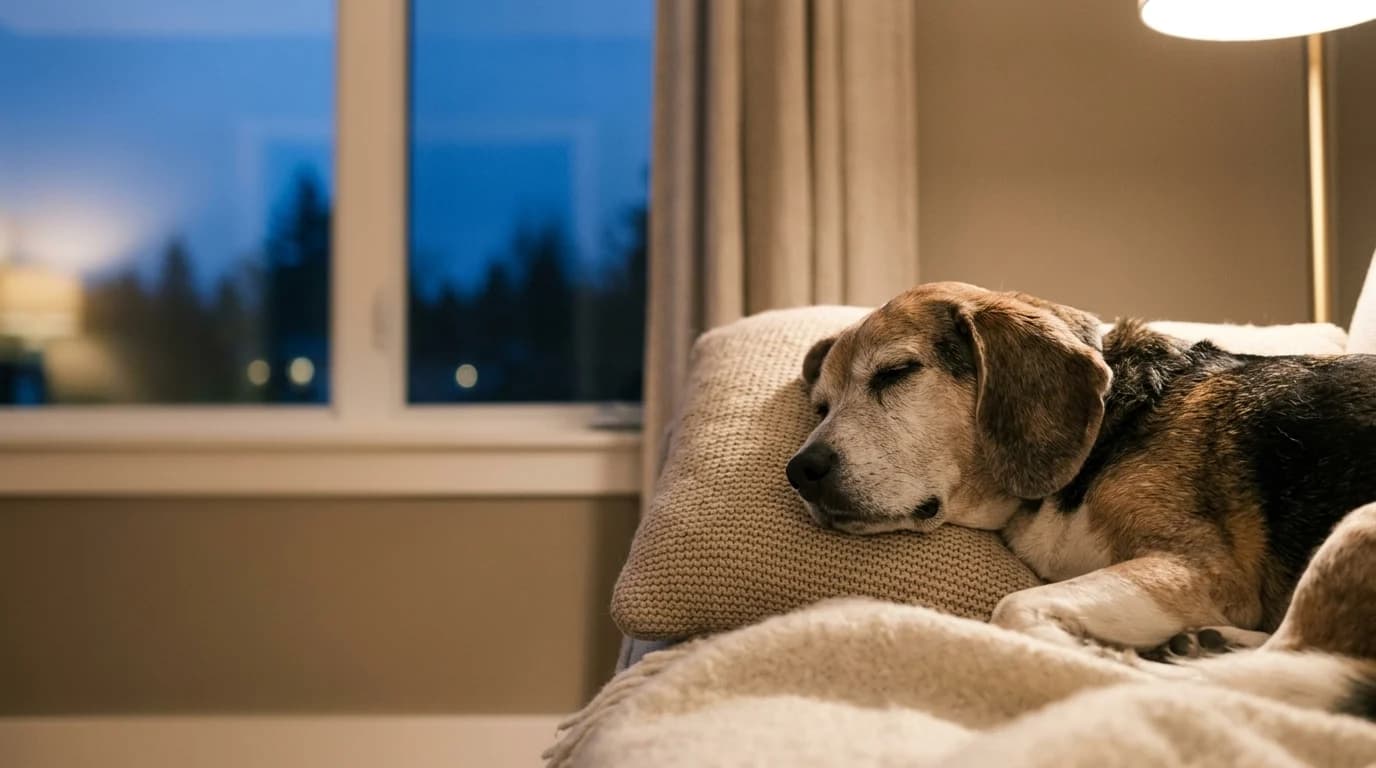
Night-time Vocalisation and Spatial Disorientation in Aging Dogs: The Role of Neuronal Choline
In senior dogs wandering aimlessly at night, getting trapped behind furniture, and losing familiarity with household routines, Canine Cognitive Dysfunction Syndrome is a progressive concern. Nutritional support with phosphatidylcholine, citicoline and antioxidants.
Summary — direct answer: Aimless nocturnal wandering, vocalising in the dark, and getting stuck facing corners or behind doors are hallmark signs of Canine Cognitive Dysfunction Syndrome (CDS), akin to Alzheimer's in humans. Free radical accumulation, reduced acetylcholine neurotransmitter synthesis, and loss of neuronal membrane fluidity drive this deterioration. Dietary matrices providing phosphatidylcholine, citicoline, and antioxidant vitamins nutritionally support cognitive health in senior pets. Clinical assessment belongs to your veterinarian.
What Is Canine Cognitive Dysfunction Syndrome (CDS)?
Cognitive decline in aging dogs is not simply 'grumpy old age'; it is a genuine neurodegenerative progression characterised by beta-amyloid deposition and cerebral microvascular changes.
Veterinarians monitor this using the DISHA framework:
- Disorientation: Getting trapped behind doors or furniture, staring blankly at walls.
- Interactions: Becoming overly clingy or detached from family members.
- Sleep-Wake Alterations: Sleeping heavily by day, pacing and crying at night.
- House-soiling: Losing previously learned housetraining habits.
- Activity Changes: Wandering purposelessly, repetitive pacing.
The Biochemical Role of Choline and Phospholipids
- 1Acetylcholine Synthesis: Choline and citicoline serve as primary precursors for acetylcholine, the essential neurotransmitter for memory, focus, and spatial awareness.
- 2Membrane Fluidity: Phosphatidylcholine preserves neuronal membrane architecture and myelin sheath integrity, facilitating efficient synaptic transmission.
- 3Neuroprotective Shielding: Combining citicoline with potent antioxidants shields cerebral tissues from oxidative insults.
Administration with Neurokolin Liquid
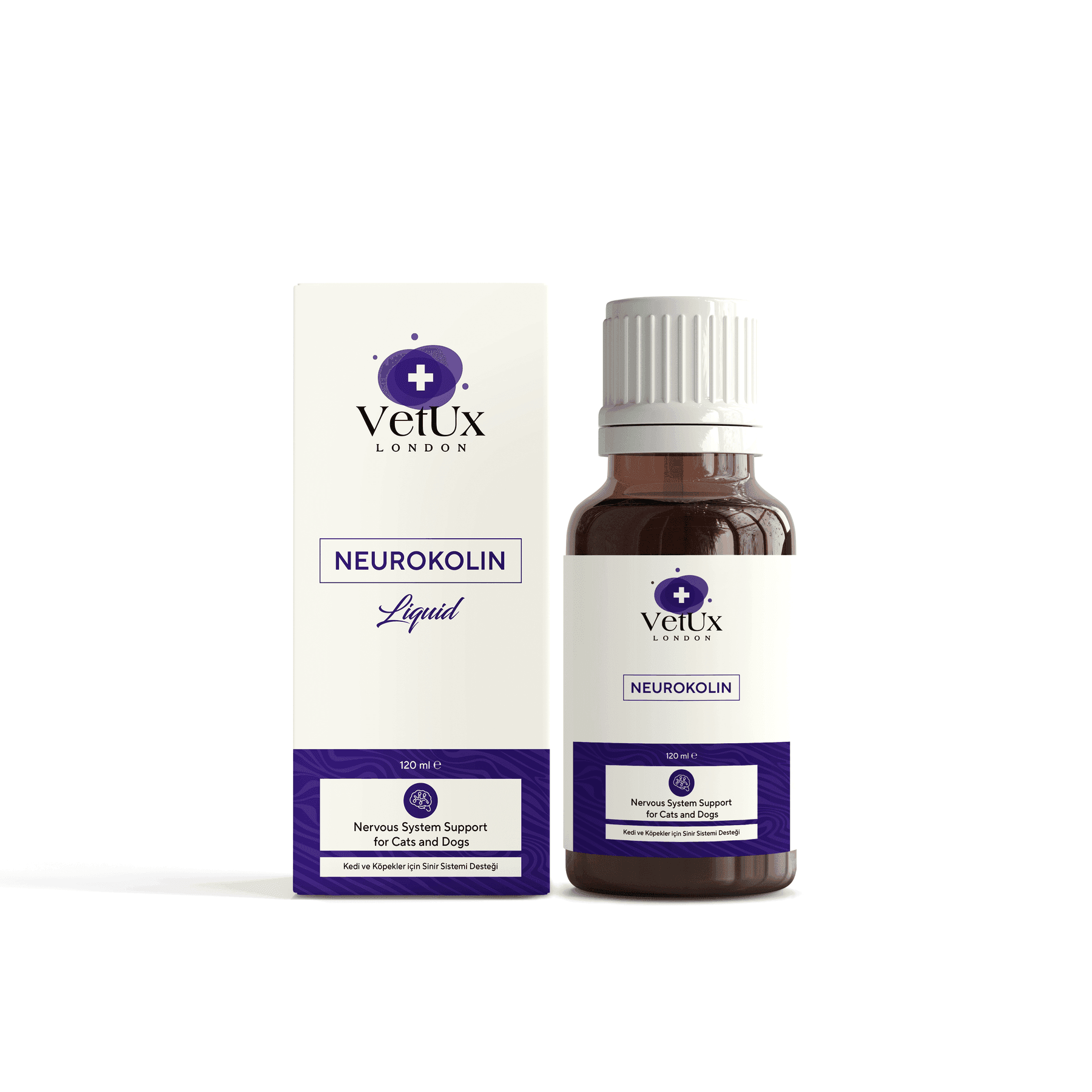
Neurokolin Liquid provides high-bioavailability neuronal precursors in an easy-to-dose liquid format, easily blended into meals to promote restful nights and alert days in senior companions.
Frequently Asked Questions (FAQ)
Does Neurokolin cure canine dementia?
No. Neurokolin is a complementary feed and does not cure neurodegenerative disease. It provides essential nutritional building blocks for neuronal membranes and transmitter synthesis. Diagnosis and medical plans remain with your vet.
Can Neurokolin be given to senior cats?
Yes. Geriatric felines displaying disorientation or night vocalisation can safely receive Neurokolin under veterinary guidance.
Frequently asked questions
Does Neurokolin cure canine dementia?
No. It is a complementary feed providing nutritional support for neuronal physiology, not a cure.
Can it be used for senior cats?
Yes, senior cats also experience cognitive decline and benefit from appropriate veterinary dosing.
This article is for general information only; it does not replace veterinary examination, diagnosis or treatment. VetUx London products are complementary feed. If you have any concern about your companion, please consult your veterinary surgeon.
Share
The formulas matching the nutritional support described above.
Related articles
All articles Clinical Notes
Diabetes Management in Cats and Dogs: Botanical and Nutritional Supports Slowing Carbohydrate Absorption
Blood glucose fluctuations, insulin resistance, and postprandial glycemic control in cats and dogs. Bitter melon, gymnema, chromium picolinate, and Elixir of Diabetic for cellular glycemic balance.
 Clinical Notes
Feline Hyperthyroidism vs Canine Hypothyroidism: Balancing Metabolic Harmony
Weight loss with voracious appetite in geriatric cats versus lethargy and weight gain in aging dogs. Understanding thyroid endocrine balance, L-carnitine, selenium, and Thyrovet support.
 Clinical Notes
Liver and Bile Duct Integration: Diet and Phytotherapy in Hyperbilirubinemia
Jaundice, elevated bilirubin, and cholangiohepatitis in cats and dogs. Hepatobiliary drainage, antioxidant cytoprotection, and nutritional support with Elixir of Bile Fix.