
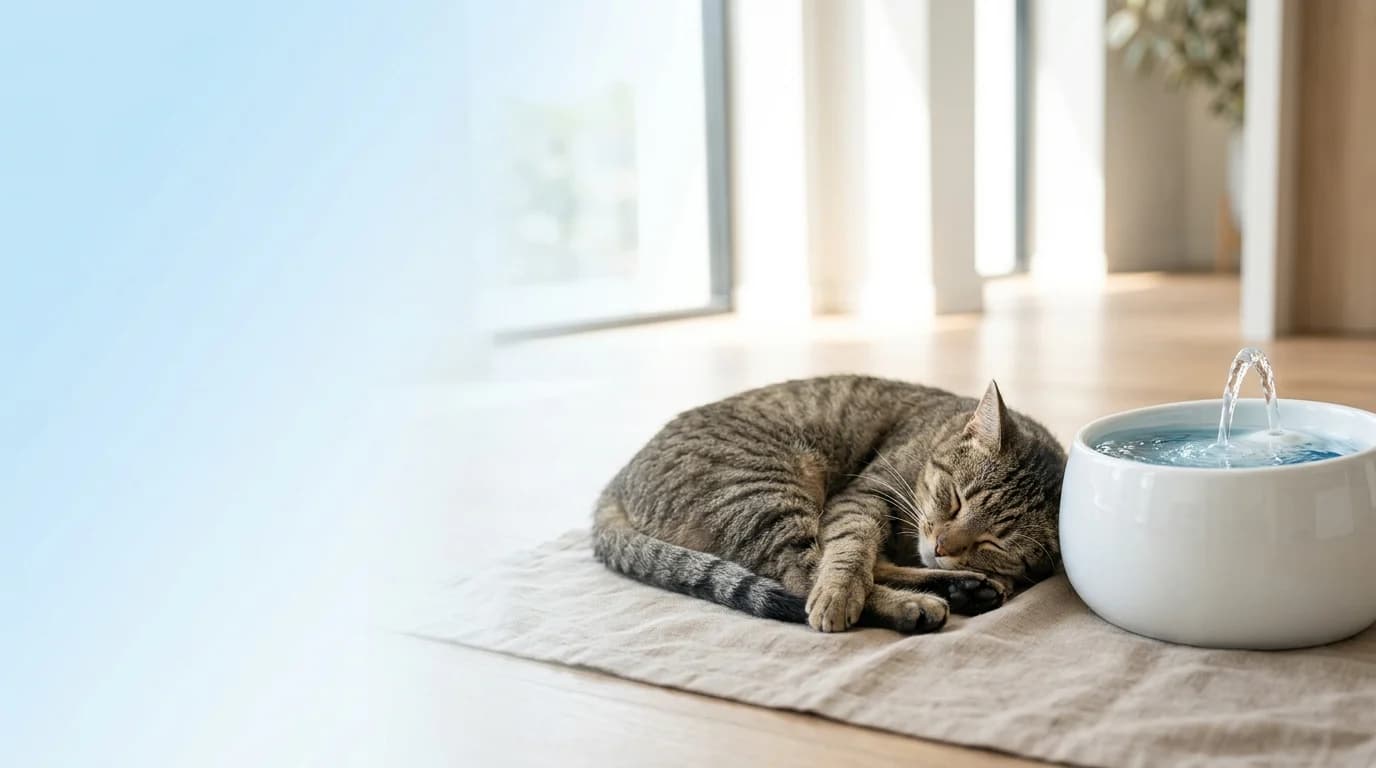
Why Does the Feline Bladder Mucosa Become Irritated? The Crucial Role of the Glycosaminoglycan Layer
In cats visiting the litter box repeatedly, straining with discomfort, or urinating outside their box, Feline Idiopathic Cystitis (FIC) is a primary concern. The science behind the protective Glycosaminoglycan (GAG) urothelial barrier and environmental stress management.
Summary — direct answer: At the centre of feline lower urinary tract disease (FLUTD) and idiopathic cystitis (FIC) lies the breakdown of the protective Glycosaminoglycan (GAG) layer lining the interior of the bladder. When this mucosal shield thins, acidic urea and concentrated urinary minerals directly contact submucosal sensory nerves, producing sterile inflammation, pain, and urethral spasm. Providing nutritional building blocks such as N-Acetyl Glucosamine (NAG) alongside stress-calming L-Tryptophan supports the physiological defences of the urothelium. Diagnosis and medical treatment belong to your veterinarian.
Feline Idiopathic Cystitis (FIC) and Mucosal Compromise
Unlike in dogs and humans, lower urinary tract symptoms in young to middle-aged cats are rarely driven by bacterial infection. Over 60% of cases are diagnosed as Feline Idiopathic Cystitis (FIC)—a sterile neuro-inflammatory syndrome linked to altered neuro-endocrine stress responses.
Key symptoms observed by owners include:
- Pollakiuria: Visiting the box numerous times per day to produce only tiny droplets.
- Dysuria & Stranguria: Crying out while posturing, persistent straining.
- Haematuria: Blood-tinged or dark urine.
- Periuria: Inappropriate urination on rugs, tiles, or bathtubs.
- Overgrooming: Intensive licking of the inguinal and caudal abdominal regions.
Why the Glycosaminoglycan (GAG) Layer Is Vital
The luminal surface of the transitional epithelium in the bladder is lined by a specialized glycocalyx layer composed of sulfated glycosaminoglycans.
- 1Impermeable Chemical Barrier: This GAG layer shields underlying bladder tissues from harsh solutes, protons, and potassium. Once compromised, urothelial hyperpermeability triggers local neurogenic inflammation.
- 2Anti-Adherence: A healthy GAG matrix prevents the adherence of crystals and debris to the bladder wall.
- 3N-Acetyl Glucosamine (NAG): NAG is the fundamental precursor required for the endogenous synthesis and turnover of this protective layer.
Nutritional Support with Cyctoblock
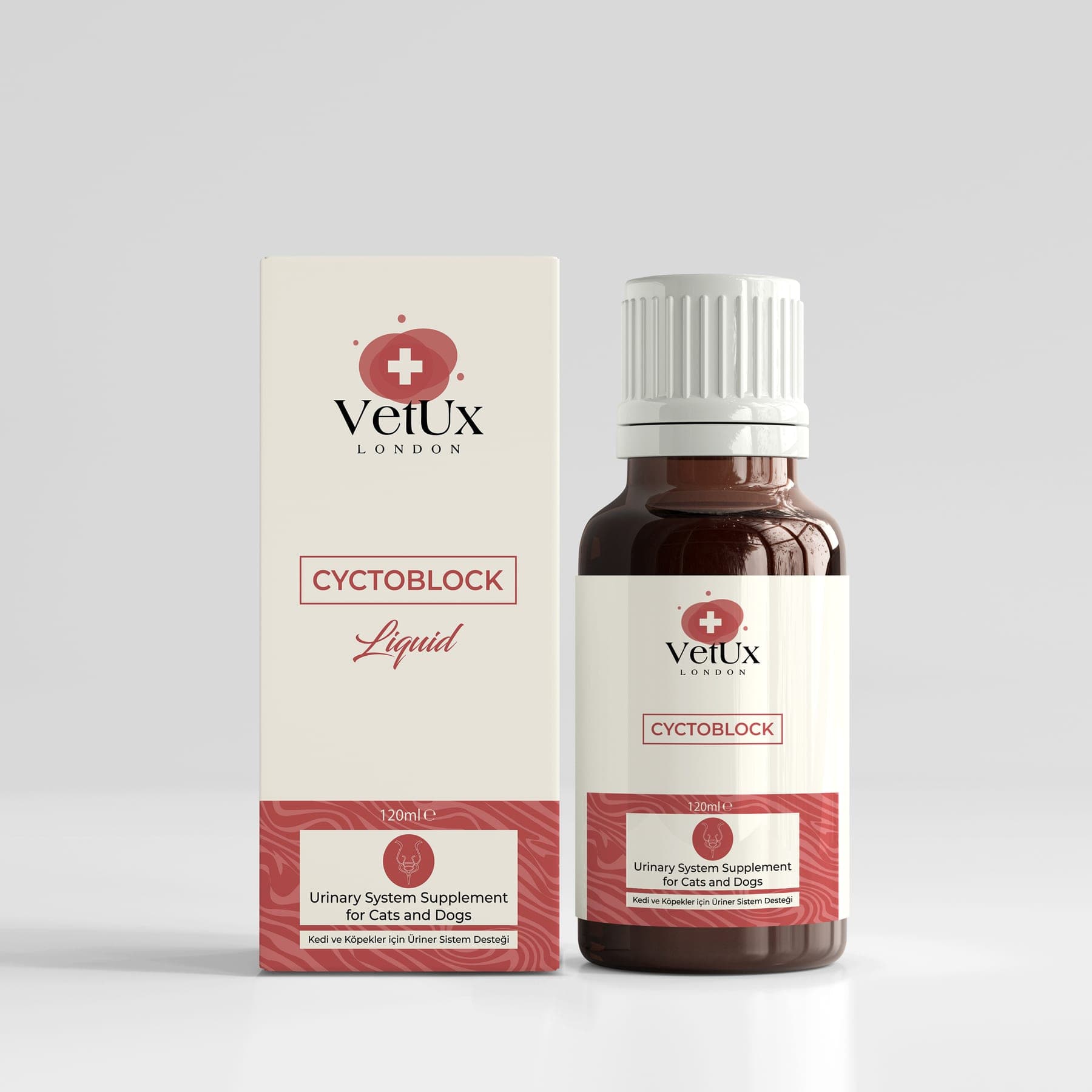
Cyctoblock provides bioavailable GAG precursors (N-Acetyl Glucosamine) combined with L-Tryptophan to nutritionally support both the bladder mucosal lining and stress neurochemistry.
Frequently Asked Questions (FAQ)
Does Cyctoblock resolve urinary obstruction?
No. Urinary obstruction is a life-threatening medical emergency requiring catheterisation. Cyctoblock is a supportive feed designed to nurture urothelial integrity.
Does a cat with bloody urine always need antibiotics?
No. Most feline cystitis cases are sterile. Unnecessary antibiotic use disrupts the gut microbiome. Treatment must follow professional urinalysis.
Frequently asked questions
Does Cyctoblock treat feline UTI?
No. It is a complementary feed supporting mucosal integrity, not an antibiotic or curative drug.
Why does my cat urinate on cool floors when in pain?
Cats associate the litter box with discomfort and seek cool, smooth surfaces to relieve urethral spasms.
This article is for general information only; it does not replace veterinary examination, diagnosis or treatment. VetUx London products are complementary feed. If you have any concern about your companion, please consult your veterinary surgeon.
Share
The formulas matching the nutritional support described above.
Related articles
All articles Clinical Notes
Non-Seasonal Excessive Shedding in Pets: The Balance of Omega 3-6 Fatty Acids and Biotin
Beyond typical spring moulting, relentless year-round coat shedding, dull fur and flaky skin indicate deeper physiological concerns. Sex-specific hormonal sebum dynamics, epidermal lipid barriers, and the Vetux Glow Male / Glow Female philosophy.
 Clinical Notes
Night-time Vocalisation and Spatial Disorientation in Aging Dogs: The Role of Neuronal Choline
In senior dogs wandering aimlessly at night, getting trapped behind furniture, and losing familiarity with household routines, Canine Cognitive Dysfunction Syndrome is a progressive concern. Nutritional support with phosphatidylcholine, citicoline and antioxidants.
 Clinical Notes
Recognising Hidden Joint Pain in Cats: The Difference Between Hyaluronic Acid and Type II Collagen
Cats are masters of masking pain. In senior cats reluctant to jump to high places, refusing grooming, or struggling with litter boxes, degenerative joint disease is a frequent reality. The role of hyaluronic acid and undenatured Type II collagen in synovial fluid support.