

Non-Seasonal Excessive Shedding in Pets: The Balance of Omega 3-6 Fatty Acids and Biotin
Beyond typical spring moulting, relentless year-round coat shedding, dull fur and flaky skin indicate deeper physiological concerns. Sex-specific hormonal sebum dynamics, epidermal lipid barriers, and the Vetux Glow Male / Glow Female philosophy.
Summary — direct answer: Persistent, heavy coat shedding outside of spring and autumn seasonal moults is rarely 'normal shedding'; it stems from epidermal lipid barrier compromise, follicle malnutrition, and sex-specific hormonal sebum imbalances. Achieving a healthy coat requires feeding the hair follicle's anagen (growth) phase internally with EPA/DHA Omega-3s, GLA Omega-6s, chelated zinc, and biotin. Persistent skin lesions warrant veterinary dermatological consultation.
Normal Shedding vs Pathological Coat Loss
Coat turnover involves three cyclical phases:
- 1Anagen Phase: Active follicular hair generation and growth.
- 2Catagen Phase: Regressive transitional stage.
- 3Telogen Phase: Resting stage culminating in hair shedding.
When shedding is constant year-round, hair follicles prematurely enter the telogen resting phase due to micro-inflammation or nutritional deficits.
Key clinical indicators:
- Dull, brittle, coarse fur lacking natural lustre.
- Epidermal flaking, dandruff, or excessive greasiness.
- Secondary itching and licking.
The Biochemistry of the Epidermal Barrier
- Omega-3 (EPA/DHA): Mitigates inflammatory eicosanoids and follicular micro-irritation.
- Omega-6 (GLA): Seals the epidermal water barrier and restores natural sebum fluidity.
- Biotin & Chelated Zinc: Essential enzymatic cofactors in keratin protein synthesis.
The Vetux Glow Male and Glow Female Philosophy
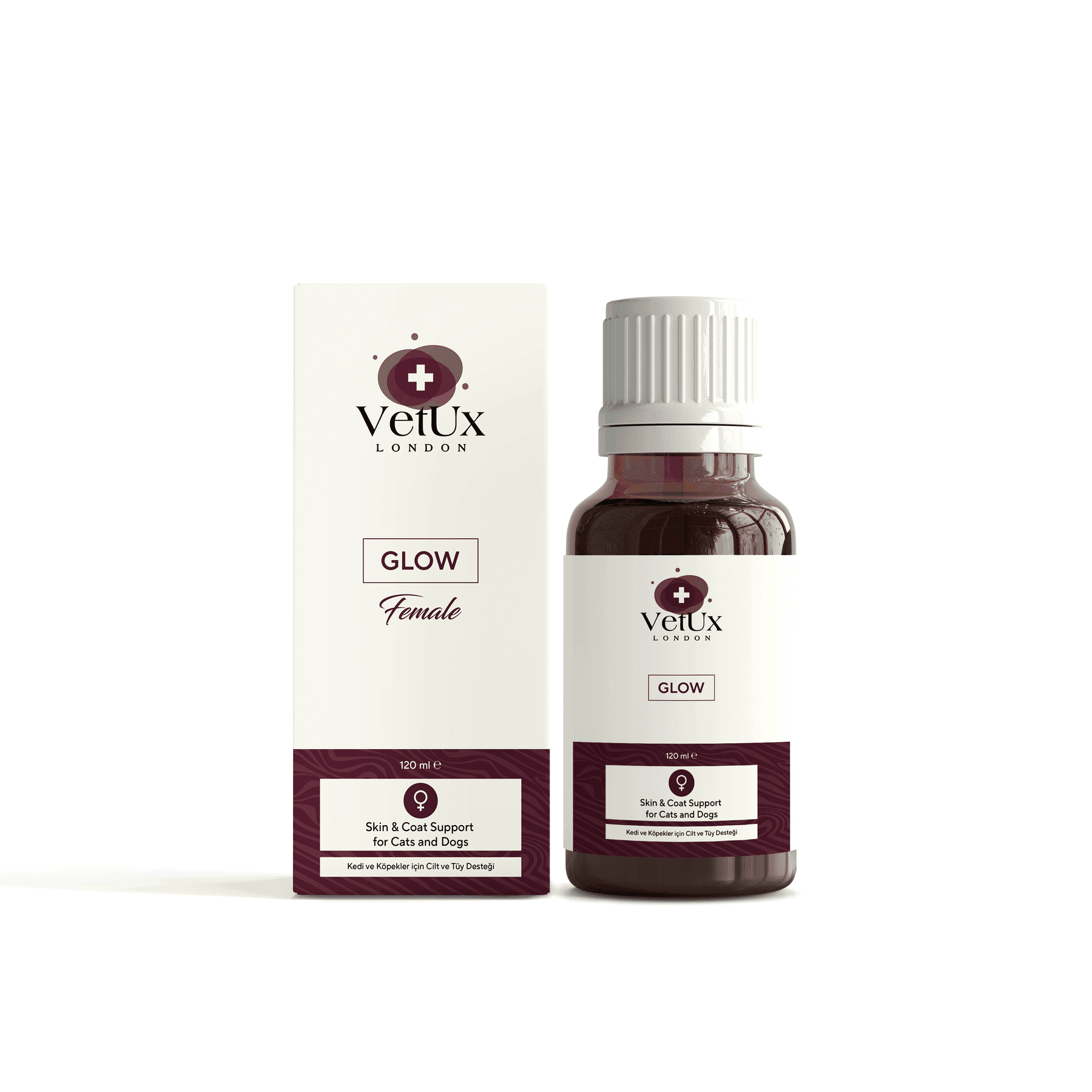
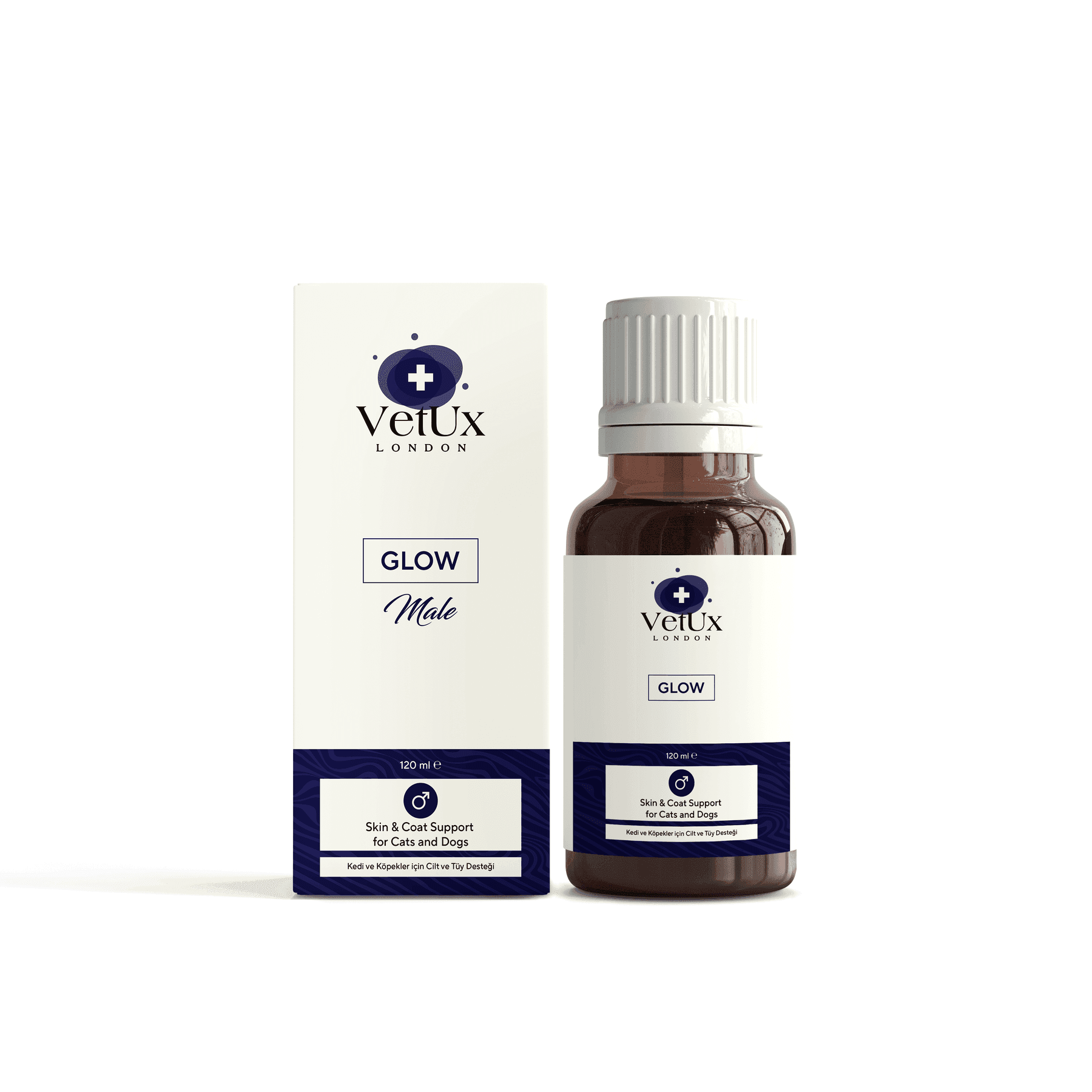
Glow Male targets androgenic sebum equilibrium and follicular root resilience. Glow Female provides deep lipid barrier restoration and antioxidant protection tailored to female endocrine rhythms.
Frequently Asked Questions (FAQ)
Does Glow stop shedding completely?
No healthy pet should ever stop shedding completely; cyclical hair renewal is a vital physiological necessity. Glow aims to eliminate excessive, pathological fallout and produce a resilient, vibrant coat.
Frequently asked questions
How soon will I see results with Glow?
Because hair follicle turnover takes 3 to 6 weeks, noticeable coat sheen and reduced shedding typically appear within one month.
This article is for general information only; it does not replace veterinary examination, diagnosis or treatment. VetUx London products are complementary feed. If you have any concern about your companion, please consult your veterinary surgeon.
Share
The formulas matching the nutritional support described above.
Related articles
All articles Clinical Notes
Paw-Licking and Ear-Scratching in Dogs: Breaking the Itch-Scratch Cycle with Phytotherapeutic Oils
In dogs waking at night to gnaw at their paws, constantly flapping ears, and breaking their skin, atopic dermatitis and the itch-scratch cycle require deep epidermal restoration. The soothing role of botanical lipids, GLA, and the Elixir of Itching matrix.
 Clinical Notes
Why Does the Feline Bladder Mucosa Become Irritated? The Crucial Role of the Glycosaminoglycan Layer
In cats visiting the litter box repeatedly, straining with discomfort, or urinating outside their box, Feline Idiopathic Cystitis (FIC) is a primary concern. The science behind the protective Glycosaminoglycan (GAG) urothelial barrier and environmental stress management.
 Clinical Notes
Night-time Vocalisation and Spatial Disorientation in Aging Dogs: The Role of Neuronal Choline
In senior dogs wandering aimlessly at night, getting trapped behind furniture, and losing familiarity with household routines, Canine Cognitive Dysfunction Syndrome is a progressive concern. Nutritional support with phosphatidylcholine, citicoline and antioxidants.