
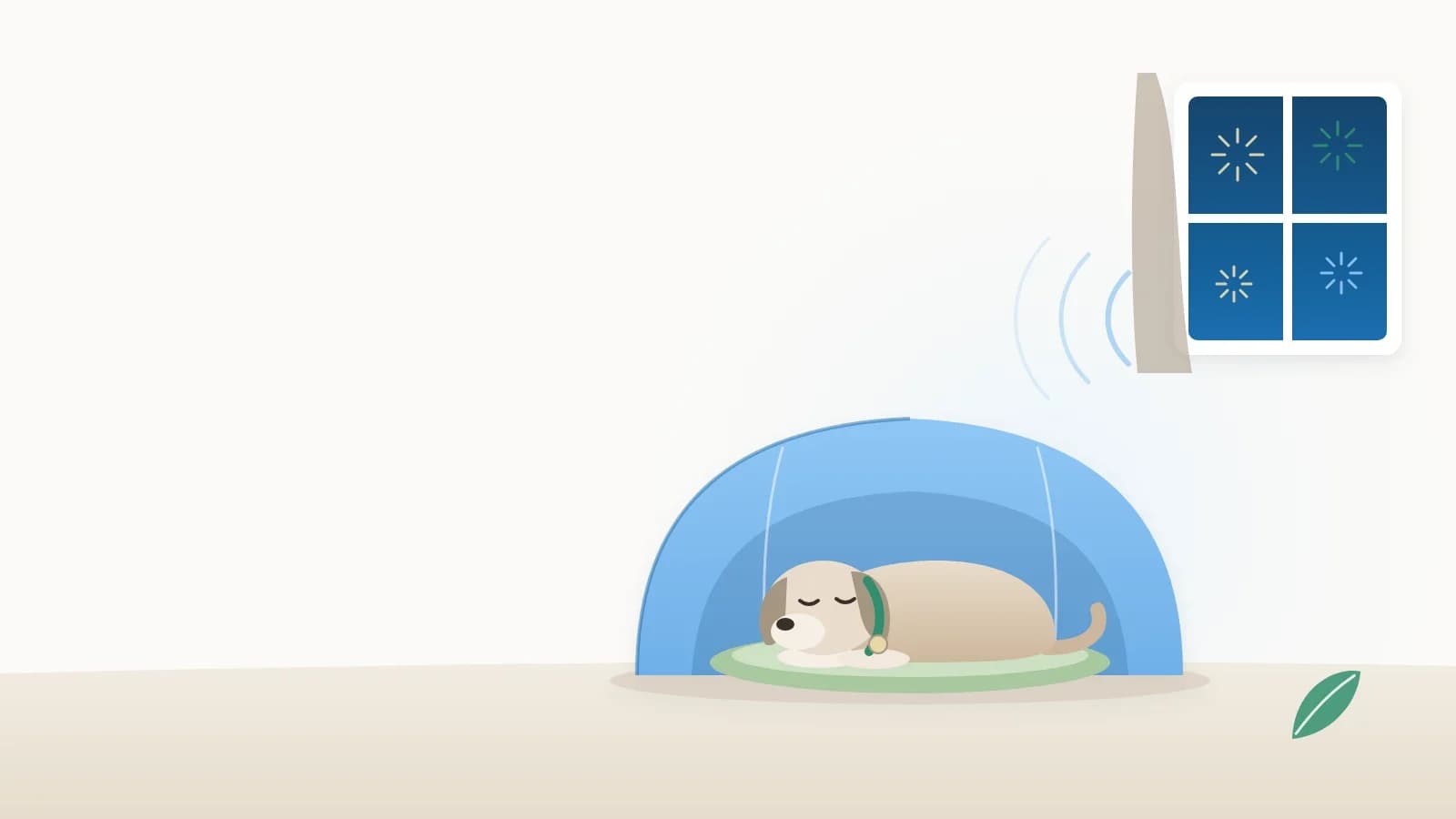
Fireworks and Thunderstorm Fear in Dogs: A Preparation Plan Before New Year's Eve
Does your dog tremble, hide or try to bolt during fireworks or thunder? Vet. Hek. Metehan Çalıkuşu explains how fear develops in the body, gradual sound training before New Year's Eve, the safe space, ID tag precautions against escapes and when to see your veterinary surgeon.
Fear of fireworks and thunder is common in dogs and often does not pass on its own. The weeks before New Year's Eve are the time to start gradual sound training, set up a safe space, update ID tag and microchip details and, for severe fear, plan with your veterinary surgeon. Diagnosis and treatment belong to your vet.
A few minutes before midnight the first bang goes off; your dog flattens their ears, starts panting, begins to tremble and tries to squeeze under the bed. Some dogs scratch at the door; others bolt the moment they find a gap. Fear of fireworks and thunder is a problem dog owners live through again every year, and New Year's Eve is often met unprepared, with the hope that "it will pass again this year".
Yet there are still around six weeks until New Year's Eve, and that time can make a real difference in managing fear. In this article we explain how fear develops in the body, why it can grow over the years, and what you can do step by step before New Year. The information here does not replace an examination; assessing how severe your dog's fear is and planning treatment where needed is your veterinary surgeon's job.
Why are dogs so afraid of fireworks and thunder?
Fear is a natural, healthy response that protects an animal from danger. The problem arises when the response is far too intense for a situation that holds no real danger, lasts a long time and disrupts the dog's daily life. Fireworks and thunder are almost "perfect" triggers for this response: sudden, loud, unpredictable sounds that the dog cannot escape.
Dogs hear differently from us; they also pick up high frequencies that people cannot hear. With thunder, the sound does not come alone: lightning flashes, wind, the sound of rain and changes in the air before a storm are added to the picture. That is why some dogs become restless before a storm has even started.
What does fear set off in the body?
When the brain perceives a sound as a threat, the fear centre deep in the brain (the amygdala) activates two systems at once:
- The fast response — the sympathetic nervous system: Adrenaline and noradrenaline are released. The heart speeds up, breathing quickens, pupils dilate and muscles tense. Trembling, panting, increased drooling and the urge to flee are the visible face of this "fight or flight" response.
- The slow response — the stress hormone axis: Cortisol is released through the hypothalamic–pituitary–adrenal axis. This response starts later but lasts longer, which is why some dogs still cannot fully settle hours after the bangs have stopped.
Why can it get worse every year?
Fear is learned and it generalises. The dog links the frightening sound with other cues that come with it: the smell of gunpowder, flashes of light, a certain time of the evening, even the bustle of people getting ready. Over time, these cues can trigger fear on their own. Every intense experience the dog cannot escape or control can make the response stronger the next time (sensitisation). Research shows that in many dogs firework fear does not fade by itself over time; it can instead increase and spread to other sounds. That is why acting early and with a plan matters.
The link between pain and sound sensitivity
Sound sensitivity may not be purely a behavioural matter. There are findings suggesting that sound sensitivity is seen more often in dogs with musculoskeletal pain; a body that tenses up and hurts during a fear response may experience fear even more intensely. Especially if sound fear has newly appeared or clearly increased in an older dog, your veterinary surgeon needs to investigate the cause through an examination.
The part nutrition plays in the everyday balance of the nervous system
Nerve cells have a constant need for energy and building blocks. Vitamin B1 (thiamine) and vitamin B12 (cobalamin) contribute to the normal metabolism of nerve cells, while essential amino acids and essential fatty acids are among the basic nutrients the body must obtain from food. These nutrients accompany the normal physiological functioning of the nervous system. However, no nutrient removes fear, and none replaces sound training or, where needed, the treatment your veterinary surgeon plans.
How can you tell your dog is afraid?
Not every frightened dog trembles or hides. Mild signs are easily missed, so recognising your dog's early signals makes things easier both during training and on New Year's Eve.
- Mild signs: Ears pinned back, lip licking, yawning, showing the whites of the eyes, a lowered tail, frequent sniffing of the air or freezing to stare towards the sound, refusing treats or food.
- Moderate signs: Panting, trembling, following you everywhere, restless pacing, hiding, increased drooling.
- Severe signs: Scratching and chewing at doors, windows or a crate, trying to escape, self-injury, loss of bladder or bowel control, refusing to come out of hiding for long periods, not eating.
Six weeks to New Year's Eve: how do you build a preparation plan?
This week: a veterinary check, ID tag and observation
- Talk to your veterinary surgeon. Describe how your dog reacted in previous years and how long the signs lasted; if possible, show a short video recorded on your phone. Your veterinary surgeon will assess how severe the fear is and whether pain or another health problem is involved, and if needed will plan treatment options with you.
- Check the ID tag and microchip details (more on this below).
- Keep notes. Observe which sounds, and at what volume, bother your dog. These notes guide both your veterinary surgeon and the training.
How do you do gradual sound training?
This method combines two steps: introducing the frightening sound at a level low enough that the dog does not react (desensitisation) and pairing that sound with something the dog loves (counter-conditioning). The goal is for the sound to signal "something good" rather than "something bad".
- 1Find the starting level. Play a recording of fireworks or thunder so quietly that your dog barely notices it. Watch whether their ears move and whether they eat comfortably.
- 2Pair the sound with something enjoyable. While the sound plays, give a favourite treat, play a game or offer a lick mat or chew toy. When the sound stops, the treat stops too.
- 3Keep it short. Sessions should last no more than a few minutes; finish before your dog gets tired or bored.
- 4Progress very slowly. If your dog is completely relaxed at a given level over several sessions, raise the volume only slightly. Changing the room, the speaker position and the time of day brings training closer to real life.
- 5If you see fear, go back a step. If even one of the mild signs appears, the sound is too loud; go back to the previous level. "Exposing" the dog to the sound while frightened sets training back.
Limits to keep in mind: recordings cannot fully reproduce the pressure, light and smell of real bangs or a storm, and training alone may not be enough for every dog. If your dog shows fear even at very low volume, do not push the training on your own; work with your veterinary surgeon and, if needed, a behaviour specialist your veterinary surgeon refers you to. Even if training is not finished by New Year's Eve, do not stop; it is also an investment in next year and in the storm season.
How do you prepare a safe space?
A frightened dog wants to retreat to a place where they feel safe. Let your dog choose this place; your job is simply to make it safer:
- If possible, choose a room or corner on the inner side of the home, with few windows and less sound. Many dogs prefer enclosed spaces such as a bathroom, a hallway or a spot beside a wardrobe.
- Put in their bed, water bowl, a favourite toy and an item of clothing you have worn that carries your scent.
- If you use a crate, use only one your dog already likes and enters willingly; you can cover it, but do not shut the door. A panicking dog in a closed crate can injure themselves.
- Prepare the space weeks before New Year's Eve and help your dog spend calm time there, linking it with treats and play.
What should you do on New Year's Eve and on stormy days?
Do:
- Walk your dog in daylight, before the bangs start, and serve the evening meal a little earlier.
- Check doors, windows, the garden gate and fences; close the curtains.
- Put on a familiar background sound such as the television, music or white noise.
- Do not leave your dog alone. Talking in a calm voice, stroking them or sitting beside them does not "reward" fear; your calm presence supports your dog.
- If they want to hide, let them, and allow them to go to their safe space.
- If you have guests, watch the door opening and closing; keeping the dog in a room away from the door reduces the risk of escape.
Don't:
- Do not punish or scold your dog; fear does not decrease with punishment, it increases.
- Do not take them outside to "get used to it" by watching fireworks, and do not tie them up on a balcony or in the garden.
- Do not force them out of their hiding place.
- Do not give your dog any medicine meant for people or prescribed for another animal without consulting your veterinary surgeon. Only your veterinary surgeon decides whether medication is needed and which one is appropriate.
Thunderstorms are not scheduled in advance like New Year's Eve. Following the weather forecast and using the same safe space and the same routine on days when storms are expected gives your dog a predictable structure.
How can you guard against escapes?
A frightened dog may bolt through a door, slip out of a collar or jump a fence in a way they would never normally do. That is why the New Year period is a time when lost dogs are common. What you can do from today:
- ID tag: Make sure your dog's collar carries a legible tag with their name and a phone number on which you can be reached.
- Microchip: Make sure your dog is microchipped and that the contact details on the registration are up to date; if you have moved house or changed your number, update the record. You can ask for the microchip to be scanned at the next check-up.
- Harness set-up: In the days around New Year, use a well-fitted harness that is hard to slip out of; if needed, attach the lead to both harness and collar.
- On the lead, even in the garden: On days when bangs are frequent, do not let your dog into the garden off the lead.
- A recent photo: Keep a clear, recent photo of your dog ready on your phone.
- Take care the next day too: Fireworks may continue the following day; on walks, also watch out for firework debris left on the ground.
When should you see a veterinary surgeon?
Every dog with a fear of fireworks benefits from a veterinary check, because assessing how severe the fear is and deciding whether treatment is needed is the veterinary surgeon's job. Contact your veterinary surgeon without delay in the following situations:
- If in previous years your dog injured themselves, destroyed a door or crate, or broke a tooth or claw
- If fear signs last for hours and your dog has not returned to normal by the next day
- If there has been an escape attempt or your dog has run away before
- If sound fear has newly appeared or has clearly increased in an older dog (pain, a change in hearing or another age-related problem may be involved)
- If the fear is starting to spread to other sounds such as the doorbell or car horns
- If your dog shows fear even during training at very low volume
- If you see signs such as vomiting, diarrhoea, excessive panting or collapse together with the fear
- If you are considering giving your dog any medicine or supplementary product
For severe fear, your veterinary surgeon may also plan medication. That decision is made only by the veterinary surgeon, taking into account your dog's health and any other products they receive; have the conversation in these weeks so you are not leaving it to the last day before New Year.
Where does Calm fit into this plan?
Calm is a complementary feed in drop form that contributes to maintaining composure in cats and dogs through situations that bring tension and fear. Its composition includes hemp seed oil, a natural source of essential fatty acids; the essential amino acid L-threonine, which accompanies the normal balance of the nervous system; and vitamins B1 and B12, which contribute to the normal metabolism of nerve cells. Calm is not a sedative; it does not replace calming medication, gradual sound training or a safe space, and within this plan it is purely a nutritional companion. Your veterinary surgeon and the product label decide whether it is suitable for your dog, when to start and how to use it. You can review the details of the composition on the Calm product page.
Frequently asked questions
If I comfort my frightened dog, will I reinforce the fear?
No. Fear is an emotion; talking in a calm voice, stroking your dog or sitting beside them does not "reward" it. On the contrary, your calm presence can reassure your dog. What to avoid is acting anxious yourself, punishing the dog or forcing them out of their hiding place.
If I start sound training now, will it be ready in time for New Year?
It depends on the dog and how severe the fear is. In some dogs with mild fear, a few weeks of regular work can make a difference; with severe fear, the process takes longer and may not be enough on its own. Even if it is not finished by New Year, it is worth continuing; make the best plan for your dog with your veterinary surgeon.
Can I leave my dog in the garden or on the balcony on New Year's Eve?
This is not recommended. Outside, your dog is closer to the bangs and unprotected, and may panic and jump a fence, slip a collar or injure themselves. On New Year's Eve your dog should stay indoors, somewhere they can reach their safe space, with someone beside them.
Can I give my dog a sedative or sleeping pill made for people?
No. The effects and safe conditions of use of human medicines are different in dogs; some can be dangerous for dogs or may only restrict movement without reducing fear. Only the veterinary surgeon who examines your dog decides whether medication is needed and which one is appropriate.
Is fear of thunder different from fear of fireworks?
The two often occur together, but with thunder the sound does not come alone: lightning, wind, rain and changes in the air before a storm can also trigger fear. That is why some dogs become restless before a storm starts. The principles of preparation are similar; a safe space and a predictable routine matter in both situations.
Is Calm a sedative?
No. Calm is a complementary feed that nutritionally accompanies the maintenance of composure; it is not a sedative and it is not a medicine. Diagnosing the fear, assessing its severity and treating it where necessary are your veterinary surgeon's responsibility, and your veterinary surgeon also decides whether Calm is suitable for your dog.
Final word
Fear of fireworks and thunder is not something to wait out in the hope that "it will pass again this year"; in most dogs it can be managed with planned preparation. In the weeks left before New Year, starting gradual sound training, preparing the safe space your dog chooses, updating ID tag and microchip details and, for severe fear, planning ahead with your veterinary surgeon will help both you and your dog spend a calmer New Year's Eve. For the severity of your dog's fear, the training plan and any product you are considering, consult your veterinary surgeon.
References
- Blackwell EJ, Bradshaw JWS, Casey RA. Fear responses to noises in domestic dogs: prevalence, risk factors and co-occurrence with other fear related behaviour. Applied Animal Behaviour Science. 2013;145(1–2):15–25.
- Riemer S. Not a one-way road — Severity, progression and prevention of firework fears in dogs. PLoS ONE. 2019;14(9):e0218150.
- Sherman BL, Mills DS. Canine anxieties and phobias: an update on separation anxiety and noise aversions. Veterinary Clinics of North America: Small Animal Practice. 2008;38(5):1081–1106.
- Levine ED, Ramos D, Mills DS. A prospective study of two self-help CD based desensitization and counter-conditioning programmes with the use of Dog Appeasing Pheromone for the treatment of firework fears in dogs (Canis familiaris). Applied Animal Behaviour Science. 2007;105(4):311–329.
- Lopes Fagundes AL, Hewison L, McPeake KJ, Zulch H, Mills DS. Noise sensitivities in dogs: an exploration of signs in dogs with and without musculoskeletal pain using qualitative content analysis. Frontiers in Veterinary Science. 2018;5:17.
- Hammerle M, Horst C, Levine E, et al. 2015 AAHA Canine and Feline Behavior Management Guidelines. Journal of the American Animal Hospital Association. 2015;51(4):205–221.
- Dale AR, Walker JK, Farnworth MJ, Morrissey SV, Waran NK. A survey of owners' perceptions of fear of fireworks in a sample of dogs and cats in New Zealand. New Zealand Veterinary Journal. 2010;58(6):286–291.
This article is for information only and does not replace an examination by a veterinary surgeon. For your dog's sound fear, New Year preparation and any product or medicine you are considering, consult your veterinary surgeon.
Frequently asked questions
If I comfort my frightened dog, will I reinforce the fear?
No. Fear is an emotion; talking in a calm voice, stroking your dog or sitting beside them does not "reward" it. On the contrary, your calm presence can reassure your dog. What to avoid is acting anxious yourself, punishing the dog or forcing them out of their hiding place.
If I start sound training now, will it be ready in time for New Year?
It depends on the dog and how severe the fear is. In some dogs with mild fear, a few weeks of regular work can make a difference; with severe fear, the process takes longer and may not be enough on its own. Even if it is not finished by New Year, it is worth continuing; make the best plan for your dog with your veterinary surgeon.
Can I leave my dog in the garden or on the balcony on New Year's Eve?
This is not recommended. Outside, your dog is closer to the bangs and unprotected, and may panic and jump a fence, slip a collar or injure themselves. On New Year's Eve your dog should stay indoors, somewhere they can reach their safe space, with someone beside them.
Can I give my dog a sedative or sleeping pill made for people?
No. The effects and safe conditions of use of human medicines are different in dogs; some can be dangerous for dogs or may only restrict movement without reducing fear. Only the veterinary surgeon who examines your dog decides whether medication is needed and which one is appropriate.
Is fear of thunder different from fear of fireworks?
The two often occur together, but with thunder the sound does not come alone: lightning, wind, rain and changes in the air before a storm can also trigger fear. That is why some dogs become restless before a storm starts. The principles of preparation are similar; a safe space and a predictable routine matter in both situations.
Is Calm a sedative?
No. Calm is a complementary feed that nutritionally accompanies the maintenance of composure; it is not a sedative and it is not a medicine. Diagnosing the fear, assessing its severity and treating it where necessary are your veterinary surgeon's responsibility, and your veterinary surgeon also decides whether Calm is suitable for your dog.
This article is for general information only; it does not replace veterinary examination, diagnosis or treatment. VetUx London products are complementary feed. If you have any concern about your companion, please consult your veterinary surgeon.
Share
The formulas matching the nutritional support described above.

Related articles
All articles Care Guides
Eye Discharge in Cats and Dogs: What Do Colour and Consistency Tell You, and How Should You Clean Around the Eyes?
What might clear, mucoid or yellow-green eye discharge point to, how can you clean around the eyes safely at home, and which signs mean you should see your vet without delay? Vet. Hek. Metehan Çalıkuşu explains tear staining and why human eye drops are never used.
 Care Guides
Senior Cat Care Guide: Check-ups, Nutrition and Warning Signs After Age 7
Cats hide pain and illness remarkably well. We explain which check-ups are needed after age 7, which behaviour, mouth, weight and water intake signs to watch for at home, and how to plan a change of food.
 Care Guides
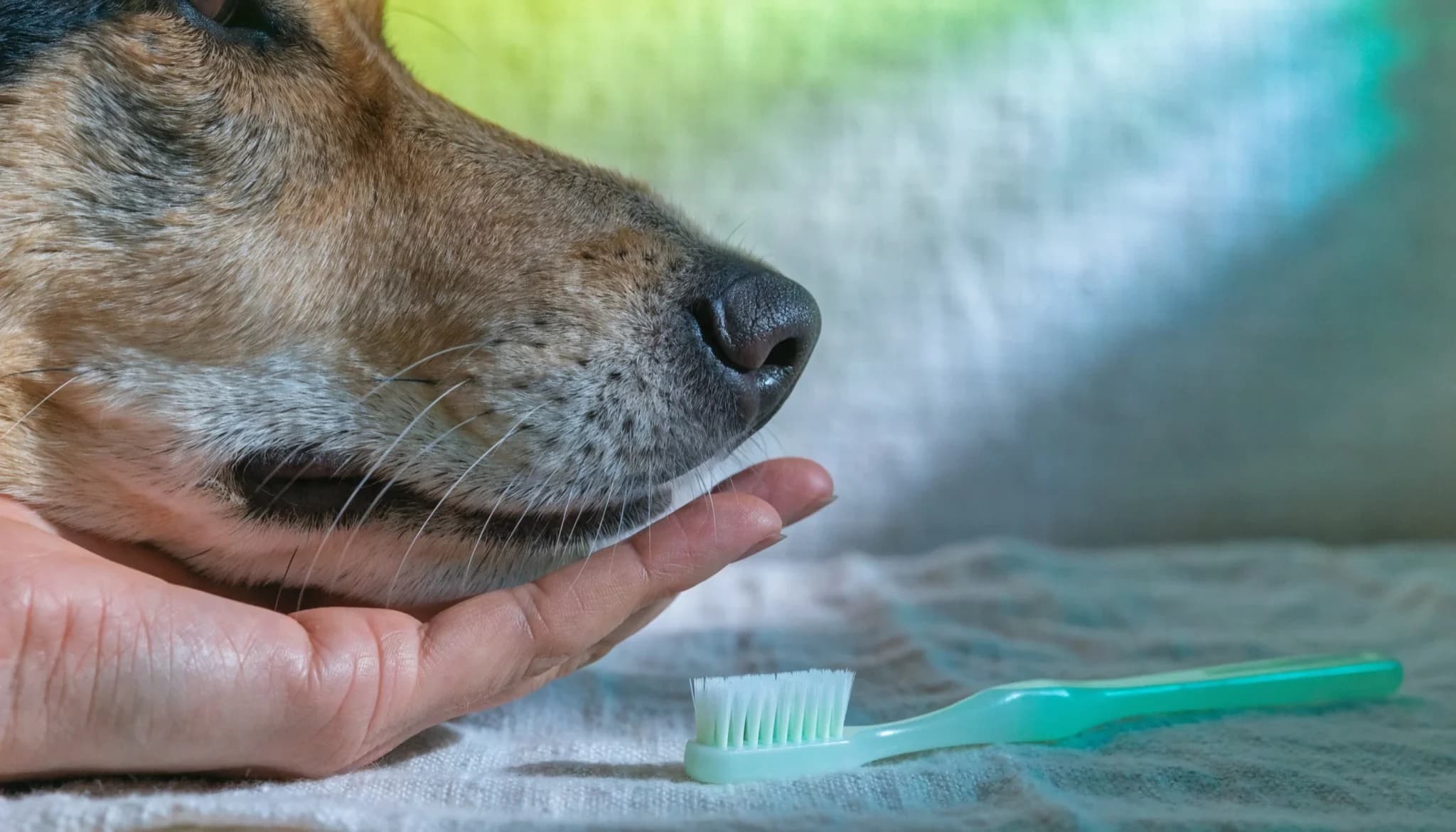
Oral care at home: a step-by-step way to build the habit
The hard part of oral care is not the brushing — it is getting there. A patient two-week programme is usually enough for the routine to settle in most dogs and cats.