
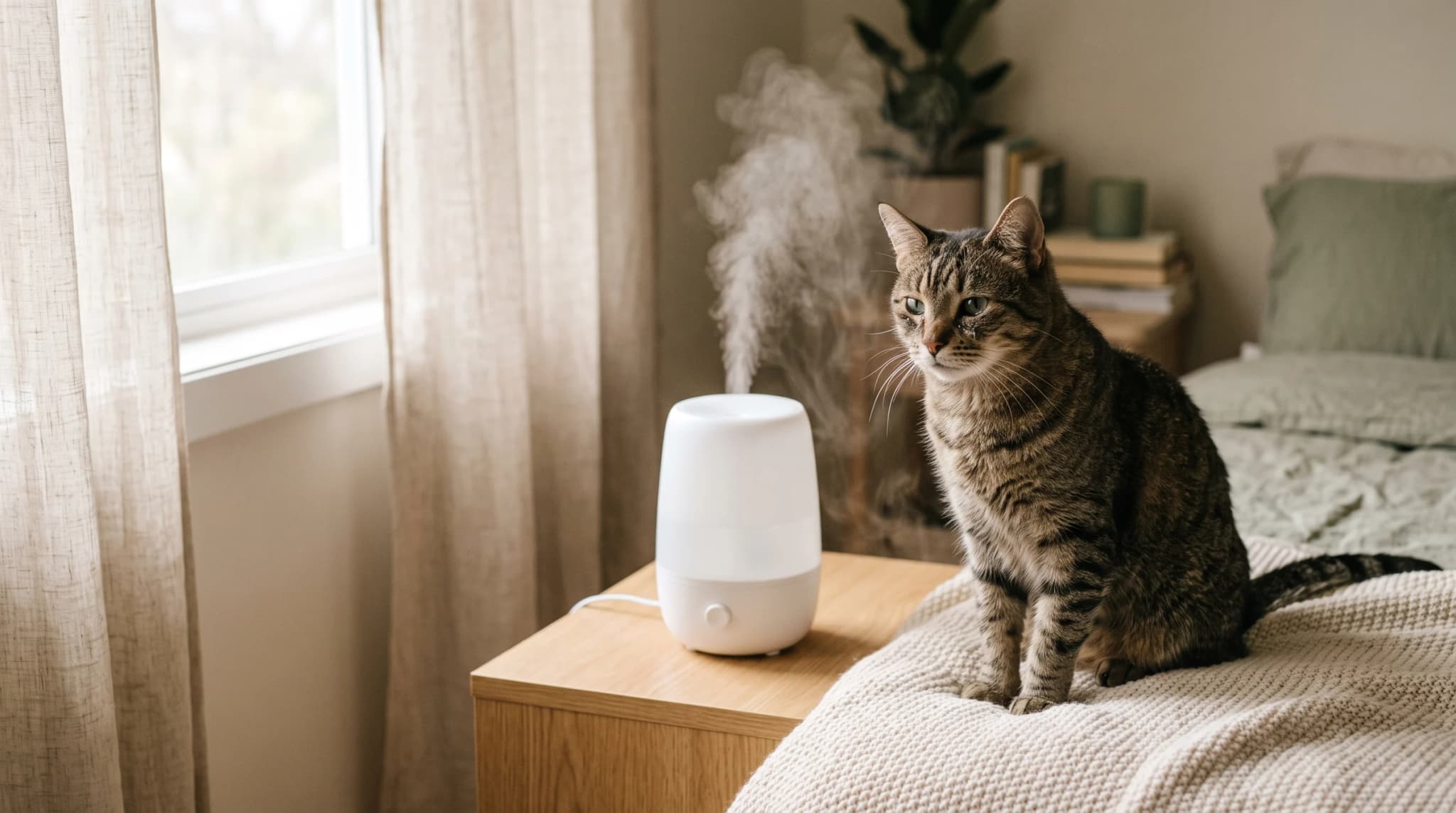
Cough and Nasal Discharge in Pets: Mucus Viscosity and Bronchial Comfort
In cats wheezing with extended necks, and dogs coughing persistently at night, respiratory mucosal irritation requires physiological clarity. The role of mucociliary clearance, thyme, licorice root, and the Free Breathing botanical matrix.
Summary — direct answer: Coughing and nasal discharge in dogs and cats are protective reflex mechanisms triggered when the tracheobronchial mucosa is irritated and thickened secretions obstruct airways. The respiratory tract's self-cleaning escalator (mucociliary clearance) halts when mucus becomes hyperviscous. Botanical extracts such as thyme, licorice root, and eucalyptus promote physiological thinning of secretions and soothe bronchial responsiveness. Underlying cardiac disease or pneumonia mandates emergency veterinary diagnostics.
The Mucociliary Escalator: The First Line of Pulmonary Defence
The airways are lined with pseudostratified ciliated columnar epithelium coated in a dual-phase mucus blanket. Microscopic cilia beat rhythmically, sweeping entrapped particulates towards the pharynx at 1-2 cm per minute. Environmental dry air, allergens, viral challenges, and irritants dehydrate this fluid layer, causing ciliary paralysis and triggering cough reflexes.
Differentiating Cough Types
- Goose-Honk Paroxysmal Cough: Common in toy breeds experiencing tracheal collapse.
- Harsh Retching Cough: Frequently linked to infectious tracheobronchitis (Kennel Cough).
- Crouching with Extended Neck in Cats: Often mistaken for hairball vomiting, this is a signature indicator of feline asthma.
- Nocturnal Soft Moist Cough: Potential indicator of congestive heart failure.
The Botanical Synergy of Free Breathing
- Thyme (Thymol): Natural secretomotor and mucolytic activity thinning bronchial secretions.
- Licorice Root (Glycyrrhizin): Demulcent protective coating buffering hypersensitive mucosal cough receptors.
- Eucalyptus (Cineole): Promotes airway relaxation and smooth respiratory airflow.
Complementary Respiratory Support with Free Breathing
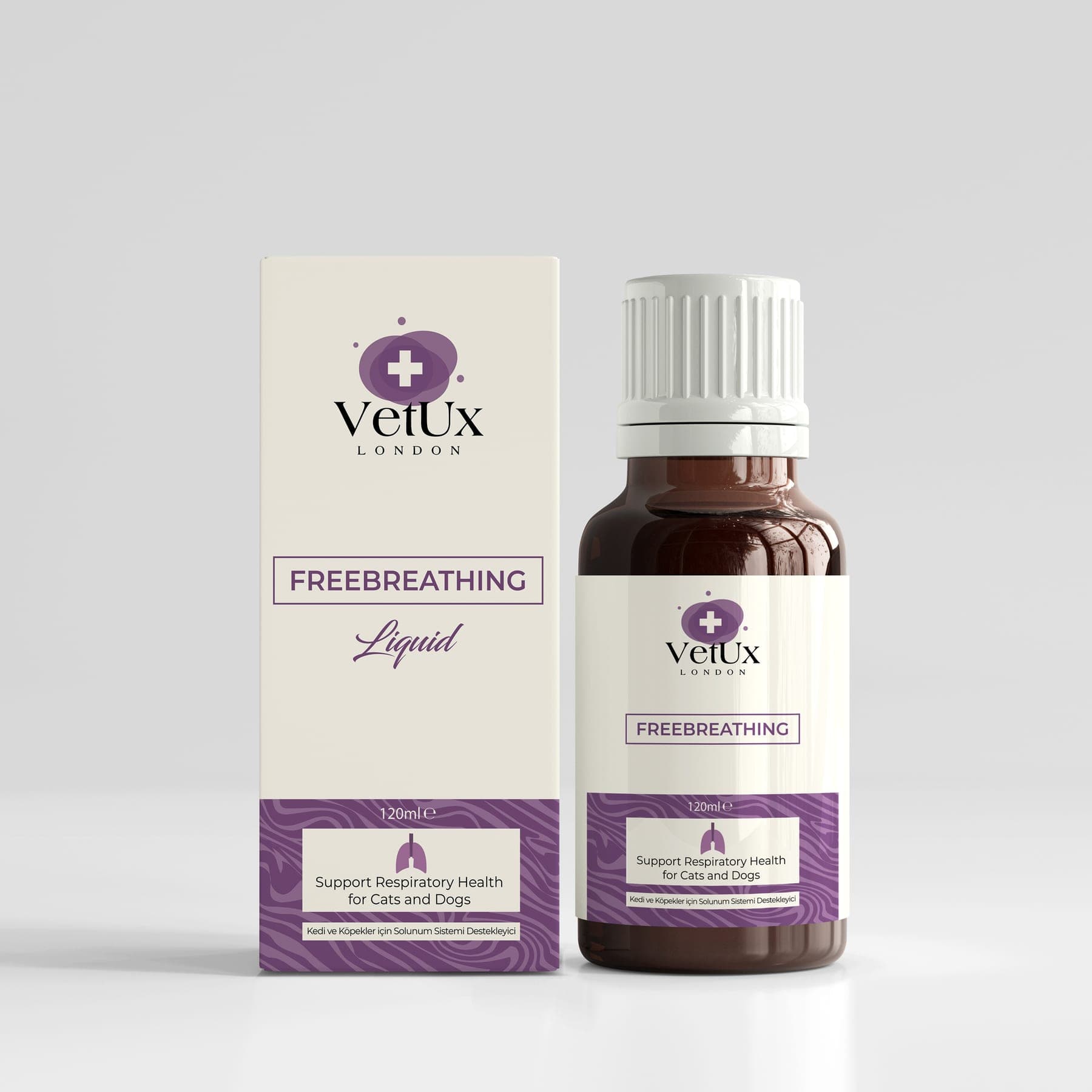
Free Breathing provides an alcohol-free, palatable liquid complementary feed designed to maintain airway hydration and natural bronchial clearway function in cats and dogs.
Frequently Asked Questions (FAQ)
Does Free Breathing cure feline asthma?
No. Feline asthma requires dedicated inhaler and corticosteroid management. Free Breathing supports mucosal hydration and physiological comfort.
Can human cough syrups be given to dogs?
Never. Ingredients such as dextromethorphan combinations and xylitol cause severe neurotoxicity and liver failure in companion animals.
Frequently asked questions
Does Free Breathing treat kennel cough?
It supports airway hydration and secretion thinning during recovery under veterinary supervision.
This article is for general information only; it does not replace veterinary examination, diagnosis or treatment. VetUx London products are complementary feed. If you have any concern about your companion, please consult your veterinary surgeon.
Share
The formulas matching the nutritional support described above.
Related articles
All articles Clinical Notes
Hip Dysplasia in Dogs: Signs, Weight Control and an Exercise Plan
Hip dysplasia starts when the hip joint of a growing dog, most often a large breed, develops loose and ends in osteoarthritis over time. We explain the signs, why diagnosis needs an X-ray at the vet, how weight loads the joint and how to plan controlled exercise from puppyhood to old age.
 Clinical Notes
Bad Breath in Cats: Tartar, Gum Disease and Causes Beyond the Mouth
Bad breath in cats usually comes from plaque and tartar, but it can also be an early sign of kidney disease or diabetes. We explain how the odour develops, why tartar removal belongs at the vet and how to care for your cat's mouth day to day.
 Clinical Notes
Signs of Heart Failure in Dogs: Coughing, Fast Breathing and Tiredness
Coughing, fast breathing during sleep and tiring quickly are the most common signs of heart failure in dogs. Why they happen, counting sleeping breathing rate at home, emergency signs and the diagnostic process, from a veterinary surgeon.