
Can Two Supplements Be Used Together in Cats and Dogs with Kidney Disease? How the Vet Builds the Plan
Whether two different complementary feeds can sit in the same plan for a patient with reduced kidney function is not a product question — it is a clinical decision. This article sets out, at ingredient level, which separate lines Nephrovet and Azo-Fix occupy, where they overlap when given together, and what a veterinary surgeon actually looks at when building the plan. Dosage and sequencing are deliberately not covered here: that decision belongs to the veterinary surgeon examining the animal.
In brief — the direct answer: Two different complementary feeds can sit in the same plan for a cat or dog with reduced kidney function, but this is a clinical decision made in front of the patient, not a matter of a ready-made combination or pack. Two criteria drive it: whether the ingredients overlap, and whether the animal can actually carry the total daily intake. Nephrovet and Azo-Fix are two separate complementary feeds written for two separate surfaces of the same picture — one accompanies normal kidney function and fluid balance, the other the natural elimination route through the gut and the balance of the gut flora. Neither is a medicine; diagnosis, staging and sequencing belong to the veterinary surgeon examining the animal.
Why nutritional support in chronic kidney disease does not fit onto a single line
In an animal whose kidney function is permanently reduced, the clinical picture is not the product of one mechanism. On one side sit the kidney's own working conditions: filtration capacity, the daily rhythm of urine production, the balance of body fluid, oxidative load at tissue level. On the other, as the kidney slows, nitrogenous compounds that would normally leave the body in urine remain in circulation, and a proportion of them passes into the gut lumen, where the resident flora takes part of that load into its own metabolism. In the literature this second surface is called the gut–kidney axis, and it is not the same place as kidney tissue itself.
That is why a veterinary surgeon asks two independent questions about the same patient. First: what can accompany the maintenance of normal kidney function and fluid balance? Second: what can accompany natural elimination and flora balance on the gut side? There is no obligation for one product to answer both — and usually it does not, because the two surfaces have different needs. We have looked at where phosphorus load and renal microcirculation sit in this picture in a separate article: phosphorus retention and microcirculation in chronic kidney disease.
One ordering point deserves emphasis. Nutritional support is a part of the plan the veterinary surgeon builds, not the whole of it. In a kidney patient, priority always goes to clinical examination, diagnosis, staging, assessment of hydration status and the diet the veterinary surgeon recommends. Complementary feeds do not replace that plan; they accompany it.
Can two supplements be given together to the same patient?
The short answer is yes — but it is a clinical decision rather than a product decision, and "given together" means two separate complementary feeds appearing in the same plan, not a single combined product or a ready-made set.
These are the headings a veterinary surgeon works through:
- Ingredient overlap. The two ingredient lists are placed side by side. Where the same functional group appears in both products, the animal is receiving that group from two sources. That is not in itself a problem, but it should be a known one.
- Total intake burden. In a cat or dog with kidney disease, appetite is among the most valuable clinical signals available. Every item added to the daily bowl brings volume, taste and smell that can affect appetite. The veterinary surgeon asks whether the plan is one this particular animal will actually consume.
- Form and practicality. A liquid and a powder behave differently in the same meal. Which form is workable depends on the household and on the animal's temperament.
- Relationship with diet and prescribed treatment. The renal diet the veterinary surgeon recommends, together with any prescribed treatment, is the core of the plan. A complementary feed sits around that core; it does not stand in for it.
- Monitoring. Where a decision is made to use both, the veterinary surgeon also decides in advance what will be monitored and at what interval.
None of these five headings can be completed by reading online. Each requires the judgement of a clinician who has seen the animal and holds its laboratory results.
Which separate lines do Nephrovet and Azo-Fix occupy?
The difference between the two products is clearest in their ingredient lists.
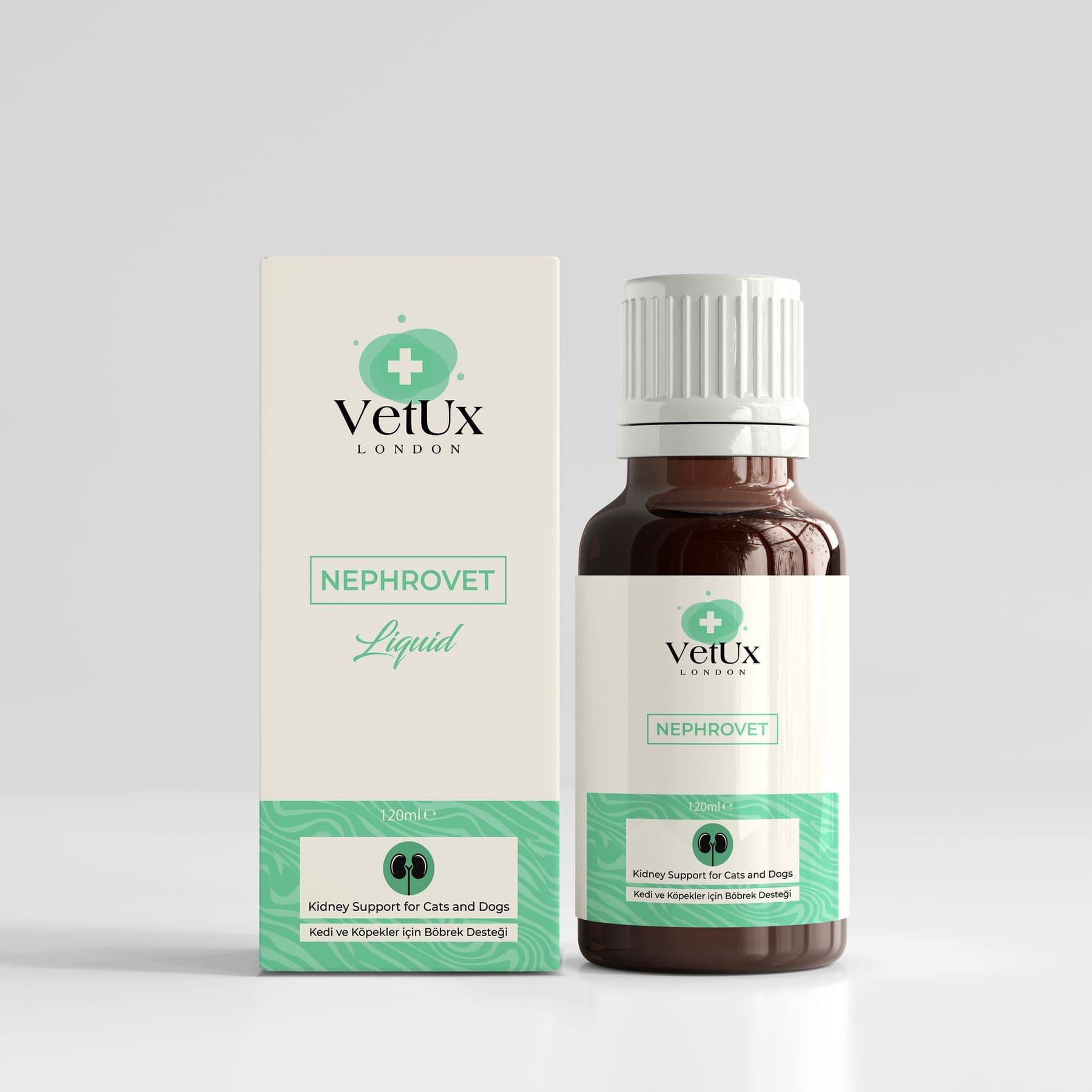
Nephrovet is a liquid complementary feed for cats and dogs in a 120 ml pack. Its composition per kilogram consists of five botanical extracts: Punarnava extract (Boerhavia diffusa) 25,000 mg, Varun extract (Crataeva nurvala) 20,000 mg, Gokshura extract (Tribulus terrestris) 15,000 mg, Palaash extract (Butea monosperma) 15,000 mg and Kaasni/chicory extract (Cichorium intybus) 12,500 mg. The positioning in the product record matches that composition: a contribution to the maintenance of normal kidney function, normal fluid balance, the natural rhythm of urine production and the oxidative balance of kidney cells.
One point must be stated plainly, in the same words we used in an earlier article: Nephrovet is not a phosphate binder; its formulation contains no phosphate-binding ingredient. There is nothing in the composition beyond the five botanical extracts. Phosphorus management is a separate heading, built by the veterinary surgeon through diet and, where indicated, prescribed options.
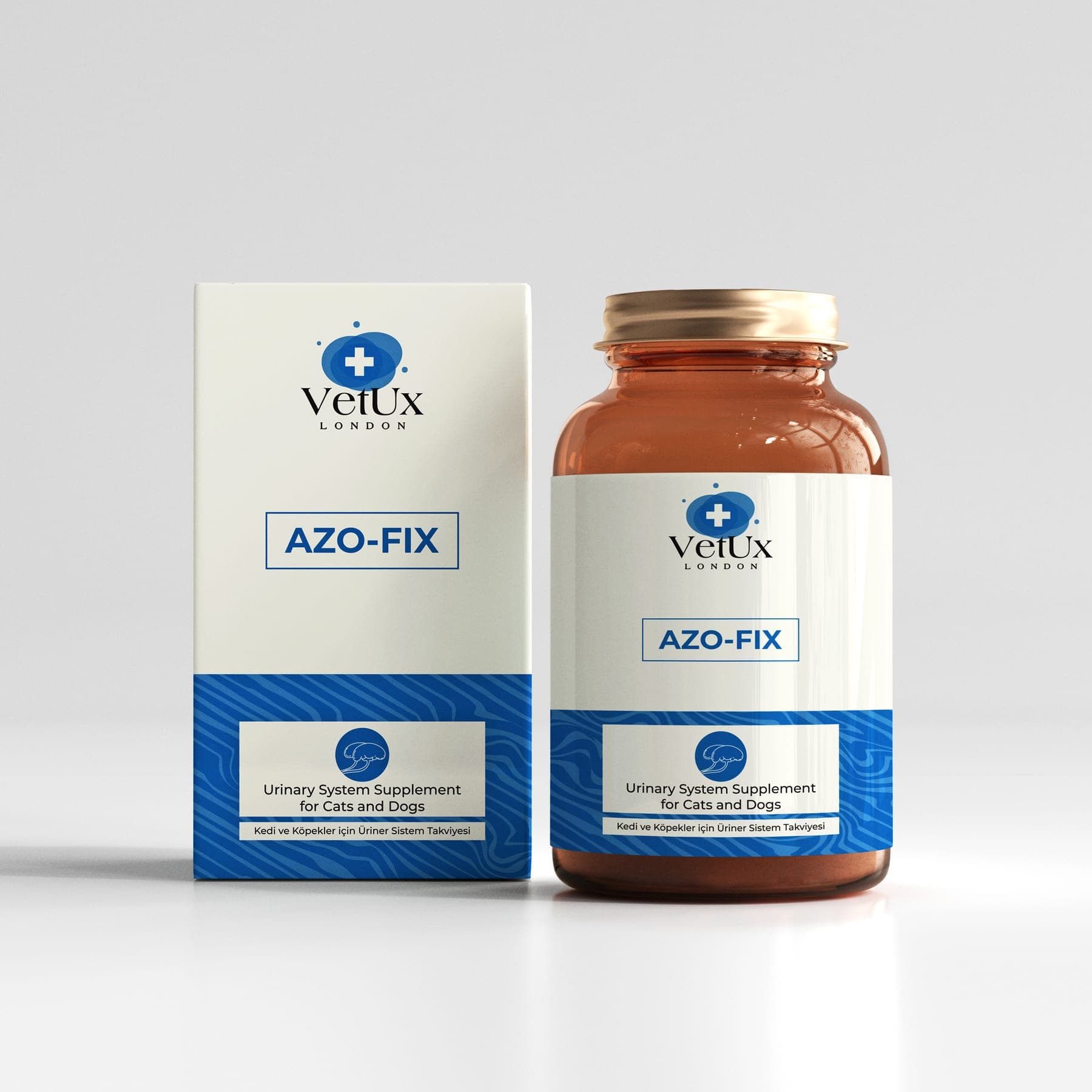
Azo-Fix is a powder complementary feed for cats and dogs in a 30 g pack, with a considerably broader list. Per kilogram: cranberry extract (Vaccinium macrocarpon) 117,500 mg, taurine 59,000 mg, nettle leaf extract (Urtica dioica) 59,000 mg, DL-methionine 35,000 mg, parsley extract (Petroselinum crispum) 35,000 mg, valerian extract (Valeriana officinalis) 33,000 mg, vitamin B6 (pyridoxine HCl) 24,000 mg, L-citrulline 23,500 mg, L-arginine 17,500 mg, pumpkin extract 17,500 mg, rosemary extract 11,500 mg, broccoli extract 2,500 mg, and two probiotic strains: Enterococcus faecium NCIMB 10415 and Lactobacillus acidophilus CECT 4529, each at 6.6 × 10¹² CFU. The positioning in the record follows from that: it accompanies the natural elimination of urea and ammonia via the gut and supports the normal balance of the intestinal flora.
Seeing the two lines in one table makes the distinction easier to hold:
| | Nephrovet | Azo-Fix | |---|---|---| | Form / pack | Liquid · 120 ml | Powder · 30 g | | Character of composition | Five botanical extracts | Botanicals + amino acids + B6 + two probiotic strains | | Direction in the record | Normal kidney function, fluid balance, urine rhythm, oxidative balance | Natural elimination of urea and ammonia via the gut, flora balance | | Class | Complementary feed | Complementary feed |
To describe the removal of nitrogenous compounds through the gut, the literature sometimes uses the metaphor "enteric dialysis". It needs saying that this is only a name: a complementary feed is not a dialysis method and does not take the place of real dialysis. We have examined the concept in detail in a separate article: uraemic toxins and "enteric dialysis". Full compositions and dosage tables sit on the product pages themselves: Nephrovet and Azo-Fix.
Which ingredients overlap when both products are given?
This question deserves an honest answer, because saying that two products occupy separate lines is not the same as saying they never intersect.
Urinary-directed botanical extracts. This is where the real overlap sits. All five Nephrovet ingredients are botanicals traditionally associated with the urinary system. Azo-Fix contains cranberry, nettle leaf and parsley from the same family. Given together, the animal receives ingredients from this functional group through two different sources. Adding those figures up and announcing a total is not the job of this article — both products carry their own dosage tables, and which dose suits which patient is a clinical decision.
Amino acids and vitamin B6. Here the overlap is not between the two products: taurine, DL-methionine, L-citrulline, L-arginine and B6 appear only in Azo-Fix, and none of them is present in Nephrovet. The overlap comes from elsewhere — commercial renal diets and any other supplement the patient is already receiving may contain the same items. In other words, the "same substance from two sources" question arises on the product–diet axis rather than the product–product axis. That is precisely why the veterinary surgeon should also see the food label when building the plan.
Probiotics. Azo-Fix carries two strains. If the patient is already receiving a probiotic, the veterinary surgeon needs to know; combining two separate probiotic sources is its own assessment.
In short: overlap is not a prohibition but information to be managed. The person managing it is the veterinary surgeon; the owner's job is to bring the complete list of everything the animal receives to the consultation.
What does the vet base the plan on, and what is monitored?
Building a plan does not begin with choosing a product. It begins with knowing where the patient stands.
Staging. The staging approach of the International Renal Interest Society (IRIS) frames clinical decisions in cats and dogs with chronic kidney disease. Stage influences how intensively, and in what order, nutritional support is considered at all. That assessment requires laboratory data and clinical examination.
Hydration. In a kidney patient, water intake and hydration status come before any added item. Where fluid balance is disturbed, the priority is correcting that balance rather than the support itself.
Appetite and weight trend. This is one of the two things a veterinary surgeon watches most closely. In an animal with reduced appetite, increasing the number of items in the bowl can make matters harder, and weight trend is among the earliest indicators of whether a plan is working.
Priority of the diet. The renal diet the veterinary surgeon recommends is the core of the plan. A complementary feed stands alongside the diet, never in place of it.
Laboratory follow-up interval. When blood and urine are re-checked is decided by the veterinary surgeon, and the interval shifts with stage, with the patient's stability and with any change made to the plan.
Sequence. Which of two complementary feeds is started first, whether they run in the same period or one after the other, and for how long they continue, is entirely a clinical decision. This article deliberately gives no numerical dose: dosage and sequence are determined by the veterinary surgeon examining the animal.
If you need to reach a clinician who can see your animal, our clinic list is a place to start. Veterinary examination and diagnosis are essential; this article is not a proposed plan but a framework to help you understand the plan your veterinary surgeon builds.
What this article does not claim
For the avoidance of doubt:
- There is no treatment claim. Neither product described here treats, cures or prevents chronic kidney disease or any other condition. Their contribution is nutritional support directed at the maintenance of normal function.
- Nephrovet is not a phosphate binder. Its formulation contains no phosphate-binding ingredient.
- Azo-Fix is not a dialysis method, nor a substitute for dialysis. The phrase "enteric dialysis" is only a metaphorical name found in the literature and does not replace real dialysis.
- No pack or set is being recommended. This article treats two separate complementary feeds separately.
- No case, patient, clinician, clinic, study result, percentage or success rate is cited. Only the composition data held in the product records, and a framework at organisation level (IRIS staging), are referred to.
- No numerical dose is given. Dose and sequence are clinical decisions; the tables sit on the product pages.
Product class and clinical priority
Complementary feed statement: Nephrovet and Azo-Fix, referred to in this article, are complementary feeds and not medicines. They are not intended to diagnose, treat, cure or prevent any disease, and no such effect is claimed. They do not replace a balanced diet or veterinary care.
Clinical priority statement: Decisions on diagnosis and treatment — including which support is used in which patient, in what order and at what dose — belong to the veterinary surgeon examining the animal. This article is for information only and does not, under any circumstances, take the place of veterinary examination, diagnosis or treatment. If you notice reduced appetite, vomiting, excessive drinking, a change in urine volume or weight loss in your animal, consult a veterinary surgeon without delay.
Frequently asked questions
Can Nephrovet be used as a phosphate binder?
No. Nephrovet is not a phosphate binder; its formulation contains no phosphate-binding ingredient. Its composition consists of five botanical extracts, and its direction in the product record is a contribution to the maintenance of normal kidney function, fluid balance and the natural rhythm of urine production. Phosphorus management is a separate heading built by the veterinary surgeon through diet and, where indicated, prescribed options.
Does Azo-Fix replace dialysis?
No. Azo-Fix is a complementary feed; it is not a dialysis method and it does not take the place of real dialysis. The literature sometimes uses the metaphor "enteric dialysis" for the removal of nitrogenous compounds via the gut, but that is only a name. Whether your animal is in a situation that requires dialysis can be judged only by the veterinary surgeon examining it.
Can I give both products on the same day, in the same meal?
This is a clinical decision and no numerical answer can be given here. In assessing combined use, a veterinary surgeon looks at ingredient overlap, the animal's total daily intake burden, its appetite and its current diet. Dose and sequence are determined by the veterinary surgeon examining the animal; the tables sit on the product pages.
My cat's appetite has dropped and adding two separate items to the bowl is difficult. What should I do?
Reduced appetite is a finding that warrants attention in its own right in a kidney patient, so tell your veterinary surgeon first. A plan the animal will actually consume matters more than the number of items added to it. Your veterinary surgeon may change the sequence or postpone one item if needed — please do not make that decision alone.
My vet has recommended a renal diet. Is a supplement needed as well?
The diet your veterinary surgeon recommends is the core of the plan and takes priority. Complementary feeds do not replace the diet; they accompany it, and whether they are needed varies from patient to patient. Put this question to the clinician who sees your animal — veterinary examination and diagnosis are essential.
This article is for general information only; it does not replace veterinary examination, diagnosis or treatment. VetUx London products are complementary feed. If you have any concern about your companion, please consult your veterinary surgeon.
Share
The formulas matching the nutritional support described above.
Related articles
All articles Clinical Notes
Removing Uraemic Toxins Through the Gut: The Enteric Dialysis Rationale in Azotaemia Management
A substantial share of uraemic toxins is produced not in the kidney but in the colon. The urea–ammonia cycle, protein-bound solutes and the gut–kidney axis: the basis and limits of the "enteric dialysis" rationale.
 Clinical Notes
Why Are Phosphorus Retention and Microcirculation Vital in Chronic Kidney Disease?
In chronic kidney disease, blood phosphorus can look normal until the adaptive capacity of the remaining nephrons is exhausted. We explain the FGF-23–PTH axis and renal microcirculation at the level of general physiology.
 Clinical Notes
What Do Raised ALT and AST Mean in Cats and Dogs? The Hepatoprotective Role of Silymarin and Artichoke
Raised ALT and AST are not a diagnosis but a laboratory finding your vet reads. We look at why these enzymes leak into the blood, the described membrane mechanisms of silymarin, and the role of artichoke extract in bile flow — with the limits of the evidence stated plainly.